
Couples drug rehab: definition, process, treatment options, and effectiveness


Table of content
- What is couples drug rehab?
- How does couples drug rehab work?
- What types of addiction are treated in couples drug rehab?
- What types of treatment are offered in couples drug rehab?
- How effective is couples drug rehab?
- How long does couples drug rehab typically last?
- What are the differences between individual and couples drug rehab?
Couples drug rehab refers to a specialized form of addiction treatment designed to help couples who are both impacted by substance use disorders. This therapy focuses not only on treating the individual’s addiction but it additionally addresses the dynamics of their relationship that contribute to or be affected by the addiction.
Process of couples drug rehab integrates addiction treatment with relationship counseling to address personal and shared challenges. It fosters open communication, rebuilds trust, and resolves conflicts. The process includes assessment, detoxification, therapy, and aftercare planning to help couples cope with triggers and support each other.
Treatments offered in couples drug rehab include detoxification, behavioral couples therapy (BCT), alcohol behavioral couples’ therapy (ABCT), Gottman method couples therapy, emotionally focused therapy (EFT), inpatient and outpatient treatment program, 12-step program, and halfway house.
The effectiveness of couples drug rehab lies in its ability to address both substance use and relationship challenges simultaneously. By promoting abstinence and fostering healthier communication, these programs enhance treatment retention and relationship satisfaction. Couples rehab provides long-lasting benefits, helping partners build a supportive dynamic that strengthens their recovery journey and overall connection.
What is couples drug rehab?
Couples drug rehab is a specialized treatment option for couples where both partners are struggling with substance use disorders. This form of rehab addresses both addiction and relationship issues simultaneously, providing a holistic approach to healing.
Addiction often places immense strain on relationships, breaking trust and creating resentment and anger. Couples drug rehab equips both individuals with the tools they need for personal recovery while promoting a healthier, more supportive relationship.
Substance use often damages relationships by fostering emotional distance, neglect of shared responsibilities, and reliance on intoxication for intimacy or communication. According to a research article “Couple Therapy Treatments for Substance Use Disorders: A Systematic Review” by Kara Fletcher published in the Journal of Social Work Practice in the Addictions in 2013, couples who engage in such treatments often experience reduced substance use, improved relationship satisfaction, and better long-term recovery outcomes.
However, couples rehab is not suitable in cases of ongoing domestic violence, lack of mutual commitment, or specific medical needs. When appropriate, this approach offers a unique path to recovery, helping couples rebuild their lives together while maintaining individual sobriety. By addressing substance use issues, couples rehab helps partners break harmful cycles, rebuild trust, and work toward a healthier, sober future together.
How does couples drug rehab work?

Couples drug rehab works by combining addiction treatment with relationship counseling to address both individual and shared challenges. During therapy sessions, a structured yet adaptable approach is used to enhance communication, resolve conflicts, and foster mutual support. It focuses on improving communication, resolving conflicts, and building a stronger bond among the couple struggling with addiction.
Couples drug rehab starts with an initial assessment, where medical and mental health evaluations help to determine the level of care and create a personalized treatment plan for each couple. For those experiencing severe withdrawal symptoms, medically supervised detoxification is required to ensure safety and comfort. The main part of the program focuses on addiction treatment, combining individual, group, and couples therapy to rebuild trust, improve communication, and provide mutual support.
After completing the program, couples work with therapists to create an aftercare plan to prevent relapse, maintain recovery, and build fulfilling lives together. Aftercare programs and continued support further solidify progress, helping couples build a healthier, more supportive partnership in addiction recovery.
Do couples go through detox together in rehab?
Yes, couples go through detox together in rehab, as it benefits both partners. It helps to address both the relationship and the drug addiction by assisting couples to uncover the underlying issues that led to addiction at first instance.
Drug detoxification programs for couples combine individual and joint therapies, focusing on rebuilding trust, improving communication, and addressing relational challenges such as co-dependency that have fueled substance abuse.
What types of addiction are treated in couples drug rehab?
The types of addiction treated in couples drug rehab are listed below.
- Substance use disorder: One of the primary focuses of couples rehab is the treatment of substance use disorders. This includes alcohol addiction, which often requires comprehensive programs encompassing detoxification, therapy, and relapse prevention strategies. Drug addiction, including the misuse of illegal drugs like heroin, cocaine, and methamphetamine, as well as prescription medications such as opioids, sedatives, and stimulants, is additionally a major focus of these programs. The goal is to address both the physical and psychological aspects of addiction while fostering mutual support between partners.
- Behavioral addiction: While primarily focused on substance use disorders, certain programs support couples dealing with co-occurring behavioral addictions. These include gambling addiction, which leads to financial strain and stress, and sex addiction, which leads to trust and intimacy issues. Certain other addictions such as the internet, and gaming addictions that disrupt daily life and interpersonal relationships are additionally treated.
- Polysubstance addiction: Couples rehab provides support for polysubstance addiction, where couples struggle with multiple substance dependencies simultaneously. These cases require an integrated treatment approach to handle the complexities involved.
- Dual diagnosis: Couples drug rehab offers dual-diagnosis complex cases, addressing co-occurring mental health disorders such as anxiety, post-traumatic stress disorder (PTSD), depression, or bipolar disorder alongside addiction problems. This comprehensive approach ensures that underlying issues contributing to addiction are typically treated.
What types of treatment are offered in couples drug rehab?

The types of treatment offered in couples drug rehab are listed below.
- Detoxification: Detoxification programs in couples drug rehab serve as the initial step in addressing substance use disorders, focusing on safely managing acute intoxication and withdrawal. While detox eliminates harmful toxins from the body, it does not address the long-term psychological, behavioral, or relational issues linked to addiction, making it a precursor to comprehensive addiction treatment. In couples rehab, detox begins with an evaluation, where each partner undergoes medical and psychiatric assessments to determine substance levels and co-occurring conditions. Stabilization follows, with medical and psychosocial support provided to ensure safe withdrawal and a substance-free state. This process prepares couples to transition into therapy-focused treatment, fostering mutual support and improved relationship dynamics.
- Behavioral couples therapy (BCT): BCT is a behavioral therapy approach that involves couples struggling with substance use disorders and addictions. Its goal is to strengthen the relationship while supporting sobriety by fostering positive interactions, improving communication, and balancing acceptance with change to aid recovery from alcohol or drugs. BCT is founded on the concept that environmental incentives and consequences influence behavior. It emphasizes involving family members to encourage abstinence while addressing interpersonal issues that frequently coexist with substance use disorders. BCT promotes long-term sobriety and relationship stability by reorganizing negative patterns and enhancing interactions. A 2004 research article “Behavioral Couples Therapy for Substance Abuse: Rationale, Methods, and Findings” by William Fals-Stewart et al. published in the journal Science & Practice Perspectives / a publication of the National Institute on Drug Abuse, National Institutes of Health, highlights the significant benefits of BCT. It was found that patients undergoing BCT reported greater reductions in substance use, alongside enhanced relationship satisfaction and improvements in key areas of family functioning.
- Alcohol behavioral couples’ therapy (ABCT): ABCT is a specialized form of treatment designed for couples where both partners struggle with alcohol use disorders (AUD). ABCT integrates different types of addiction treatment, such as cognitive-behavioral therapy (CBT) with relationship-focused interventions, recognizing the reciprocal relationship between alcohol use and relationship dynamics. It aims to address both individual drinking behaviors and the relational patterns that contribute to or are affected by alcohol use. The research article “Alcohol-Focused Behavioral Couple Therapy” by Barbara S Mccrady et al. published in the journal Family Process in 2016, highlights the efficacy of ABCT in reducing drinking behaviors, improving relationship satisfaction, and addressing co-occurring issues such as intimate partner violence (IPV) among couples. The therapy includes key components such as self-monitoring of drinking, partner support strategies, and communication skill-building to enhance relationship functioning.
- Gottman method couples therapy:The Gottman method focuses on helping couples build stronger relationships by teaching them better communication, emotional connection, and how to resolve conflicts constructively. In drug rehab settings, this method is particularly valuable because it helps couples overcome the specific challenges of addiction, such as increased arguments, emotional detachment, and unhealthy reliance on each other. Developed by Dr. John and Julie Gottman, the method focuses on fostering a deep understanding between partners by exploring their hopes, fears, and aspirations. It uses the “Sound Relationship House” model to build trust, intimacy, and shared life goals. Couples learn to navigate conflicts, set healthy boundaries, and view addiction as an external obstacle. By rebuilding a strong foundation, this method supports individual recovery and strengthens couples, increasing the chances of long-term sobriety and resilience.
- Emotionally focused therapy (EFT): EFT is a short-term approach that strengthens emotional bonds in couples by addressing negative patterns that lead to conflict. Through three stages—de-escalation, restructuring, and consolidation, EFT fosters empathy, vulnerability, and secure attachment. In couple-based drug rehab, EFT helps partners address addiction-related stress by reframing it as a shared challenge. By improving communication and rebuilding trust, EFT supports both relationship healing and sustained recovery, enhancing long-term sobriety and resilience.
- Inpatient and outpatient treatment program: Inpatient rehab offers couples structured, rigorous residential treatment so they are able to focus on their recovery. Structured daily routines, including therapy, physical activities, and downtime, help rebuild trust, improve communication, and support mutual sobriety goals, fostering healthier relationship dynamics. Outpatient treatment programs, on the other hand, allow couples to live at home while receiving therapy, giving them more freedom as they integrate recovery into their daily lives. Both strategies promote accountability and reciprocal healing.
- 12-step program: Couples’ rehabilitation centers incorporate 12-step programs such as recovering couples anonymous (RCA) into their treatment plans. These meetings provide ongoing support, guidance, and a structured framework for couples navigating recovery from drug and alcohol addiction. Even after completing formal treatment, certain couples continue to find significant value in attending RCA meetings, as they offer a supportive community and tools to maintain sobriety and strengthen their relationship.
- Halfway house: A halfway house is a residential facility that offers couple-based drug rehab by providing a structured, supportive environment during the transition from treatment. These houses are intended to serve as a transitional space, bridging the gap between the strict structure of rehab and the full independence of returning home. Typically located in peaceful areas, these homes offer a safe, substance-free space where couples focus on rebuilding their relationship dynamics while maintaining sobriety. By fostering peer support, professional guidance, and access to recovery resources, halfway houses help couples solidify their commitment to a substance-free life.
What is the purpose of a halfway house in couples rehab?
The purpose of a halfway house in couples rehab is to ease the transition from structured rehabilitation to independent living. These houses provide a supportive environment where couples practice essential coping, life, and social skills learned during treatment. Therapy and counseling sessions help strengthen relationships, while professional staff and peers offer guidance and accountability to sustain recovery.
In addition to promoting sobriety, halfway houses allow couples to focus on rebuilding their bond while avoiding stressors or triggers from their previous environment. This transitional living arrangement provides a stress-free space where couples reinforce healthy habits, develop resilience, and prepare for reintegration into everyday life, ensuring a smoother and more sustainable recovery journey.
How effective is couples drug rehab?
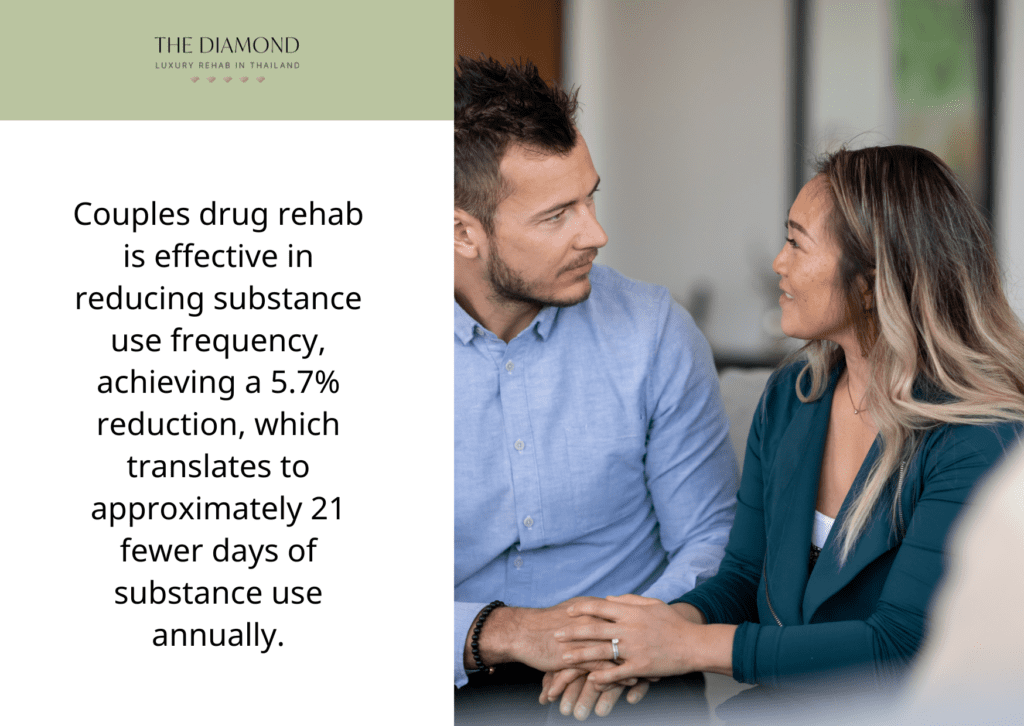
Couples drug rehab is effective in reducing substance use frequency, achieving a 5.7% reduction, which translates to approximately 21 fewer days of substance use annually, according to the research article “The Effect of Significant-Other Involvement in Treatment for Substance Use Disorders: A Meta-Analysis” by Talia Ariss and Catharine E Fairbairn, published in the Journal of Consulting and Clinical Psychology in 2020. These programs deliver long-term benefits, with their positive effects lasting 12–18 months post-treatment. By addressing both substance use and relationship issues simultaneously, couples and family therapies improve treatment retention and provide a more holistic approach to recovery. Their effectiveness spans diverse populations, substance types, and treatment modalities.
A meta-analysis “Review: family or couples therapy is more effective than non-family therapy for drug abuse”by Michael Farrell and John Strang, published in the journal BMJ Mental Health in 1997, highlighted that couples therapy achieved a 48% greater reduction in drug use compared to non-family approaches, such as individual counseling, while significantly enhancing treatment retention rates.
Another research article“Congruence couple therapy for alcohol use and gambling disorders with comorbidities (part I): Outcomes from a randomized controlled trial”byBonnie K. Lee et al. published in the journal Family Process in 2022, found that couples drug rehab is highly effective, particularly when employing systemic approaches like congruence couple therapy (CCT). All primary outcomes (alcohol use and gambling, psychiatric symptoms, and couple adjustment) showed significant improvement using CCT with large effect sizes (0.14-0.29). Secondary outcomes (emotion regulation, substance use, depression, post-traumatic stress symptoms, and life stress) were significantly better for CCT with large effect sizes (0.14-0.50). This dual focus makes couples rehab an impactful and sustainable method for treating substance use disorders while fostering healthier relationships.
How long does couples drug rehab typically last?
Couples drug rehab typically lasts from 30 to 90 days, depending on factors such as the severity of addiction, the presence of co-occurring mental health disorders, and the specific needs of the couple.
While scholarly literature specifically addressing the optimal length of couples rehab programs is limited, the research paper “Pathways to Long-Term Recovery: A Preliminary Investigation”by Alexandre B Laudet et al. published in the Journal of Psychoactive Drugs in 2002, states that longer treatment durations are associated with better outcomes.
Another research article “Relationship Between Drug Treatment Services, Retention, and Outcomes” by Yih-Ing Hser et al. published in the journal Psychiatric Services in 2004, found that treatment programs lasting at least 90 days are significantly more effective in promoting sustained recovery than shorter programs. This finding is especially relevant for couples, as treating addiction and its impact on their relationship requires longer and more comprehensive programs.
What are the differences between individual and couples drug rehab?
The differences between individual and couples drug rehab are explained below.
| Individual drug rehab | Couples drug rehab |
|---|---|
| It focuses on the personal needs of the individual, including addressing underlying mental health issues, addiction triggers, and personal coping mechanisms. | Addresses both individual needs and relationship dynamics, including codependency, enabling behaviors, and communication patterns. |
| Therapy sessions in individual drug rehab are primarily one-on-one, providing a private space for self-reflection and personalized recovery strategies. | Combines individual sessions with joint therapy to enhance mutual support, rebuild trust, and improve relational communication. |
| Encourages personal accountability and the development of a self-sufficient support system, often through group therapies or self-help programs. | Emphasizes shared accountability and mutual encouragement, fostering a partnership-based approach to sobriety and long-term recovery. |
| Focuses solely on the individual’s journey to sobriety, allowing for intensive personal growth and healing. | Aims to strengthen the relationship while achieving sobriety, offering tools to navigate relational conflicts and improve overall connection. |
| Ideal for those who prefer a private, introspective approach to recovery or whose partner does not share the addiction. | Suited for couples where both partners are struggling with addiction or where one partner’s addiction impacts the relationship itself. |