
Types of addiction treatment


Table of content
- 1. Inpatient treatment program
- 2. Residential treatment program
- 3. Detoxification programs
- 4. Partial hospitalization
- 5. Intensive outpatient program (IOP)
- 6. Outpatient treatment programs
- 7. Medication-assisted treatment (MAT)
- 8. Therapy-based programs
- 9. 12-Step programs
- 10. Support groups
- What is the difference between outpatient and inpatient programs?
- How can you choose the right treatment program for addiction?
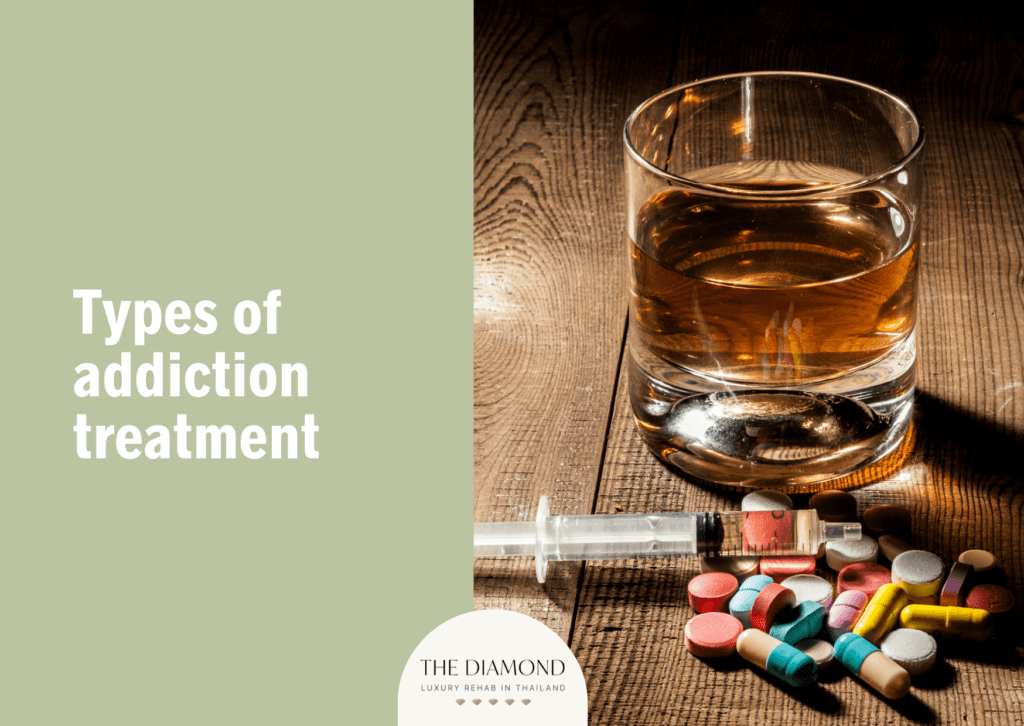
The types of addiction treatment are classified on the basis of three principal dimensions: treatment approach, treatment setting, and treatment components. The treatment approach refers to the overarching theoretical and philosophical principles of a program. The treatment setting refers to the physical environment where therapy is provided. The treatment components of a program are the specific clinical and psychotherapeutic interventions offered to meet a patient’s unique needs and recovery goals.
The types of addiction treatment are listed below.
- Inpatient treatment program
- Residential treatment program
- Detoxification programs
- Partial hospitalization
- Intensive outpatient program (IOP)
- Outpatient treatment programs
- Medication-assisted treatment (MAT)
- Therapy-based programs
- 12-Step programs
- Support groups
1. Inpatient treatment program
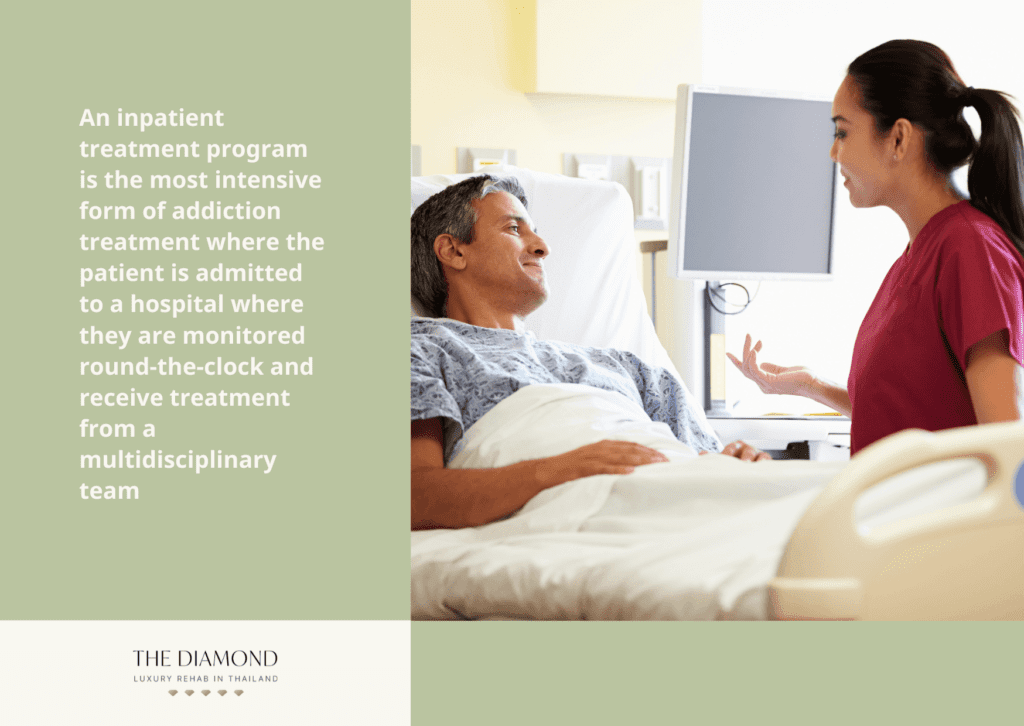
An inpatient treatment program is the most intensive form of addiction treatment where the patient is admitted to a hospital where they are monitored round-the-clock and receive treatment from a multidisciplinary team, as noted in the chapter titled “Specialized Substance Abuse Treatment Programs” from the 1997 publication titled “A Guide to Substance Abuse Services for Primary Care Clinicians” released by the Substance Abuse and Mental Health Services Administration (SAMHSA). This mode of treatment is for patients who present with the following conditions: severe substance withdrawal syndrome with a history of delirium tremens or are currently abusing multiple drugs; acute substance dependence and prior failed attempts at abstinence using less intensive modes of treatment; and severe overdose and presenting with serious respiratory distress or coma. An inpatient treatment program is also advised for patients with severe psychiatric disorders who are at risk of harming themselves or others and individuals with underlying medical conditions that make addiction withdrawal complicated.
Receiving addiction treatment at an inpatient facility removes an individual from the toxic environments and people that act as stressors and compel substance-seeking behaviors. Being admitted to an inpatient facility also cuts off access to substances. So, patients are able to focus on recovering. A patient’s typical day in an inpatient addiction recovery facility is highly structured with designated times for meals, recovery-related activities, physical exercise, and downtime. Having a strict daily routine helps patients feel more in control of their lives and hopeful about bringing about a change.
2. Residential treatment program
Residential treatment programs require patients seeking addiction recovery to live in a facility with 24-hour supervision. However, these programs do not involve the same level of medical monitoring and staffing associated with inpatient hospitalization, according to a release titled “Treatment Settings” published by the Center for Substance Abuse Treatment and Research (Johns Hopkins Medicine).
Residential addiction treatment programs aim to stabilize people with substance use disorders and considerable psychosocial needs while they are in recovery and equip them with the skills necessary to transition to an outpatient setting before returning to an unsupervised living environment, according to a January 2019 report by the Canadian Agency for Drugs and Technologies in Health, titled “Residential Treatment for Substance Use Disorder: A Review of Clinical Effectiveness” and authored by Casey Gray and Charlene Argaez.
These programs are ideal for patients with overwhelming substance abuse issues who lack the motivation necessary to go through a less rigid or structured drug rehab or who do not have access to a substance-free living environment or social support to promote abstinence, as noted in the chapter titled “Specialized Substance Abuse Treatment Programs” from the 1997 SAMHSA publication titled “A Guide to Substance Abuse Services for Primary Care Clinicians.” These patients do not have severe underlying medical or psychiatric disorders that fulfill the criteria for hospitalization.
There are considerable differences in how a rehab works based on the level and intensity of care that the facility offers to its patients. Residential addiction treatment programs offer different levels of care that are ideal for different patient demographics. For instance, there are programs that offer medically managed detoxification, long-term and self-contained therapeutic communities that emphasize social learning processes and peer support, and halfway and quarterway houses with a lesser degree of supervision (SAMHSA, 1997). Specialized residential programs serve the unique needs of adolescents, pregnant or postpartum women and the children who are dependent on them, and individuals who have been ordered by the court to undergo addiction treatment.
3. Detoxification programs
Detoxification programs are addiction treatment programs that offer medical interventions aimed at managing acute substance intoxication and withdrawal, as mentioned in the chapter titled “Overview, Essential Concepts, and Definitions in Detoxification” from the 2006 publication “Detoxification and Substance Abuse Treatment [Internet]” released by the SAMHSA.
Detoxification refers to the process whereby toxins are eliminated from the body of the individual who is intoxicated or is dependent on substances. However, it must be noted that detoxification is not a “treatment” for substance use disorder because a detoxification program is unable to address the long-term psychological, behavioral, and social problems associated with drug and alcohol addiction. It is typically the first step in an addiction recovery program.
There are three principal components of a drug or alcohol detoxification program. Evaluation involves an initial medical assessment of the patient to determine the presence and concentration of substances of abuse in their bloodstream and screening them for co-occurring medical and psychiatric disorders. The information and insights gained from an evaluation determine the subsequent plan of care, which should be individualized, as noted in the chapter titled “Detoxification” of the book “Regional Anesthesia and Pain Management” published in 2009.
Stabilization involves implementing pharmacological and psychosocial processes to safely assist the patient through intoxication and/or withdrawal and help them reach a medically stable and substance-free state. A critical component of a detoxification program is preparing the patient to move to the next phase of addiction treatment that suits their needs and abstinence goals.
4. Partial hospitalization
Partial hospitalization in addiction treatment is a hospital-based form of outpatient drug treatment. The patients are not required to stay overnight at the hospital. However, the program requires 20 hours of treatment attendance every week. The level of care in partial hospitalization is more than what is associated with standard and intensive outpatient programs but less than what is provided at inpatient facilities.
According to a release titled “Treatment Settings” published by the Center for Substance Abuse Treatment and Research (Johns Hopkins Medicine), partial hospitalization programs function as a step-down level of care for an individual who has completed inpatient treatment and a step-up level of care for someone who has relapsed and needs more intensive services that standard and intensive outpatient programs are unable to provide.
5. Intensive outpatient program (IOP)

An intensive outpatient program (IOP) for addiction treatment offers a higher level of therapy intensity and more structure than a standard outpatient program but lower than what is associated with an inpatient facility. The program does not require overnight stays at a hospital or an inpatient center. However, patients are required to attend the outpatient facility for a minimum of 9 hours for 5-7 days every week, as mentioned in the chapter titled “Specialized Substance Abuse Treatment Programs” from the 1997 SAMHSA publication titled “A Guide to Substance Abuse Services for Primary Care Clinicians.” They are able to fulfill their personal, professional, and/or academic obligations during the rest of the day and return home or to a sober living environment for the night.
In the chapter “Intensive Outpatient Treatment and the Continuum of Care” from the book “Substance Abuse: Clinical Issues in Intensive Outpatient Treatment” published in 2006, SAMHSA mentions that the minimum duration of IOP should be 90 days because low-intensity outpatient treatment over an extended period is associated with reduced substance use and improved social functioning at a low cost.
An intensive outpatient program is beneficial for individuals who do not require detoxification services and round-the-clock medical supervision. IOPs function as an entry point into substance abuse treatment, a step-down level of care for someone transitioning from an inpatient or residential facility, or a step-up level of care for an individual who has not achieved the desired degree of abstinence in an outpatient facility and now requires a more intense and structured intervention.
6. Outpatient treatment programs
Outpatient treatment programs for substance use disorders do not require patients to stay overnight at a hospital or residential facility. Of all forms of addiction treatment settings, this is the least intensive and restrictive because it allows patients to attend treatment during the day and return home or to a safe and therapeutic environment, such as a sober living home, for the night. They are also able to attend school or work while undergoing treatment at an outpatient facility.
The treatment program involves a scheduled attendance of less than 9 hours a week that includes individual, group, or family counseling sessions once or twice a week, as noted in the chapter titled “Specialized Substance Abuse Treatment Programs” from the 1997 SAMHSA publication titled “A Guide to Substance Abuse Services for Primary Care Clinicians.“
Outpatient treatment programs also provide other therapeutic and support services like occupational or recreational therapy, medication, and education sessions. These programs are held in substance abuse treatment centers, hospital-affiliated clinics, mental health clinics, community health clinics, offices, and residential facilities that provide outpatient services.
Outpatient treatment programs are beneficial for individuals who are recovering from mild addiction or transitioning from an inpatient to a long-term rehabilitation facility. Some of the biggest benefits of these services are that they cost much less than inpatient, residential, and intensive outpatient programs and individuals are able to remain employed and maintain a close relationship with and receive support from their loved ones while undergoing treatment.
7. Medication-assisted treatment (MAT)

Medication-assisted treatment (MAT) is a “whole-patient” approach to treating substance use disorders that involves the administration of medicines alongside providing counseling and behavioral therapies, according to a publication by the SAMHSA titled “Medications for Substance Use Disorders” that was last updated on 11 April 2024. MAT has been shown to reduce substance cravings; manage withdrawal symptoms; block the rewarding effects, such as euphoria, of certain substances; and promote and sustain abstinence. Medicines are also provided as part of addiction treatment to prevent overdose.
According to a release by the Illinois Department of Public Health, titled “Medication-Assisted Treatment FAQ,” a combination of medications and psychotherapy improves patient survival rates; increases treatment retention that ultimately promotes and sustains sobriety; increases the likelihood of the patient gaining and maintaining meaningful employment; decreases criminal activity; increases social functioning; improves maternal and fetal outcomes in pregnant and breastfeeding women; and lowers an individual’s risk of contracting HIV and hepatitis C.
The medicines used in medication-assisted treatment (MAT) are approved by the Food and Drug Administration (FDA). The following classes of medicines are typically used in addiction treatment settings: medications to manage withdrawal, such as benzodiazepines for alcohol withdrawal symptoms and methadone, buprenorphine, and clonidine for opioid withdrawal; medications to discourage drug and alcohol use, such as disulfiram (Antabuse) for alcohol use disorder (AUD) and naltrexone for opioid use disorder (OUD); agonist substitutes for opioid maintenance treatment, such as methadone and levo-alpha-acetyl-methadol (LAAM); and medications for co-occurring psychiatric conditions, such as antidepressants, mood stabilizers, and neuroleptics, as mentioned in the chapter titled “Specialized Substance Abuse Treatment Programs” from the 1997 SAMHSA publication titled “A Guide to Substance Abuse Services for Primary Care Clinicians.” Naloxone and nalmefene are used to reverse opioid overdose (SAMHSA, 2024).
8. Therapy-based programs
Therapy-based programs as part of addiction treatment offer psychosocial interventions to address the social, environmental, and psychological factors that contribute to problematic substance use, according to a November 2022 StatPearls [Internet] release by Han Yue and Eduardo Pena, titled “Addiction Psychotherapeutic Care.”
Authors Daniel Feingold and Dana Tzur Bitan in their 2022 article titled “Addiction Psychotherapy: Going Beyond Self-Medication,” which was published in the journal Frontiers in Psychiatry, explain that the use of psychotherapy in addiction treatment is rooted in the notion that substance abuse has its bases not only in neurobiological deficits but also in the maladaptive coping mechanisms that individuals exhibit to deal with negative emotional experiences. These coping efforts include self-medicating, or abusing substances of abuse, to repress and/or act out negative emotions.
Therapy-based programs in addiction treatment follow different theoretical frameworks and strategies and include cognitive behavioral therapy (CBT), dialectical behavior therapy (DBT), motivational interviewing, and contingency management. These psychotherapeutic interventions are delivered in individual or group settings. Family therapy is a form of group therapy that aims to improve maladaptive interpersonal relationships and communication between family members that contributed to or sustained addiction in their loved ones in treatment, and alter their thinking and behavioral responses to the issue of substance abuse and toward the person undergoing therapy.
According to Karsberg et al., in their 2021 article titled “Group versus individual treatment for substance use disorders: a study protocol for the COMDAT trial,” which was published in the journal BMC Public Health, there is no scientific consensus on the individual vs. group therapy debate. Individual therapy is still the most widely used treatment form in addiction therapy and is more effective than group therapy in treating individuals with co-occurring substance use and post-traumatic stress disorders. On the other hand, several studies suggest that group therapy is equally or more effective in treating substance use disorder than individual counseling, especially with regard to abstinence.
9. 12-Step programs
12-Step programs represent a distinctive approach to overcoming addictive, compulsive, and behavioral problems. It was developed by Alcoholics Anonymous (AA) to guide alcoholism recovery, according to the definition in the APA Dictionary of Psychology published by the American Psychological Association and last updated on 15 November 2023.
The 12-Step plan is a theoretical proposition that outlines 12 consecutive steps, or activities, that individuals should strive to achieve during recovery. It is now used by other substance abuse self-help groups like Narcotics Anonymous (NA) and Cocaine Anonymous (CA). Over the years, the 12-step methodology has been altered and adapted to reflect more secular ideas.
According to authors Donovan et al., in their 2013 article titled “12-Step Interventions and Mutual Support Programs for Substance Use Disorders: An Overview” published in the journal Social Work in Public Health, 12-Step programs serve as a principal driver of behavior change for many individuals seeking recovery. These programs are effective as adjuncts to formal addiction treatment modalities and as tools of continuing care and community support after an individual completes formal treatment.
According to the SAMHSA report titled “National Survey of Substance Abuse Treatment Services (N-SSATS): 2020–Data on Substance Abuse Treatment Facilities,” published in June 2021, 65% of addiction treatment centers in the world use 12-Step programs.
10. Support groups
Support groups in addiction recovery are groups where members with similar lived experiences of abusing substances support one another to recover or sustain abstinence without professional guidance, according to the definition provided by the World Health Organization in The Global Health Observatory data entry titled “Mutual support/ self-help groups for substance use.”These groups create an environment that promotes long-term recovery by establishing supportive and reciprocal relationships between group members, called peers, who give and receive non-medical support based on tenets like shared experiences, cooperation, and accountability, according to a 2021 article by Christian Scannell published in the journal Substance Use: Research and Treatment, titled “Voices of Hope: Substance Use Peer Support in a System of Care.”
Addiction support groups reinforce an individual’s effort to develop the ability to regulate their thoughts and emotions, improve interpersonal skills, and learn the practical skills necessary to navigate daily life, prevent relapse, and sustain sobriety, as mentioned in the chapter titled “Types of Groups Commonly Used in Substance Abuse Treatment” from the 2005 SAMHSA publication Substance Abuse Treatment: Group Therapy [Internet].
Scannell (2021) notes that peer support groups in addiction recovery have been shown to produce equal or greater positive behavioral health outcomes than what is achieved by services provided by non-peer professionals. However, it must be noted that support groups are not substitutes for formal addiction treatment programs or medical supervision and guidance, according to a 2016 article by Kathlene Tracy and Samantha P. Wallace published in the journal Substance Abuse and Rehabilitation, titled “Benefits of peer support groups in the treatment of addiction.”
What is the difference between outpatient and inpatient programs?

The difference between outpatient and inpatient programs stems from the settings where they take place and the unique features of each environment, the level of care provided, and the demographic characteristics of the patient most likely to benefit from each program. The differences are described in the table below.
| Outpatient Programs | Inpatient Programs |
|---|---|
| Patients are not required to stay at the facility, and they live at home or in a sober living environment while accessing treatment during the day. | Patients are required to stay at the inpatient facility throughout the duration of treatment. |
| Patients are able to attend work and school while undergoing treatment. | Patients are unable to work or attend school during treatment. |
| Patients are not monitored round-the-clock. | There is 24×7 medical supervision of the patient. |
| These are recommended for patients with mild substance use disorders and those who do not require intensive medical or psychiatric care. | These are recommended for patients with severe substance use disorder and/or with an increased risk of experiencing serious withdrawal complications; co-occurring physical and psychiatric disorders; and a history of failed attempts at abstinence. |
| Outpatient programs are much less intensive and restrictive than inpatient programs. | These are the most intensive and restrictive of all addiction treatment programs. |
| These last longer than inpatient programs. | These are shorter in duration than outpatient programs. |
| These are much less expensive than inpatient programs. | These are costlier than outpatient programs. |
| The success of the program depends on the patient being highly motivated to consistently attend the treatment sessions and living in a supportive and substance-free environment. | The restrictive nature of inpatient programs compels compliance and treatment adherence so that patients need not be highly motivated. |
How can you choose the right treatment program for addiction?
You can choose the right treatment program for addiction by consulting with an addiction specialist who has the knowledge and experience to assess and match your treatment needs and recovery goals with an appropriate treatment program. Ask for recommendations from loved ones and/or acquaintances who are currently undergoing treatment or had in the past. Choose an addiction treatment program based on the nature and severity of your substance use disorder and whether you have co-occurring physical and/or mental health conditions. Treatment programs vary according to the addiction types they treat and the level and intensity of care they provide.
For instance, opioid maintenance therapy is not provided at an alcohol detox clinic, or an outpatient treatment facility does not have the medications and skilled manpower needed to treat a drug abuser with a severe co-occurring mental disorder. As has been recommended by the SAMHSA in the chapter titled “Specialized Substance Abuse Treatment Programs” from their 1997 publication titled “A Guide to Substance Abuse Services for Primary Care Clinicians,” check the information on treatment facilities provided by the National Council on Alcohol and Drug Dependence that is available for free or pay a sliding scale fee to access assessments and referrals. Look for information about licensed and certified addiction treatment facilities in the National Directory of Drug Abuse and Alcoholism Treatment and Prevention Programs (1-800-729-6686) released by SAMHSA.
What are the different considerations when choosing an addiction treatment program?
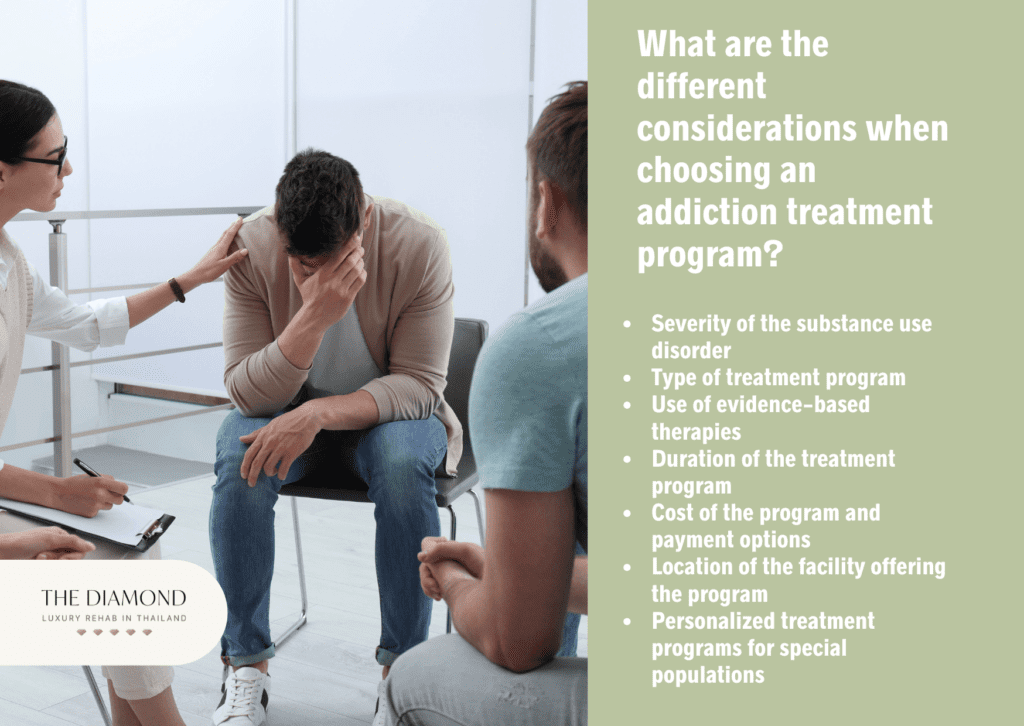
The different considerations when choosing an addiction treatment program are listed below.
- Severity of the substance use disorder: The severity of the addiction problem and the presence or absence of co-occurring physical and psychiatric disorders determine the level of care that an individual needs.
- Type of treatment program: The choice of a type of treatment program depends on the level and intensity of care provided and the treatment modalities offered. There are facilities that offer treatment services for specific substances, such as an opioid detox clinic.
- Use of evidence-based therapies: SAMHSA, in their January 2019 publication titled “Struggling with Addiction? Tips on Finding Quality Treatment” that was authored by Anne M. Herron, recommends verifying that a treatment program uses evidence-based therapies to treat substance use disorders. They should also provide multiple forms of therapies to maximize the chances of recovery. If medication is to be a part of the treatment, the facility should use only those medicines that have been approved by the FDA.
- Duration of the treatment program: Addiction treatment programs typically last from a few weeks to several months depending on the severity of the substance use problem, the type of program, and the individual’s recovery goals. Patients should take into account how much time they are able to commit to treatment without neglecting personal and professional responsibilities.
- Cost of the program and payment options: Finding out about the cost of the treatment, how much of it will be covered by insurance, and whether the patient qualifies for government grants, loans, or free or subsidized treatment helps in choosing a treatment program that suits an individual’s financial situation.
- Location of the facility offering the program: There are instances where individuals choose a treatment program far away from their current residence to remove themselves from toxic environments, places, and people that trigger substance cravings. Often, individuals choose treatment programs based on the availability of public transportation.
- Personalized treatment programs for special populations: Special populations have unique needs. High-quality treatment programs are able to identify the needs of special populations like pregnant and post-partum women, adolescents, people who are HIV-positive, and individuals from minority communities and tailor the treatment to make it effective, and culturally sensitive, and contextual.
- Accreditation: The treatment program should be licensed or certified by the state and accredited by a federal regulatory organization (SAMHSA, 2019). High-quality treatment facilities are accredited or certified by some or all of the following organizations: the Commission on Accreditation of Rehabilitation Facilities (CARF), the Compliancy Group, the National Association for Behavioral Healthcare (NABH), and the Joint Commission on Accreditation of Healthcare Organizations. These credentials prove that the program fulfills basic safety, quality, and standard-of-care requirements. Additionally, checking how previous users have rated the program helps to determine if a treatment program delivers high-quality care. For instance, businesses accredited by the Better Business Bureau are known to follow ethical business practices.