Addiction treatment: definition, goal, and process



Addiction treatment means any program that systematically works to reduce or eliminate a patient’s reliance on substances. In order to address the psychological, medical, and emotional elements of addiction, it usually consists of counseling, medical attention, and support networks.
The goal of addiction treatment is to help individuals stop using substances and achieve lasting recovery. For the sake of long-term recovery and general health, it addresses addiction’s root causes, helps people through withdrawal, and prevents relapse via therapy and support.
The addiction treatment process begins with intake and assessment, where professionals get important information and do tests to make a personalized plan. After that, under medical supervision, detoxification aids people in getting rid of drugs from their bodies.
Following stabilization, therapy is the main emphasis of rehabilitation, which addresses the behavioral and psychological components of addiction. Following inpatient rehab, an intensive outpatient program (IOP) offers continued treatment with more flexibility, allowing individuals to live at home while attending therapy.
A person’s post-treatment plan, which details measures to prevent relapse and provide support, is developed as treatment approaches completion to help them prepare for life beyond rehab. People use the skills they learned throughout therapy when they return to their everyday lives after their release. To ensure long-term recovery, ongoing care like therapy and support groups provides continued guidance, helping to maintain sobriety and prevent relapse over time.
What is addiction treatment (drug rehabilitation)?
Addiction treatment (drug rehabilitation) refers to an all-encompassing program that helps people overcome their mental and physical reliance on substances. After a person’s body is cleansed of hazardous substances through detoxification, they then go on to therapy to address the emotional and behavioral issues that have contributed to their addiction.
Cognitive behavioral therapy (CBT), motivational interviewing, medication-assisted treatment, and individual and group counseling are common components of treatment programs that attempt to promote sustained recovery.
Recovery from drug abuse involves learning how to deal with addiction triggers that make one want to fall back to their old habits and relapse. Supporting individuals as they strive for a life free of drugs and long-term recovery is the ultimate goal of drug rehab treatment.
Can addiction be cured?
No, addiction cannot be fully cured, but it can be effectively managed. As explained in a 2023 publication from the National Institute on Drug Abuse (NIDA) titled, “Drugs, Brains, and Behavior: The Science of Addiction Treatment and Recovery,” treatment for addiction is a means of managing the problem rather than a cure, much like treatment for other chronic illnesses like asthma or heart disease.
Through treatment, people are able to reclaim control of their lives and counteract the destructive effects of addiction on their brain and behavior. While individuals achieve long-term recovery and live fulfilling lives without using substances, the risk of relapse remains due to the nature of addiction and the brain changes associated with it.
With the support of treatment, people with addictions learn to manage their symptoms and stay sober. Although a cure is not possible, continuous care, therapy, and support lead to a successful, substance-free life.
What percentage of people with addiction receive treatment?

About 1 in 4 (23.6 percent, or 12.8 million people) of those 12 years of age or older in 2023 who were identified as needing substance use treatment in the previous year actually received it, according to a 2024 publication titled, “Key Substance Use and Mental Health Indicators in the United States: Results from the 2023 National Survey on Drug Use and Health” from the Substance Abuse and Mental Health Services Administration (SAMHSA).
Among individuals requiring substance use treatment in the past year, young adults aged 18 to 25 were less likely to have received such treatment (16.6 percent or 1.6 million individuals) compared to other age demographics.
What is the goal of addiction treatment?
The goal of addiction treatment is to help people break free from the grip of addiction and lead healthier, substance-free lives. It focuses on addressing the root causes, managing withdrawal, and preventing relapse through therapy and support.
Along the way, treatment helps individuals regain control over their lives and improve their overall well-being. In the end, it’s about guiding people toward a more balanced, fulfilling life without relying on substances.
What are the key principles of addiction treatment?

Key principles of addiction treatment are the core rules and practices in which successful addiction recovery programs are built upon. The key principles of addiction treatment are listed below.
- Addiction is a complex yet manageable condition: Addiction influences both brain function and behavior, rendering it a complex illness. Recognizing that addiction is more than just a lack of willpower, treatment must take these changes in the brain into account. Although recovery is difficult, it is feasible through targeted interventions.
- There is no one treatment that works for everyone: Every person has a unique path to recovery, therefore their care must be customized to meet their needs. The type of addiction, past medical history, and mental health constitute a few of the factors that influence which approach is best. A one-size-fits-all strategy frequently misses important points.
- There must be easy access to treatment: Access to treatment is crucial, as individuals struggling with addiction often do not seek help until a moment of crisis. Immediate availability ensures that people are able to begin their recovery journey when they are ready. Delaying treatment reduces its effectiveness, as motivation tends to wane over time.
- Effective treatment addresses multiple needs, not just addiction: For treatment to work, it must address the person as a whole, not just the addiction itself. This includes considering medical, social, psychological, vocational, and legal needs, according to a 2014 publication titled, “Principles of Drug Addiction Treatment: A Research-Based Guide (Third Edition)” from the National Institute on Drug Abuse (NIDA). When all aspects of an individual’s life are considered, the chances of long-term success improve.
- It’s crucial to continue treatment for a sufficient amount of time: Longer treatment durations are generally linked to better outcomes. Addiction recovery takes time, and individuals must engage in treatment for sufficient periods to allow for real progress. Commitment to a longer treatment program increases the chances of maintaining sobriety.
- Behavioral therapies are the most common and effective treatment methods: Counseling and behavioral therapies help individuals change their attitudes and behaviors related to drug use. These therapies additionally improve coping mechanisms and teach strategies to handle triggers. Regular participation in therapy is key to preventing relapse.
- Medications are often an important part of treatment: In certain cases, medications play a crucial role in addiction treatment, especially for substance use disorders like opioid or alcohol dependence. Preventing relapse, managing withdrawal symptoms, and reducing cravings are all facilitated by medications. The overall efficacy of treatment is improved when they are combined with therapy.
- Continuous monitoring and adjustments are necessary: As individuals progress in treatment, their needs change, requiring adjustments to the recovery plan. Ongoing monitoring helps identify whether the current approach is effective. Adjusting treatment based on progress ensures that individuals receive the most appropriate care at each stage.
- Treatment must address mental health disorders: Numerous individuals with addiction struggle with co-occurring mental health conditions. Addressing these disorders simultaneously with addiction is essential for effective recovery. Failure to treat mental health issues leads to relapse or hinders progress. Integrated treatment for both addiction and mental health ensures a more holistic and effective approach.
- Detoxification is only the first step: While detoxification helps the body rid itself of substances, it is just the beginning of addiction treatment. Without further therapy and support, detox alone does not address the behavioral aspects of addiction. To prevent relapse, ongoing therapy is essential after detox.
- Effective treatment does not require willing participation: Even if individuals are pressured into treatment, it is still possible for them to achieve recovery. Court orders, family intervention, or workplace mandates are likely to motivate people to engage in treatment. Once involved, people experience positive changes and begin actively participating. The outcome of treatment relies on the quality of care, not just initial willingness.
- It is essential to closely observe drug use while undergoing treatment: Drug usage must be continuously monitored because relapses occur during the rehabilitation process. Frequent testing makes it possible to spot obstacles and take prompt action. It additionally helps with accountability and maintaining treatment goals on schedule. Early drug usage identification lowers the chance of relapse and stops future escalation.
- Testing for infectious diseases and providing risk-reduction counseling is essential: Addiction treatment programs must routinely test for HIV/AIDS, hepatitis B and C, and tuberculosis. In order to intervene quickly with medical treatment, early diagnosis of these disorders is essential. Equally crucial is the provision of counseling on the reduction of health hazards related to drug use.
What are the steps in the addiction treatment process?

Steps in the addiction treatment process refer to the sequential phases individuals go through during their recovery journey. The steps in the addiction treatment process are listed below.
- Rehab intake: During intake, addiction specialists gather vital personal and medical information from the individual. This stage ensures that healthcare providers understand the severity of addiction, substance use patterns, and any co-occurring disorders. It’s essential for developing a customized treatment plan. Intake is often the first contact with treatment, creating a roadmap for care.
- Assessment: Comprehensive assessments focus on evaluating both physical and mental health. To meet the particular needs of the patient, medical staff members usually do blood tests, psychological assessments, and other diagnostics. This procedure guarantees that treatment is catered to particular problems like trauma or underlying mental health diseases. A clear picture of the individual’s overall health guides the rest of the treatment journey.
- Detoxification: Detoxification, or detox, is the process of removing harmful substances from the body. Physical dependence on drugs or alcohol is addressed in this step, which is typically accompanied by withdrawal symptoms that require medical management. Detox alone is not enough for recovery, but it prepares individuals for the next stages of treatment. It offers a blank canvas on which to address the psychological components of addiction.
- Rehabilitation (therapy and counseling): Rehabilitation focuses on addressing the psychological, emotional, and behavioral aspects of addiction. To help people learn to cope with their symptoms and identify what sets them off, this approach frequently incorporates cognitive-behavioral therapy, group therapy, and individual counseling. At this point, individuals are able to zero in on what’s really driving their addiction.
- Intensive outpatient program (IOP): IOP provides a flexible treatment option, allowing individuals to live at home while attending structured therapy sessions. Each week, participants spend several hours in treatment concentrating on coping mechanisms and relapse prevention. For those who have finished inpatient rehabilitation or need less rigorous help, this degree of attention is ideal. IOP strikes a compromise between ongoing therapy and autonomy.
- Post-treatment plans: This step involves developing a long-term strategy to maintain sobriety post-treatment. Therapists and counselors work with individuals to create a comprehensive aftercare plan. Techniques for preventing relapse, ongoing support, and continued therapy are all included. Preparing for life post-treatment is essential for a smooth reintegration into everyday life.
- Release: Transitioning out of formal treatment requires careful planning to ensure continued progress. After release, people go back to their regular environment with the knowledge and tools gained in treatment. During this stage, continuing therapy and the support of friends and family are essential.
- Ongoing care and support: Recovery does not end after rehabilitation; ongoing care is essential for maintaining sobriety. This step includes relapse prevention strategies, participation in support groups, and continued therapy when needed. Regular monitoring and follow-up care help individuals stay on track with their recovery goals. Long-term support networks, such as 12-step programs, play a crucial role in sustaining a substance-free lifestyle.
How long does addiction treatment take?
Addiction treatment generally takes 30 to 90 days, with certain programs extending to several months or even years. For example, inpatient rehabilitation programs typically run six to eight weeks, but for people who need more time to adjust to healthier lifestyles or who require a longer detox phase, a 90-day stay is seen to be ideal.
In contrast, outpatient programs typically last several months, ranging from a few weeks to a year, depending on the patient’s improvement and continued support needs. It’s important to recognize that recovery is an ongoing process; therefore, aftercare and continued support are crucial for maintaining long-term sobriety.
How does addiction treatment support recovery?
Addiction treatment supports recovery by offering people the tools and resources they need to beat drug addiction and start over in life. Both the mental and physical components of addiction are addressed through treatment, which includes counseling, medication, and therapy.
One of the ways that treatment aids in maintaining sobriety is by providing medical support for managing withdrawal symptoms and cravings. Individuals are more likely to remain motivated throughout their journey to addiction recovery when they have the continuous support of healthcare providers and peer groups.
What is the role of treatment in preventing addiction relapse?
The role of treatment in preventing addiction relapse is to teach people that they are capable of managing their substance use by identifying and avoiding situations that put them in danger of relapsing.
Individuals are taught how to identify and manage stress, emotions, and environmental cues that present a risk of relapse through therapy. Individuals are held responsible and linked to their recovery objectives through treatment’s continuous monitoring and support.
In addition to giving patients the support they need to stay on the road to recovery, treatment assists patients in developing healthier habits. Relapse prevention depends much on this continuous direction, which guarantees their commitment to their sobriety.
What are the biggest challenges in finding treatments for addiction?
The biggest challenges in finding treatments for addiction refer to the substantial barriers that people must overcome in order to get the appropriate assistance for their substance abuse. The biggest challenges in finding treatments for addiction are listed below.
- Limited access to quality care: Numerous individuals struggle to find addiction treatment programs due to a lack of available facilities, especially in rural or underserved areas. This scarcity of resources means people often face long waiting lists or have to travel far for help. According to a 2015 study by Edmond et al., titled, “Rural substance use treatment centers in the United States: an assessment of treatment quality by location,” rural facilities have a limited number of counselors with advanced degrees, hindering their ability to implement novel treatment approaches. They were additionally more inclined to hire a medical nurse, likely due to restricted access to physicians.
- High treatment costs: The cost of addiction treatment tends to be prohibitively expensive in certain cases, particularly for those without insurance. Various people are unable to afford inpatient or outpatient programs, leaving them with few options for recovery. Financial barriers often prevent individuals from getting the comprehensive care they need to achieve lasting recovery. A 2009 study from the journal Drug and Alcohol Dependence titled, “The cost of treating addiction from the client’s perspective: Results from a multi-modality application of the Client DATCAP” found that the total cost per visit for outpatient non-methadone clients was $28.50, while the total cost per treatment episode was $571. Conversely, inpatient clients encountered significantly higher expenses, with an average daily cost of $235 and a total cost of $10,749 per treatment episode.
- Stigma associated with addiction: The social stigma surrounding addiction discourages individuals from seeking help, as they fear judgment or discrimination. Affected people hesitate to admit they have a problem because of the negative perceptions linked to substance abuse. This stigma influences how society views treatment as well, making it harder for individuals to receive the support they need.
- Finding personalized treatment: Addiction affects each person differently, and one-size-fits-all approaches are often ineffective. The difficulty resides in identifying programs that provide customized therapies aimed at addressing the underlying causes of addiction. Personalized treatment is crucial for sustained success; however, locating programs that offer such tailored care is occasionally challenging. A 2020 article by Nora D. Volkow titled, “Personalizing the Treatment of Substance Use Disorders” highlighted the need for dynamic, individualized treatment plans that take into account each patient’s unique neurobiological and social circumstances. For instance, behavioral and neuromodulation therapies, as well as the use of medications to address particular symptoms of withdrawal (such as cravings, insomnia, depression), has the potential to improve treatment results.
- Lack of continuity in care: Ongoing support after initial treatment is critical for long-term recovery, but numerous individuals face gaps in care after completing rehab. A lack of follow-up care, such as counseling or support groups, increases the risk of relapse. Ensuring continuous support throughout the recovery process is vital, but the challenge lies in maintaining access to resources after formal treatment ends.
What are the different types of addiction treatment?
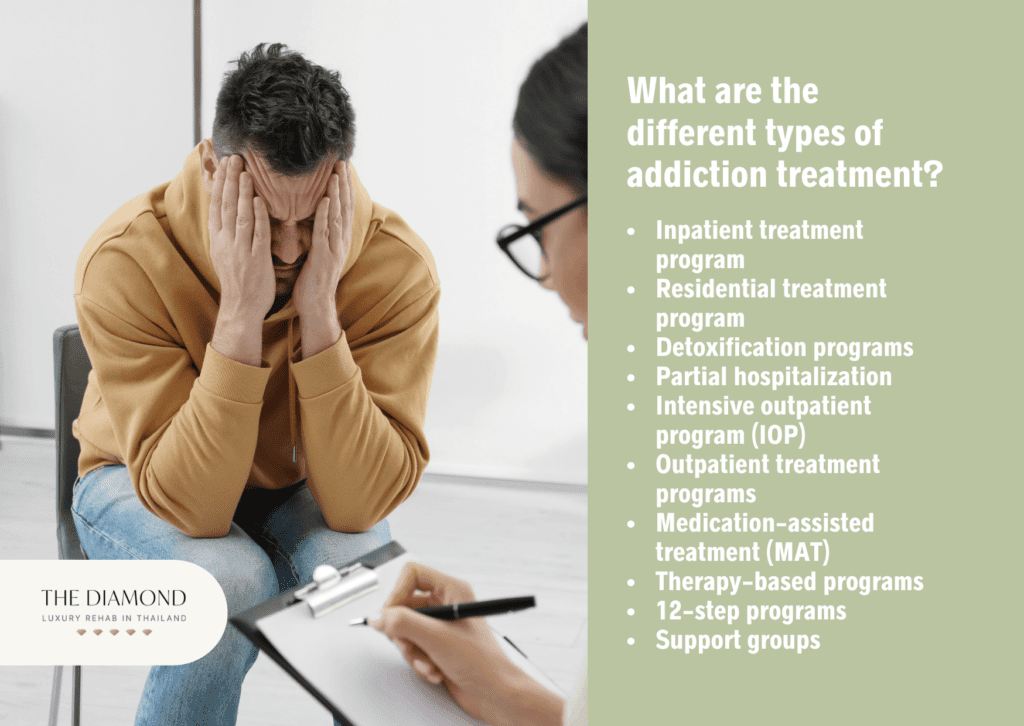
Different types of addiction treatment denote the several ways and strategies applied to assist people in overcoming drug abuse. The different types of addiction treatment are listed below.
- Inpatient treatment program: Inpatient treatment involves individuals living at a facility where they receive 24-hour medical and emotional support. This highly structured environment provides intensive care, making it one of the addiction treatment types ideal for severe addictions.
- Residential treatment program: Similar to inpatient treatment, residential programs offer long-term care in a non-hospital setting. Individuals stay at the facility for an extended period, focusing on recovery and life skills in a supportive environment.
- Detoxification programs: Detox programs help individuals safely withdraw from drugs or alcohol under medical supervision. These programs manage withdrawal symptoms and prepare individuals for further addiction treatment.
- Partial hospitalization: Partial hospitalization programs (PHPs) provide structured treatment during the day, but individuals return home at night. These programs are suitable for those needing intensive care without full-time residential treatment.
- Intensive outpatient program (IOP): IOPs offer comprehensive therapy and support but allow individuals to live at home. These programs are less intensive than inpatient treatment, making them suitable for those with stable home environments.
- Outpatient treatment programs: Outpatient programs offer flexible therapy sessions that allow individuals to continue their daily lives while attending treatment. These programs are ideal for those with milder addictions or those transitioning from more intensive care.
- Medication-assisted treatment (MAT): MAT combines medications, such as methadone or buprenorphine, with counseling to treat substance use disorders. This approach helps manage cravings and withdrawal, making recovery more manageable.
- Therapy-based programs: These programs focus on behavioral therapies like cognitive-behavioral therapy (CBT) and motivational interviewing to address the psychological aspects of addiction. Therapy helps individuals understand their triggers and develop healthier coping strategies.
- 12-step programs: 12-step programs, such as Alcoholics Anonymous (AA), offer a structured path to recovery based on guiding principles. These peer-led programs emphasize personal accountability, spiritual growth, and community support.
- Support groups: Support groups bring together individuals who are in various stages of recovery, providing a safe space to share experiences and offer encouragement. Participants are encouraged and made to feel connected to others who relate to their challenges, all while cultivating a sense of community.