
Anxiolytic addiction: symptoms, causes, effects, and treatment


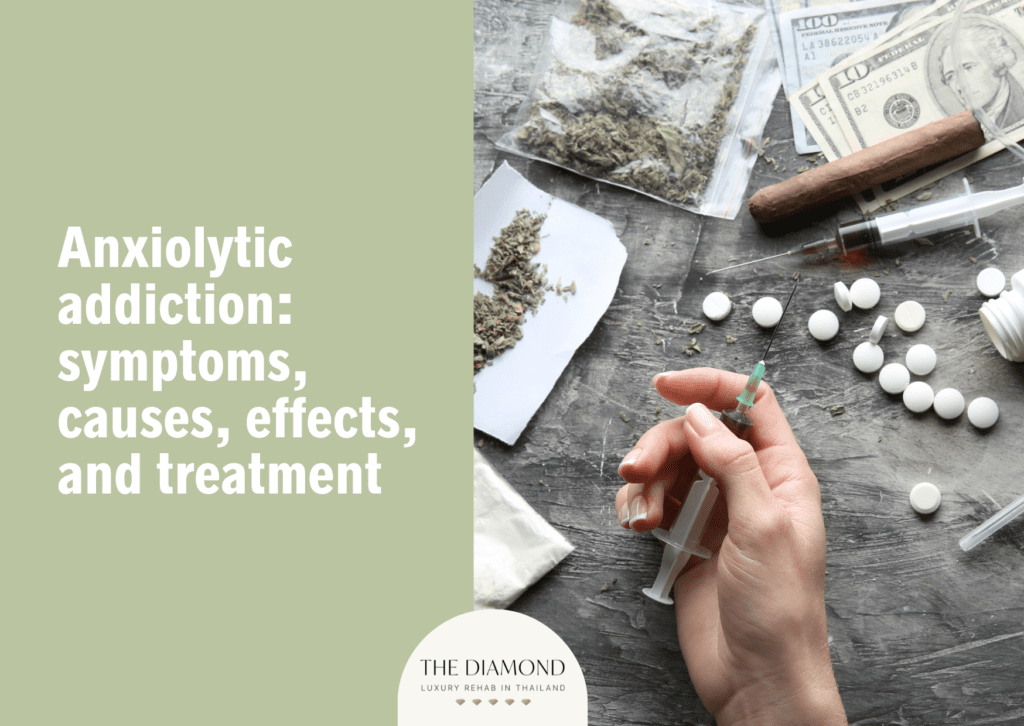
Anxiolytic addiction is a substance use disorder characterized by the uncontrollable and compulsive use of various anxiety-relief medications, often benzodiazepines, despite their known harmful medical and psychological consequences.
Symptoms of anxiolytic addiction include cravings, tolerance, physical dependence, rebound anxiety, and compulsive use and risky behaviors.
Causes of anxiolytic addiction encompass chronic use, environmental factors, maladaptive coping mechanisms, mental illness, inadequate monitoring, combination with other substances, and lack of awareness.
Effects of anxiolytic addiction comprise cognitive impairment, respiratory depression, drowsiness and fatigue, mood swings, slurred speech, and risk of overdose.
Treatment of anxiolytic addiction includes detoxification, cognitive behavioral therapy (CBT), motivational interviewing (MI), gradual tapering, continuous care and support, 12-step programs, and support groups.
What is anxiolytic addiction?
Anxiolytic addiction refers to a substance use disorder, characterized by the compulsive misuse of anxiolytic medications. The disorder is closely linked to the risk of dependency particularly benzodiazepines as defined in the chapter “Anxiolytics: Misuse, Dependence, and Withdrawal Syndromes” authored by Victor M. Tang and Simon J. C. Davies published in the journal NeuroPsychopharmacotherapy in 2022.
The Diagnostic and Statistical Manual of Mental Disorders, fifth edition (DSM-5), classifies this disorder as a Sedative-, Hypnotic-, or Anxiolytic-Related Disorder. The term “anxiolytic” is derived from the Greek roots “anxio-” meaning anxiety and “-lytic” meaning “to loosen”. These medications alleviate stress by “loosening” its grip on the individual.
Benzodiazepine addiction, a common manifestation of anxiolytic addiction, develops when prolonged use of these anxiety-relieving medications leads to physical dependence and psychological reliance. Anxiolytics are commonly used to manage symptoms of anxiety, such as fear, unease, dread, and muscle tension, which often arise in response to stress.
How common is anxiolytic addiction?
Anxiolytic addiction is a common concern, particularly with benzodiazepines as it affects 12.6% of U.S. adults annually, with 10.4% using as prescribed and 2.2% misusing, as evidenced in the 2019 research study “Benzodiazepine Use and Misuse Among Adults in the United States” by Donovan T Maust et al. published in the journal Psychiatric services: a journal of the American Psychiatric Association.
Another research article “Increasing Benzodiazepine Prescriptions and Overdose Mortality in the United States, 1996–2013” by Marcus A Bachhuber et al. published in the American Journal of Public Health in 2016, highlights a significant rise in benzodiazepine prescriptions in the U.S. between 1996 and 2013. During this period, the number of adults receiving these prescriptions increased by 67%, from 8.1 million to 13.5 million.
Additionally recent study titled “Anxiolytics and Sedative-Hypnotics Toxicity” by Christopher G. Simone and Bradford D. Bobrin published in the book StatPearls, updated in 2023, suggests that around 1-1.1% of Americans have experienced an anxiolytic use disorder in their lifetime. While the general population’s prevalence is estimated at 0.16%, this number increases to 6% among those with other substance abuse issues.
What are anxiolytic medications (anxiety drugs)?
The anxiolytic medications (anxiety drugs) are listed below.
- Benzodiazepines: Benzodiazepines are a class of anxiolytic (anti-anxiety) medications that act on the central nervous system (CNS) to reduce anxiety by enhancing the effect of the neurotransmitter gamma-aminobutyric acid (GABA). GABA is an inhibitory neurotransmitter that calms brain activity, helping to alleviate symptoms of anxiety, agitation, insomnia, and seizures, as highlighted in the article “Benzodiazepines” by Connor G. Bounds and Preeti Patel published in the book StatPearls, last updated 2024.
- Barbiturates: Barbiturates are strong CNS depressant drugs that slow down the brain and nervous system. They are used to treat conditions like anxiety, difficulty sleeping, seizures, and muscle problems. However, they are highly addictive and lead to an overdose easily. Examples include amobarbital, pentobarbital, and phenobarbital.
- Antidepressants: Antidepressants such as selective serotonin reuptake inhibitors (SSRIs), serotonin-norepinephrine reuptake inhibitors (SNRIs), and tricyclic antidepressants (TCAs) are widely prescribed class of antidepressant medications primarily used to treat depression, illness anxiety disorder, and post-traumatic stress disorder (PTSD). Each works by altering the balance of neurotransmitters in the brain to improve mood and alleviate depression or anxiety.
- Buspirone: Buspirone is an anti-anxiety medication that works by affecting brain chemicals to reduce symptoms such as fear, tension, irritability, dizziness, and rapid heartbeat. Unlike benzodiazepines, it is not sedative or habit-forming and is commonly prescribed for generalized anxiety disorder (GAD).
- Beta-blockers: Beta-blockers, such as propranolol, atenolol, and metoprolol, reduce physical anxiety symptoms like a rapid heart rate and trembling by blocking adrenaline. They are effective for situational stress, like performance anxiety, and are taken as needed with fewer side effects compared to other anxiety medications.
Why are anxiolytics addictive?
Anxiolytics are addictive because they alter the brain’s neurotransmitter systems, particularly by enhancing gamma-aminobutyric acid (GABA) activity, which produces calming effects. The research article “Anxiety disorders and GABA neurotransmission: a disturbance of modulation” by Philippe Nuss published in the journal Neuropsychiatric Disease and Treatment in 2015, highlights that long-term use of anxiolytic drugs leads to neuroadaptive changes, including alterations in GABAA receptor composition and sensitivity, which cause tolerance, and addiction.
Furthermore, abrupt discontinuation triggers withdrawal symptoms, such as heightened anxiety and physiological distress, due to the brain’s downregulated GABAergic activity. These withdrawal effects significantly contribute to continued drug use and addiction.
How addictive are anxiolytics?
Anxiolytics are addictive, particularly benzodiazepines, which, despite their widespread use and efficacy, are recommended only for short-term or intermittent therapy at the lowest effective dose due to their high potential for addiction and abuse. According to the research article “Long-term anxiolytic therapy: the issue of drug withdrawal” by M Lader, published in The Journal of Clinical Psychiatry in 1987, benzodiazepines which were initially considered safe are now considered addictive even at low doses. The research highlights that although it is effective for short-term treatment, it still needs to be carefully monitored and gradually tapered, given its potential for addiction.
Buspirone, on the other hand, offers a safer alternative for long-term anxiety management with no significant risk of addiction and abuse. With a lower risk of addiction and minimal withdrawal symptoms. However, its potential side effects require vigilant observation during treatment.
What is the difference between anxiolytics and hypnotics?
The difference between anxiolytics and hypnotics lies in their intended purpose and mechanism of action. Anxiolytics are designed to reduce anxiety and promote calmness and relaxation in the patient, alleviating stress and worry without necessarily causing drowsiness. Hypnotics, on the other hand, are specifically intended to induce drowsiness and facilitate the onset and maintenance of sleep, closely mimicking natural sleep patterns.
Mechanistically, many anxiolytics, such as benzodiazepines, enhance the activity of gamma-aminobutyric acid (GABA), the brain’s main inhibitory neurotransmitter, to decrease neuronal excitability and produce a calming effect. Hypnotics typically work on the GABA system but at higher doses, focusing on promoting sleep induction rather than just reducing anxiety. While anxiolytics are effective at lower doses to calm the patient without inducing sleep, hypnotics require higher doses to achieve their intended sleep-inducing effects.
However, the prolonged or unsupervised use of hypnotics increases the risk of hypnotic addiction, as patients develop a dependency while trying to maintain regular sleep patterns. Certain drugs, like benzodiazepines, function as both anxiolytics and hypnotics depending on the dosage.
What is the difference between anxiolytics and sedatives?
The difference between anxiolytics and sedatives lies in their primary indications and the specific effects they target. Anxiolytics are primarily used to reduce anxiety and treat disorders such as generalized anxiety disorder, and conditions similar to anxiety disorders such as panic disorder. These drugs modulate neurotransmitter activity, particularly gamma-aminobutyric acid (GABA), which helps calm the brain. Their effects are focused on reducing psychological tension and anxiety without necessarily causing sedation, although certain anxiolytics have mild sedative properties at higher doses.
Sedatives, on the other hand, are designed to promote relaxation, drowsiness, or sleep and are often prescribed for conditions like insomnia, preoperative sedation, or situations requiring physical relaxation. They work by enhancing GABA activity but are typically used at doses that produce more pronounced effects, such as inducing sleep or significant physical relaxation. However, prolonged or unsupervised use of sedatives leads to sedative addiction, characterized by dependency and the need for higher doses to achieve the same effect.
According to the article “Benzodiazepines” by Connor G. Bounds and Preeti Patel published in the book StatPearls, last updated in 2024, there is considerable overlap between the two classes, as certain drugs, particularly benzodiazepines, serve as both anxiolytics and sedatives depending on the dose. To ensure safe and effective treatment, healthcare providers often employ incremental dosing. This involves administering small, controlled amounts of the drug while carefully monitoring the patient’s response. This allows them to achieve the desired therapeutic effects, whether it’s calming the patient (sedation), stopping seizures, or relieving anxiety, without risking overmedication.
What are the most abused anxiety drugs?
The most abused anxiety drugs and their statistics are explained in the table below.
| Drug name | Common brand name | Prescription statistics |
| Alprazolam | Xanax | 34.6 million |
| Diazepam | Valium | 9.1 million |
| Clonazepam | Klonopin | 23.7 million |
| Lorazepam | Ativan | 21.3 million |
| Temazepam | Restoril | 4.7 million |
What are the symptoms of anxiolytic addiction?

The symptoms of anxiolytic addiction are listed below.
- Cravings: Anxiolytic addiction leads to a strong, persistent desire to consume anxiolytic drugs even when the individual knows or acknowledges that their use is problematic.
- Tolerance: Tolerance in anxiolytic addiction refers to the increased requirement of large doses of anxiolytic drugs to achieve the same calming or anti-anxiety effects.
- Physical dependence: Physical dependence refers to the body’s adaptation to the continued use of anxiolytic drugs (such as benzodiazepines). Over time, the body relies on the drug to maintain normal functioning. When the drug is reduced or discontinued, this dependence manifests as a withdrawal syndrome.
- Rebound anxiety: According to the article “Anxiolytic drugs: dependence, addiction and abuse” by Malcolm Lader, published in the journal European Neuropsychopharmacology in 1994, rebound anxiety refers to the phenomenon where anxiety symptoms not only return after discontinuation of anxiolytic medication (such as benzodiazepines) but become more severe than the levels experienced before starting the treatment. This occurs due to the body’s adjustment to the presence of the anxiolytic drug and its reduced ability to regulate anxiety naturally after the drug is removed.
- Compulsive use and risky behaviors: In anxiolytic addiction, individuals continue using the drug and prioritize it over other responsibilities despite significant negative consequences, such as health deterioration, relationship issues, or professional setbacks. They engage in dangerous behaviors, such as driving under the influence, putting themselves and others at risk. Additionally, dishonesty about the extent of their drug use is common, with individuals often hiding their consumption from loved ones or medical professionals to avoid judgment or intervention.
What are the causes of anxiolytic addiction?
The causes of anxiolytic addiction are listed below.
- Chronic use: Chronic use of anxiolytics, particularly benzodiazepines, leads to physical dependence and addiction characterized by withdrawal symptoms, as highlighted in the article “Anxiolytic drugs: dependence, addiction and abuse” by Malcolm Lader, published in the journal European Neuropsychopharmacology in 1994. These symptoms include perceptual disturbances like photophobia, hyperacusis, and unsteadiness, which compel continued drug use to avoid discomfort.
- Environmental factors: Environmental factors significantly influence the development of anxiolytic addiction by shaping an individual’s perceptions, behaviors, and access to these substances. Elements such as family dynamics, cultural norms, and social peer influence contribute to the causes of addiction. For example, family conflicts, a history of substance misuse within the household, or lenient attitudes toward the inappropriate use of medications normalize anxiolytic misuse.
- Maladaptive coping mechanisms: Maladaptive coping mechanisms, such as using anxiolytics to manage emotional distress, significantly contribute to addiction. When healthy strategies fail, individuals often turn to anxiolytics for temporary relief from anxiety or trauma, neglecting underlying issues. This reliance fosters dependence, creating a cycle of emotional distress and substance use.
- Mental illness: Mental illnesses, such as anxiety, depression, or post-traumatic stress disorder (PTSD), often co-occur with anxiolytic addiction. Individuals misuse anxiolytics as a coping mechanism to manage distressing symptoms like fear and worry, leading to dependency. Untreated mental illness exacerbates anxiolytic misuse, creating a cycle of addiction and worsening both conditions.
- Inadequate monitoring: Inadequate monitoring of patients during treatment allows for prolonged use beyond the intended short-term prescription. Patients who are not educated about the risks of dependency or the importance of adhering strictly to prescribed dosages of anxiolytic drugs, unintentionally misuse these drugs, leading to addiction.
- Combination with other substances: The combination of anxiolytics with other substances such as alcohol or opioids further compounds the risk of addiction. When taken together, these substances amplify the sedative effects, leading to heightened relaxation or euphoria. This enhanced effect makes the combination more habit-forming, as users seek out this intensified state of relief or pleasure.
- Lack of awareness: Lack of awareness significantly contributes to anxiolytic addiction, as individuals often fail to understand the risks and long-term consequences of their substance use. This unawareness leads to repeated misuse, as people remain oblivious to the potential for dependency and the harm it causes. Additionally, impaired self-awareness—linked to dysfunctions in brain regions like the ventromedial prefrontal cortex (vmPFC) and anterior cingulate cortex (ACC)—further exacerbates addiction, as evidenced in the research article “Impaired self-awareness in human addiction: Deficient attribution of personal relevance” authored by Scott J. Moeller and Rita Z. Goldstein, published in the journal Trends in Cognitive Sciences in 2014.
What are the risk factors for anxiolytic addiction?
The risk factors for anxiolytic addiction are listed below.
- Demographic risk: Demographic risks include being female, Caucasian, and uninsured as highlighted in the article “Anxiolytics and Sedative-Hypnotics Toxicity” by Christopher G. Simone and Bradford D. Bobrin published in the book StatPearls, updated in 2023.
- Presence of substance use disorder (SUD): Individuals with existing substance use disorders are at heightened risk for addiction to anxiolytics, as evident in the research article “Anxiolytics: Misuse, Dependence, and Withdrawal Syndromes” by Victor M. Tang and Simon J. C. Davies, published in the journal NeuroPsychopharmacotherapy in 2022.
- Mental health disorders: Individuals with mental health conditions like anxiety, mood, or personality disorders are more likely to develop an addiction to anxiolytic drugs. These risk factors for addiction are heightened if they have a history of substance or alcohol use, or if the drugs are prescribed without a clear diagnosis or alongside opioids. These factors increase the chance of misuse and addiction.
- Prescribing patterns: According to the research article “Sedative, hypnotic and anxiolytic drug use disorder: prevalence and treatment perspectives in a population of young detainees” authored by Filippo Pennazio and Vincenzo Villari, published in the Evidence based Psychiatric Care Journal of the Italian Society of Psychiatry in 2023, prescribing patterns play a critical role in influencing the risk of addiction to anxiolytics. When these medications are prescribed without a clear and justified diagnosis, or alongside opioids, the likelihood of misuse increases.
- Prison environments: Prison environments significantly contribute to the misuse of anxiolytics, particularly among young detainees. Many individuals enter prison with pre-existing patterns of substance misuse, including anxiolytics, which they continue during incarceration. Additionally, the stressful and often harsh conditions of prison life—such as loss of personal freedom, isolation, and exposure to violence or conflict—exacerbate mental health issues like anxiety and depression. In such cases, anxiolytics are misused as a coping mechanism to manage stress, agitation, or insomnia.
- Smoking: Smoking is a significant risk factor for uncontrolled anxiolytic use, with smokers being 3.22 times more likely to misuse these medications compared to non-smokers, as reported in the 2019 study “Factors associated with the use of anxiolytic drugs among military firefighters” by Danielle Sandra da Silva de Azevedo et al. published in the journal Revista Brasileira de Epidemiologia. It is because nicotine accelerates drug metabolism, thereby reducing anxiolytic effectiveness, that further leads to its increased improper use.
What are the effects of anxiolytic addiction?
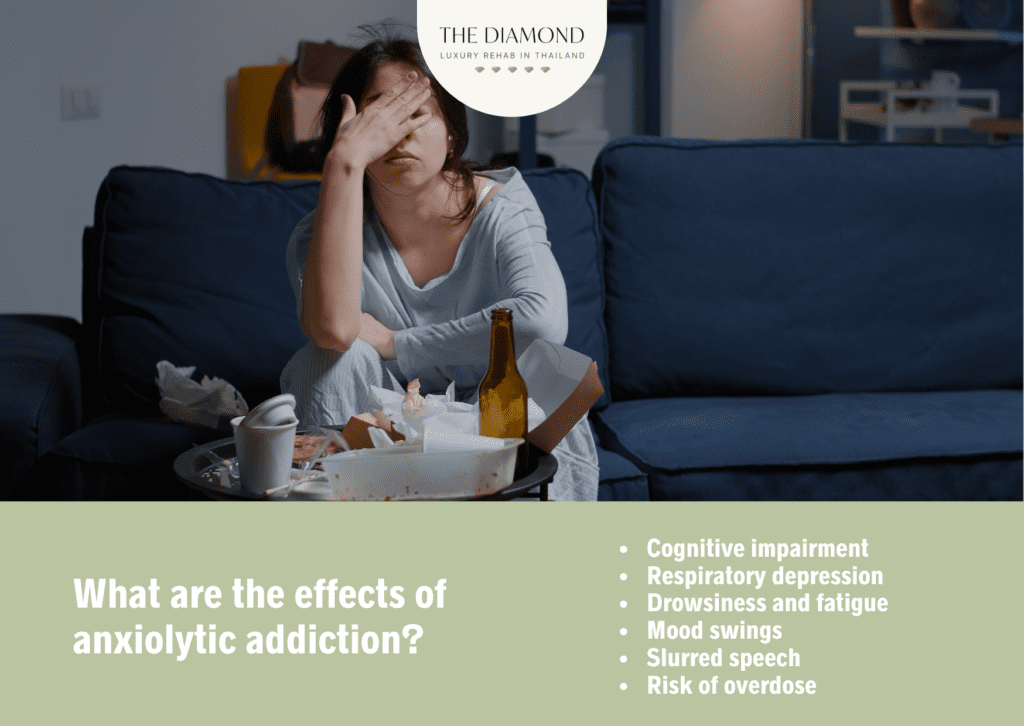
The effects of anxiolytic addiction are listed below.
- Cognitive impairment: Long-term use of anxiolytic medications, particularly benzodiazepines, has been found to cause cognitive impairment. According to a research study “The effects of benzodiazepines on cognition” by Samantha A Stewart published in the Journal of Clinical Psychiatry in 2005, benzodiazepine use is associated with deficits in visuospatial ability, processing speed, and verbal learning.
- Respiratory depression: Respiratory depression is a serious and potentially fatal effect of anxiolytic addiction, particularly when misused or combined with other depressants like opioids or alcohol. It leads to reduced respiratory drive and, in severe cases, respiratory failure.
- Drowsiness and fatigue: Drowsiness and fatigue are common side effects of anxiolytic medications, particularly benzodiazepines. These drugs depress the central nervous system, leading to sedation, reduced alertness, and physical lethargy.
- Mood swings: Mood swings are a common psychological effect of anxiolytic addiction, often caused by fluctuations in drug levels or withdrawal. Individuals experience rapid shifts between emotional states, including irritability, anxiety, and depression, which disrupt relationships and daily functioning.
- Slurred speech: Slurred speech is a symptom of anxiolytic addiction and indicates intoxication or a potentially life-threatening overdose, necessitating urgent medical attention.
- Risk of overdose: Anxiolytic addiction significantly increases the risk of overdose, especially with benzodiazepines. An overdose occurs due to escalating doses to achieve the desired effect or combining anxiolytics with other depressants like alcohol or opioids.
What are the treatment options for anxiolytic addiction?
The treatment options for anxiolytic addiction are listed below.
- Detoxification: Detoxification for anxiolytic addiction treatment involves a structured and medically supervised process that aims to safely manage withdrawal symptoms and support long-term recovery. It begins with a comprehensive assessment of the patient’s drug use history, reliability, and any underlying medical or psychiatric conditions. Stable patients with supportive home environments undergo outpatient detoxification, while individuals with severe addiction or complications are treated in an inpatient setting for closer monitoring. As detailed in the article “Safety and effectiveness of a fixed-dose phenobarbital protocol for inpatient benzodiazepine detoxification” by Sarah Sharfstein Kawasaki et al. published in the Journal of Substance Abuse Treatment in 2012, it is found that a 3-day fixed-dose phenobarbital protocol is a safe and effective method for managing benzodiazepine withdrawal in an inpatient setting. It successfully prevented serious complications like seizures and falls, with sedation being the most frequent but manageable side effect.
- Cognitive behavioral therapy (CBT): CBT is highly effective for anxiolytic addiction treatment, addressing the psychological aspects of dependence. It focuses on identifying and reshaping negative thought and behavior patterns, equipping individuals with healthier coping mechanisms to manage anxiety and triggers without medication. By challenging automatic negative thoughts and adopting alternative strategies like mindfulness and relaxation, patients build confidence in managing anxiety independently. When combined with medical supervision for gradual tapering, CBT reduces relapse rates, enhances self-efficacy, and supports long-term addiction recovery, making it a cornerstone of treatment for anxiolytic addiction.
- Motivational interviewing (MI): MI is a collaborative counseling approach designed to help individuals overcome ambivalence and strengthen their commitment to recovering from anxiolytic addiction. Through techniques such as open-ended questions, reflective listening, and affirmations, MI empowers patients to explore their motivations, identify triggers, and develop healthier coping strategies. By fostering a non-confrontational and empathetic environment in drug rehab, MI enhances self-confidence and builds the patient’s belief in their ability to change. When integrated with cognitive behavioral therapy (CBT), MI increases patient engagement and supports long-term recovery by aligning the treatment process with the patient’s personal values and intrinsic motivations.
- Gradual tapering: Gradual tapering is critical for safely discontinuing anxiolytics, as abrupt cessation leads to withdrawal symptoms such as anxiety, tremors, and insomnia. According to the research article “Pharmacological interventions for benzodiazepine discontinuation in chronic benzodiazepine users” by Lone Baandrup et al. published in the journal The Cochrane Database of Systematic Reviews in 2018, this method involves a slow, individualized dose reduction, typically 10-25% per week to up to 4 weeks customized as per individual’s requirements. Adjunct treatments assist, but tapering remains the primary strategy for successful discontinuation.
- Continuous care and support: Recovery extends beyond rehabilitation, requiring ongoing efforts to maintain sobriety. This includes implementing relapse prevention techniques, engaging in support groups, and continuing therapy as necessary. Regular follow-ups and monitoring are vital to help individuals stay aligned with their recovery goals.
- 12-step programs: For anxiolytic addiction, 12-step programs provide a structured, self-help framework rooted in the methodology developed by Alcoholics Anonymous (AA). Participants work through a sequence of 12 activities designed to promote personal accountability, behavioral change, and sustained recovery. While these programs are not standalone treatments, they serve as valuable adjuncts to formal therapies by fostering a sense of community and shared purpose.
- Support groups: Support groups play a crucial role in anxiolytic addiction recovery by connecting individuals who share similar experiences with dependence and recovery. These peer-led groups provide a non-judgmental environment where members support each other in maintaining abstinence. They teach practical coping skills for managing anxiety and negative emotions without resorting to anxiolytics, offer strategies to navigate daily stressors, and enhance interpersonal communication. The encouragement and shared wisdom within these groups help individuals stay motivated and resilient in their recovery journey.
How can you overcome anxiolytic addiction?
You can overcome anxiolytic addiction with a structured and disciplined plan. Start by recognizing the dependency and understanding the risks of prolonged use, such as tolerance, withdrawal, and psychological dependence. Seek medical guidance to create a personalized treatment plan, including a supervised tapering schedule to avoid the dangers of abrupt cessation. Explore safer alternatives like non-addictive medications and therapies to manage anxiety effectively. Address the underlying causes of anxiety through approaches like cognitive-behavioral therapy (CBT) or counseling, which help build healthier coping mechanisms and reshape anxious thought patterns.
Lifestyle changes play a vital role in recovery. Regular exercise, mindfulness practices, and a balanced diet naturally reduce stress and promote overall well-being. A strong support system of friends, family, or support groups provides encouragement and accountability throughout the process. Consistency and a proactive approach are key to long-term success. With commitment and the right resources, it is possible to overcome anxiolytic addiction and achieve better mental and emotional health.
What are the symptoms of anxiolytic addiction withdrawal?

- Anxiety and anxiety-related symptoms: Withdrawal from benzodiazepines often triggers a resurgence of anxiety and related symptoms. According to the research article “Benzodiazepine Dependence and Its Treatment with Low Dose Flumazenil” by Sean David Hood et al., published in the British Journal of Clinical Pharmacology in 2012, common drug withdrawal effects include heightened anxiety, sweating, panic attacks, muscle spasms, hyperventilation, dysphoria, weight loss, and anorexia. These symptoms, reflecting the body’s overactive response to the drug’s absence, emphasize the importance of gradual tapering and supportive care.
- Tremors: Hand tremors are particularly listed as the common drug withdrawal effect of anxiolytic addiction, as evidenced in the article “The benzodiazepine withdrawal syndrome” by H. Petursson published in the journal Addiction in 1994. These tremors result from rebound hyperexcitability of the central nervous system after discontinuing anxiolytics such as benzodiazepines.
- Rebound insomnia: Rebound insomnia is a significant withdrawal symptom of anxiolytic addiction, particularly associated with benzodiazepines. According to the article “Rebound Insomnia and Rebound Anxiety: A Review” by A. Kales et al. published in the journal Pharmacology in 1983, discontinuation of these medications often leads to rebound insomnia, characterized by worsening sleep difficulties compared to their baseline before medication use. This effect is particularly pronounced with short-acting benzodiazepines, where the abrupt cessation of sedative effects exacerbates withdrawal symptoms. In certain cases, the rebound insomnia extends beyond the initial phase, potentially evolving into chronic and persistent sleep disturbances.
- Gastrointestinal issues: Withdrawal from anxiolytic addiction commonly leads to digestive problems, including nausea, vomiting, diarrhea, and loss of appetite. Benzodiazepine receptors in the gut and chronic hyperventilation, which releases histamine, contribute to these issues.
- Perceptual symptoms: Sensitivity to light (photophobia) and sound (hyperacusis), along with feelings of unsteadiness or dizziness, are common withdrawal symptoms of anxiolytic addiction, as highlighted in the article “Anxiolytic drugs: dependence, addiction and abuse” by Malcolm Lader, published in the journal European Neuropsychopharmacology in 1994.