Sedative addiction: symptoms, causes, effects, and treatment



Sedative addiction, also called sedative use disorder, is a condition marked by compulsive and continued usage despite adverse outcomes. It is typically associated with the abuse of prescription medications like benzodiazepines and sleeping pills for their psychoactive properties.
The symptoms of sedative addiction are loss of control over use; cravings; inability to quit; increased tolerance; and withdrawal symptoms. Other symptoms are using despite adverse consequences; using in hazardous situations; neglecting important activities in favor of drug use; and spending increasing amounts of time on drug-related activities.
The causes of sedative addiction are genetic traits; misuse; self-medication; environmental factors; development of tolerance; development of dependence; and the manifestation of withdrawal symptoms.
The effects of sedative addiction are depression; anxiety; excessive daytime sleepiness; cognitive impairment; impaired coordination and balance; respiratory depression; slurred speech; dizziness; and an elevated risk of overdosing.
The treatment options for sedative addiction are detoxification; inpatient care; outpatient care; behavioral therapy; and aftercare or recovery support groups.
What is sedative addiction?
Sedative addiction is a condition characterized by impaired control over sedative use and continued usage despite its harmful consequences. The condition is clinically referred to as sedative use disorder.
Sedative addiction typically involves drugs with legitimate medical uses, such as benzodiazepines, barbiturates, and medications for insomnia. However, individuals with benzodiazepines addiction or barbiturates addiction tend to misuse these substances for their psychoactive properties, such as inducing euphoria and/or a sense of calm and relaxation.
How common is sedative addiction?
Sedative addiction is common with the highest prevalence witnessed among U.S. young adults aged 18-25 years. Among individuals in this age group, 42.8% of those who used these substances in the previous year also reported misusing the drugs, according to a 2018 article by Schepis et al., published in the journal Addictive Behaviors, titled “Prescription tranquilizer/sedative misuse prevalence and correlates across age cohorts in the US.” In 2020, 3,43,000 individuals aged 12 years or older started abusing prescription sedatives. There are statistical variations in the nature of sedatives misused.
For instance, according to data collected from the National Survey on Drug Use and Health from 2015 to 2019 and reported in a 2023 article by McHugh et al., published in the journal Frontiers in Psychiatry, titled “Prevalence and correlates of the misuse of z-drugs and benzodiazepines in the National Survey on Drug Use and Health,” about 2% of the population misused benzodiazepines in the previous year and less than 0.5% abused Z-drugs.
What are sedatives?
Sedatives are a broad class of prescription medications that slow down the activity of the brain and the spinal cord. Also known as central nervous system (CNS) depressants, sedatives are prescribed for treating anxiety or insomnia. They are controlled substances because of their potential for misuse or abuse, according to a 2015 article by Michael F. Weaver published in the Yale Journal of Biology and Medicine, titled “Prescription Sedative Misuse and Abuse.” These are categorized under schedules II, III, and IV of the Controlled Substances Act. These substances are also known to be habit-forming, a property that makes them prone to abuse. Misuse of prescription sedatives increases the risk of developing sedative addiction and suffering an overdose. Sedatives are alternatively known as tranquilizers or sleeping pills.
What are the common uses of sedatives?
The common uses of sedatives are listed below.
- Treating sleep disorders: Sedatives are prescribed only for a short term with the aim to reduce the time needed to fall asleep and/or prevent early awakening, according to a release by the National Institute of Diabetes and Digestive and Kidney Diseases titled “Sedatives and Hypnotics” from the publication “LiverTox: Clinical and Research Information on Drug-Induced Liver Injury [Internet]” last updated on 20 February 2018.
- Treating anxiety: Sedatives like benzodiazepines are known to be extremely effective in treating anxiety during the short term. However, their efficacy tends to wane with long-term use.
- Managing panic disorders: Benzodiazepines are used with antidepressants to bring about rapid control of panic disorder symptoms. These drugs are known to lessen the severity of panic attacks.
- Easing the symptoms of post-traumatic stress disorder (PTSD): Sedatives have the potential to benefit individuals with PTSD by relieving physical stress and anxiety and inducing a state of relaxation.
- Managing seizures: The U.S. Food and Drug Administration (FDA) has approved the use of benzodiazepine tranquilizers as a short-term treatment to manage all seizures. These medicines are frequently used in emergency settings.
- Treating bipolar disorder: Benzodiazepines are used as a short-term adjunct treatment to manage specific bipolar disorder symptoms like agitation and overactivity.
- Managing muscle spasticity: Diazepam, a sedative belonging to the class benzodiazepine, is effective in reducing muscle spasms caused by inflammation, muscle spasticity, or trauma.
- Inducing sedation: Sedatives are used to induce sedation, ranging from mild sedation to general anesthesia, in patients before they undergo a surgical procedure.
- Easing distress during labor: Sedatives are given to pregnant patients experiencing restlessness or distress during labor.
What are the most common types of sedatives?
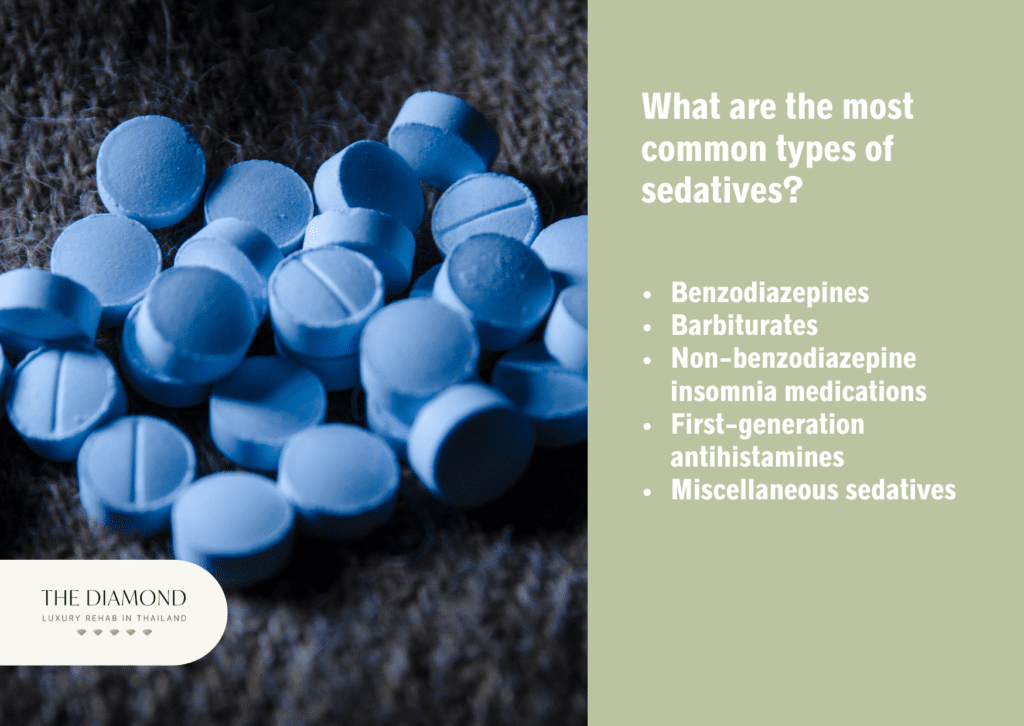
The most common types of sedatives are listed below.
- Benzodiazepines: They are the most widely prescribed sedatives and include drugs like alprazolam (Xanax), diazepam (Valium), chlordiazepoxide (Librium), lorazepam (Ativan), flurazepam (Dalmane), and triazolam (Halcion). They are typically prescribed for insomnia, anxiety disorders, and seizures.
- Barbiturates: Barbiturates induce drowsiness or a feeling of relaxation. They are also known to prevent or stop seizures.Common examples of barbiturates are butalbital (Fiorinal or Fioricet), phenobarbital (Luminal Sodium, Tedral, Solfoton), amobarbital (Amytal Sodium), pentobarbital (Nembutal), and methohexital (Brevital).
- Non-benzodiazepine insomnia medications: These are also known as “Z-drugs.” They are selective benzodiazepine receptor subtype agonists that work as allosteric GABAA receptor modulators that bind the benzodiazepine receptor site. They have hypnotic properties and are usually prescribed for sleep disorders. These drugs work like benzodiazepines but have fewer side effects and significantly less dependence potential. Common examples of these drugs are eszopiclone (Lunesta), zaleplon (Sonata), and zolpidem (Ambien).
- First-generation antihistamines: These drugs have sedating effects and are useful for treating mild sleep disorders. They are available for purchase without a prescription and include drugs like diphenhydramine (Benadryl), dimenhydrinate (Dramamine), and brompheniramine (Dimetapp).
- Miscellaneous sedatives: Melatonin and its analogues (Ramelteon), agents like Suvorexant, and prescription medications like oxycodone (OxyContin), morphine (Roxanol), baclofen (Lioresal), gamma-hydroxybutyrate (Xyrem), amitriptyline (Elavil), and olanzapine (Zyprexa) have sedative properties but work differently than other sedatives and do not fit into the above-mentioned categories. General anesthetics, opioids, alcohol, anti-depressants, muscle relaxants, and antipsychotics have sedating properties.
How do sedatives work?
Sedatives work by disrupting communication between specific neurons in the brain. These substances increase the activity of gamma-aminobutyric acid (GABA), an inhibitory neurotransmitter that slows down electrical activity in the brain. The result is a slowing down of brain activity in general, which manifests as effects like drowsiness and a sense of calm.
What is the difference between sedatives and hypnotics?
The differences between sedatives and hypnotics stem from their intended use and the effects they produce on the body. Sedatives are prescribed primarily to patients with anxiety and panic disorders to induce a state of calm. On the other hand, hypnotics are prescribed for patients with insomnia to induce drowsiness and promote and maintain a state of sleep similar to natural sleep. However, sedatives taken in high doses cause sleep. Specific classes of drugs like benzodiazepines have both sedative and hypnotic properties depending on the medication used and its dosage.
Both sedatives and hypnotics are addictive. Individuals use these drugs to achieve intoxication and euphoria. Sedative use disorder and hypnotic addiction are caused by long-term use or misuse of these substances.
What is the difference between sedatives and anxiolytics?
The difference between sedatives and anxiolytics stems from their intended use. Anxiolytics are a class of drugs mainly prescribed to treat panic disorders and generalized anxiety. Sedatives are prescribed to treat a broader range of disorders, from anxiety and panic disorders to insomnia.
Both sedatives and anxiolytics have the potential for misuse and abuse, which increases the risk of dependency, tolerance, and addiction. The most common drug implicated in anxiolytic addiction is the benzodiazepine class of medications.
Why are sedatives addictive?
Sedatives are addictive because they impair the normal functioning of the brain’s reward circuit. The reward pathways of the brain have evolved to reinforce pleasurable or rewarding activities. Multiple sedatives induce euphoria that users find pleasurable. In response, the reward pathways release dopamine which, in turn, creates a feeling of satisfaction. This feeling motivates future and repeated drug use. With repeated exposure to a drug, the brain becomes less sensitive to its effects and requires more of it to experience the earlier level of pleasure or “high.” The altered functioning of the reward circuitry also reduces the response to rewards and decreases motivation for actions that are not drug-related alongside impairing self-regulation. This induces compulsive drug use even in the face of adverse outcomes.
Additionally, all sedatives are able to cause physiological and/or psychological dependence if taken for extended periods, even in therapeutic doses. Dependence drives compulsive drug-taking behaviors.
What are the symptoms of sedative addiction?
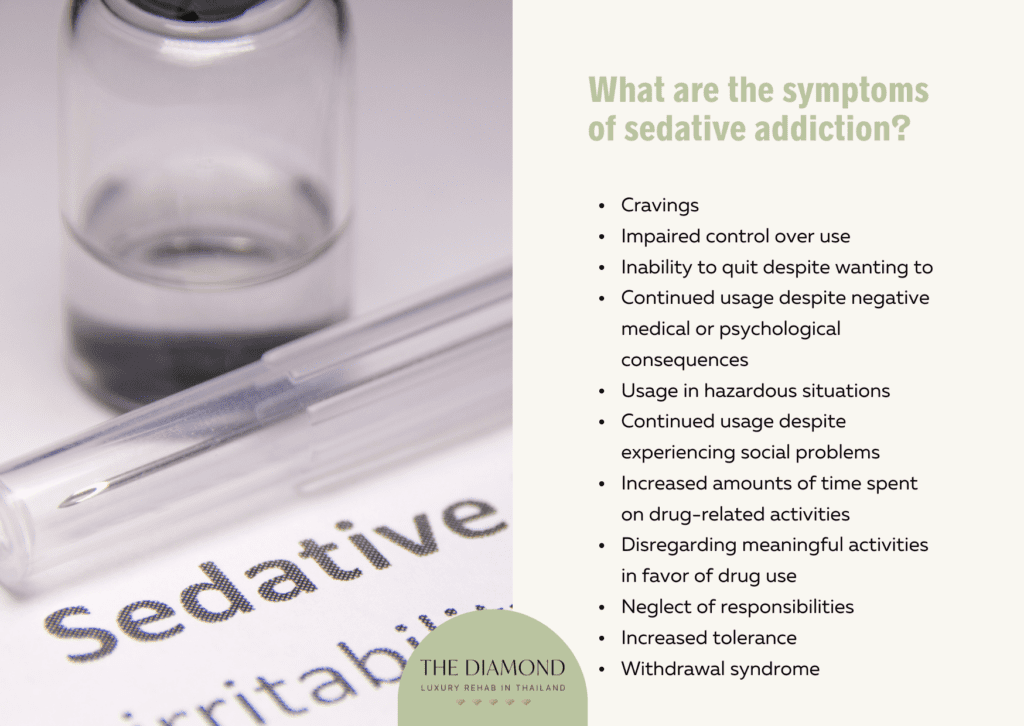
The symptoms of sedative addiction are listed below.
- Cravings: Craving is a strong desire or powerful urge to use a substance and is a common feature of addiction. This feeling is intense enough to block out other thoughts.
- Impaired control over use: Impaired control manifests as using the sedative in excessive amounts, more frequently, or for longer than what was originally intended for by the prescriber. Typical behaviors exhibited by the user include escalating doses and requesting early prescription refills, according to a 2015 article by Michael F. Weaver published in the Yale Journal of Biology and Medicine, titled “Prescription Sedative Misuse and Abuse.”
- Inability to quit despite wanting to: The user is unable to quit or cut down using a sedative despite wanting to and/or after multiple attempts.
- Continued usage despite negative medical or psychological consequences: Individuals with sedative addiction are likely to continue using the substance despite being aware of the physiological and mental health problems that the drug is triggering or aggravating.
- Usage in hazardous situations: There is a tendency to use sedatives in physically hazardous situations, such as when driving a vehicle or operating heavy machinery, thereby increasing the risk of harming oneself or others.
- Continued usage despite experiencing social problems: There is a tendency to continue using a sedative despite experiencing persistent or recurrent interpersonal or social problems caused or exacerbated by substance use. Common instances of these problems are relationship distress or dissatisfaction; family breakup due to separation, divorce, or children being taken away from home and placed under foster care; and financial troubles caused by excessive expenditure on substances, job loss, or reliance on welfare.
- Increased amounts of time spent on drug-related activities: Individuals with sedative addiction tend to spend increasing amounts of time seeking, consuming, and recovering from the effects of the substance.
- Disregarding meaningful activities in favor of drug use: Individuals with sedative addiction give up or reduce participation in meaningful social, recreational, and/or occupational activities in favor of drug-related activities.
- Neglect of responsibilities: Increasing preoccupation with and increased amounts of time spent on drug-related activities make individuals neglect their responsibilities at home, work, or school.
- Increased tolerance: Increased tolerance is characterized by needing more of the sedative to experience the desired level of “high” or feeling the effects of the substance to a lesser degree at the same dose.
- Withdrawal syndrome: Uncomfortable withdrawal symptoms manifest when the sedative is stopped or its usage reduced compelling individuals to continue taking the drug to avoid the distress of withdrawal.
What are the causes of sedative addiction?
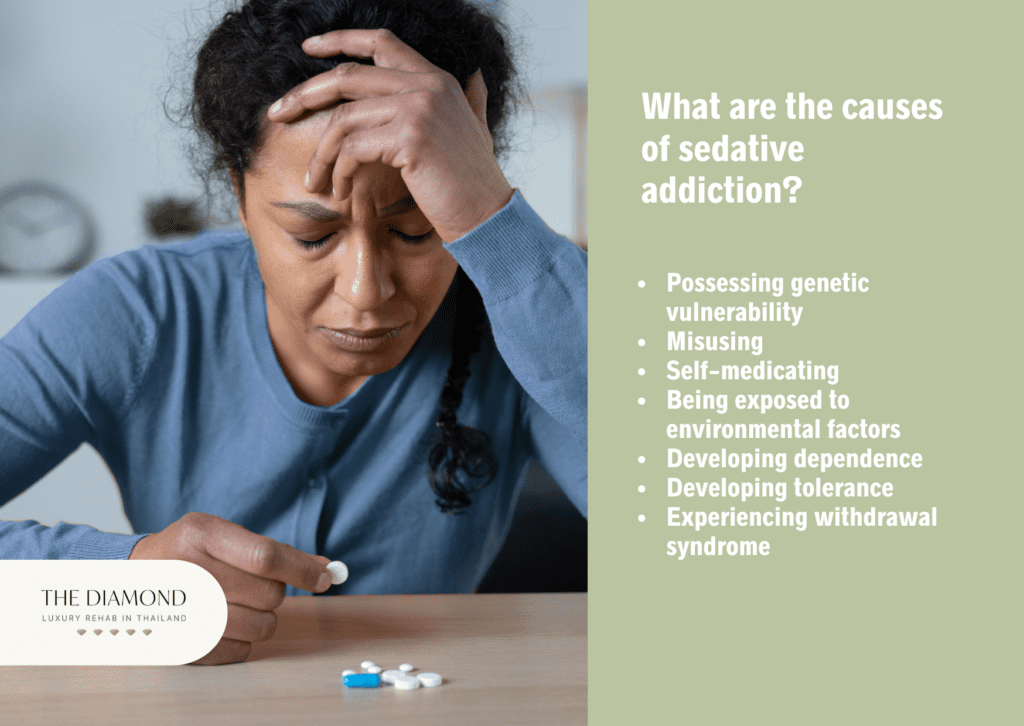
The causes of sedative addiction are listed below.
- Possessing genetic vulnerability: In the presence of risk factors like early-life trauma and environmental stimuli, genes contribute to about 50% of the risk of developing an addiction to all substances of abuse.
- Misusing: Misuse refers to taking a medication in a way or dose that has not been authorized by the prescriber or taking it to get a “high.” According to the National Institute on Drug Abuse (NIDA) in their October 2011 publication titled “Misuse of Prescription Drugs Research Report: Overview,” CNS depressants like sedatives are one of the most commonly misused prescription drugs. Prolonged misuse of addictive substances is known to trigger the development of addiction.
- Self-medicating: The act of misusing sedatives is triggered by the feeling of needing to self-medicate or chemically cope with psychological symptoms like intense emotional stress or pain, according to a 2015 article by Michael F. Weaver published in the Yale Journal of Biology and Medicine, titled “Prescription Sedative Misuse and Abuse.” Individuals who have been prescribed sedatives for panic attacks are known to use the drugs to derive other benefits, such as alleviating stress when faced with negative life circumstances.
- Being exposed to environmental factors: Living in an environment where sedative misuse is prevalent increases the likelihood of a vulnerable individual also misusing it. A common instance is when an individual who has been prescribed sedatives shares their medications with a family member with insomnia to help the latter avoid the cost of visiting a healthcare practitioner and/or procuring prescription medicine. Living in such an environment also exposes individuals to drugs and increases the likelihood of at-risk individuals abusing them. Scientific literature suggests that both peer pressure and parental influence, such as the quality of parent/child attachment and parental modeling of substance abuse, are critical environmental factors that contribute to the development of addiction.
- Developing dependence: Developing dependence on a sedative is one of the most significant causes of addiction. Dependence on a substance of abuse, either physical or psychological, is known to fuel compulsive drug-use behaviors that eventually lead to the development of addiction.
- Developing tolerance: Increased tolerance compels an individual to take higher doses of a substance to experience their desired level of euphoria, thereby making them more likely to become addicted.
- Experiencing withdrawal syndrome: Attempting to cope with withdrawal symptoms is an exhaustive and stressful process that compels individuals to resume using drugs. Individuals are also known to continue using drugs of abuse just to avoid experiencing the negative effects of withdrawal.
How does sedative addiction develop?
Sedative addiction develops due to a vulnerable individual building tolerance to the effects of the drug and developing dependence. The neurobiological and chemical changes caused by prolonged sedative use and/or misuse cause the brain to adapt and become sensitive to the effects of the drug. The individual needs more of the drug to feel the earlier degree of euphoria. Sedatives are also known to cause dependence even in therapeutic doses.
Dependence manifests as uncomfortable withdrawal symptoms upon stopping or reducing drug use. So, individuals with sedative addiction find themselves compelled to carry on taking the drugs just to avoid the discomfort of withdrawal.
What are the risk factors for sedative addiction?
The risk factors for sedative addiction are listed below.
- Prolonged use: Sedatives like benzodiazepines have a high risk of causing tolerance, dependence, or addiction, according to NIDA’s research report titled “Prescription Drug Abuse” last revised in October 2011. It is estimated that 40% of all individuals who take benzodiazepines for longer than six months experience moderate to severe withdrawal symptoms. Older adults over 64 years of age are particularly vulnerable to developing dependence on tranquilizers prescribed to them for insomnia or anxiety, according to a 2015 article by Michael F. Weaver published in the Yale Journal of Biology and Medicine, titled “Prescription Sedative Misuse and Abuse.”
- History of a substance use disorder (SUD): Patients with a history of SUD have an increased risk of abusing sedatives (Weaver, 2015).
- Presence of a psychiatric disorder: It has been found that in specific sections of the population, the presence of a mental health disorder triggers the development of a substance use disorder. This phenomenon is explained by the self-medication hypothesis and is one of the most potent risk factors for addiction.
- Easy access: The greater availability of and easy access to medications like sedatives is a reason for the high prevalence of prescription drug abuse (NIDA, 2011).
How can sedative addiction be prevented?
Sedative addiction can be prevented by ensuring there is strict adherence to dosage instructions and adopting alternate strategies to improve sleep that do not involve the use of prescription sedatives. Users of prescription sleeping pills must never take their medicines in doses more than what was prescribed. It is essential to safely dispose of unused medication at the end of the treatment period, either through a community drug take-back scheme or a pharmacy mail-back program. Getting psychological or therapeutic support, such as behavioral therapy, has the potential to help individuals with sedative dependence stop using the substance, thereby stopping a problematic use pattern from developing into a full-blown addiction.
Alternative ways to improve sleep quality and duration without taking sedatives include making lifestyle modifications, taking supplements known to enhance sleep, and undergoing complementary therapies. Practicing good sleep hygiene, exercising regularly, and eating a healthy and nutritious diet are believed to enhance the quality of sleep. Supplements like magnesium, passionflower, melatonin, and valerian root are believed to improve sleep duration and quality. Complementary and alternative therapies like aromatherapy have been shown to have significant positive effects on the clinical symptoms of insomnia.
What are the effects of sedative addiction?
The effects of sedative addiction are listed below.
- Cognitive decline: Cognitive decline manifests as impaired memory, difficulty in focusing and concentrating, impaired judgment, slowed reaction times, impaired ability to determine depth and distance, and confusion or brain fog. Difficulty in learning is also observed during the period a sedative is present in the body.
- Depression: Depression is a common effect of long-term benzodiazepine use. Benzodiazepines decrease the activity of the neurotransmitter serotonin. It is believed that an imbalance in the level of serotonin affects mood in a way that produces depressive feelings.In severe cases, depression is known to trigger suicidal ideation that requires medical and/or psychological attention.
- Anxiety: The imbalance in the serotonin level caused by sedative abuse is known to trigger symptoms like anxiety, panic, and excessive anger.
- Poor coordination and balance: The individual feels unsteady after getting up from a seated position and has a tendency to fall over. Poor muscle coordination also results in decreased dexterity that hinders activities like driving a vehicle or operating machinery.
- Slurred speech: This is a sign of intoxication and a potentially dangerous overdosing situation that requires immediate treatment.
- Dizziness: Dizziness has been reported in users taking benzodiazepines with powerful anticonvulsant properties.
- Respiratory depression: All sedatives are CNS depressants and hence induce respiratory depression in a dose-dependent manner. Respiratory depression has the potential to be fatal if it involves sedatives mixed with CNS depressants like other tranquilizers, alcohol, cold medications, and opiates.
- Daytime drowsiness: Sedatives like benzodiazepines and barbiturates are associated with excessive daytime sleepiness.
- Increased risk of overdosing: Compulsive drug-use behavior or loss of control over drug usage increases the risk of overdosing.
What are the treatment options for sedative addiction?
The treatment options for sedative addiction are listed below.
- Detoxification: Detoxification or withdrawal management involves tapering off from the sedative over the course of several days, ideally under medical monitoring. In cases of severe sedative addiction, the patient foregoes tapering off of the sedative they had been abusing and is instead, administered a benzodiazepine with a long half-life to manage serious withdrawal symptoms like seizures and rebound agitation.
- Inpatient care: Inpatient care for sedative addiction entails round-the-clock intensive medical care and monitoring at a hospital or a specialized residential facility where the patient has to stay. This level of care is advised for individuals with severe addiction, co-occurring mental health disorders, and/or complex medical conditions. Inpatient care is highly structured and incorporates daily individual or group therapy sessions and scheduled recreational activities.
- Outpatient care: Outpatient facilities deliver addiction treatment at different levels of intensity depending on the needs and convenience of the patient without them requiring to stay overnight at the facility. The treatment modalities offered include medical and clinical support needed to manage complex physiological and psychiatric problems and individual, family, and group counseling sessions to promote behavioral changes and/or provide instructions on healthy coping skills and relapse prevention. Less rigorous outpatient programs link patients to more intensive services or those that provide increased levels of monitoring.
- Behavioral therapy: Cognitive behavioral therapy (CBT) for insomnia, also referred to as CBT-I, has been found to be equally effective as sedatives with no reports of adverse side effects, fewer instances of relapse, and maintenance of positive effects long after treatment has terminated. The efficacy of CBT-I is enhanced if it is delivered alongside other interventions like mindfulness meditation, deep breathing, nighttime grounding/relaxation exercises, and progressive muscle relaxation.
- Aftercare or recovery support groups: Addiction is a chronic relapsing disease. So, ongoing support is necessary after completing formal drug rehab and during recovery to prevent relapsing. These services include sober living services, addiction recovery coaching, self-help support groups like the Pills Anonymous modeled on the 12-Step program, and individual counseling.
How do you overcome sedative addiction?
To overcome sedative addiction, seek professional addiction treatment. Sedative withdrawal is distressing, and the discomfort experienced during this phase is likely to trigger a relapse. So, do not attempt to quit the drugs abruptly or taper. Seek behavioral therapy for any mental health disorder that is triggering symptoms like anxiety and panic that necessitate the use of sedatives.
What are the symptoms of sedative addiction withdrawal?
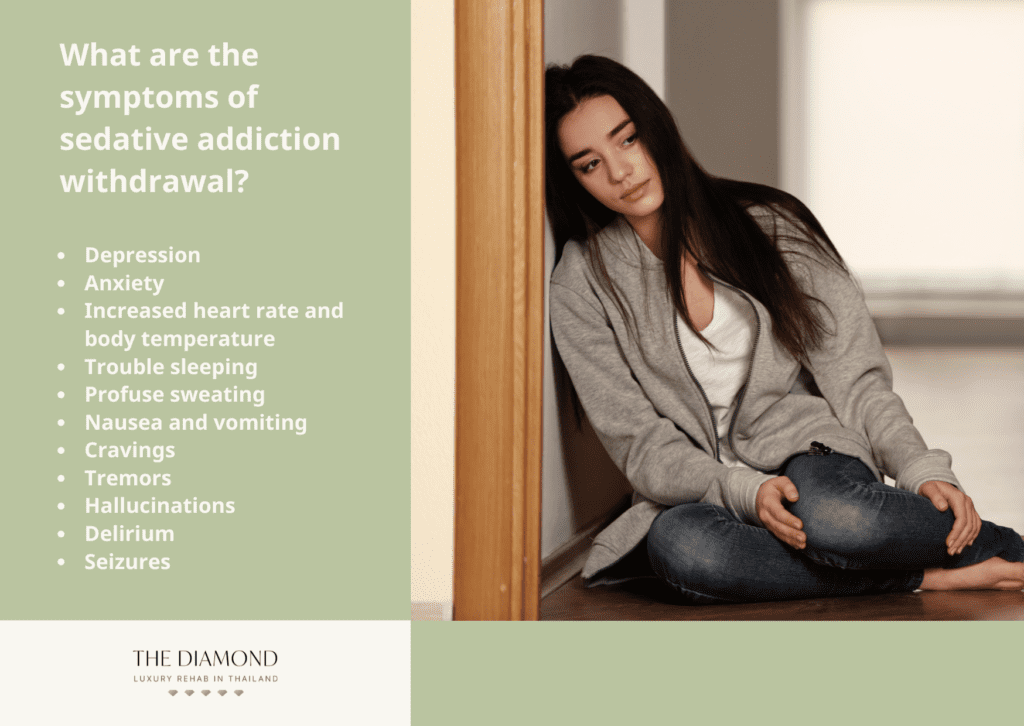
The symptoms of sedative addiction withdrawal are listed below.
- Depression: Depression caused by withdrawal from benzodiazepines has the possibility of progressing to major depressive disorder, which includes the risk of suicide. Suicidal thoughts require treatment with antidepressant drugs and/or psychotherapy.
- Anxiety: Anxiety experienced during the early withdrawal phase of benzodiazepines is likely a rebound effect, which is a re-emergence of a symptom for which the drug had been originally prescribed. Panic attacks are also a common symptom of sedative withdrawal.
- Increased heart rate and body temperature: These symptoms are serious and typically associated with individuals who have been taking Z-drugs in supratherapeutic doses.
- Trouble sleeping: This is likely to be a rebound effect, which manifests within 1-4 days of stopping the use of benzodiazepines. It is possible for insomnia to linger after the acute withdrawal phase, especially in individuals who used the drug for extended periods.
- Profuse sweating: Profuse sweating is a common symptom during the early phase of withdrawing from benzodiazepines. Although uncomfortable, it is not a severe symptom and its intensity reduces with time.
- Nausea and vomiting: These symptoms manifest during the acute withdrawal phase that begins a few days after quitting benzodiazepines.
- Cravings: Cravings are a common psychological manifestation of drug withdrawal. If not managed appropriately, they are known to trigger a relapse. CBT and other behavioral therapies teach coping skills to deal with cravings.
- Tremors: Tremors are acute withdrawal symptoms. They manifest as uncontrollable shaking of one or both hands.
- Hallucinations: Hallucinations are a severe symptom of abrupt or rapid sedative withdrawal. However, these symptoms are rare with slow taper. Hallucinations are typically visual, although auditory, tactile, and olfactory hallucinations are also known to occur.
- Delirium: The risk of the development of delirium during withdrawal from benzodiazepines is high among older adults.It is fatal if left untreated.
- Seizures: Withdrawal seizures are commonly seen in individuals who have been taking sedatives for extended periods and at high doses. However, there are also reports of seizures occurring after less than 15 days of use and at therapeutic doses, according to a 2011 article by Xiaohong Hu published in The Journal of the Oklahoma State Medical Association, titled “Benzodiazepine withdrawal seizures and management.” The seizures, mostly grand mal seizures, ranged from lone episodes to coma and death.