

Schizophreniform disorder: definition, causes, symptoms, and treatments


Table of content
- What is schizophreniform disorder?
- What are the causes of schizophreniform disorder?
- What are the symptoms of schizophreniform disorder?
- What are the treatments for schizophreniform disorder?

Schizophreniform disorder is a type of psychotic disorder indicated by symptoms of psychosis lasting from one to six months. The condition is similar to schizophrenia, but it’s not a lifelong mental disease.
The causes of schizophreniform disorder are a combination of genetics, environment, and abnormalities in brain structure and function. People are more likely to develop this disorder if they abuse mind-altering drugs.
Symptoms of schizophreniform disorder include hallucinations, delusions, disorganized speech, odd behavior, lack of energy, poor hygiene, lack of interest, and social withdrawal.
Treatment of schizophreniform disorder includes psychotherapy and medications. Patients are able to achieve full recovery when they adhere to the recommended treatment program.
What is schizophreniform disorder?

Schizophreniform disorder is a short-term psychiatric illness characterized by symptoms of schizophrenia for at least a month and not longer than six months. Like schizophrenia, it belongs to a group of psychotic disorders in the Diagnostic and Statistical Manual of Mental Disorders, fifth edition (DSM-5) by the American Psychiatric Association.
The main feature of psychotic disorders, including schizophreniform disorder, is psychosis, indicated by delusions and hallucinations. Schizophreniform disorder is considered a placeholder for a schizophrenia diagnosis. If the symptoms don’t resolve within six months, a doctor diagnoses schizophrenia. That explains why the two disorders have identical symptoms. Their only difference is duration.
In 1939, a Norwegian psychiatrist Gabriel Langfeldt introduced the concept of schizophreniform disorder. He distinguished the difference between this disorder and typical schizophrenia on the basis of outcome. Langfeldt described that although symptoms of the two conditions are the same, people with schizophreniform disorder had significantly better outcomes.
Over the years, understanding of schizophreniform disorder improved and psychiatrists even described it as one of the unusual instances of affective disorders displaying symptoms similar to schizophrenia, a 2003 paper by Naz et al., in Schizophrenia Research reported.
How common is schizophreniform disorder?
Schizophreniform disorder is relatively uncommon, as primary schizophreniform disorders have been found to affect 0.4% to 1% of the general population, as per an article written by A.M. Kanner and A.R. Balabanov for the book, “Encyclopedia of the Neurological Sciences (Second Edition) published in 2014 by the Academic Press.
On the other hand, the 18th chapter of the book, “Foundations of the Mind, Brain, and Behavioral Relationships: Understanding Physiological Psychology” published in 2023 by the Academic Press stated that globally, the incidence of schizophreniform disorder is approximately one in every 1,000 individuals.
The prevalence of schizophreniform disorder in children, adolescents, and the elderly is unknown. There is no significant difference in terms of the prevalence of this disorder among men and women.
The only difference is the age of onset. Men tend to develop symptoms of schizophreniform disorder at a younger age, between 18 and 24 years. On the other hand, women usually develop symptoms between 24 and 35 years of age.
What are the causes of schizophreniform disorder?
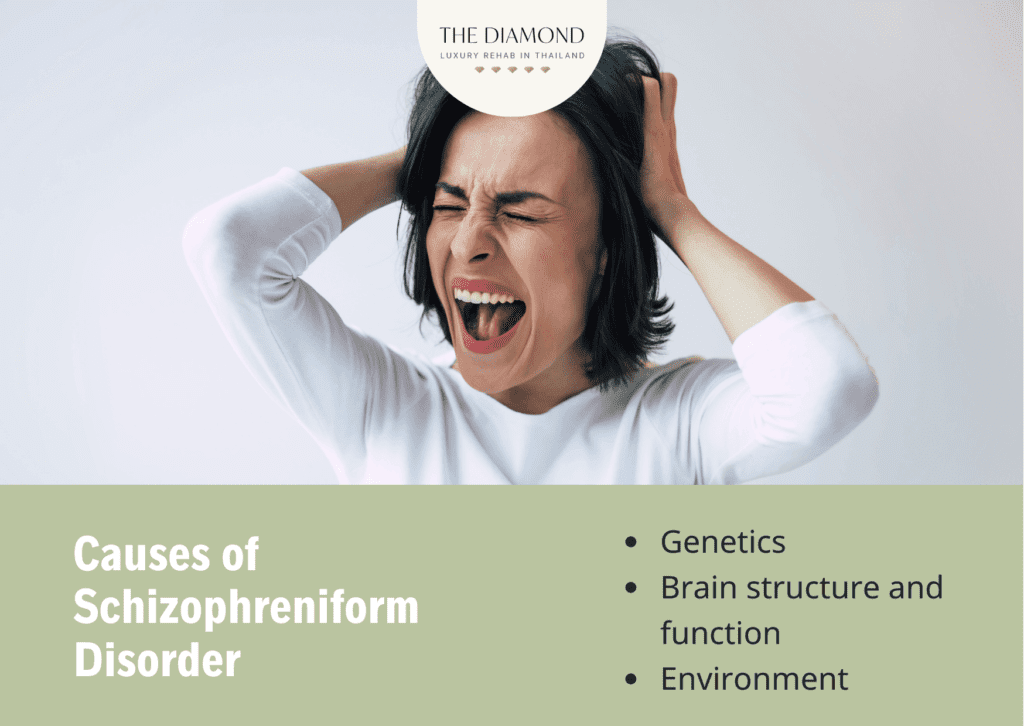
Causes of schizophreniform disorder are complex and multifaceted. The potential causes of schizophreniform disorder are listed below.
- Genetics
- Brain structure and function
- Environment
1. Genetics
Genetics refers to the presence of genetic predisposition in the development of the schizophreniform disorder. The National Institute of Mental Health, in its article titled, “Looking at My Genes: What Can They Tell Me About My Mental Health?” last revised in 2020, reported that there is a familial predilection for certain mental disorders. Specific genes and gene variations make a person more susceptible to developing mental health conditions.
This is particularly the case for close relatives such as parents and siblings. More specifically, an individual is more likely to develop mental health problems such as schizophreniform disorder if their siblings or parents have it too.
At the same time, a paper by Daniel H. Geschwind and Jonathan Flint published in the September 2015 issue of the journal Science confirmed the association between genetic variants that are linked to the development of several mental health disorders, including schizophrenia, major depression, bipolar disorder, and autism spectrum disorder (ASD).
At this point, it’s unclear why certain people have gene variations that make them more prone to developing mental health problems, such as schizophreniform disorder. However, it’s unlikely that genetics or heredity is the sole cause of schizophreniform disorder. More precisely, a combination of genetics and other factors is possibly the main culprit.
2. Brain structure and function
Brain structure and function refer to abnormalities and imbalances in different brain regions and neurotransmitters that contribute to the development of schizophreniform disorder.
Psychotic disorders such as schizophrenia and schizophreniform disorder are strongly associated with brain abnormalities such as reduced gray matter volume of medial temporal, superior, and prefrontal areas. These regions of the brain are involved in episodic memory, processing of auditory information, short-term memory, and decision-making.
Structural brain abnormalities in people with this disorder are progressive i.e., tend to worsen over time. Additionally, psychotic disorders such as schizophreniform disorder are linked to impaired neural connectivity.
More precisely, disrupted communication between different brain areas contributes to the development of symptoms, according to a 2010 paper by Karlsgodt et al., in Current Directions in Psychological Science.
Changes in levels of dopamine and serotonin play a role in the development of schizophreniform disorder, as well. The reason these changes in the brain happen is unclear. However, abnormalities in the structure and function of the brain make a person more susceptible to developing this disorder.
3. Environment
The environment refers to social life, family life, and other external factors that contribute to the onset of schizophreniform disorder symptoms.
Poor social interactions and major stress or traumatic events are among the environmental causes of this disorder. Failing to cope with or process trauma properly changes the way a person perceives reality, which ultimately leads to psychotic symptoms.
Other environmental factors include complications in pregnancy and labor. Low birth weight, malnutrition, and preeclampsia in the mother during pregnancy contribute to the onset of schizophreniform disorder. It’s unclear how it happens, but these complications affect brain structure and function.
What are the symptoms of schizophreniform disorder?

Symptoms of schizophreniform disorder are similar to those of schizophrenia. The most common symptoms of schizophreniform disorder are listed below.
- Hallucinations
- Delusions
- Disorganized speech
- Odd or strange behavior
- Lack of energy
- Poor hygiene and grooming habits
- Loss of interest or pleasure in life
- Withdrawal from family, friends, and social activities
1. Hallucinations
Hallucinations are perceptions of nonexistent objects or events and sensory experiences that aren’t produced by stimulation of the sensory organs. People with hallucinations hear, see, or feel things that aren’t there.
In most cases, people with schizophreniform disorder experience auditory hallucinations (hearing voices), but most of them have visual hallucinations. Generally speaking, hallucinations involve any of the five senses.
Physical effects of hallucinations usually include problems with vision or hearing. Other effects such as weight gain and a higher risk of health problems linked to it are indirect and stem from a lack of hygiene and care for one’s health.
Behavioral effects of hallucinations include social isolation, aggressiveness (rarely), and problematic relationships with other people as a person feels misunderstood and unsafe.
2. Delusions
Delusions are clearly false beliefs in something that isn’t true. A person with delusions believes someone wants to harm them, even though they have no evidence to prove it. There are different kinds of delusions or false beliefs. For example, they tend to believe they’re superior to someone or that their partner is being unfaithful.
Delusion is not the same as a hallucination. The latter is a false sensory experience whereas delusion is a false belief.
The physical effects of delusions are the same as those of hallucinations such as lack of self-care and proper hygiene and weight gain. Behavioral effects range from social withdrawal to accusatory and argumentative behaviors, being frustrated and overwhelmed, and making bizarre choices and decisions. This leads to problems at work or school due to low productivity and difficulty functioning with colleagues or coworkers.
3. Disorganized speech
Disorganized speech refers to communication that is difficult to understand. People with this symptom experience difficulty concentrating and maintaining their train of thought, which affects the way they speak.
This symptom doesn’t have specific physical effects other than those linked to stress. Problems with communication tend to be stressful. Unresolved stress jeopardizes sleep and energy levels.
Behavioral effects of disorganized speech include speaking incoherently, responding to questions with unrelated answers, changing topics quickly, and saying illogical things. These behaviors lead to arguments with others and social isolation.
4. Odd or strange behavior
Odd or strange behaviors are actions that are inconsistent with a person’s typical behavioral pattern. This symptom doesn’t have physical effects because it affects behavior primarily.
Behavioral effects of this symptom of the schizophreniform disorder include walking in circles, writing constantly, pacing, talking to oneself, smiling or laughing for no apparent reason, and lack of impulse control. The erratic or bizarre behaviors often lead to dysfunctional relationships.
5. Lack of energy
Lack of energy or fatigue is a feeling of weariness or tiredness that doesn’t go away with rest. Physical effects of this symptom include chronic sleepiness, headaches, dizziness, weight gain due to a sedentary lifestyle, muscle weakness, and a weak immune system.
Behavioral effects of lack of energy include moodiness, irritability, problems at work or school due to low productivity and impaired performance, and making questionable decisions due to reduced decision-making abilities.
6. Poor hygiene and grooming habits
Poor hygiene and grooming habits refer to bad or inconsistent self-care that leads to health concerns and a messy appearance. People with schizophreniform disorder tend to neglect their hygiene, which is easily noticeable by others.
Physical effects of poor hygiene and grooming habits include gum disease, tooth decay, a faster aging process, and a higher risk of infections and diseases caused by bacteria and parasites.
Behavioral effects of this symptom include defensiveness when others bring up the issue, social withdrawal, irritability, and jeopardizing relationships or living arrangements.
7. Loss of interest or pleasure in life
Loss of interest or pleasure in life is self-explanatory; a person loses interest in activities they once enjoyed. In fact, they lose the ability to feel pleasure and satisfaction as well.
Physical effects of this symptom include changes in appetite and weight, increased risk of diabetes and heart disease due to being overweight/obese, low energy levels, and poor quality of sleep.
Behavioral effects of loss of interest are mainly associated with social isolation, reactions that affect relationship dynamics, irritability due to impaired concentration, and poor performance at work.
8. Withdrawal from family, friends, and social activities
Social withdrawal refers to avoiding people as well as interactions and social activities that include communicating with larger groups. People with social withdrawal isolate themselves entirely and are reluctant to talk to almost anyone, including family and friends.
Physical effects of social withdrawal include poor quality of sleep, appetite changes, impaired cognitive functioning, weight gain, weakened immune system, and a higher risk of diabetes and heart disease.
Behavioral effects of social withdrawal include fear of rejection, low self-esteem, going to extra lengths to avoid people, and becoming irritable and moody.
Who is affected by schizophreniform disorder?
Men and women alike are affected by schizophreniform disorder, just the age of onset differs. Men develop symptoms at a younger age than women. Women tend to develop schizophreniform disorder between the ages of 24 and 35.
Generally speaking, people with a personal or family history of schizophrenia and other psychotic disorders are affected by this mental illness. The illness additionally affects people who have experienced trauma in life and haven’t processed it in a healthy manner. The disorder affects persons who abuse psychoactive substances such as cannabis as well.
What are the risk factors for schizophreniform disorder?

Risk factors for schizophreniform disorder potentially increase the likelihood of developing the condition. The most common risk factors for schizophreniform disorder are listed below.
- Family history of psychotic disorders (e.g., schizophrenia) and other mental disorders
- Personal history of mental health problems
- Experiencing trauma or major life stress
- Being young adult
- Changing residence in childhood from rural to urban
- Winter or spring birth
- Substance abuse, especially mind-altering drugs
- Exposure to harmful toxins in the womb
- Unhealthy relationships
How is schizophreniform disorder diagnosed?
Schizophreniform disorder is diagnosed after physical and psychiatric evaluation. A healthcare provider first performs a complete physical exam to determine whether a specific health problem is the cause of symptoms. Physical exam includes a blood test, urine test, and imaging tests such as MRIs. Another purpose of the blood test is to show whether a person has been using drugs.
If a physical exam shows no sign of a medical problem, a patient is referred to a psychiatrist who performs a psychiatric evaluation. The psychiatric evaluation aims to get a detailed insight into the symptoms, behaviors, and mental health of an individual. The psychiatrist asks a series of questions or a patient completes a questionnaire. For the psychiatric evaluation, the psychiatrist interviews the patient’s family members as well.
In order to establish an accurate diagnosis, the psychiatrist uses DSM-5 to ensure the patient meets the diagnostic criteria for a schizophreniform disorder. The diagnosis is made when a patient experiences schizophreniform disorder symptoms for one to six months.
How to prevent schizophreniform disorder?
It’s unclear how to prevent schizophreniform disorder. Scientific evidence regarding the causes of this disorder is still scarce and limited. Since knowledge about underlying mechanisms is unclear, there is no sure way to prevent the development of this mental condition.
However, it’s possible to lower the risk of schizophreniform disorder by staying away from alcohol and drugs. In addition, it is important to maintain a social life and find a healthy way to cope with past trauma.
Therapy is a good approach for persons who have experienced traumatic events. Make sure to manage stress properly because it weakens the mental health of a person and makes them more vulnerable to problems.
What are the treatments for schizophreniform disorder?

Treatments for schizophreniform disorder are designed to control symptoms and enhance general functioning. The treatments for schizophreniform disorder are listed below.
- Medications: Upon diagnosing schizophreniform disorder, a healthcare professional prescribes antipsychotic medications. The first-generation antipsychotics work by inhibiting dopaminergic neurotransmission i.e. they block dopamine receptors in the brain. Doing so, the medications decrease the flow of messages and thereby reduce psychotic symptoms. These drugs help calm and clear confusion in a matter of hours or days, but it takes four to six weeks for antipsychotics to exhibit their full effect.
- Psychotherapy: The main objective is to help patients learn about their condition and cope with symptoms in a healthy way. Therapy helps manage feelings and distress linked to symptoms. At the same time, patients learn to challenge thoughts that are not based on reality. The most common psychotherapy approach is cognitive-behavioral therapy (CBT), which focuses on identifying negative or faulty thinking patterns to replace them with more realistic alternatives. This type of therapy is based on the notion that thoughts have a major impact on our moods and behavior. During therapy sessions, patients learn skills that improve their daily functioning. Even though schizophreniform disorder’s symptoms are temporary, it’s a good idea to go to therapy for about 12 months to get the best results. The ideal number of sessions varies from one patient to another. Therapies are usually performed in a one-on-one setting, but group therapy is just as beneficial.
Do schizophreniform disorders have a cure?
Yes, schizophreniform disorders have a cure i.e., patients recover from symptoms of this mental illness within six months. Unlike other psychotic disorders, symptoms of the schizophreniform disorder are temporary.
If they don’t go away within six months, it indicates that a patient has schizophrenia. That means it’s possible to cure the symptoms and make them go away by taking medications and going to therapy regularly.
In order to overcome schizophreniform disorder, a patient needs to adhere to the recommended treatment protocol. Keep in mind that even though the disorder is treatable, it puts a patient at a higher risk of other psychotic disorders.