

Phone addiction: definition, causes, symptoms, risk factors, treatment and prevention


Table of content
- Is phone addiction a real disorder?
- What is phone addiction?
- What are the causes of phone addiction?
- What are the symptoms of phone addiction?
- What are the risk factors for phone addiction?
- How is phone addiction diagnosed?
- What are the treatment options for phone addiction?
- How is phone addiction prevented?
Phone addiction refers to compulsive reliance on phones for constant stimulation or reassurance. Cell phone use dominates daily routines, causing distress or functional disruption once access stops.
The causes of phone addiction include dopamine-driven reinforcement, fear of missing out (FOMO), boredom, escapism and app design features.
The symptoms of phone addiction are compulsive checking, anxiety or irritability when phone is not nearby, losing track of time, preoccupation with phone activity, social withdrawal, neglected self-care, interference with sleep and relationship problems.
The risk factors for phone addiction include mental health conditions, younger age, lack of alternative coping mechanisms, certain personality traits, environmental factors and social influences.
Treatment options for phone addiction include psychotherapy, motivational interviewing (MI), support groups, lifestyle changes and family therapy.
Prevention of phone addiction starts with early habit building, keeping phone use tied to real needs and structured routines. Clear screen-time boundaries, purposeful app use, reduced notifications and home setups limiting bedroom or mealtime phone access help minimize habitual overuse.
Is phone addiction a real disorder?
No, phone addiction is not a real disorder. Technically, the Diagnostic and Statistical Manual of Mental Disorders, Fifth Edition (DSM-5) contains no formal diagnosis labeled phone addiction, so clinical coding relies on related categories.
A label like phone addiction therefore fails to qualify as a real medical condition in a strict diagnostic sense. DSM-5 focuses on substance-related disorders, plus a limited set of behavior-focused entries such as internet gaming disorder listed for further study.
Various researchers still describe an addiction-like behavioral pattern marked by obsessive checking and loss of control. Clinical debates continue regarding criteria, measurement tools and diagnostic boundaries. Overlap often appears with internet overuse, since apps, feeds and messaging drive repeated engagement.
What is phone addiction?
Phone addiction describes a pattern of compulsive mobile phone use disrupting daily life. A cell phone user repeats scrolling or messaging far beyond practical need, even after clear downsides appear.
Behavioral dependence develops as reward cues from notifications and social feedback shape habits. Attention shifts toward quick hits of stimulation, leaving usual tasks harder to sustain. Sleep suffers due to late-night screen exposure and repeated wake-ups for alerts.
Stress rises during separation from a device, with restlessness and irritability pushing renewed use. Relationships and productivity decline as priorities tilt toward online interaction instead of present goals.
What is the other term for phone addiction?
The other term for phone addiction is nomophobia, short for no mobile phone phobia, recognized as a widely used label for fear of being without a phone. Other labels include smartphone addiction, mobile phone addiction and problematic smartphone use in research literature.
Nomophobia describes anxiety linked to loss of device access or signal. Separation triggers repeated unlocks and constant scanning for notifications. Researchers connect term usage with rising concern about compulsive checking habits. Daily routines suffer as screen engagement takes priority over offline tasks.
How common is phone addiction?
Phone addiction is very common, with a pooled rate of 94% across several countries included in a 2025 paper by Al-Mamun et al., titled “The prevalence of nomophobia: A systematic review and meta-analysis.”
Findings showed nomophobia as widespread, with 26% of participants noting mild symptoms, 51% moderate symptoms and 21% severe symptoms. Figures represent self-reported distress levels rather than clinical diagnoses. Greater occurrence appeared among university students and young adults.
In a 2022 study by Ratan et al., “Prevalence of Smartphone Addiction and Its Association with Sociodemographic, Physical and Mental Well-Being: A Cross-Sectional Study among the Young Adults of Bangladesh,” the overall rate of smartphone addiction among surveyed young adults reached 61.4%, with male participants showing higher involvement at 68.4% compared to female participants at 53.4%.
Individuals aged 25 or younger showed a 2.88-fold greater likelihood of smartphone addiction compared to adults aged 31 or older. Unemployment status and coming from a large family increased vulnerability to problematic phone use.
What are the causes of phone addiction?
Causes of phone addiction refer to drivers behind compulsive mobile device engagement. The causes of phone addiction are listed below.
- Dopamine-driven reinforcement: Pleasure signals in brain circuits reinforce phone engagement through rapid dopamine release. Short bursts of satisfaction then encourage prolonged scrolling sessions. Neural pathways strengthen with repetition, increasing craving for screen interaction. Habit loops develop as reward expectations grow stronger with ongoing exposure.
- Fear of missing out (FOMO): Social anxiety rises from concern about unseen updates or unanswered messages. Constant connection feels necessary for staying informed about digital activity. Relief gained from viewing updates fortifies reliance on immediate access to a device. Persistent anticipation of online updates promotes uncontrollable usage patterns.
- Boredom: Idle moments trigger instinctive device grabbing for instant entertainment. Screen content fills mental gaps left by inactivity. A 2023 study by Yang et al., called “Life Events, Boredom Proneness and Mobile Phone Addiction Tendency: A Longitudinal Mediation Analysis Based on Latent Growth Modeling (LGM)” showed boredom proneness served as a connecting factor between stressful life experiences and rising phone addiction patterns. Negative life events elevated baseline boredom proneness. Greater boredom proneness then increased initial addiction levels and accelerated growth of mobile phone addiction tendency.
- Escapism: Escapism turns the phone into a fast exit from stress, conflict or uncomfortable thoughts. Virtual content offers instant distraction, delaying problem-solving and reinforcing avoidance. Avoidance of real-life situations gradually escalates dependence on digital spaces for comfort. Habitual retreat into online environments contributes to ongoing behavioral dependence.
- App design features: Various applications employ visual cues, interactive elements and endless content delivery designed to sustain engagement for long periods. Automatic content loading removes natural stopping signals, encouraging prolonged browsing sessions. Personalized alerts and attention-grabbing displays maintain user involvement even in the midst of unrelated activities. Such structural design choices cultivate strong device-oriented routines.
What are the symptoms of phone addiction?
Symptoms of phone addiction refer to indications of problematic phone use that disrupts daily life and feels hard to control. The symptoms of phone addiction are listed below.
- Compulsive checking: Compulsive checking shows up as repeated screen unlocks without a clear purpose, even while doing tasks needing focus. Frequent “just a second” checks interrupt attention and reduce completion speed across school or work. A person often reaches for a phone during small pauses, then repeats the action minutes later.
- Anxiety or irritability when phone is not nearby: Separation distress looks like impatience or agitation after a phone stays out of reach for a short period. Comfort returns only after device access resumes. Daily plans start to revolve around keeping a charger, signal or device close at all times. Strong discomfort during brief gaps suggests excessive use has shifted into a coping crutch.
- Losing track of time: Minutes intended for short browsing expand into long sessions without awareness of duration. According to a 2024 review article by Wang et al., “The relationship between mobile phone addiction and time management disposition among Chinese college students:A cross-lagged panel model,” addictive phone use disrupts attention and time perception. Resulting impairment in planning and time monitoring weakens time management disposition. Students showing poorer time management struggle to regulate behavior. Such limitation extends to phone habits, increasing vulnerability to mobile phone addiction.
- Preoccupation with phone activity: Thoughts keep circling back to updates or feeds during work, class or conversations. Attention feels split, since mental space stays reserved for possible notifications. Rest becomes harder because the mind stays on call for new activity. Constant mental pull, even without alerts, signals an unhealthy level of attachment.
- Social withdrawal: Time spent on a phone gradually replaces participation in in-person conversations. A person is likely to decline invitations or be physically present but mentally absorbed in screen interaction. Face-to-face communication skills weaken as digital contact becomes the primary social outlet.
- Neglected self-care: Basic routines such as meals, exercise or hygiene receive less attention due to prolonged phone use. Personal health priorities shift downward as scrolling fills spare moments. Fatigue or physical discomfort appears from postponed rest or movement. Self-maintenance becomes inconsistent as virtual habits occupy personal care time.
- Interference with sleep: Late-night phone activity delays bedtime and shortens rest periods. Screen light and ongoing stimulation disrupt natural sleep rhythms. A 2021 study by Sohn et al., titled “The Association Between Smartphone Addiction and Sleep: A UK Cross-Sectional Study of Young Adults” revealed smartphone addiction was linked to poorer sleep, increasing sleep-disturbance odds by 41% in affected participants. Phone activity at 1 AM or later carried a fourfold rise in addiction risk, while use within 30 minutes before sleep doubled that risk.
- Relationship problems: Family or friends of phone addicted individuals typically express frustration over incessant phone focus during shared time. Important discussions receive partial attention due to digital distraction. Trust and closeness weakens as communication quality declines. Personal bonds strain under repeated instances of divided attention.
When do phone addiction symptoms usually occur?
Addiction symptoms usually occur in a slow build rather than all at once, as cell phone habits grow from convenient to hard to stop. Early on, extra screen time shows up during idle time, then begins creeping into work, school or conversations.
A first warning sign involves repeated checking without any clear reason, even right after a recent check. Another early shift shows up as discomfort during short periods without a phone, like a quick errand or a meeting.
Time loss becomes noticeable, with a few minutes turning into extended sessions pushing chores or meals later. Sleep interference follows, since late-night scrolling delays bedtime and morning fatigue rises.
Social changes appear next, with less interest in in-person plans and more attention going to online updates. People then start hiding the extent of phone usage or getting defensive, signaling loss of control.
What are the risk factors for phone addiction?
Risk factors for phone addiction refer to a number of traits, situations or conditions increasing the likelihood of developing excessive and uncontrolled phone use. The risk factors for phone addiction are listed below.
- Mental health conditions: Individuals experiencing depression, anxiety or chronic stress seek rapid relief through digital interaction. Mobile content provides brief emotional comfort, making frequent phone use an appealing coping outlet. Over time, dependence on a device for mood regulation solidifies habitual patterns. Battling mental illness therefore heightens the chance of developing phone addiction.
- Younger age: Adolescents and young adults grow up surrounded by digital access, shaping early dependence on technology. Among 496 participants aged 16–19 in a 2021 study by Bhanderi et al., titled “Smartphone Use and Its Addiction among Adolescents in the Age Group of 16–19 Years,” 83.9% reported smartphone use and 37% met criteria for smartphone addiction. Longer ownership and higher daily use increased addiction risk, with usage and addiction reinforcing one another. Older adolescents showed higher addiction rates than younger peers. College students experienced greater vulnerability than school students, likely due to fewer phone-use restrictions.
- Lack of alternative coping mechanisms: People lacking effective strategies for handling pressure, loneliness or boredom turn to phones for escape. Virtual interaction becomes a substitute for problem-solving or emotional processing. Without healthier coping outlets, phone use occupies psychological space in periods of distress. Dependence grows as the device becomes the main method for managing discomfort.
- Certain personality traits: Individuals with impulsive tendencies or low self-control often struggle to moderate phone habits once usage begins. Sensation-seeking personalities pursue constant stimulation through apps, messaging or online content. Difficulty tolerating boredom or delayed gratification encourages frequent device interaction.
- Environmental factors: Family dysfunction and parental phubbing are two environmental factors significantly contributing to problematic smartphone use. According to a 2024 paper by Sina Crowhurst and Hassan Hosseinzadeh called “Risk Factors of Smartphone Addiction: A Systematic Review of Longitudinal Studies,” family-related difficulties heightened vulnerability to smartphone addiction. Emotional neglect, maltreatment and strained parent–child relationships predicted later addiction. Parental psychological control and adolescent phone dependence influenced each other over time. Parental phubbing—when parents frequently used phones during interactions—increased susceptibility to addiction, with parental behavior serving as a model for persistent phone use.
- Social influences: Peer environments strongly affect phone use patterns, especially in adolescence. Social pressure to remain available online promotes habitual device monitoring. Peer victimization or rejection pushes individuals toward digital spaces for connection instead.
How much screen time is considered unhealthy?
Generally, more than 2 hours daily for adults outside work and over 1–2 hours for kids for recreational use counts as excessive screen time. Unhealthy screen time carries an impact on sleep quality, attention span, physical activity and overall well-being.
Extended exposure to screens late in the evening interferes with natural sleep rhythms. Long viewing times replace movement or outdoor activity, increasing sedentary behavior. Children and adolescents experience greater difficulty balancing schoolwork, leisure and offline social interaction. Adults notice productivity disruptions or reduced relaxation from constant device use.
A 2023 article by Khumukcham A. Devi and Sudhakar K. Singh, “The hazards of excessive screen time: Impacts on physical health, mental health, and overall well‑being,” linked high screen exposure with depression, anxiety and mood disorders, especially among younger users.
Adolescents exceeding five hours of daily screen use show markedly higher risk of suicidal thoughts. Sleep disruption caused by late or prolonged screen activity further contributes to mental health strain.
Is depression a risk factor for phone addiction?
Yes, depression is a risk factor for phone addiction. Depressive symptoms bring low energy, reduced pleasure and a stronger pull toward easy digital comfort. Scrolling and messaging offer quick relief from emptiness or social pain, reinforcing round-the-clock phone checking.
Depressive disorders additionally tend to overlap with anxiety and rumination, pushing more time into feeds, games or chats. Social comparison on apps deepen negative self-talk, creating a loop of checking for reassurance.
Findings of a 2023 study by Nikolic et al., titled “Smartphone addiction, sleep quality, depression, anxiety, and stress among medical students” revealed students showing higher depression scores were more than twice as likely to meet criteria for smartphone addiction. After controlling for other variables, depression remained an independent predictor, meaning depressive symptoms had a strong standalone connection with addiction risk.
Is anxiety a risk factor for phone addiction?
Yes, anxiety is a risk factor for phone addiction. Heightened alertness and constant anticipation create a need to stay continuously reachable. Various individuals with anxious tendencies feel compelled to monitor messages, notifications or online spaces for fear of missing urgent information.
Anticipatory worry makes device access feel necessary for maintaining a sense of control. Habitual message monitoring eventually transforms into automatic behavior rather than conscious choice. Anxiety disorder patterns commonly involve reassurance-seeking, and smartphones provide immediate channels for such reassurance.
How is phone addiction diagnosed?
Phone addiction is diagnosed through a clinical assessment of problematic phone use and resulting impairment. Formal diagnostic manuals like DSM-5 do not currently list phone addiction as a recognized disorder, yet clinicians evaluate patterns resembling established addiction frameworks.
Core indicators include impaired control over phone use, unsuccessful attempts to cut back and persistent usage despite negative consequences. Emotional discomfort or irritability when there is no phone access further supports identification.
Functional impact on school, work, relationships or responsibilities is considered essential for assessment. Questionnaires and structured clinical interviews help determine symptom severity and consistency. Since symptom profiles resemble substance-related and behavioral addictions, comparable diagnostic principles guide evaluation.
Where can you seek phone addiction diagnosis?
You can seek phone addiction diagnosis from mental health professionals. Licensed psychologists, psychiatrists and clinical counselors assess compulsive phone use by mapping patterns, triggers and real-life impairment.
Primary care doctors help as a first stop, especially if sleep loss or anxiety need medical screening. University counseling centers evaluate problematic smartphone use among students and offer structured support programs.
Community mental health clinics provide assessment plus therapy options at lower cost in numerous areas. Behavioral addiction specialists, including therapists experienced with gaming or internet overuse, have useful tools for phone-related compulsive use.
Pediatricians and child psychologists evaluate youth, since school performance often shows early warning signs. A strong assessment includes screening for depression, anxiety disorders and substance use, as comorbidity influences treatment. If local options feel limited, telehealth therapy and digital well-being clinics offer remote evaluation and follow-up.
What are the treatment options for phone addiction?
Treatment options for phone addiction refer to professional and self-directed approaches designed to reduce mobile use and restore healthy daily functioning. The treatment options for phone addiction are listed below.
- Psychotherapy: Psychotherapy helps individuals recognize thought patterns and emotional triggers driving excessive phone use. Cognitive behavioral therapy (CBT) guides people in reshaping automatic behaviors, replacing compulsive scrolling with intentional decision-making. Mindfulness practices strengthen awareness of urges, allowing a person to pause before reaching for a device. Structured therapy sessions build healthier routines and restore balance between virtual activity and offline life.
- Motivational interviewing (MI): Motivational interviewing draws out personal reasons for change instead of relying on lectures or shame. A therapist helps a client weigh pros and cons of current use, then connect reduction goals with values like sleep, school, work or relationships. Resistance gets handled with curiosity, nourishing commitment rather than triggering defensiveness. Small, self-chosen targets build confidence, making follow-through more likely across weeks.
- Support groups: Support groups provide shared space where individuals discuss struggles with phone overuse alongside peers facing similar challenges. Group interaction reduces isolation and normalizes the effort required for behavior change. Members exchange practical strategies, setbacks and progress experiences.
- Lifestyle changes: Lifestyle changes begin with a digital detox, a planned break that resets habits and reduces automatic checking. Clear setting limits, such as app timers and device-free meals, protects focus and restores control across everyday tasks. Results of a 2023 study by Wang et al., called “Relationship between smartphone addiction and eating disorders and lifestyle among Chinese college students” indicated greater smartphone addiction scores were linked with more fast-food intake and soft-drink consumption, alongside lower breakfast frequency and reduced physical activity. The authors emphasized prevention efforts must address diet and lifestyle factors together.
- Family therapy: Family therapy addresses patterns across a household, since heavy device use reflects shared rules and modeling. Sessions build stronger communication, helping each person express needs without blame and set realistic expectations for availability. A therapist guides agreement on boundaries, such as quiet hours and consistent consequences for broken rules.
When should you seek treatment for phone addiction?
You should seek treatment for phone addiction once device use begins interfering with daily responsibilities or personal well-being. Persistent failure to reduce screen time despite repeated attempts signals a deeper behavioral concern.
Irritability or restlessness without phone access suggests growing dependence. Sleep disruption, declining academic or work performance or strained relationships further indicate a need for support.
When phone use becomes the primary focus of free time, balance in everyday life suffers. A person does not need to identify as an addict to benefit from therapy because treatment targets patterns and triggers, not labels. Professional guidance becomes especially important if anxiety, depression or isolation accompany excessive phone behavior.
How to do a digital detox?
To do a digital detox, begin by creating a clear plan outlining specific goals for reducing screen exposure. Set realistic limits for daily phone use, including scheduled hours reserved for time away from digital devices.
Consider uninstalling apps triggering habitual scrolling or unnecessary notifications. Establish tech-free zones at home, such as dining areas or bedrooms, to protect face-to-face interaction and rest.
Choose a defined detox period ranging from a few hours daily to several full days without nonessential technology. Inform friends or colleagues about reduced availability to manage expectations.
Replace phone time with alternative activities like reading, exercise or outdoor engagement. Track progress to identify improvements in focus or mood. Consistency and gradual adjustment help maintain long-term digital balance.
How to help my child with phone addiction?
To help your child with phone addiction, start by observing patterns around school, mood and conflict instead of solely focusing on screen hours. Open a calm conversation about what the phone provides—friends, games, comfort or escape—then listen before setting rules.
Set clear family limits for school nights and meals, and keep rules consistent across caregivers. Use parental controls and device settings to enforce downtime and app limits without arguing. Model healthy habits by keeping phones away during family time and avoiding phubbing, given how kids copy adult behavior fast.
Replace screen time with appealing options like sports, clubs, crafts or friend meetups to avoid boredom from fueling heavy use. Protect sleep by charging devices outside bedrooms and setting a firm cutoff at least an hour before bed. Watch for anxiety, depression or bullying, since such issues drive problematic use and need direct support.
How is phone addiction prevented?
Phone addiction is prevented by building habits early and keeping phone use tied to real needs. Set clear limitations on daily device use and establish consistent boundaries around screen time. Families and individuals additionally benefit from defining phone-free hours during study periods and bedtime preparation.
Purposeful tech use helps, meaning a person opens an app with a clear goal, then exits after finishing. Notifications need trimming, because fewer pings means fewer triggers. Home layout matters as well, with charging stations outside bedrooms and phones kept off the table during conversations.
Self-control grows through small practice, such as short no-phone periods that slowly extend. Parents and partners influence outcomes by modeling the same rules, since mixed signals tend to weaken limits.
Can limiting screen time help prevent phone addiction?
Yes, limiting screen time can help prevent phone addiction. Clear daily caps reduce the number of automatic check-ins, lowering habit strength. Fewer hours on a device leaves more room for sleep and offline activities, both of which support mental balance.
A limit reduces late-night scrolling, helping morning energy and reducing the urge for consistent stimulation. Various people notice improved attention span once interruptions drop and longer focus blocks return. Limits work best with practical changes, like disable nonessential notifications and removing tempting apps from the first screen.
According to a 2023 paper by Rahmillah et al., “Evaluating the Effectiveness of Apps Designed to Reduce Mobile Phone Use and Prevent Maladaptive Mobile Phone Use: Multimethod Study,” intervention strategies such as grayscale mode, app limit features and mixed approaches showed effectiveness in reducing mobile phone use.
Grayscale mode produced the strongest impact, with average daily reductions of up to 37.90 minutes. A grayscale interface appears less visually stimulating, removes positive reinforcement from colorful app design and weakens the urge to remain active on social media.
Can engaging in regular physical exercise help prevent phone addiction?
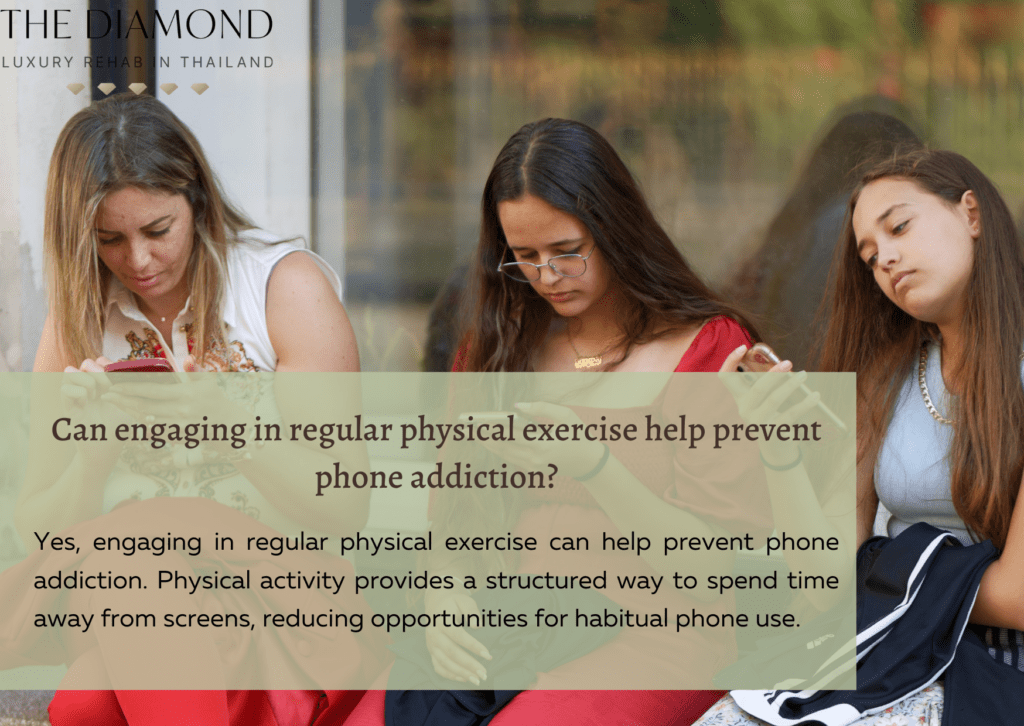
Yes, engaging in regular physical exercise can help prevent phone addiction. Physical activity provides a structured way to spend time away from screens, reducing opportunities for habitual phone use.
Exercise supports mood regulation and stress reduction, lowering the urge to seek stimulation through a device. Participation in sports or fitness routines builds discipline often carrying over into digital habits.
According to a 2025 paper by Qi et al., titled “The impact of regular physical exercise on mobile phone addiction tendency among Chinese college students: the mediating role of trait boredom and the moderating role of self-control,” regular physical exercise was associated with lower mobile phone addiction tendency and reduced boredom levels.
Exercise correlated with stronger self-control, while higher boredom aligned with weaker self-control and greater addiction risk. Strong self-control corresponded with lower addiction tendency. Overall, physical activity functioned as a protective factor against mobile phone addiction.