What is dopamine: definition, function, and role in addiction


Table of content
- What is dopamine?
- What is the function of dopamine?
- How does dopamine work?
- What triggers dopamine release?
- How to regulate dopamine levels?
- Why does the brain always want more dopamine?
- What is the role of dopamine in addiction?
- How does drug abuse affect dopamine?
- How long does it take for dopamine levels to reset after addiction?
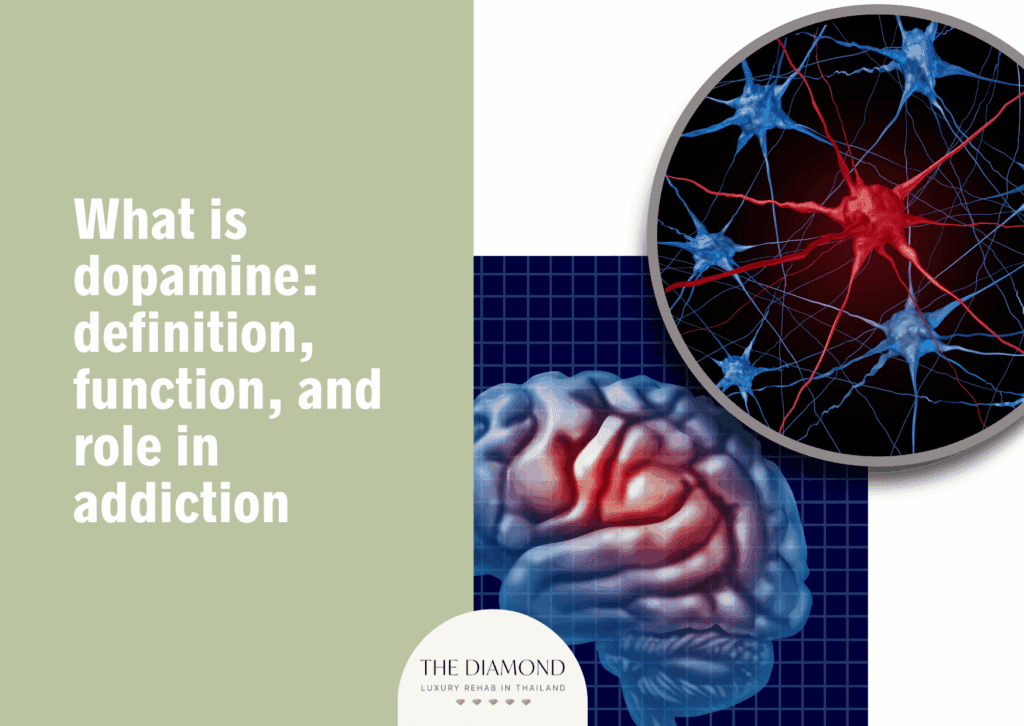
Dopamine is a neurotransmitter and hormone produced by the brain. It facilitates the transmission of chemical signals between neurons and the rest of the body.
The function of dopamine is to facilitate cognitive functions like learning, motivation, motor control, mood control, attention, decision-making, memory consolidation, and habit formation. Dopamine influences sleep, pain processing, blood vessel integrity, kidney functionality, digestion and blood flow, and heart rate.
The role of dopamine in addiction is to mediate reward perception, learning via reward reinforcement, cravings, habit formation, attentional processing of drug cues, and goal-directed behaviors to seek pleasurable substances and experiences. Dopamine is implicated in the transition from intermittent drug use tendencies to compulsive drug seeking behaviors that are fueled by cravings.
What is dopamine?
Dopamine is a hormone and a neurotransmitter that is generated in the brain and is responsible for transmitting signals or messages between neurons. Dopamine also facilitates the transmission of chemical signals between the brain and other regions of the body. It is produced in the ventral tegmental area, substantia nigra, and hypothalamus of the brain. Dopamine plays a critical role in nearly all cognitive processes and dysregulation of the dopaminergic system is implicated in multiple psychiatric and neurological disorders, including addiction, according to a 2022 publication by Kauê Machado Costa and Geoffrey Schoenbaum published in the journal Current Biology, titled “ Dopamine.”
It is a major component of the reward circuitry of the brain. It contributes to the development, maintenance, and relapse of addiction through drug-induced neuroadaptations that trigger cravings in the presence of drug cues and impulsive and compulsive drug-seeking behaviors that are the hallmarks of addiction.
It is believed that dopamine is an evolutionarily ancient neurotransmitter. It has been found in primitive organisms and its structure, genetic composition, and functional characteristics have been mostly conserved across vertebrates and invertebrates. It is thus believed that motor control and learning via reward reinforcement are the original and primary functions of dopamine that served evolutionary purposes, according to a 2015 article by Yamaguchi et al., published in the journal Frontiers in Neuroscience, titled “Dopamine in socioecological and evolutionary perspectives: implications for psychiatric disorders.”
What is the function of dopamine?
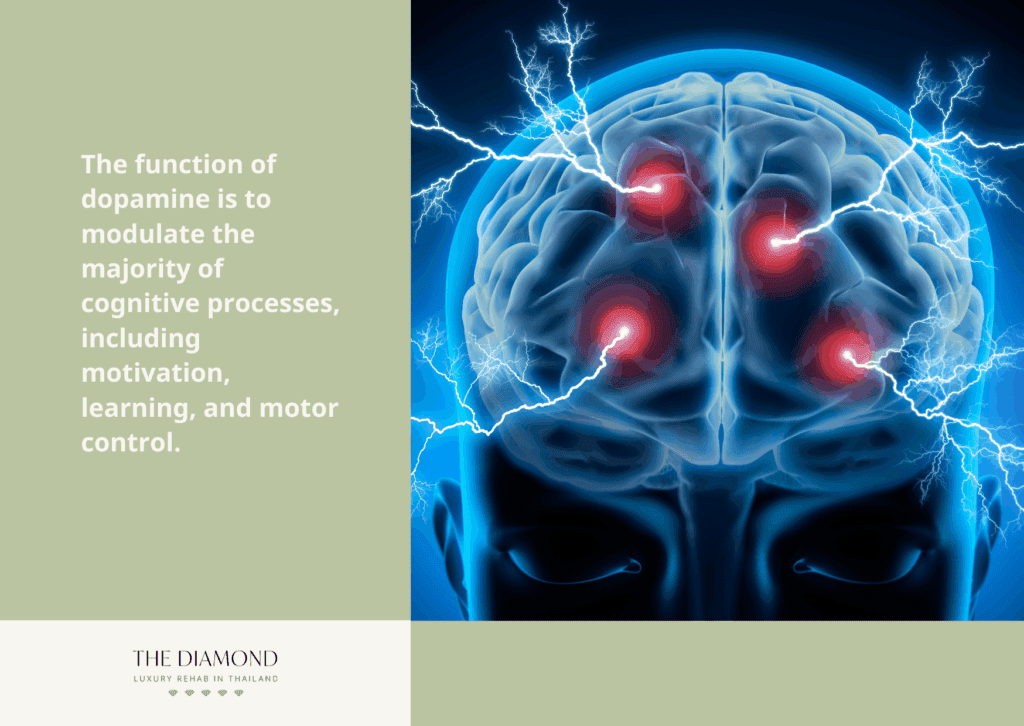
The function of dopamine is to modulate the majority of cognitive processes, including motivation, learning, and motor control, according to a 2022 article by Kauê Machado Costa and Geoffrey Schoenbaum published in the journal Current Biology, titled “ Dopamine.” Specifically, dopamine contributes to the development and persistence of drug addiction through its influence on the processes involving motivation, learning, memory, and habit formation. Dopamine is responsible for attaching motivational salience to otherwise neutral stimuli, promoting the encoding of stimulus-reward and response-reward associations, and consolidating memory, according to a 2004 article by Roy A. Wise published in the journal Nature Reviews Neuroscience, titled “Dopamine, learning and motivation.”
Dopamine also induces maternal and reproductive behaviors, as noted in a 2018 article by O Klein et al., published in the journal Cellular and Molecular Neurobiology, titled “Dopamine: Functions, Signaling, and Association with Neurological Diseases.” Dopamine affects physical and mental processes like sleep, mood, decision-making, pain processing, heart rate, blood vessel functionality, digestion and blood flow, and kidney functionality.
How does dopamine work?
Dopamine works by enabling the transmission of chemical signals between neurons and the rest of the body to facilitate a multitude of functions like reward perception, motivation, learning, memory, executive functions, and movement. The effects of dopamine depend on the regions it targets. In the hippocampal region, dopamine facilitates learning, working memory, and consolidation of long-term memory. The mesolimbic-dopaminergic circuitry is the “reward pathway” of the brain that is responsible for mediating positive reward effects from substances and situations. This region is associated with motivated behaviors, reward salience, and cognitive processes.
In this region, dopamine plays a critical role in reward-seeking behavior by influencing the perception of reward and facilitating goal-driven behaviors to procure the reward. In the substantia nigra region, dopamine modulates movement and influences cognitive executive functions. A depletion of dopaminergic neurons in this region is linked to the development of Parkinson’s disease.
What triggers dopamine release?
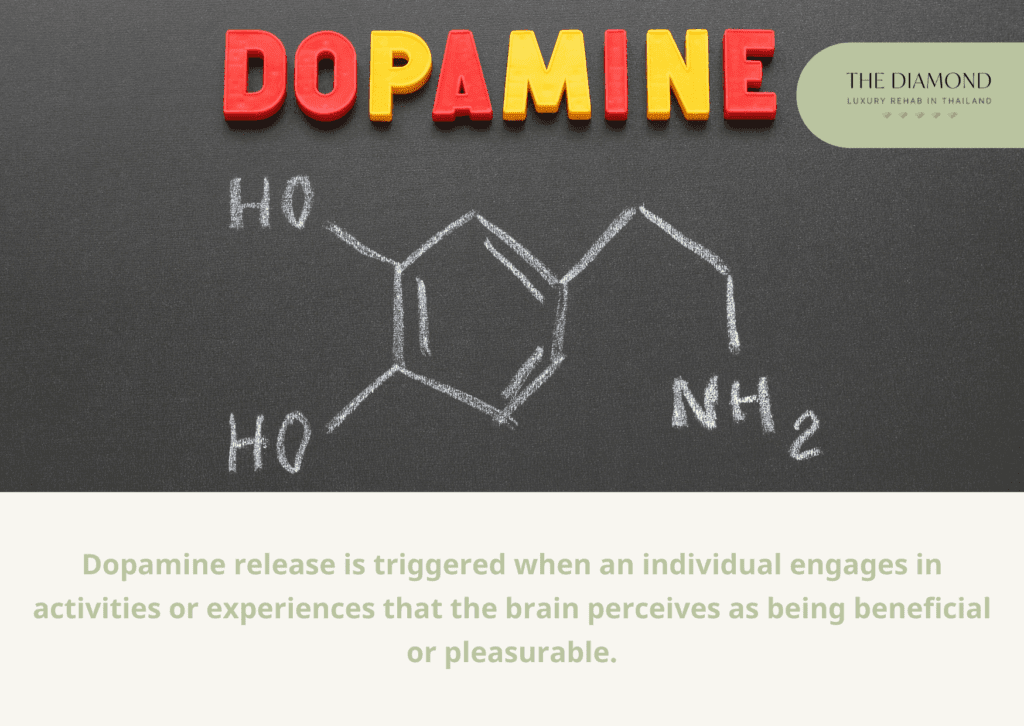
Dopamine release is triggered when an individual engages in activities or experiences that the brain perceives as being beneficial or pleasurable. These activities include specific hobbies individuals enjoy pursuing like dancing or cooking, sex, and shopping. Physical exercise, meditation, and substances of abuse like drugs and alcohol also trigger dopamine release. This release of dopamine is self-regulated by the dopamine-secreting neurons, according to a 2021 article by Hikima et al., published in the journal Cell Reports, titled “Activity-dependent somatodendritic dopamine release in the substantia nigra autoinhibits the releasing neuron.”
Multiple scientific studies have shown that physical exercise triggers dopamine release, according to a 2021 article by Marques et al., published in the journal Brain Sciences, titled “Bidirectional Association between Physical Activity and Dopamine Across Adulthood—A Systematic Review.” The authors note that physical activity increases dopamine receptor availability and triggers the release of dopamine in multiple brain regions like the ventromedial striatum and caudate nucleus. Authors Kjaer et al., in their 2002 article titled “Increased dopamine tone during meditation-induced change of consciousness” published in the journal Cognitive Brain Research state that meditating has been shown to trigger the release of dopamine.
What is a dopamine rush?
A dopamine rush refers to a rapid release of dopamine in the brain that produces feelings of intense pleasure. Frequent episodes of dopamine rush caused by chronic substance abuse lead to the development of a dopamine deficit state where the individual needs more of the drug to derive the earlier level of high. Dopamine rush is implicated in the transition from controlled and infrequent use of drugs to full-blown addiction via mechanisms like triggering cravings in the presence of drug-related cues, producing drug tolerance, and causing a loss of control over drug-seeking behaviors.
How to regulate dopamine levels?
To regulate dopamine levels, it is essential to learn about the physical and mental symptoms of high and low dopamine levels to be able to take corrective actions that decrease or increase these levels and restore them to a healthy range. Activities like eating dopamine-boosting foods, exercising regularly, meditating, getting adequate sleep, listening to music, and exposing oneself to early morning sunlight are actions that increase dopamine levels naturally. There are medications to decrease dopamine levels. They are prescribed to manage specific psychiatric conditions. Avoiding the practice of layering multiple sources of dopamine prevents episodes of dopamine spikes that are followed by crashes.
For instance, having energy drinks, taking nootropics or “smart drugs” that boost dopamine, and excessively engaging in socializing activities trigger dopamine releases. These dopamine spikes are not sustainable and quickly deplete leaving an individual feeling demotivated and lacking long-term drive.
What happens if dopamine levels are high?
If dopamine levels are high, an individual experiences feelings of euphoria or intense pleasure, has a high level of energy, and increased libido. The adverse effects of high dopamine include experiencing anxiety, having trouble sleeping, and hallucinating. Other symptoms of high dopamine levels include mania and delusional behaviors. It has been found that increased dopamine functionality is associated with impulsive and aggressive behaviors, according to a 2008 article by Seo et al., published in the journal Aggression and Violent Behavior, titled “Role of Serotonin and Dopamine System Interactions in the Neurobiology of Impulsive Aggression and its Comorbidity with other Clinical Disorders.” It is believed that having high levels of dopamine is associated with conditions like addiction, obesity, and schizophrenia.
Can you decrease dopamine levels?
Yes, you can decrease dopamine levels by stopping usage of substances of abuse, avoiding dopamine “triggers,” seeking treatment for conditions like Huntington’s disease that causes high dopamine levels, and using conventional and atypical antipsychotic medications. Substances of abuse are known to cause a surge of dopamine in the reward pathway of the brain. Stopping drug use reduces dopamine levels. However, it must be noted that this decrease in dopamine from their drug-induced abnormally high levels is likely to trigger unpleasant symptoms like low mood and drug cravings.
Elevated dopamine levels are decreased by giving up or gradually reducing engaging in substance use or actions that have addictive potential. These include drugs of abuse, compulsive acts like shopping, eating, and using social media, and thrill-seeking behaviors. Individuals recovering from addiction should avoid drug-related cues that are known to trigger dopamine secretion. Conventional antipsychotics work by blocking specific dopamine receptors and are used to manage psychiatric conditions like bipolar disorder and schizophrenia. Atypical antipsychotics decrease dopamine levels through the dual actions of blocking a key dopamine receptor and lowering serotonin levels.
What happens if dopamine levels are too low?
If dopamine levels are too low, an individual exhibits symptoms like decreased motivation to strive for goals and not feeling pleasure when engaging in activities they previously used to enjoy. Other symptoms of low dopamine levels include insomnia, anxiety or sadness, low energy and tiredness, trouble concentrating, and decreased libido. When dopamine levels are low, an individual shows symptoms like mental confusion, mood swings, tremors, and muscle spasms or cramps. Dopamine regulates motor movement. Symptoms like decreased coordination and balance, a slow and shuffling gait, impaired fine motor skills, and stiff and painful muscles are characteristic of low dopamine levels. Low dopamine levels are associated with conditions like Parkinson’s disease, depression, and dopamine transporter deficiency syndrome.
Can you increase dopamine levels?
Yes, you can increase dopamine levels naturally or with medications. Eating a healthy and balanced meal, correcting nutritional deficiencies, getting adequate sleep, and managing stress with relaxation techniques are known to increase dopamine levels. Physical exercise, too, has been found to increase dopamine levels.
Deficiencies of iron, niacin, vitamin B6, and folate deplete dopamine levels. So, eating a diet that corrects these deficiencies will increase dopamine. A dopamine-boosting diet should include protein-rich foods that contain amino acids like tyrosine that improve dopamine availability and enhance cognitive capabilities. Readily-available protein-rich foods include chicken, fish, lamb, beef, and pork; dairy products, especially cheese; eggs; soy; turkey; and legumes. Fruits and vegetables like apples, bananas, avocados, eggplant, spinach, plantains, tomatoes, broad beans, and velvet beans too, boost dopamine. Caffeine, alcohol, foods high in saturated fats, and sugar deplete dopamine levels and should be eliminated from the diet or at least, restricted.
Animal studies suggest that high-intensity interval training exercise is able to increase dopamine D2 receptors, thereby promoting effective dopamine signaling, according to a 2023 article by Tyler et al., published in the journal Frontiers in Public Health, titled “High intensity interval training exercise increases dopamine D2 levels and modulates brain dopamine signaling.” It has been observed that meditation and mindfulness practices like Yoga increase dopamine levels in the brain, according to a 2015 article by Krishnakumar et al., published in the journal Ancient Science of Life, titled “Meditation and Yoga can Modulate Brain Mechanisms that affect Behavior and Anxiety-A Modern Scientific Perspective.”
It is known that the dopamine system interacts with the visual system. A method called “spotlighting” is believed to increase dopamine levels. Spotlighting is the practice of physically directing one’s visual attention to a specific point to induce a state of focus.
Listening to music has been shown to increase dopamine levels in the brain, according to a 2019 article by Ferreri et al., published in the journal PNAS, titled “Dopamine modulates the reward experiences elicited by music.” Sunlight exposure has been linked to increased dopamine receptor availability, according to a 2011 article by Tsai et al., published in the journal Progress in Neuro-Psychopharmacology & Biological Psychiatry, titled “Sunshine-exposure variation of human striatal dopamine D(2)/D(3) receptor availability in healthy volunteers.” However, sunlight exposure should be in moderation, and individuals should avoid being out in the sun when ultraviolet radiation is at its peak, which is typically between 10 am and 2 pm.
Massage therapy increases levels of dopamine, according to a 2013 publication by the American Massage Therapy Association titled “Massage and Addiction” written by Clara La Plante. Massage therapy is used as an adjunct therapeutic intervention to complement traditional addiction treatment modalities. It is particularly beneficial during the early stages of withdrawal when dopamine levels in the patient are low.
Medications like dopamine agonists increase dopamine levels and are used to manage conditions like Parkinson’s disease. Common medications include Mirapex (pramipexole),
ropinirole, and Neupro (rotigotine patch). However, there is limited evidence to suggest that these medicines are effective for increasing low dopamine levels associated with substance abuse.
Why does the brain always want more dopamine?
The brain always wants more dopamine because evolutionary needs have hard-wired it to want or seek experiences that are rewarding or beneficial. The release of dopamine triggers feelings of pleasure, thereby motivating an individual to seek more of an experience that generates pleasurable feelings.
Dopamine is a driver of the reward system. To fulfill evolutionary needs, the system was engineered to reward an individual for engaging in activities that are crucial for survival, such as eating and drinking, procreating, and fighting and/or competing to stay alive. Dopamine also drives the attentional pathway, thereby inducing the brain to concentrate on activities that release dopamine. From an evolutionary standpoint, this meant paying attention to activities that helped individuals survive and were perceived by the brain as being salient.
What is the role of dopamine in addiction?
The role of dopamine in addiction is linked to how this chemical dysregulates the brain’s reward, self-control, emotional regulation, learning, and habit-formation pathways. Functional disruptions of these pathways cause an individual to transition from being able to control their drug use to exhibiting compulsive drug-seeking and drug-taking behaviors that characterize addiction.
The link between the brain’s reward system and addiction is understood by exploring dopamine’s role in experiencing reward, directing attentive processing of drug-related stimuli, and inducing cravings, according to a 2005 article by Franken et al., published in the European Journal of Pharmacology, titled “The role of dopamine in human addiction: From reward to motivated attention.” Dopamine is involved in producing the pleasurable and reinforcing effects of substances of abuse. The dopamine-releasing neurons are naturally programmed to fire in the presence of salient stimuli. The supraphysiological increase in the extracellular concentration of dopamine in response to an addictive substance mimics that produced by the physiological process of dopamine neurons firing, according to a 2008 article by Volkow et al., published in the journal Neuropharmacology, titled “Imaging dopamine’s role in drug abuse and addiction.” However, the dopamine surge triggered by drugs is more intense and prolonged than that produced by any natural reward, such as food and social interactions.
The firing of dopamine neurons in response to the presence of a salient stimulus is associated with conditioned or associative learning and the motivation to seek reward, according to a 2007 article by Volkow et al., published in the journal Archives of Neurology, titled “Dopamine in Drug Abuse and Addiction–Results of Imaging Studies and Treatment Implications.” The activation of the dopamine cells by drugs is perceived as highly salient, thereby triggering a motivation to procure the drug. The firing of dopamine neurons enables learning, as deduced from animal studies reported in a 2021 article by Roy A. Wise and Chloe J. Jordan published in the Journal of Biomedical Science, titled “Dopamine, behavior, and addiction.” Thus, the stimulation of the dopamine neurons strengthens conditioned learning and induces automatic behaviors like compulsions and habits (Volkow et al., 2007).
Prolonged substance abuse causes dopamine-generating neurons to stop firing when experiencing the reward and instead, start firing in the presence of a drug cue merely in anticipation of the reward, according to a 2016 article by Volkow et al., published in The New England Journal of Medicine, titled “Neurobiologic Advances from the Brain Disease Model of Addiction.” This process engages the same mechanisms that are involved in encoding, learning, and forming memories. This triggers powerful cravings in the presence of drug-related cues.
Long-term substance abuse is implicated in a decrease in the cellular concentration of dopamine and its function (Volkow et al., 2008). Decreased dopamine functionality in individuals who abuse drugs reduces their sensitivity to non-drug rewards. Additionally, low cellular levels of dopamine are associated with impaired functioning of regions like the orbitofrontal cortex, the cingulate gyrus, and the dorsolateral prefrontal cortex. These regions are involved in attributing salience to drug-related stimuli, exerting inhibitory control, and performing executive functions. Functional disruptions in these regions of the brain result in impulsive and compulsive behaviors, an inability to manage cravings, and a loss of control over drug-taking behaviors. Loss of control over drug use and compulsive drug taking are the hallmarks of addiction.
How does dopamine affect compulsive behaviors?
Dopamine affects compulsive behaviors by hyperstimulating the motivation pathway in the presence of drugs and drug cues and impairing the functioning of the executive control circuit, according to a 2010 article by Volkow et al., published in the journal BioEssays, titled “Addiction: Decreased reward sensitivity and increased expectation sensitivity conspire to overwhelm the brain’s control circuit.” A hyperfunctioning dopamine system contributes to the development of compulsive behaviors by enhancing the influence of temporal discounting and impairing decision-making ability, according to a 2010 article by Pine et al., published in The Journal of Neuroscience, titled “Dopamine, Time, and Impulsivity in Humans.”
Dopamine plays a key role in modulating the motivation circuitry that comprises the orbitofrontal cortex (OFC) and the anterior cingulate gyrus (CG). The OFC and CG are responsible for assigning saliency values to reinforcers, thereby driving motivation to seek and procure rewarding objects and/or experiences, according to a 2007 article by Volkow et al., published in the journal Archives of Neurology, titled “Dopamine in Drug Abuse and Addiction–Results of Imaging Studies and Treatment Implications.” The presence of drugs of abuse or drug-related cues in the environment hyperactivates these regions. The individual perceives the drugs or the drug-related stimuli to be highly salient and experiences an intense craving for the addictive substances. These powerful cravings underlie the compulsive substance-seeking behavior that characterizes addiction.
Prolonged drug abuse decreases the number of dopamine receptors and the concentration of this chemical, thereby reducing activity in the dorsolateral prefrontal cortex, a region of the brain involved in executive functioning, according to a 2008 article by Volkow et al., published in the journal Neuropharmacology, titled “Imaging dopamine’s role in drug abuse and addiction.” Impaired executive functionality manifests as decreased self-awareness, loss of inhibitory control, and dysregulated behavioral responses. The development of these cognitive deficits results in compulsive drug-seeking behaviors overriding the control of the executive circuit of the brain.
The phenomenon of temporal discounting refers to a decrease in the perceived value of a reinforcer as the delay in obtaining or experiencing it increases. It is the cognitive tendency of individuals to perceive immediate rewards as being more valuable than future ones. A dysregulated dopamine circuitry causes an enhancement of the effects of temporal discounting of drugs in addicted individuals (Pine et al., 2010). The resulting compulsive drug-seeking behaviors are influenced by a tendency to overweigh rewards compared to losses or detrimental effects and an inclination to choose smaller-sooner instead of larger-later rewards.
What role does dopamine play in drug tolerance?
The role of dopamine in drug tolerance is explained via the mechanisms associated with the development of a hypodopaminergic state, according to a 2010 article by Volkow et al., published in the journal BioEssays, titled “Addiction: Decreased reward sensitivity and increased expectation sensitivity conspire to overwhelm the brain’s control circuit.” Desensitization of the reward circuitry is also known to contribute to the development of drug tolerance.
It has been observed that long-term drug addicts have reduced extracellular dopamine concentration and fewer dopamine receptors. When not using drugs, they are in a hypodopaminergic state (Volkow et al., 2010). The state is characterized by decreased sensitivity to non-drug natural rewards, such as food and sex, and a perception that taking drugs will reverse this state. However, chronic drug abuse also desensitizes the reward circuitry to the effects of substances.
The drug-induced spike in dopamine in individuals who have been abusing substances for a long term is significantly less than the dopamine spike induced by drug cues that trigger cravings. This creates a gap between the expectation for the drug’s effects, such as experiencing feelings of euphoria and/or calmness, and the actual pharmacological effects produced by the drug. The individual thus feels compelled to take increasing amounts of the substance to derive an earlier level of high, according to a 2011 article by Volkow et al., published in the journal PNAS, titled “Addiction: Beyond dopamine reward circuitry.” This marks the development of drug tolerance.
How does drug abuse affect dopamine?
Drug abuse affects dopamine by modifying its concentration and activity in varied ways during the different stages of addiction. All drugs of abuse initially trigger an increase in the extracellular concentration of dopamine in the nucleus accumbens, resulting in the individual experiencing the reinforcing effects of the drug, according to a 2007 article by Volkow et al., published in the journal Archives of Neurology, titled “Dopamine in Drug Abuse and Addiction–Results of Imaging Studies and Treatment Implications.” However, prolonged alcohol, heroin, and cocaine abuse have been shown to deplete dopamine receptors and decrease the concentration of dopamine in the ventral striatum region, according to a 2011 article by Marco Diana published in the journal Frontiers in Psychiatry, titled “The Dopamine Hypothesis of Drug Addiction and Its Potential Therapeutic Value.”
All addictive drugs trigger a release of dopamine in the initial stages of drug abuse. This dopamine spike produces the reinforcing effects of the drug and generates the “high” associated with drug abuse. However, the magnitude of the rewarding effects is dependent not only on the amount of dopamine spike but also on its rate of increase. The quicker the spike, the more intense the rewarding effects.
More specifically, this reward is produced when dopamine increases take place over a short time, typically within 10 minutes of taking the drug, according to a 2015 article by Nora D. Volkow and Marisela Morales published in the journal Cell, titled “The Brain on Drugs: From Reward to Addiction.’ Dopamine spikes that occur over a longer period, for instance, 60 minutes, are not associated with experiencing a rewarding effect. The answer to how do drugs impact the brain is thus also dependent on the specific route of administration of the substance, which influences how fast peak dopamine concentrations are reached. The brain absorbs a drug faster and in higher amounts if it is smoked or injected than when taken orally.
How long does it take for dopamine levels to reset after addiction?
There is as yet no scientific consensus on how long it takes for dopamine levels to reset after addiction. The timeline depends on multiple factors like the nature of the substance abused, the intensity and duration of use, and the individual’s unique genetic makeup. An individual is able to influence the duration by adopting practices like eating dopamine-boosting foods, exercising, and meditating.
Typically, dopamine receptors begin recovering within a few weeks of quitting substance use. Marked improvements in dopamine functionality and receptor sensitivity have been noticed in individuals within 90 days of stopping drug use. It was observed that the levels of dopamine transporters in the reward circuitry of the brains of a sample of methamphetamine users were restored to nearly their baseline level of functionality after a period of protracted abstinence lasting 12-17 months, according to a 2001 article by Volkow et al., published in The Journal of Neuroscience, titled “Loss of Dopamine Transporters in Methamphetamine Abusers Recovers with Protracted Abstinence.”