Acupuncture in addiction treatment: definition, how it’s done, and effectivity


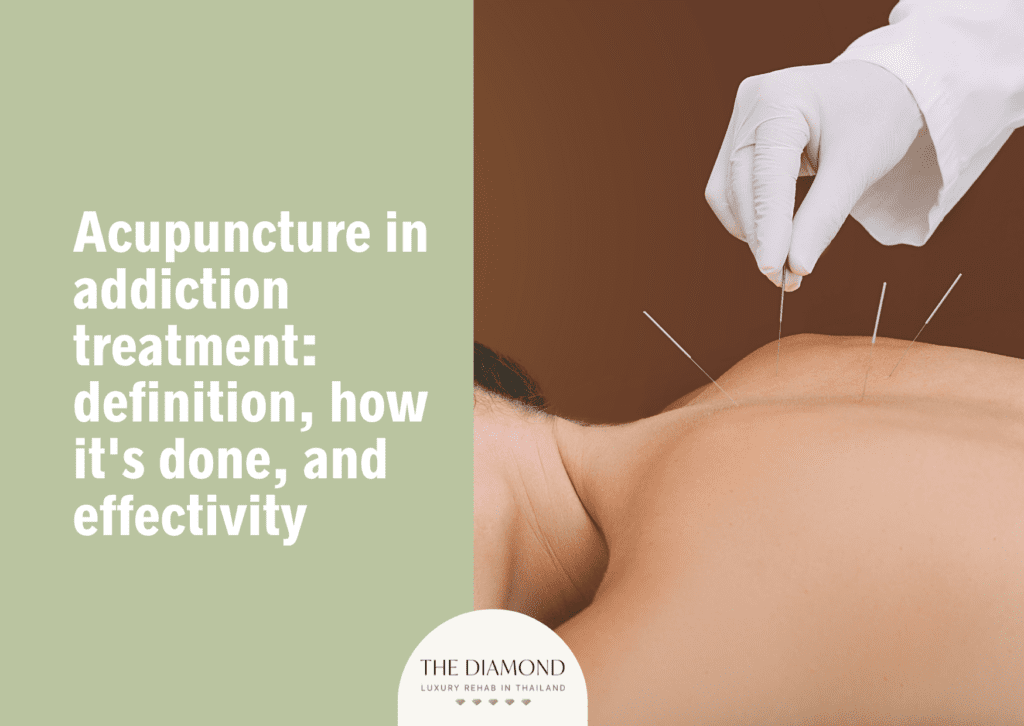
Acupuncture in addiction treatment is an alternative medical practice that involves stimulating specific body points, typically with fine needles, to promote healing. Originated in Chinese culture, it has been used for centuries to relieve pain and various medical conditions. In addiction treatment, acupuncture is used as a complementary therapy to help manage withdrawal symptoms, reduce cravings, and support overall well-being.
Acupuncture is done by inserting sterile, hair-thin needles into specific points on the body. This process helps to regulate energy flow (Qi) and stimulate the nervous system to release natural painkillers and calming neurochemicals. Treatment sessions are often integrated into an individualized and comprehensive treatment plan.
Effectiveness of acupuncture in addiction treatment lies in its ability to complement conventional therapies. While not a standalone cure, acupuncture helps alleviate symptoms of anxiety, depression, withdrawal, and cravings. As a safe and beneficial technique, acupuncture is increasingly integrated into comprehensive addiction recovery programs.
What is acupuncture in addiction treatment?
Acupuncture in addiction treatment is a complementary and alternative therapeutic intervention derived from Traditional Chinese medicine (TCM). It uses small needles on the pressure points along the meridians or pathways in the body, to balance the vital energy (Qi) that flows throughout the body, promoting spiritual, emotional, and physical well-being. Traditional acupuncture identifies over 2,000 points connected by these meridians.
According to an article “Acupuncture therapy for drug addiction” by Farid Esmaeili Motlagh et al. published in the journal Chinese Medicine in 2016, acupuncture was internationally acknowledged by the World Health Organization (WHO) in 1996 as a beneficial alternative therapy for treating substance abuse. Currently, acupuncture is employed in more than 700 addiction treatment centers globally.
How is acupuncture done in addiction treatment?
Acupuncture is done in addiction treatment by stimulating specific points on the body. According to the research article “Acupuncture therapy for drug addiction” by Farid Esmaeili Motlagh et al. published in the journal Chinese Medicine in 2016, themost commonly used protocol is the National Acupuncture Detoxification Association (NADA) protocol. This involves inserting fine needles into five auricular points: sympathetic, shenmen, kidney, liver, and lung. This method is widely applied in addiction treatment centers and rehabilitation programs.
According to the chapter“Acupuncture for the Treatment of Opiate Addiction” by Jaung-Geng Lin et al. published in the journal Evidence-based Complementary and Alternative Medicine in 2012,two primary acupuncture techniques are utilized in addiction treatment. These include ear acupuncture known as auricular acupuncture, and body acupuncture with manual insertion or electrical stimulation (electro-acupuncture). Ear acupuncture involves inserting small needles into specific points on the ear. This technique is often used to treat addiction, as it stimulates the brain’s reward system and reduces cravings.
Body acupuncture involves stimulating specific acupoints, typically by inserting thin needles into the skin. These needles are stimulated manually or through electroacupuncture, which applies a small electrical current to enhance treatment effectiveness. While acupuncture is not a standalone cure, it serves as an effective alternative therapy that enhances conventional addiction recovery programs. In China, manual acupuncture was more commonly utilized than ear acupuncture for treating drug addiction.
What are the acupuncture points for addiction treatment?

The acupuncture points for addiction treatment are listed below.
- Hegu (LI4): According to the article “Acupuncture Point “Hegu” (LI4) Is Close to the Vascular Branch from the Superficial Branch of the Radial Nerve” by Kanae Umemoto et al. published in the journal Hindawi Evidence-Based Complementary and Alternative Medicine in 2019, the Hegu acupuncture point is located on the back of the hand between the thumb and index finger. It is strategically positioned near nerves and a major artery. Stimulating LI4 is reported to enhance blood circulation and promote the release of beneficial neurotransmitters, including endorphins, serotonin, and dopamine, which significantly lower anxiety levels. In China, the LI4 point is commonly and effectively utilized in the treatment of opiate addiction.
- Neiguan (PC6): Neiguan point (PC6) is located on the inner forearm. Its stimulation helps to regulate neurotransmitter systems, particularly dopamine pathways, which play a critical role in addiction. The research article “Acupuncture therapy for drug addiction” by Farid Esmaeili Motlagh et al. published in the journal Chinese Medicine in 2016, suggests that electroacupuncture at PC6 modulates brain activity associated with cravings and withdrawal symptoms, especially in cases of alcohol and opioid dependence.
- Shenmen (HT7): The Shenmen (HT7) acupoint is located near the wrist on the heart meridian. It is a common target used in acupuncture treatments for addiction treatment. Stimulating this acupoint positively impacts addiction-related symptoms and behaviors by modulating neurological and biochemical pathways involved in addiction. Acupuncture at Shenmen helps reduce cravings and withdrawal symptoms for substances such as cocaine, nicotine, alcohol, and opioids. Specifically, Shenmen stimulation appears to influence dopamine levels and activity in brain regions associated with reward and craving, such as the nucleus accumbens. This modulation attenuates stress-induced relapse, inhibits drug-induced hyperactivity, and decreases anxiety-like behaviors during withdrawal. The research study “Acupuncture Alleviates Anxiety and 22-kHz Ultrasonic Vocalizations in Rats Subjected to Repeated Alcohol Administration by Modulating the Brain-Derived Neurotrophic Factor/Corticotropin-Releasing Hormone Signaling Pathway” by Su Yeon Seo et al. published in the International Journal of Molecular Sciences in 2021, further substantiates Shenmen’s efficacy. This study demonstrated that acupuncture at HT7 notably mitigates stress and anxiety induced by repeated alcohol exposure by modulating critical signaling pathways involving brain-derived neurotrophic factor (BDNF) and corticotropin-releasing hormone (CRH).
- Taichong (LR3): Taichong or LR3, is located on the top of the foot where the first and second metatarsal bones meet. Traditionally, it is used to regulate liver Qi and alleviate various conditions. Acupuncture at LR3 modulates neurological pathways associated with substance dependence. According to a study “Effects of Electroacupuncture on Methamphetamine-Induced Behavioral Changes in Mice”by Tsung-Jung Ho et al. published in the journal Evidence-based complementary and alternative medicine in 2017, electroacupuncture (EA) at the Zhubin (KI9)–Taichong (LR3) points helped reduce methamphetamine induced addictive behaviors.
- Zusanli (ST36): Zusanli (ST36) is a well-known acupuncture point located on the lower leg, just below the knee. A study “Overview of researches on central action mechanism of needling Zusanli (ST 36)” by Liu Can et al. published in the Journal of Acupuncture and Tuina Science in 2017, acupuncture at ST36 plays a significant role in regulating brain activity. It influences key regions such as the prefrontal cortex, limbic system, and hypothalamus, helping to stabilize dopamine levels and reduce cravings. Additionally, ST36 is beneficial for stress and anxiety management.
- Sanyinjiao (SP6): Sanyinjiao (SP6) is a vital acupuncture point located on the spleen meridian of the foot, approximately four finger widths above the medial malleolus (inner ankle bone). It helps balance the mesolimbic dopamine system, reducing cravings and withdrawal symptoms. SP6 lowers cortisol levels, easing anxiety and emotional instability—key triggers for relapse. Additionally, it enhances liver and kidney function, supporting detoxification and metabolic recovery. According to an article “Bidirectional role of acupuncture in the treatment of drug addiction” by Mi Young Lee et al. published in the journal Neuroscience & Biobehavioral Reviews in July 2021, electroacupuncture (EA) at SP6 helped reduce heroin-seeking behavior.
- Laogong (PC8): Laogong (PC8) is a powerful acupuncture point located on the pericardium meridian in the center of the palm, between the second and third metacarpal bones, where the fingertips naturally touch when making a fist. The 2015 study “Transcutaneous electrical acupoint stimulation for the treatment of withdrawal syndrome in heroin addicts”byDa Ma et al. published in the Pain medicine: the official journal of the American Academy of Pain Medicine, provides compelling evidence for the therapeutic potential of Laogong (PC8) in addiction treatment. The study employed Transcutaneous Electrical Acupoint Stimulation (TEAS), which delivers electrical pulses to a combination of acupoints, including Laogong. The research demonstrated that the combined stimulation of Laogong (PC8) with other acupoints, such as Hegu (LI4), Neiguan (PC6), and Waiguan (SJ5), resulted in a significant reduction in heroin withdrawal symptoms.
- Auricular acupoints: Unlike traditional acupuncture, which involves placing needles at various body points, the National Acupuncture Detoxification Association (NADA) protocol specifically targets five auricular (ear) acupoints: Liver, Lung, Kidney, Shenmen, and Sympathetic point. Each point provides specific therapeutic effects beneficial for addiction treatment. The Liver point, located along the inner ridge of the ear, aids in detoxification, emotional regulation, and helps in anger reduction. The Lung point, located on the lower side of the ear ridge, controls functions of the skin and expands lung capacity. Stimulating this point through acupuncture helps relieve grief, and lethargy. The Kidney point, at the ear’s center, helps reduce anxiety, and increase confidence. It is used to calm paranoia, fear, and mistrust, as well as to enhance relaxation. The Shenmen or “Divine Point,” located inside the upper ear is used in acupuncture to calm the mind, reduce anxiety, manage pain, promote restful sleep, and help patients cope with fear, panic attacks, and hyperactivity. Sympathetic point, located along the outer edge of the ear, helps manage stress responses during addiction treatment.
What happens during an acupuncture treatment for addiction?
During an acupuncture treatment for addiction, thin needles are inserted into specific points on the body, often located away from the area of pain. According to the article “Acupuncture”by Michele Van Hal et al. published in the book StatPearls, last updated in July 2023, needle lengths typically range from 10 mm to 100 mm. Longer needles are required for areas with thicker tissue to ensure adequate penetration, whereas shorter, thinner needles are commonly used for the head and neck regions.
The process begins with carefully inserting needles into the specific locations at varying depths beneath the skin. Patients generally experience minimal discomfort or mild pain at the insertion sites. Following insertion, the acupuncturist manipulates the needles by gently wiggling, moving, or applying electrical or heat stimulation to enhance therapeutic effects. Patients then relax for 10 to 20 minutes in a quiet, dimly lit room while the needles remain in place.
The full acupuncture session typically lasts between 30 to 60 minutes, after which the needles are carefully removed. Although acupuncture is often associated with positive outcomes, its success is not uniform. The effectiveness of acupuncture treatment varies significantly from person to person.
Where can you get acupuncture treatment for addiction?
You can get acupuncture treatment for addiction at holistic treatment centers, addiction treatment centers or rehabs, acupuncture clinics, and community health clinics, which offer comprehensive recovery programs addressing physical, emotional, and mental well-being. Addiction treatment facilities, offering both inpatient and outpatient services, incorporate acupuncture as a part of their therapeutic services. These centers combine acupuncture with traditional therapies such as group counseling, and family therapy to support individuals in their recovery journey.
Is acupuncture in addiction treatment safe?
Yes, acupuncture in addiction treatment is safe and carries a very low risk of complications. Its safety relies heavily on adherence to strict protocols, including the use of sterile, single-use needles and administration by qualified, licensed practitioners. This standardized approach helps minimize the risk.
To maintain safety standards, acupuncture needles are regulated by the U.S. Food and Drug Administration (FDA). The FDA mandates that the needles be sterile, non-toxic, and properly labeled, along with the requirement of their proper disposal by qualified professionals, prioritizing patient safety.
What are the possible side effects of using acupuncture in addiction treatment?
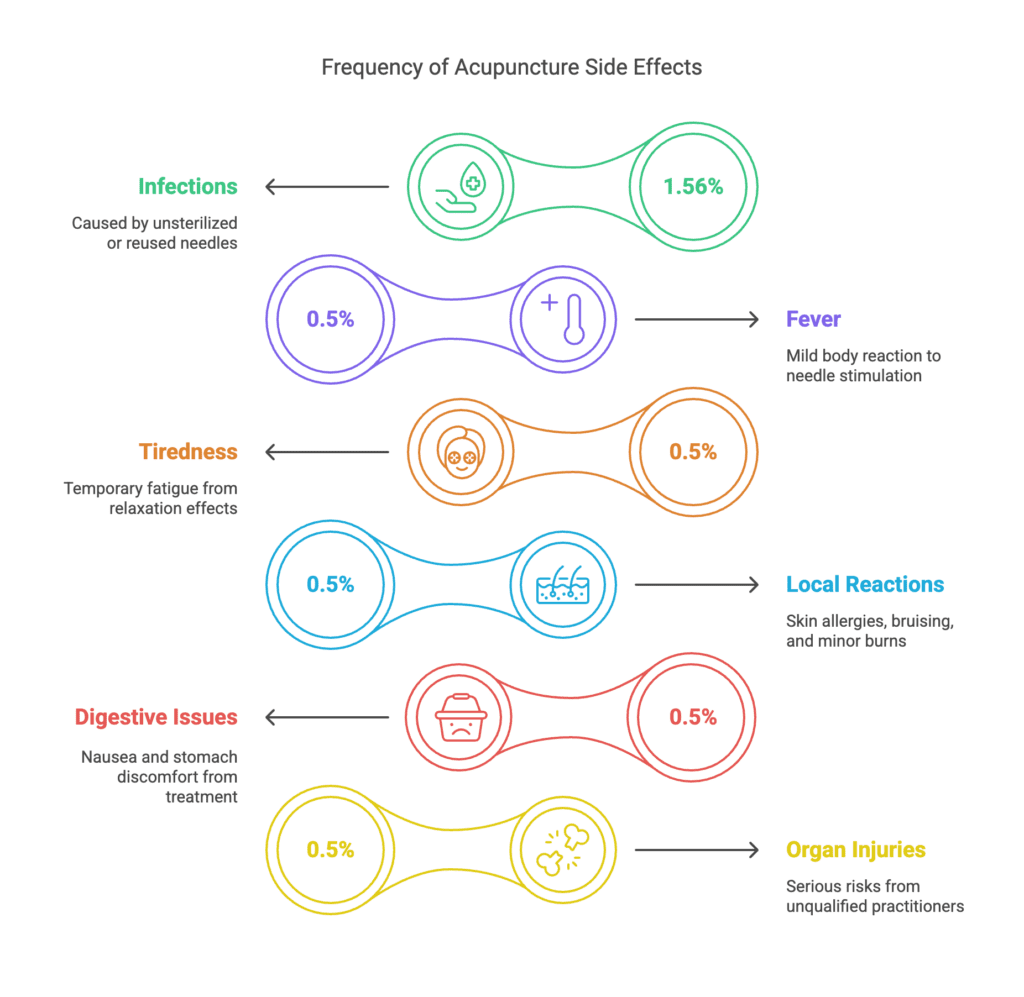
The possible side effects of using acupuncture in addiction treatment are listed below.
- Infections: According to the 2023 study “Adverse effects associated with acupuncture therapies: An evidence mapping from 535 systematic reviews”by Meng Xu et al.published in the journal Chinese Medicine,infections are a common side effect of acupuncture, occurring in 1.56% of cases across 19 studies. They are primarily caused by unsterilized or reused needles and contamination.
- Fever: Certain patients develop mild fever after acupuncture due to exposure during treatment or reactions of the body to needle stimulation. These effects are usually mild and resolve on their own without medical intervention.
- Tiredness: Tiredness is a common but temporary side effect of acupuncture. It occurs as the body adjusts to the treatment, promoting relaxation, improved circulation, and energy balance. Certain individuals feel fatigued or drowsy after a session, but this usually fades as the body restores its natural equilibrium.
- Local adverse events or reactions: Skin allergies, contact dermatitis, bleeding, pain, bruising, and minor burns are experienced by certain individuals after acupuncture.
- Digestive issues: Acupuncture for addiction sometimes causes mild digestive issues such as nausea, vomiting, loss of appetite, dry mouth, constipation, diarrhea, stomach discomfort, indigestion, and heartburn. These symptoms result from the body’s response to nerve stimulation and metabolic adjustments during treatment.
- Organ or tissue injuries: Acupuncture carries one of the serious side effects to organ or tissue injury, particularly if performed by unqualified practitioners. According to the article “Safety of Acupuncture: Overview of Systematic Reviews” by Malcolm W. C. Chan et al. published in the journal Scientific Reports in 2017, a median of 36 organ or tissue injuries were documented across 13 systematic reviews, along with a median of 4 deaths. The most commonly reported serious injuries included pneumothorax (collapsed lung), central nervous system or spinal cord injuries, subarachnoid or intracranial hemorrhage, cardiac tamponade or heart injury, pseudoaneurysms, hematomas, broken needles or needle fragments, soft tissue injuries, and thumb deformities.
Is acupuncture effective for addiction treatment?
Yes, acupuncture is effective for addiction treatment as evidenced in the article “Bidirectional role of acupuncture in the treatment of drug addiction” by Mi Young Lee et al. published in the journal Neuroscience & Biobehavioral Reviews in July 2021. Acupuncture helps regulate neurotransmitters within the mesolimbic dopamine system, restoring balance in reward pathways and reducing compulsive drug-seeking behavior. It activates inhibitory mechanisms, such as gamma-aminobutyric acid (GABA) neurons in the ventral tegmental area (VTA), suppressing excessive dopamine release associated with addiction. Furthermore, acupuncture alleviates withdrawal symptoms and stress responses through interactions with endogenous opioid and corticotropin-releasing factor (CRF) systems, reducing relapse likelihood.
Another research article “Acupuncture in Addiction Medicine: Its History, Evidence, and Possibilities” by Jamie M Kitzman et al. published in the journal Medical Acupuncture in 2023, explores the use of the National Acupuncture Detoxification Association (NADA) protocol, developed in the 1970s. This protocol, which utilizes auricular (ear) acupuncture, has shown effectiveness in reducing relapse rates and enhancing compliance with addiction treatment programs. The authors highlight consistent evidence demonstrating that acupuncture serves as a safe, beneficial alternative therapy for various forms of addiction, including opioid use disorders.
How does acupuncture help with addiction recovery?
Acupuncture helps with addiction recovery by promoting physical, emotional, and mental well-being. It helps by reducing cravings, easing withdrawal symptoms, alleviating physical pain, and helping regulate emotions, anxiety, stress, and sleep.
According to the 2018 study “Acupuncture on the Stress-Related Drug Relapse to Seeking” by Hyo Sun Roh et al. published in the journal Evidence-Based Complementary and Alternative Medicine, acupuncture shows promise in preventing stress-induced relapse in addiction recovery. It regulates key neurotransmitters like dopamine and corticotropin-releasing factor (CRF), restoring neurochemical balance and reducing withdrawal symptoms. By alleviating anxiety, depression, and emotional distress, acupuncture lowers the risk of drug-seeking behaviors.
Acupuncture is recognized as one of the alternative therapies for addiction, due to its effectiveness in reducing cravings for substances such as alcohol, opioids, and cocaine. Through its influence on the mesolimbic dopamine system and stress-response pathways, acupuncture helps manage triggers and external stressors. Its role as a holistic therapy makes it a valuable approach to addiction recovery and relapse prevention.
What are the benefits of acupuncture in addiction treatment?
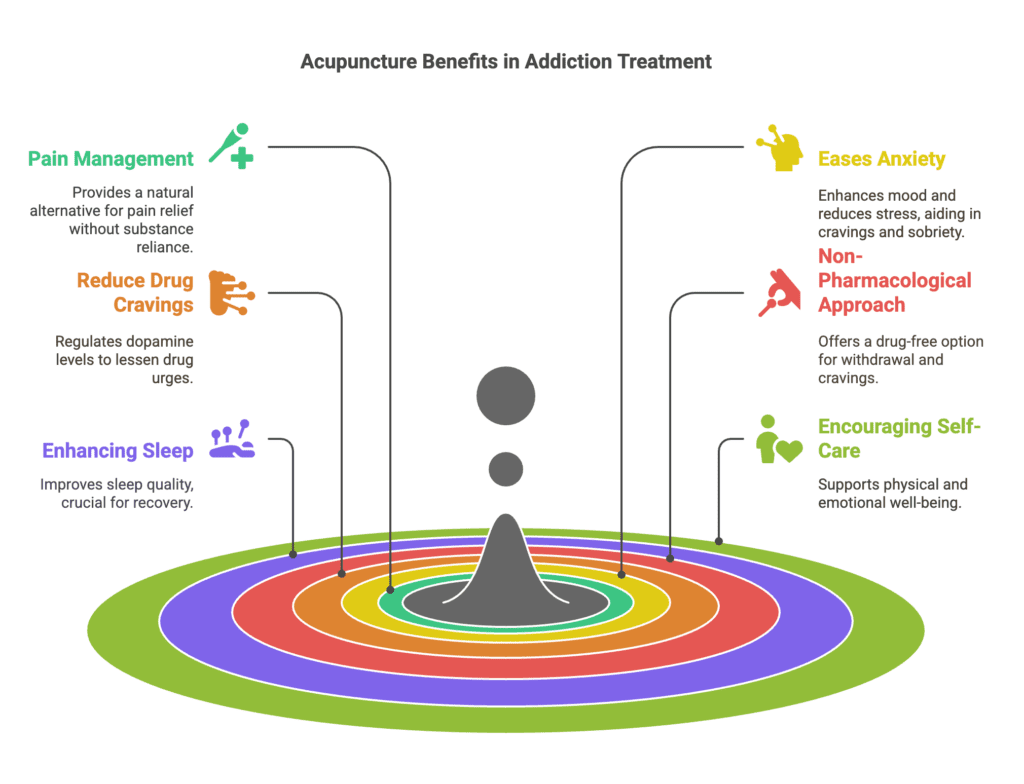
The benefits of acupuncture in addiction treatment are listed below.
- Pain management: One of acupuncture’s primary benefits is its effectiveness in pain management. For those recovering from opioid addiction, especially painkiller dependency, acupuncture offers a natural alternative to pain relief without the risk of substance reliance.
- Eases anxiety: A key benefit of acupuncture is its ability to enhance mood while alleviating stress and anxiety. By stimulating the release of endorphins, acupuncture promotes a calming effect on both the mind and body. This reduction in stress and anxiety helps individuals better cope with cravings and supports long-term sobriety.
- Reduce drug cravings: Acupuncture has been found to help reduce drug cravings, potentially strengthening an individual’s ability to avoid relapse. By stimulating specific acupuncture points, it impacts the brain’s reward system, regulating dopamine levels and reducing the overpowering urge for substances.
- Non-pharmacological approach : Unlike medications used in addiction treatment, acupuncture provides a drug-free option for managing withdrawal symptoms, reducing cravings, and supporting overall well-being.
- Enhancing sleep: Acupuncture promotes relaxation while alleviating stress and anxiety, leading to improved sleep quality. This is especially beneficial for individuals with dual diagnosis, helping them get the restorative rest needed to support their recovery.
- Encouraging self-care: Acupuncture serves as a self-care practice that supports individuals with drug addiction in improving their physical and emotional well-being.