
Reward system and addiction


Table of content
- How does the brain’s reward system contribute to addiction?
- What is the brain’s reward system?
- How does the reward system work?
- What are the components of a reward pathway?
- What are reinforcing stimuli?
- What are rewarding stimuli?
- How does addiction affect the brain’s reward system?
- Can I reset my reward system after addiction?

The brain’s reward system contributes to addiction by fundamentally rewiring neural pathways in the brain. Addictive substances and behaviors hijack this system by causing an excessive surge of neurotransmitters, driving a transition in behavior from pleasure-seeking to compulsive drug use. Additionally, addiction further impacts the reward system by causing long-term changes in brain structure and function.
The reward system works by releasing dopamine in response to rewarding stimuli, reinforcing behaviors that promote survival and pleasure. Key structures involve the mesolimbic pathway, the nucleus accumbens, the hippocampus, the amygdala, and the prefrontal cortex.
How does the brain’s reward system contribute to addiction?
The brain’s reward system contributes to addiction by regulating pleasure and reinforcing behaviors, making substance use a compulsive activity despite its harmful effects. Organisms naturally strive to maintain homeostasis, or internal equilibrium, in response to environmental and psychological stressors. However, in the case of addiction, this regulatory balance is disrupted, pushing the brain into a maladaptive state where compulsive drug-seeking behavior becomes dominant. According to the research article “Neurobiology of addiction: a neurocircuitry analysis” authored by George F Koob and Nora D Volkow, published in the journal The Lancet Psychiatry in 2016, there are three stages of addiction namely binge/intoxication, withdrawal/negative affect, and preoccupation/anticipation stage, which alter the brain’s reward system and contribute to the allostatic state of addiction.
During the initial phase of drug use, the “binge/intoxication” stage, substances trigger a flood of dopamine and opioid peptides in the brain’s basal ganglia, creating a powerful sense of pleasure. This repeated reward gradually trains the brain to associate drug-related cues with intense desire, a process called incentive salience. Eventually, drug-seeking becomes an automatic habit.
As addiction progresses to the “withdrawal/negative affect” stage, the brain’s natural dopamine production diminishes. This leads to unpleasant feelings like stress, anxiety, and unease. Simultaneously, the extended amygdala releases stress chemicals, such as corticotropin-releasing factor (CRF) and dynorphin, amplifying the withdrawal symptoms and driving the urge to use drugs again to find relief.
Finally, in the “preoccupation/anticipation” stage, intense cravings and weakened self-control take hold. This is due to disruptions in the prefrontal cortex and insula, brain regions responsible for rational decision-making and emotional regulation. These areas become dysfunctional, resulting in impulsive drug-seeking. Additionally, imbalances in glutamate, another key neurotransmitter, within the basal ganglia and extended amygdala make cravings even more challenging.
What role does dopamine play in addiction?
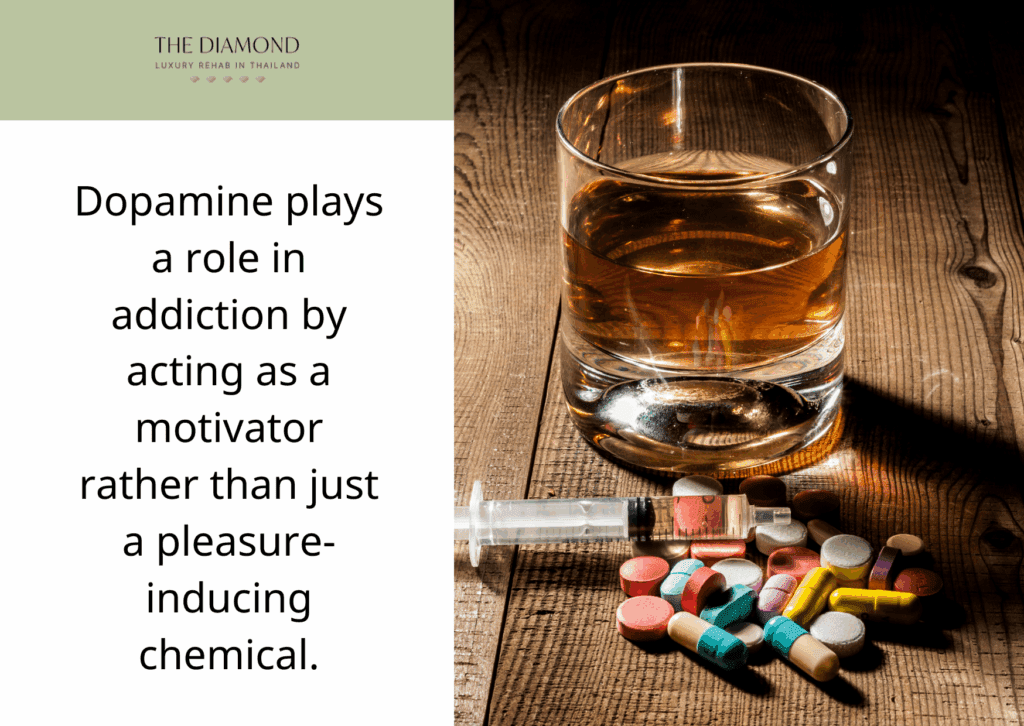
Dopamine plays a role in addiction by acting as a motivator rather than just a pleasure-inducing chemical. Dopamine, often called the brain’s “feel-good” neurotransmitter, is responsible for creating feelings of pleasure. It plays a central role in the brain’s reward system by strengthening neural pathways that encourage the repetition of rewarding behaviors. When an individual becomes addicted to substances, levels of dopamine increase, which in turn hijack the brain’s reward system.
Drugs and alcohol trigger excessive dopamine release, producing intense pleasure and reinforcing continued use. Over time, repeated exposure causes the brain to adapt by reducing its natural dopamine production. As a result, the brain becomes increasingly dependent on artificial dopamine surges, making drug-seeking behavior more compulsive. According to the article“Drugs, Brains, and Behavior: The Science of Addiction – Drugs and the Brain”published by theNational Institute on Drug Abuse in July 2020, this learned response persists for years. Even after a decade of sobriety, encountering familiar environments associated with past drug use triggers powerful cravings, highlighting how the brain’s reward system retains deep-seated drug-related memories, much like the lasting memory of riding a bicycle.
As addiction progresses, the brain begins to prioritize substance use over natural rewards, such as relationships, hobbies, and daily responsibilities. This overstimulation of the dopamine system rewires the brain, making it harder to find pleasure in everyday activities. As a result, individuals often neglect their personal well-being and social connections, as the pursuit of the substance becomes their dominant focus.
What is the brain’s reward system?
The brain’s reward system is a network of structures that responds to rewarding activities such as eating, social activities, and substance use. It plays a critical role in associative learning, the desire for rewards, and positive emotions.
It was by accident that researchers James Olds and Peter Milner made a groundbreaking discovery of the pleasure center of the brain in the 1950s, as noted in the article “The Functional Neuroanatomy of Pleasure and Happiness” by Morten L. Kringelbach and Kent C. Berridge, published in the journal Discovery Medicine in 2010. While conducting experiments, they implanted electrodes into the limbic system of rats and delivered mild electrical stimulation when the rats entered specific corners of a test box.They observed that rats repeatedly pressed levers to receive electrical stimulation in specific brain regions, particularly the septum and nucleus accumbens. Certain rats engaged in this behavior up to 2,000 times per hour, indicating the existence of a pleasure-related neural circuit in the brain. This research led to the identification of dopamine as a key neurotransmitter in reward processing.
Today, the reward system is understood to be more complex than a simple “pleasure center.” While dopamine plays a major role, other neurotransmitters and brain circuits additionally contribute to how we process rewards, form habits, and develop addictive behaviors.
How does the reward system work?
The reward system works by responding to the rewarding stimulus by increasing the release of dopamine and reinforcing the behavior. Consequently, the brain’s reward system structures are located along major dopamine pathways, such as the mesolimbic pathway connecting the ventral tegmental area to the nucleus accumbens. The mesolimbic pathway plays a key role in regulating the physiological and cognitive processing of rewards.
The research from the 2021 study titled“Dopamine, Behavior, and Addiction”by Roy A. Wise and Chloe J. Jordan, published in the Journal of Biomedical Science, found that nicotine increases dopamine levels to 150–200% above baseline, activating the brain’s reward system and reinforcing behaviors through neurotransmitter release.
Once released, dopamine travels to the brain’s pleasure center, creating a sense of joy and motivation to repeat the behavior. The hippocampus stores memories of the reward, while the amygdala adds emotional significance, such as excitement or satisfaction. Finally, the prefrontal cortex evaluates whether the reward is worth pursuing again and helps regulate impulses. This system plays a significant role in guiding behavior by encouraging positive experiences and reinforcing beneficial habits.
What are the components of a reward pathway?

The components of a reward pathway are listed below.
- Ventral tegmental area (VTA): The VTA is a region in the midbrain that is involved in the processing of reward, learning, and forming memories. It’s primarily known for its dopamine neurons, which fuel motivation. According to the article “Anatomy and Function of Ventral Tegmental Area Glutamate Neurons” authored by Jing Cai and Qingchun Tong published in the journal Frontiers in Neural Circuits in 2022, dopamine neurons make up around 60% of the VTA, it additionally contains around 35% GABAergic (Gamma-aminobutyric acid) and 5% glutamatergic neurons, each playing distinct roles in regulating behavior. GABA neurons regulate dopamine release, influencing reward, sleep, stress, and mood. Addictive substances such as morphine increase dopamine activity by suppressing GABA and boosting glutamate signals. Additionally, the article suggests that VTA’s connections to other brain areas, like the nucleus accumbens and prefrontal cortex, create complex circuits that shape one’s actions.
- Nucleus accumbens (NAc): The nucleus accumbens (NAc) is a key structure in the brain’s reward system, playing a critical role in decision-making, motivation, and reinforcement learning. It acts as a central processing unit, combining signals from emotional and thinking areas of the brain to guide behavior. It works in tandem with the basal ganglia to control the pursuit of rewards. According to the research article“The nucleus accumbens in reward and aversion processing: insights and implications” authored by Ying Xu et al. published in the journal Frontiers in Behavioral Neuroscience in 2024, the nucleus accumbens is critical for motivation by influencing both the anticipation and experience of pleasure. It evaluates the “goodness” of rewards, which is vital for learning and remembering pleasurable experiences. Furthermore, the NAc plays a role in reinforcement learning, allowing actions to be adjusted based on past outcomes. The NAc uses dopamine to alert the brain to upcoming rewards, and glutamate to change behaviors through learning.
- The prefrontal cortex (PFC): The prefrontal cortex (PFC) is a late-developing brain region that defines unique human traits. According to the article “Reward System on Dopaminergic Pathway” authored by Mohammad-Reza Zarrindast et al. published in the International Journal of Medical Reviews in 2015, the prefrontal cortex is a component of the brain’s reward circuitry that supports motivation and goal-oriented behavior. It processes current information, compares it to past experiences, and guides responses, as evidenced in the article “Neuroanatomy, Prefrontal Cortex” by William R. Hathaway and Bruce W. Newton, published in the book StatPearls, last updated in 2023. Unlike sensory or motor areas, the PFC combines information to perform higher-level thinking and control reactions based on current perceptions.
How are the components of the reward pathway involved in addiction?
The components of the reward pathway are involved in addiction by reinforcing drug-seeking behavior, altering brain chemistry, and weakening impulse control. The ventral tegmental area (VTA), nucleus accumbens (NAc), prefrontal cortex (PFC), amygdala, and hippocampus work together to create the cycle of addiction by responding to drug-induced dopamine surges. Addictive substances take control of the brain’s natural reward system, leading to compulsive substance use despite its harmful consequences.
The research article “Introduction: Addiction and Brain Reward and Anti-Reward Pathways” authored by Eliot L Gardner, published in the journal Advances in Psychosomatic Medicine in 2011, explains the details of the involvement of these components. The ventral tegmental area (VTA) is the starting point of the reward pathway, where dopaminergic neurons project to the nucleus accumbens and other brain regions. Drugs of abuse cause excessive dopamine release from the VTA, producing intense pleasure or euphoria. Over time, chronic drug use alters the VTA’s response to natural rewards, making everyday activities less pleasurable and increasing reliance on the drug for satisfaction. This process leads to tolerance, where higher doses are needed to achieve the same effect, and dependence, where the absence of the drug causes withdrawal symptoms.
The nucleus accumbens (NAc) regulates motivation and reinforcement learning, making it central to addiction. Dopamine release in the NAc reinforces drug-taking behavior, while over time, reduced dopamine receptor sensitivity diminishes pleasure from normal activities. This dysfunction leads to compulsive drug-seeking behavior as individuals attempt to regain the euphoria they initially experienced.
With chronic drug use, the prefrontal cortex (PFC), which is responsible for decision-making and impulse control, becomes impaired. Normally, the PFC helps regulate behavior and resist urges, but in addiction, its weakened function leads to poor judgment and loss of self-control. Thus, addicted individuals continue using substances despite knowing the negative consequences, such as health problems and financial issues.
The amygdala and hippocampus contribute to addiction by linking drug use with emotions and memories. The amygdala processes stress and cravings, making individuals more likely to relapse in response to stressful situations. The hippocampus stores memories of drug-related cues, such as places, people, or objects associated with substance use. These triggers evoke intense cravings and lead to relapse even after long periods of abstinence. As addiction progresses, drug use shifts from being a conscious choice to a compulsive habit, driven by neuroadaptations in the brain.
What are reinforcing stimuli?
Reinforcing stimuli refer to the process through which a change in the environment makes a behavior stronger in the future and increases the likelihood that the behavior will happen again. It’s not a tangible item. It strengthens the association between the action and its outcome, encouraging repetition.
Not all rewards are reinforcing—this is a key distinction in behavioral science. While rewards sometimes act as reinforcing stimuli, a stimulus is considered a reinforcer only if it consistently increases the likelihood of a specific behavior. The function of a reinforcing stimulus differs across individuals. For some, extrinsic reinforcers like praise, money, treats, or tokens provided by others serve this role. For others, intrinsic reinforcers—such as the satisfaction of solving a puzzle or the joy of completing a task prove more effective.
The concept of reinforcing stimuli is rooted in B.F. Skinner’s operant conditioning model which explains how behaviors are shaped through reinforcement. According to Skinner, reinforcing stimuli play a crucial role in learning and behavior modification. Reinforcement occurs in two forms: positive reinforcement and negative reinforcement. In positive reinforcement, a desirable stimulus is introduced to encourage behavior. For example, an employee receives a bonus for meeting their sales target. In negative reinforcement, an unpleasant stimulus is removed to strengthen behavior. An example of this is when a parent stops nagging once their child cleans their room. By utilizing reinforcing stimuli effectively, positive behaviors are strengthened, whereas the removal of reinforcement or the introduction of punishment weakens them.
How do reinforcing stimuli affect addiction?
Reinforcing stimuli affect addiction by strengthening behaviors associated with substance use or compulsive activities, increasing the likelihood of repetition. Addiction is fueled by two types of reinforcements- positive and negative. Positive reinforcement involves substances or behaviors that create pleasurable effects, whereas negative reinforcement involves helping escape discomfort or unpleasant feelings. According to Thomas J. Crowley’s 1972 study, “The reinforcers for drug abuse: Why people take drugs” published in the journal Comprehensive Psychiatry, the reinforcing effects of drugs play a major role in sustaining addiction. The study highlights that the intense “rush” from intravenous methamphetamine and heroin provides immediate and powerful reinforcement. It often makes addiction more likely from the very first use. The study additionally notes that faster-acting drugs, whether injected or taken orally, are generally more addictive than slower-acting ones. It is due to their rapid reinforcement effects.
Additionally, negative reinforcement is often mistaken for punishment, but it involves removing an unpleasant stimulus to strengthen a behavior. For instance, when a dependent user stops using addictive substances, withdrawal symptoms such as anxiety, tremors, and illness arise. Resuming drug use eliminates these aversive symptoms, reinforcing continued consumption. This cycle makes quitting particularly challenging, as users are motivated not just by the drug’s pleasurable effects but by the need to avoid withdrawal discomfort.
What are rewarding stimuli?
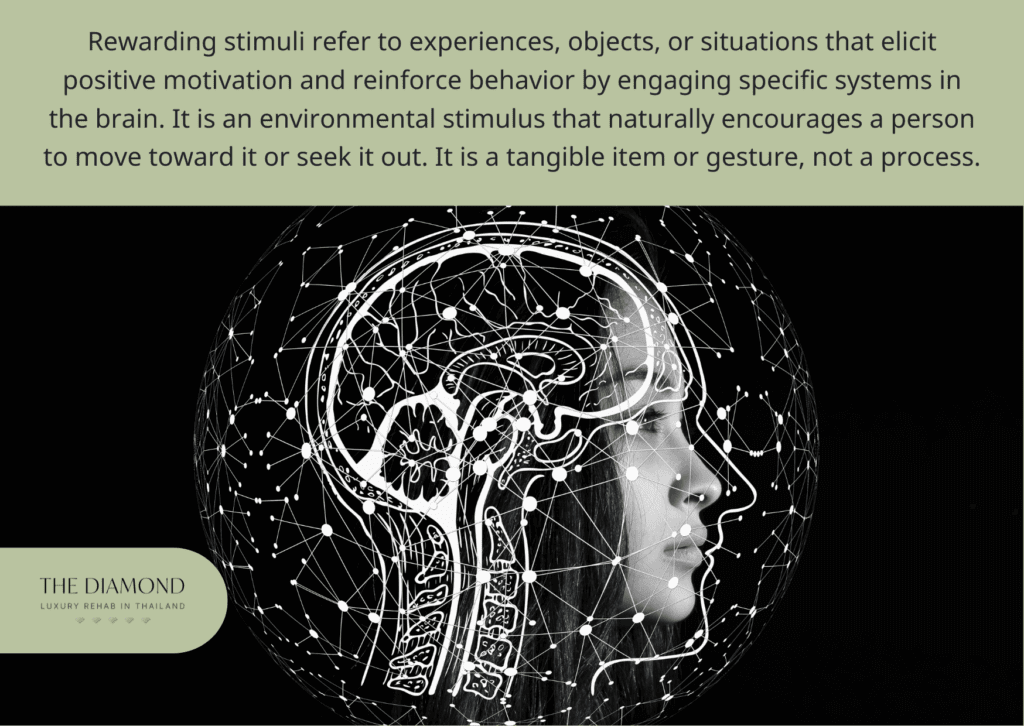
Rewarding stimuli refer to experiences, objects, or situations that elicit positive motivation and reinforce behavior by engaging specific systems in the brain. It is an environmental stimulus that naturally encourages a person to move toward it or seek it out. It is a tangible item or gesture, not a process. Rewards do not always influence behavior. In certain cases, a reward strengthens behavior as a reinforcer, but this isn’t guaranteed. As noted by Norman M. White in the article “Reward or reinforcement: What’s the difference?” published in the journal Neuroscience & Biobehavioral Reviews in 1989, this behavior is primarily mediated by the part of the brain known as ventral striatum particularly the nucleus accumbens, a key region involved in processing reward, motivation, and pleasure. The article additionally highlights that reward is likely mediated by a broader neural network, including the neostriatal patch system, the hippocampus, the limbic system, and the ventral pallidum.
According to the article “Neuronal Reward and Decision Signals: From Theories to Data” authored by Wolfram Schultz, published in the journal Physiological Reviews in 2015, these stimuli are made up of three main components. First, the sensory component that allows the organism to perceive rewards through senses like sight, sound, touch, taste, and smell, enabling identification and differentiation.
Second, the salience component draws attention to the reward through factors such as novelty, physical intensity, or motivational relevance, ensuring that the brain prioritizes processing it. Third, the value component that reflects the brain’s internal, subjective evaluation of the reward’s usefulness for survival, emotional satisfaction, or goal achievement. Unlike sensory features, value is shaped by individual past experiences and preferences, making it unique to each person. Together, these components ensure that rewards are recognized, attended to, and acted upon, forming the basis of learning, decision-making, and behavior reinforcement.
How do rewarding stimuli affect addiction?
Rewarding stimuli affect addiction by reinforcing compulsive behaviors of using substances. When a person becomes addicted to substances, the brain’s dopamine-based reward system gets activated, particularly in brain regions like the basal ganglia and its subregion, the nucleus accumbens. This creates intense feelings of euphoria, prompting the brain to associate not just the substance, but the surrounding environment, people, and emotions with that pleasurable experience.
These cues become conditioned triggers that spark cravings and dopamine release even without the substance. This process, called incentive salience, causes the brain to “want” certain cues simply because they signal past rewards. For instance, a recovering person feels the urge to use a substance again after seeing a familiar place or person linked to their addiction.
With repeated use, the brain becomes less responsive to everyday rewarding stimuli and increasingly sensitive to drug-related cues. As a result, people begin using it not for pleasure, but to relieve the discomfort of withdrawal or emotional distress. The cycle of addiction becomes self-perpetuating: the more the person uses, the more their brain is rewired to seek out the substance, and the harder it becomes to experience pleasure from anything else.
How does addiction affect the brain’s reward system?
Addiction affects the brain’s reward system by significantly altering its functions, as detailed in the Chapter 2 The Neurobiology of Substance Use, Misuse, and Addiction of the book “Facing Addiction in America: The Surgeon General’s Report on Alcohol, Drugs, and Health,” by U.S. Department of Health & Human Services published by the Substance Abuse and Mental Health Services Administration (SAMHSA) in 2016.
The brain regions that regulate addiction overlap with those responsible for critical cognitive functions, including impulse control, learning, memory, attention, and reasoning. Disruptions in these areas impair decision-making and reinforce maladaptive patterns of behavior that fuel continued drug abuse, further destabilizing the brain’s reward system.
Addictive substances initially stimulate intense pleasure by promoting the release of dopamine within the basal ganglia, particularly in the nucleus accumbens—the central hub of reward processing. However, with repeated drug abuse, neuroadaptations occur. The sensitivity of dopamine receptors decreases, and the overall function of the reward system diminishes. As a result, individuals experience less pleasure from both the drug and natural rewards, leading them to seek higher doses to recapture the original effects.
Over time, chronic substance use activates the brain’s stress systems. During withdrawal, the extended amygdala becomes overactive, releasing elevated levels of stress neurotransmitters such as corticotropin-releasing factor (CRF) and norepinephrine. These chemicals produce intense negative emotions and physical discomfort, shifting drug use from seeking pleasure to seeking relief from distress.
This transition from using for pleasure to using to avoid pain reinforces addiction. Drugs impact on the brain results in an imbalance of the brain’s reward system, diminishing the ability to experience joy from everyday activities and significantly increasing the likelihood of relapse.
Can I reset my reward system after addiction?
Yes, you can reset your reward system after addiction, typically after 14 months of abstinence. It is when the brain begins to demonstrate a remarkable recovery, with dopamine transporter (DAT) levels returning to normal levels. According to the research article “Loss of Dopamine Transporters in Methamphetamine Abusers Recovers with Protracted Abstinence” by Nora D. Volkow et al. published in the Journal of Neuroscience in 2001, brain imaging showed that individuals with methamphetamine addiction exhibited a significant recovery of dopamine transporter (DAT) levels in the striatum after 12–17 months of sustained abstinence.
The brain has an inherent ability to heal and adapt. This is made possible by neuroplasticity—the brain’s natural capacity to reorganize itself by forming new neural connections. Neuroplasticity allows the brain to adjust to new experiences, recover from injuries, and compensate for damage by rerouting functions through healthy areas. While certain consequences of addiction exhibit enduring effects, a significant proportion of the associated neurological adaptations, particularly those within the reward circuitry, demonstrate a capacity for gradual reversibility. However, recovery doesn’t happen overnight. During the initial month of abstinence, neural activity in regions governing motivation, impulse regulation, and pleasure response remains diminished, making early recovery more challenging.
Recovery is additionally influenced by factors such as the type of substance, age, frequency, duration of consumption, and supportive influences such as social connections and healthy habits. Brain healing requires more than abstinence. It demands proactive engagement in activities that foster new brain cell growth and sharper thinking. Consistent exercise, sufficient sleep, a nutritious diet, and mindfulness techniques play a vital role in this process by rebalancing brain chemicals. These lifestyle choices help restore neurotransmitter balance, improve emotional regulation, and rebuild damaged neural pathways.