
Social anxiety disorder: causes, symptoms, and treatments


Table of content
- What is social anxiety disorder?
- What are the causes of social anxiety disorder?
- What are the symptoms of social anxiety disorder?
- What are the available treatments for social anxiety disorder?
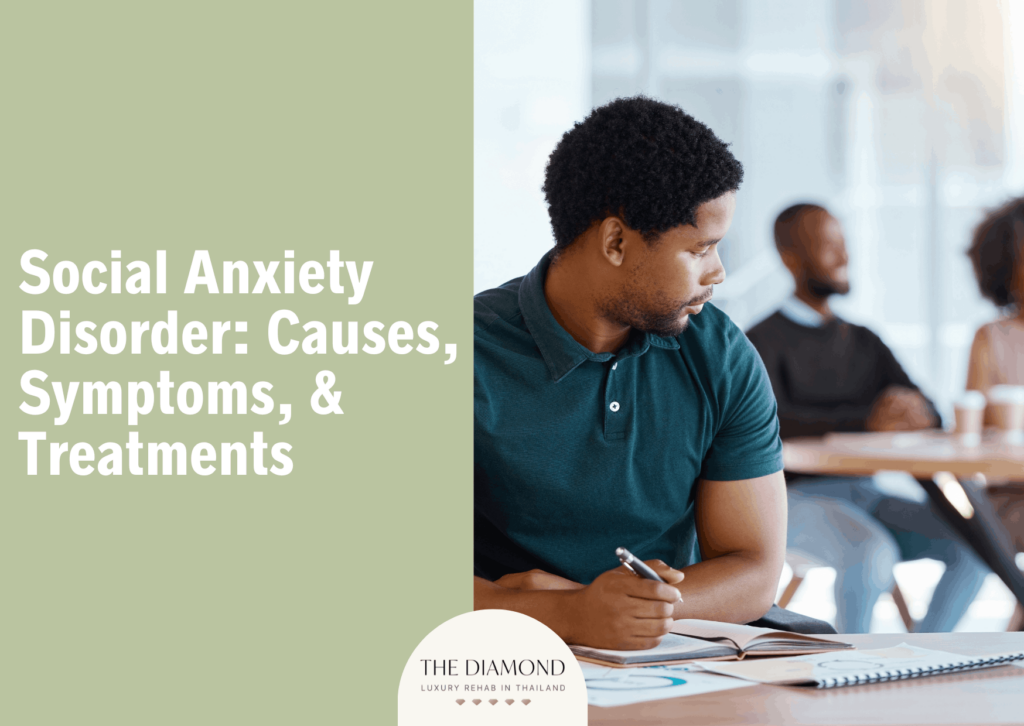
Social anxiety disorder (SAD) is a type of anxiety disorder characterized by intense fear and worry when experiencing or anticipating social situations. People with SAD worry they’re going to be embarrassed, humiliated, or judged.
Social anxiety is debilitating because it strongly limits a person’s life and activities. People with SAD aren’t anti-social in a way that they hate other people.
The causes of social phobia are inherited traits, brain structure abnormalities, and the environment. Symptoms of this condition include experiencing anxiety from people such as larger groups or strangers.
When that happens, a person experiences physical reactions such as blushing, fast heartbeat, trembling, sweating, nausea, shortness of breath, dizziness, feeling that your mind has gone blank, and muscle tension.
Treatment for social anxiety disorder relies on cognitive-behavioral therapy (CBT) and selective serotonin reuptake inhibitors (SSRIs).
What is social anxiety disorder?
Social anxiety disorder (SAD) is an overwhelming, long-term fear of social situations. Otherwise known as social phobia, social anxiety disorder is intense and persistent, which is why it has a major impact on a person’s quality of life.
This mental illness causes a fear of being judged and watched by others in public. Social anxiety means extreme worry, discomfort, and frustration with exposure to situations that everyone else perceives as completely normal.
The Diagnostic and Statistical Manual of Mental Disorders, Fifth Edition (DSM-5), released by the American Psychiatric Association, classifies social anxiety disorder as a type of anxiety disorder.
However, social anxiety disorder is not a modern-day mental illness. It has been present since prehistoric times. For example, the concept of social fear dates back to 400 BC when Hippocrates described an overly shy person as someone who loves the darkness of life and believes everyone’s watching them.
In the early 20th century, the terms social phobia and social neurosis were used to describe extremely shy patients.
For several years, social anxiety was poorly understood. One of the biggest breakthroughs in this field came in the 1950s when Joseph Wolpe, a South African psychiatrist, worked on developing systematic desensitization techniques, which contributed to advances in behavioral therapies for phobias.
During the next decade, in the 1960s, British psychiatrist Isaac Marks suggested that social phobias must be separated from other simple phobias, as per an article titled, “Social Anxiety Disorder History” last updated in April 2021 by News Medical.
In 1968, the release of DSM-2 described social fears as a specific phobia of social situations or excessive fear of being scrutinized by others. The definition of social phobia was very limited at that point.
The history was made with the release of DSM-3 in 1980, when social phobia was included as an official psychiatric diagnosis. This edition described social phobia as a fear of performance situations.
However, DSM-3 didn’t include fear of casual conversations, which is a less formal circumstance. People with fears of less formal situations were more likely to be diagnosed with an avoidant personality disorder.
Seven years later, in 1987, a revision of DSM-3 (DSM-3-R) was published and featured certain alterations in diagnostic criteria for this disorder. These changes implied that symptoms of this disorder cause interference or market distress, and it made it possible to diagnose both social phobia and avoidant personality disorder in the same patient, which was impossible before.
With the release of DSM-4 in 1994, the term social anxiety disorder replaced social phobia. Diagnostic criteria were similar i.e. slightly modified compared to that of DSM-3-R. The release of DSM-5, in 2013, didn’t change much in terms of diagnosis other than wording of the timeframe for diagnosis.
Overall, understanding of social anxiety disorder improved over the years. Celebrities and public figures aren’t immune to SAD. In fact, even the most well-known public figures have social anxiety disorder, including Naomi Osaka, Barbara Streisand, and Kim Basinger.
How common is social anxiety disorder?
Social anxiety disorder is one of the most common mental illnesses, with estimates showing that 12.1% of U.S. adults develop social anxiety disorder at a certain point in their lifetime, according to a publication titled, “Social Anxiety Disorder” from the National Institute of Mental Health.
The same report showed the past-year prevalence of SAD among U.S. adults was 7.1%. This mental illness was more prevalent in women (8.0%) than men (6.1%). Approximately 29.9% of adults who experienced SAD within the previous year reported severe impairment, 38.8% reported moderate impairment, and 31.3% reported mild impairment.
The abovementioned report additionally showed that the lifetime prevalence of social anxiety disorder in adolescents was 9.1%, while 1.3% of them had severe impairment. Prevalence was higher in female adolescents (11.2%) than in males (7.0%).
The September 2020 issue of the journal PLoS One published a study by Philip Jefferies and Michael Ungar, which focused on exploring the prevalence of SAD in 16 to 29-year-olds from seven countries.
For this purpose, researchers used a survey with 6825 respondents. Results showed that the incidence of social anxiety exceeded previous estimates. One in three (36%) of the respondents satisfied the diagnostic criteria for SAD.
The severity and prevalence of this mental illness didn’t differ between genders, but there was a difference in terms of age, work status, country, education level, and rural or urban place of living. In addition, one in six (18%) answered they didn’t think they had social anxiety, but they met the diagnostic criteria for SAD.
In a 2022 study by Aune et al., published in the Journal of Anxiety Disorders, 2.6% of 8216 adolescents had SAD. The incidence rate ranged from 2.0% to 5.7% based on the established parameters.
Research indicates that the occurrence rates of social anxiety disorder in children vary between 3% and 6.8% in samples collected from pediatric primary care settings and .5% — 9.0% in community investigations, with adolescents having slightly greater percentages, as per a 2009 study by Hitchcock et al., in the Israel Journal of Psychiatry and Related Sciences.
The paper added that childhood social phobia is one of the more prevalent child anxiety disorders in clinical settings, with rates ranging from 29 to 40%. Girls are more likely than boys to get the diagnosis in community samples.
According to a paper by Kee-Lee Chou published in the December 2009 issue of Journal of Affective Disorders, social anxiety disorder is more prevalent in younger age groups than in older adults.
Not much is known about the prevalence of SAD in the elderly population. However, as per a 2007 paper titled, “Epidemiology of Social Phobia in Later Life” from the American Journal of Geriatric Psychiatry, the lifetime and past-year prevalence of SAD in older adults was estimated at 4.94% and 1.32%, respectively.
Social phobia is a prevalent condition, with estimates suggesting that it affects between 4% to 6% of the population, and individuals have a lifetime probability of experiencing it between 7% and 13%, as per a 2001 review by H.U. Wittchen and L. Fehm published in the Psychiatric Clinics of North America.
In the July 2017 issue of the journal BMC Medicine, Stein et al., published a research article that explored cross-national epidemiology of SAD, which found that past-month, past-year, and lifetime prevalence of this mental illness was 1.3%, 2.4%, and 4.0%, respectively across all countries.
The regions with the highest prevalence rates of SAD are high-income countries, the Americas, and the Western Pacific, while low/lower-middle income countries and the African and Eastern Mediterranean regions have the lowest prevalence rates.
What are the causes of social anxiety disorder?
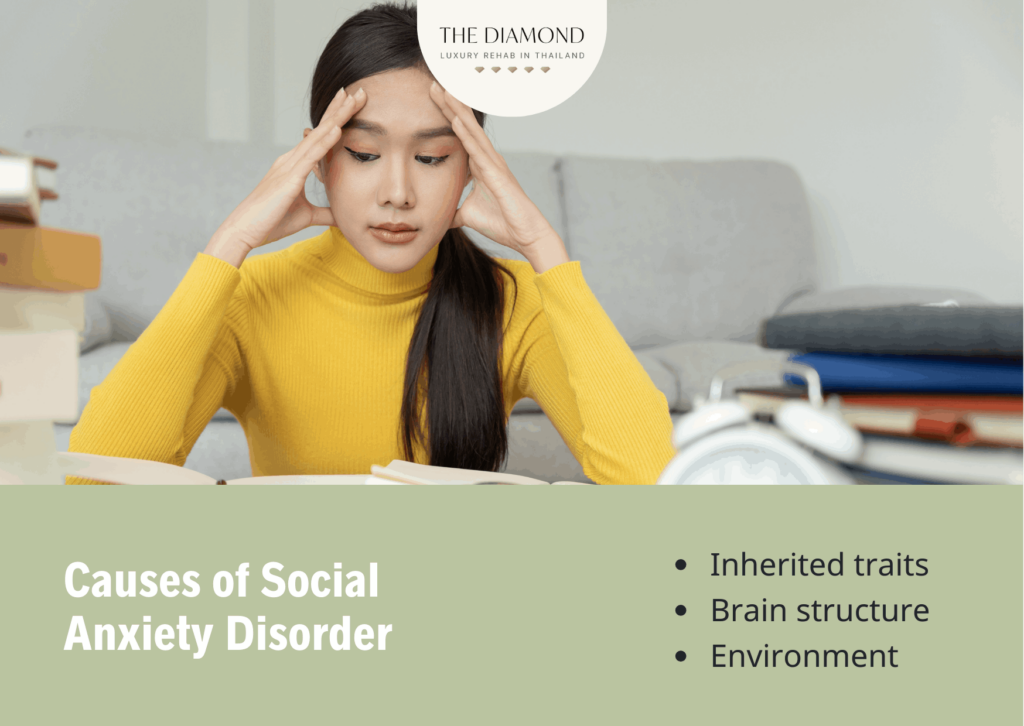
The causes of social anxiety disorder are similar to those of other anxiety disorders such as panic disorder. A combination of different causes is involved in the onset of social anxiety rather than just a single factor. The most significant causes of social anxiety disorder are listed below.
- Inherited traits
- Brain structure
- Environment
1. Inherited traits
Inherited traits are defined as characteristics or variations that are carried down from parent to child through reproduction and encoded in DNA, according to a publication titled, “Inherited” last updated in March 2024 from the National Human Genome Research Institute.
Classic examples of inherited traits are hair and eye color, but it is additionally possible for children to inherit genes that increase their susceptibility to physical and mental illnesses.
A 2021 article by Posner et al. published in the Journal of the American Academy of Child and Adolescent Psychiatry explained that mental illnesses frequently exhibit polygenic characteristics, wherein numerous prevalent genetic variants contribute a marginal yet significant additional risk.
Certain people have a genetic susceptibility to develop an anxiety disorder. The duplication of a segment of chromosome 15 is a significant genetic determinant of anxiety and phobic disorder susceptibility, according to a paper titled, “Are There Anxious Genes?” from the September 2002 issue of the Dialogues in Clinical Neuroscience. A lot more research is necessary to elucidate the link between this chromosome and symptoms of anxiety.
A 2013 review by Katharina Domschke and Eduard Maron published in the journal Modern Trends in Pharmacopsychiatry reported that multiple vulnerability genes are associated with anxiety disorders.
These genes include 5-HT1A, 5-HTT, CCK-B, COMT, MAO-A, ADORA2A, ACE, CRHR1, FKBP5, RGS2/7, and NPSR1. The same review explained that systems-level evidence suggests that these anxiety disorder vulnerability genes contribute to some disease risk through intermediate phenotypes such as anxiety sensitivity, behavioral inhibition, or various neurobiological traits like abnormal corticolimbic activity during emotional processing or increased startle reactivity.
Inherited traits become a cause of social anxiety disorder because children inherit specific genes or genetic variations from their parents. A study by Stein et al. in the February 2017 issue of the American Journal of Medical Genetics Part B Neuropsychiatric Genetics confirmed that social anxiety is influenced by genetics and has a common genetic base with extraversion, and to a lesser extent, with neuroticism.
Findings of a comparative study by Lochner et al. in the April 2007 issue of the European Neuropsychopharmacology pointed to a potential involvement of the polymorphism 5-HT(2A)T102C in the onset of social anxiety disorder.
The February 2021 issue of the journal Translational Psychiatry published a study where A. Wiegand et al. explored DNA methylation differences in social anxiety disorder. The term DNA methylation is a biological process wherein methyl (CH3) group is added to DNA, thereby modifying the function of the genes.
This particular study identified two SAD-related differentially methylated regions (DMRs) in the genes SLC43A2 and TNXB. It’s important to remember that panic disorder has previously been linked to both genes.
Authors additionally identified two DMRs connected to ELA in the SIAH3 gene and the SLC17A3 promoter region. The areas of MRPL28 and C2CD2L exhibited the greatest variation in DNA methylation among them.
Inherited traits are a cause of social anxiety disorder because certain genes and their variations affect the way people respond to fear and stressful stimuli.
2. Brain structure
Brain structure refers to regions in the brain that have their specific functions, including fear response, emotional regulation, and cognition. In the context of SAD causes, brain structure involves abnormalities in brain structure (regions) and their functioning as well as imbalance of neurotransmitters, all of which affect a person’s mental health.
An article titled, “The Brain and Common Psychiatric Disorders” from Psychology Today suggests that mental illnesses are brain disorders in that the brain facilitates the disordered ideas and behaviors that they entail.
That explains structural and functional differences in the brains of people with mental illnesses compared to healthy individuals, the article further elaborated. Brain structure plays an important role in the development of anxiety disorders, as well.
Brain structure is the cause of social anxiety disorder because abnormalities in certain areas and neurotransmitters affect emotional processing, response to fear, and how a person handles stress-inducing social situations.
A paper by Janna Marie Bas-Hoogendam and P. Michiel Westenberg from the April 2020 issue of F1000 Research reported that the socially anxious brain has heightened activity in the fear circuit, which includes the amygdala, insula, prefrontal cortex, and anterior cingulate cortex.
Additionally, the parietal and occipital regions of the brains of SAD patients exhibit hyperresponsiveness. The parietal lobe is a major sensory processing area of the brain, whereas the occipital region is responsible for visual perception.
The same paper reported hypoconnectivity in these areas, and alterations in network structure reflect the heightened emotional arousal and preoccupation with potentially dangerous stimuli that are characteristics of individuals diagnosed with SAD.
The abovementioned review added that the striatum plays a role in social anxiety disorder and intolerance of uncertainty. Striatum is a neuronal circuit necessary for voluntary movement control. People with social anxiety disorder tend to have increased striatal volume.
A research article by Tei et al. in the February 2020 issue of the Proceedings of the National Academy of Sciences of USA (PNAS) suggested that certain aspects of social anxiety are linked to increased affective empathy and decreased cognitive empathy.
Reduction in cognitive empathy points to decreased cognitive processing in embarrassing situations. This paper additionally confirmed the hyperactivity of the amygdala in people with social anxiety disorder.
An overactive amygdala in people with SAD is associated with oxytocin, a chemical messenger in the brain that reduces anxiety. According to a 2016 study by Inga D. Neumann and David A. Slattery published in Biological Psychiatry, the amygdala isn’t hyperactive in response to fearful stimuli in the presence of oxytocin. This indicates that levels of oxytocin are lower in people with social anxiety disorder, as per an article titled, “How Does Social Anxiety Affect the Brain?” from PsychCentral.
It’s useful to mention that the amygdala is slightly larger in people with this mental illness, according to a 2020 study by Suor et al. in the Journal of Psychiatric Research. What this means is that the brains of people with SAD have adjusted to spending more time and energy processing emotions and threats.
While the fear circuit, in general, is hyperactive in people with SAD, the activity of the prefrontal cortex alone is reduced. The prefrontal cortex plays a role in various aspects of human behavior, including decision-making, planning, and self-control.
Its function is to send signals to the amygdala to prevent it from becoming overactive during routine social situations. In people with social anxiety disorder, the prefrontal cortex doesn’t work properly.
When it comes to brain structures involved in social anxiety disorder, it’s useful to mention the fusiform gyrus and hippocampus. The fusiform gyrus is involved in processing faces and determining the emotional state of other people, which is why it’s important for social interactions. Hippocampus takes part in learning and memory.
Research by Yu et al. in the June 2021 issue of the International Journal of Environmental Research and Public Health suggested that the fusiform gyrus is either overactive or underactive in persons with SAD. Activity depends on the coping strategies a person has developed.
The role of the hippocampus in SAD is related to the possibility that social anxiety is a behavior that people learn after being exposed to bad social situations. With time, they get used to acting a certain way and expect people to react to them negatively.
A 2016 study by Suzanne N. Avery and Jennifer Urbano Blackford published in the journal Social Cognitive and Affective Neuroscience stated that when socially anxious individuals see the faces of people they haven’t seen before, their hippocampus becomes overactive.
When they are exposed to these faces repeatedly, they never learn to become familiar with them in a way that a person without SAD would. Those faces continue to be perceived as threatening. This explains why individuals with social anxiety disorder experience difficulties when meeting new people.
As mentioned above, an imbalance of neurotransmitters plays a role in the development of SAD, just like abnormalities in brain structure and function. According to a study by A. Frick et al. in the August 2015 issue of JAMA Psychiatry, people with social phobia produce excessive amounts of serotonin.
The bigger the serotonin production, the more anxious they become in social situations. The overproduction of serotonin in people with SAD occurs in the amygdala. Serotonin is a neurotransmitter whose function is to help regulate sleep, digestion, bone health, wound healing, sexual desire, blood clotting, and mood.
A 2004 review titled, “Neurology and Pharmacotherapy of Social Phobia” published in L’Encephale suggested that social anxiety disorder is associated with specific neurotransmitter alterations involving dopaminergic, serotonergic, and noradrenergic systems.
Brain structure is a cause of social anxiety disorder because the hyperactivity or reduced activity of certain regions and neurotransmitters affect how people react to new faces, process social situations, and cope with stressful stimuli.
3. Environment
The environment is an individual’s personal life, relationships, and social circumstances that contribute to the worsening of their mental health. In 2010, a review by Debra Umberson and Jennifer Karas Montez published in the Journal of Health and Social Behavior revealed that the quality and quantity of social connections have an impact on mortality risk, mental health, health behavior, and physical health of an individual.
Good, healthy relationships have a meaningful impact on mental health even in tough times such as the COVID-19 pandemic, according to a paper by Pieh et al. in the March 2021 issue of International Journal of Environmental Research and Public Health.
Having positive relationships with family members is important for an individual’s overall wellbeing throughout their life, a 2017 paper by P.A. Thomas et al. in the journal Innovation in Aging revealed. Besides relationships, a person’s childhood and social experiences shape their mental health and contribute to the development of disorders such as anxiety.
Environment causes social anxiety disorder because this mental illness is possibly an acquired trait, a 2021 article titled, “Social anxiety disorder (social phobia) from Mayo Clinic explained.
An embarrassing or unpleasant social situation tends to produce significant anxiety. Moreover, a child has an increased likelihood of developing social anxiety disorder if their parents exhibited anxiousness or are overprotective and controlling.
Findings of a 2017 study by L. Koban et al., published in the journal Emotion showed that as opposed to healthy adults, socially anxious individuals exhibit a lack of or reversal of the positivity bias observed in the impact of social feedback on self-perception.
The study added that state self-esteem, otherwise known as sentiments about the self, is either dynamically modified or acquired through social performance feedback. The accumulation of negatively biased learning outcomes from social feedback can eventually lead to a detrimental cycle characterized by negative self-evaluation and self-deprecating emotions, which likely sustains and even advances the disorder.
Significant prior research suggests that adults with SAD perceive more negative social signals in their environment than positive ones. Environment and how people perceive social cues play a major role in the development and progression of SAD.
Circumstances in which a child is growing up play a role in mental health in adolescence and adulthood. A study by Bruijnen et al. in the January 2019 issue of South African Journal of Psychiatry found that childhood trauma contributes to and worsens symptoms of social anxiety disorder. Early exposure to maternal stress was found to be a predictor of increased and persistent inhibition, and was associated with the development of SAD during adolescence.
Emotional abuse and neglect in childhood further contribute to social anxiety disorder and its severity, as per a 2012 study by Bruce et al. in the journal Depression and Anxiety.
Social experiences of an individual shape their behaviors in social settings. For example, peer victimization is positively associated with social anxiety, according to a 2019 study by Pontillo et al., published in the journal Brain Sciences. That means victims of bullying in childhood are prone to the development of SAD later in life.
A paper titled, “Familial Factors in the Development of Social Anxiety Disorder” from the July 2021 issue of Journal of Psychosocial Nursing and Mental Health Services reported that social anxiety develops as a result of being apart from one or both parents.
Besides parents, familial relationships, such as those with siblings, contribute to the development of SAD as well. For example, if one sibling has a high level of anxiety or in cases of sibling bullying.
The same report stated that social anxiety symptoms are often experienced as a result of stressful childhood events that have a strong social component, such as interpersonal conflict within the family. Additionally, interparental conflict heightens feelings of threat and exacerbates symptoms of social anxiety, which have an impact on peer relationships.
The environment is a cause of social anxiety disorder because relationships with family or peers and experiences to which a person has been exposed cause either a positive or negative perception of self. It additionally affects how people perceive social situations. Negative experiences and unhealthy relationships instill a fear of being humiliated or embarrassed in social settings.
What are the symptoms of social anxiety disorder?
Symptoms of social anxiety disorder have a significant impact on a person’s functioning in everyday life. The symptoms of social anxiety disorder are listed below.
- Blushing
- Fast heartbeat
- Trembling
- Sweating
- Upset stomach or nausea
- Trouble catching your breath
- Dizziness or lightheadedness
- Feeling that your mind has gone blank
- Muscle tension
1. Blushing
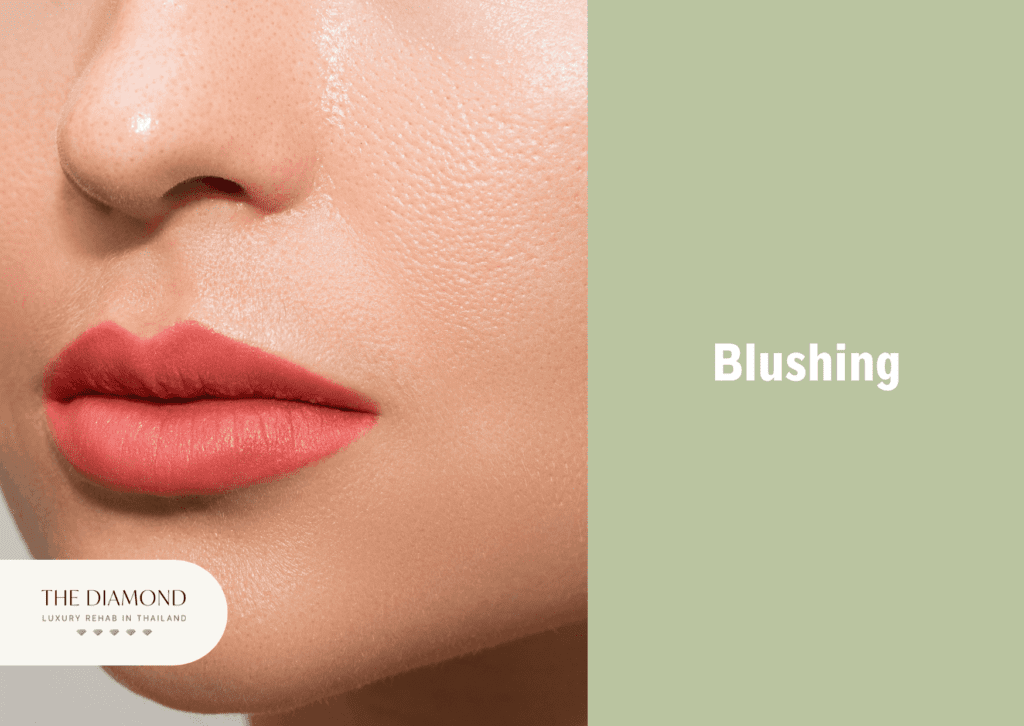
Blushing is defined as the reddening of a person’s face due to stress, embarrassment, or confusion. It is involuntary, meaning a person doesn’t induce or stop the reddening of the face on purpose.
Psychological reasons trigger blushing, such as shyness, romantic stimulation, and even fear or anger. Blushing is a normal reaction whose intensity varies from one person to another. Extreme or intense blushing is present in people with social phobia.
Social anxiety disorder causes blushing because redness in the face is a part of the body’s fight-or-flight response. When that happens, adrenal glands release adrenaline, which causes vasodilation (widening of blood vessels) in the face and neck.
More blood causes the face to flush, giving rise to a red complexion and a warming feeling, according to an article titled, “There Will Be Blood. And It Will Be in Your Face.” last updated in June 2023 by The New York Times.
When a person knows they’re blushing, they tend to blush even more. The reason for that is neurological arousal that causes a vicious self-perpetuating cycle. Looking flushed is a common indication of an active stress response that anxiety triggers.
Not only does SAD induce blushing, but the opposite is possible to happen as well. A study by Nikolić et al. in the December 2020 issue of Journal of Child Psychology and Psychiatry and Allied Disciplines reported that blushing, which is correlated with rising temperatures, plays a special role in the emergence of SAD symptoms in early to late childhood.
The reason this happens is a heightened self-conscious emotional reactivity. For example, around the age of four, when children begin to comprehend that they are subject to the opinions of others, it’s possible that they are going to start blushing in social situations out of fear of receiving a poor evaluation. This uncomfortable sensation of having a hot face may serve as a warning to them that the situation is dangerous and must be avoided, which ultimately results in SAD.
Blushing is a symptom of social anxiety disorder because it is an involuntary reaction to the fear of being judged, embarrassed, and uncomfortable in social situations. It is identified as the formation of redness in cheeks and a feeling of warmth when a person faces social events or is supposed to do so.
2. Fast heartbeat
Fast heartbeat, or tachycardia, is a heart rate of over 100 beats per minute. A fast heartbeat isn’t always a cause for concern. It’s natural for the heart rate to go up during exercise or as a response to stress. Fast heartbeat additionally occurs as a symptom of anxiety disorders such as SAD.
Social anxiety disorder causes a fast heartbeat due to the fight-or-flight mechanism, which is a part of the autonomic nervous system (ANS). When fight-or-flight mode is activated, the body tries to take in more oxygen. As a result, the breathing rate becomes faster, and with the release of adrenaline, the heart starts beating quicker.
The level of perceived anxiety plays an important role in causing a fast heart rate. A 2019 study by Trotman et al., published in the journal Anxiety, Stress, and Coping suggested that the actual change in heart rate was not correlated with the intensity of anxiety, but it was linked to more incapacitating interpretations of anxiety.
Perceptions of heart rate change were strongly related to greater intensity of cognitive and somatic anxiety. The term cognitive anxiety refers to negative thoughts and doubts, whereas somatic anxiety relates to physiological symptoms.
The above mentioned study additionally indicated that a person’s perception of their anxiety causes a fast heartbeat. For example, if a person believes their anxiety is intense, their stress levels react accordingly and cause a chain of reactions that results in a fast heartbeat.
A fast heartbeat is a symptom of social anxiety disorder because it’s a reaction to negative, stressful stimuli that a person can’t control. In this case, those stressful stimuli are a social event or situation.
Physiological hyperactivity is a defining characteristic of social anxiety, according to a 2021 paper by Rosler et al., in the Journal of Behavior Therapy and Experimental Psychiatry.
Identifying a fast heartbeat as a symptom of SAD isn’t complicated; it manifests itself in the form of a pounding heartbeat accompanied by chest pain, fainting, and shortness of breath in social situations.
3. Trembling
Trembling is an involuntary, rhythmic muscle contraction and relaxation of one or more body parts, usually the hands. Tremors occur due to various reasons ranging from lifestyle factors such as having too much caffeine to neurological conditions like Parkinson’s disease. Anxiety disorders can also cause trembling.
Social anxiety disorder causes trembling due to the activation of the fight-or-flight response. Healthline explains that when the body prepares to deal with a stressor by interpreting anxiousness as a signal that a person needs to stand their ground or escape from danger. At that point, the muscles are primed to act, which results in trembling sensation and shaking. Tremors caused by anxiety are called psychogenic tremors.
Trembling appears with other symptoms of SAD such as a fast heartbeat and shortness of breath. It’s also useful to mention that anxiety can trigger other existing conditions, such as essential tremors.
As a result, anxiety becomes worse, and so do the symptoms of that specific condition. In the case of essential tremor, a neurological disorder that causes involuntary and rhythmic shaking, the symptoms can aggravate when a person is anxious, Medical News Today explained. According to D.A. Lundervold et al. who published a study in the July 2013 issue of Psychiatry Journal, around 30% of participants with essential tremors also had a social anxiety disorder.
Trembling is a symptom of social anxiety disorder because it happens involuntarily when a person faces the source of their anxiety, in this case, that source is a social situation. In this disorder, trembling appears as shaking (usually hands) when a person is anticipating social interaction, attends parties or gatherings, eats or drinks in public, goes on a date, makes phone calls, performs on stage, or speaks up in a meeting.
4. Sweating
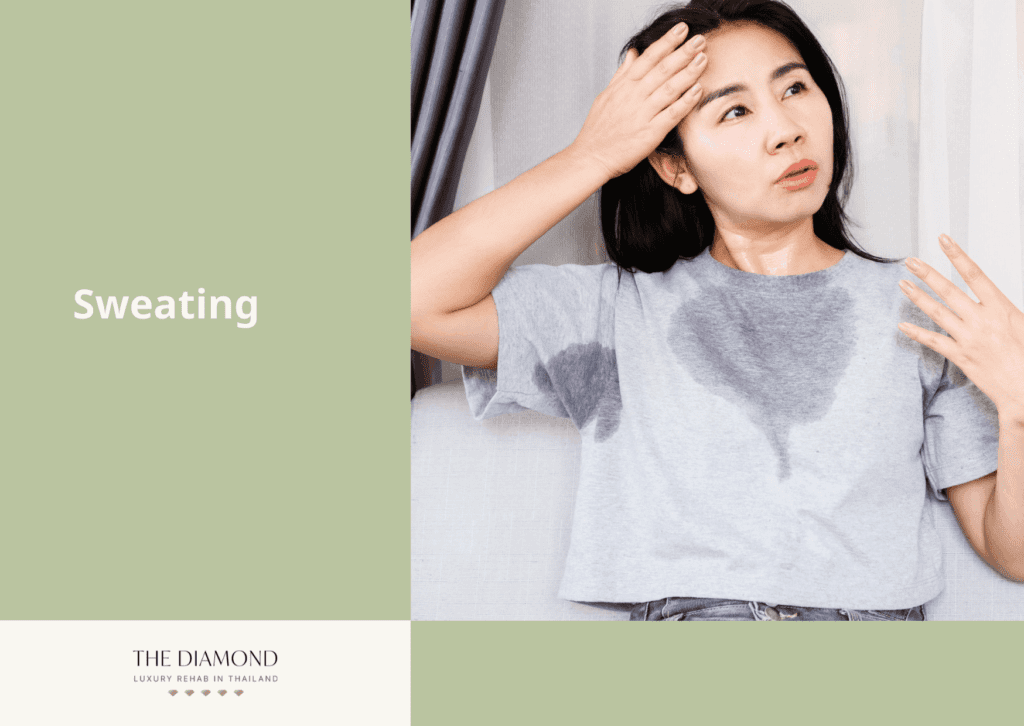
Sweating is the release of salty liquid from the sudoriferous (sweat) glands. This process is called perspiration. As a normal process, sweating helps the body stay cool when people exercise or the weather is hot. Heavy sweating can result from health problems such as diabetes, heart failure, overactive thyroid, and anxiety.
Social anxiety disorder causes sweating because it triggers the well-known fight-or-flight response. When a person faces a threat, whether it’s real or perceived, the sympathetic nervous system engages this response, which requires higher energy expenditure. As a person expends energy, their body temperature goes up. Since overheating would make it difficult to keep fighting or escape the threat, the body sends signals to sweat glands to produce sweat.
In people with anxiety disorders, the body and brain are on the constant lookout for potential threats. That’s why a person may regularly experience emotional and physical symptoms, including sweating.
According to a report from the International Hyperhidrosis Society, between 25% and 32% of people with social anxiety disorder experience excessive sweating. A person who lives with SAD is constantly worried about being judged and goes to great lengths to avoid drawing attention to themselves and their appearance, including excessive sweating.
Since fear and stress trigger sweating, a person with SAD experiences increased perspiration alongside other physical symptoms such as lightheadedness and nausea, Healthline explained. Sweating is a symptom of social anxiety disorder because it is the key sign of the fight-or-flight mechanism.
It’s a reaction to an uncomfortable social situation that a person can’t ignore. Sweating in people with SAD is similar to typical sweating, and it usually appears in the palms and soles of feet, but the forehead and under-arm areas are also affected. As a person is exposed to a social situation, such as public speaking or meeting larger groups of people, they may start producing more sweat instantly.
5. Upset stomach or nausea
An upset stomach or nausea is a feeling of sickness in the stomach that causes the urge to vomit. People can get nauseous due to bad food, side effects of medications, or due to anxiety.
A study by T.T. Haug et al. in the March-April 2002 issue of General Hospital Psychiatry found that 48% out of 62,651 people who responded to the questionnaire reported one or several gastrointestinal complaints during the last year. Of these, 12.5% of responders complained of nausea and 15.3% had an anxiety disorder. The presence of anxiety disorders carried the highest risk for nausea.
Social anxiety disorder causes nausea because neurotransmitters released during the fight-or-flight response enter the digestive tract. In the digestive tract, these neurotransmitters impair the delicate balance of microorganisms that reside in the gut.
An imbalance in gut microbiota can cause nausea. The same process can cause other digestive problems including heartburn, stomachache, gas, bloating, and diarrhea or constipation. Nausea is a symptom of social anxiety disorder because processes in the brain also reflect on the gut. This makes a person feel sick or get the urge to vomit when facing or anticipating social situations such as spending time with larger groups of people.
As a symptom of SAD, nausea appears in the form of an urge to vomit but also a lack of appetite, weakness, and increased production of saliva. These symptoms appear instantly as a person’s anxiety levels go up with exposure to the trigger of their anxiety.
6. Trouble catching your breath
Trouble catching your breath, or shortness of breath, occurs when a person isn’t getting enough oxygen, which makes them feel like they need to breathe harder, deeper, or faster. Heart or lung conditions tend to cause shortness of breath, but it can also occur during exercise or in the presence of stress and anxiety disorders.
Social anxiety disorder causes shortness of breath because the body responds to the social situation as if a person is running for their life, even though they are not. Shortness of breath is a part of the fight-or-flight mechanism.
The body is trying to get more oxygen to the muscles, preparing a person for flight. At this point, the heart rate increases, and more blood goes into the muscles thus making a person feel hot, which helps prepare for a fight. Due to a faster heart rate and increased need for oxygen, a person experiences trouble catching their breath.
Shortness of breath is a symptom of social anxiety disorder because it is a direct consequence of the protective mechanism activated in the presence of triggers. To identify it as a symptom of SAD, it is important to remember it makes a person feel like they can’t catch a breath or as if they are suffocating and hungry for air.
Tightness in the chest accompanies shortness of breath, as well. In people with social anxiety disorder, shortness of breath may appear with other physiological symptoms such as muscle tension and fast heart rate.
7. Dizziness or lightheadedness
Dizziness is defined as the feeling of being lightheaded, off-balance, and woozy. Mayo Clinic reports that dizziness is among the most common reasons adults visit their doctors. People get dizzy for many reasons, including underlying health conditions, motion sickness, certain medications, poor circulation, infection, and problems such as anxiety disorder.
Social anxiety disorder causes dizziness due to sudden changes in blood pressure, which may happen in a fight-or-flight response. The abrupt change in blood pressure can make a person feel lightheaded.
Additionally, stress hormones such as cortisol and adrenaline can affect the vestibular system of the inner ear, which is important for balance, according to a paper by Y. Saman et al. in the July 2012 issue of Frontiers in Neurology. People with SAD may hyperventilate, which deprives their brains of oxygen and causes dizziness.
When it comes to dizziness and social anxiety disorder, it’s useful to mention a study titled “Overview of Psychologic Effects of Chronic Dizziness and Balance Disorders” from the June 2000 issue of the journal Otolaryngologic Clinics of North America, which found that chronic dizziness can lead to psychological problems such as anxiety.
The relationship between dizziness and anxiety is strong, especially because anxiety and avoidance of activity can worsen and perpetuate dizziness. This results in a vicious cycle of persistent disorientation and distress.
Dizziness is a symptom of social anxiety disorder because a patient may feel emotionally unsteady, which causes a subjective feeling of dizziness. It is also a consequence of physical reactions to stressful stimuli or triggers of anxiety.
This symptom is identified as lightheadedness or feeling faint, unsteadiness, and a feeling of floating when a person is in a social situation that causes anxiety and discomfort.
8. Feeling that your mind has gone blank
Feeling that your mind has gone blank refers to the decoupling of perception and attention wherein attention fails to bring any stimuli into a person’s conscious awareness. In other words, a person’s mind seems to be “nowhere”. People with anxiety may experience mind blanking or brain fog.
Social anxiety disorder causes mind blanking because this mental illness takes up mental resources. An individual with SAD may need to use more energy to focus on something else other than their anxiety. Anxious thoughts may intrude on a thought process. As a result, it becomes difficult to concentrate and think clearly.
For instance, a research paper by K.M. Lukasik et al. from the January 2019 issue of Frontiers in Psychology shows anxiety significantly affects mental processes such as working memory.
Feeling that your mind has gone blank is a symptom of SAD because the anxious thoughts in the social situation don’t allow a person to pay attention to anything else. This symptom is identified as forgetting about a task at hand, taking longer to complete simple tasks, and poor concentration when exposed to triggering social situations or when a person expects or anticipates it.
9. Muscle tension
Muscle tension is a condition wherein one or multiple muscles remain in semi-contraction for a prolonged period. Causes of muscle tension are numerous, including poor posture, over-exercising, and performing activities using poor techniques.
Mental health can affect muscles and cause tension, which is why people with anxiety disorders may experience this problem. Social anxiety disorder causes muscle tension because the natural stress response puts a person in a state of readiness, which involves both mental and physical tension.
In the presence of a perceived threat, the body launches changes that make a person more alert and ready to face a threat or avoid it. For people who live with SAD, the body may frequently activate a fight-or-flight response, which is why the muscles are affected too.
Muscle tension goes away when a stressful situation passes. However, anxiety causes feelings of stress and tension that may last for hours or days. Muscle tension is a symptom of SAD because the trigger of anxiety puts the body in the mode of being ready to protect itself.
This symptom is identified as muscle tightness in the neck, shoulders, and other areas, such as the jaw or stomach, in the presence of a social situation that causes anxiety.
What can I expect from social anxiety disorder?
People with social anxiety disorder tend to worry a lot about embarrassing or humiliating themselves. Interaction or communication with strangers may cause intense fear. A person with SAD may be afraid other people in a specific social situation may notice they look anxious.
They may be afraid of getting embarrassed by physical symptoms of SAD, such as sweating or blushing. The fear of embarrassment or facing humiliation prompts a person with SAD to start to avoid speaking to people or participating in activities with a larger group of people.
They may also start avoiding situations where they are the center of attention. For example, a person with SAD may avoid meetings where they are required to speak up. People with SAD often focus on the worst-case scenarios during social situations, which only worsens their symptoms.
When left untreated, a social anxiety disorder can affect a person’s self-esteem and contribute to negative self-talk or hypersensitivity to criticism. In the most difficult cases, SAD can lead to social isolation, relationship problems, low academic or employment achievement, substance abuse, and suicidal thoughts and tendencies.
Who is at risk for social anxiety disorder?
People with a family history of social anxiety disorder are at a high risk of developing it as well. While social anxiety disorder can affect people at any age, it usually emerges during early to middle adolescence.
Children who were subjected to bullying, abuse, teasing, neglect, rejection, ridicule, and unstable familial relationships are more likely to develop social anxiety disorder later on.
Experiencing or witnessing negative events such as family conflict and trauma is also among the risk factors for the onset of SAD. Children whose parents were controlling, critical, and overprotective are more likely to develop this type of anxiety disorder.
Temperament also plays a role in susceptibility to social anxiety disorder. For example, children who are shy, timid, or restrained when facing new situations could be more prone to developing this mental illness.
Social anxiety disorder can be triggered by a health problem that may draw the public’s attention, such as Parkinson’s disease. People who didn’t have SAD before may develop symptoms in situations when they are supposed to give a speech in public, meet new people, or hold an important presentation at work.
How is social anxiety disorder diagnosed?
A healthcare professional or psychiatrist diagnoses social anxiety disorder when a patient meets the diagnostic criteria from DSM-5. Before that happens, a doctor performs a physical exam and orders blood tests or urine tests to determine whether the symptoms have a physiological trigger.
When a physical exam doesn’t explain a patient’s symptoms, the doctor refers them to a psychiatrist for psychiatric evaluation. During the psychiatric evaluation, the mental health expert discusses a patient’s symptoms, their frequency, severity, and situations when they occur. A patient may need to complete a questionnaire about symptoms of social anxiety.
Upon psychiatric evaluation, the psychiatrist may use DSM-5 and diagnose social anxiety disorder if a patient meets the diagnostic criteria.
Criteria for SAD include persistent fear or anxiety about specific social situations because a person believes they may be judged negatively, avoidance of anxiety-inducing social situations, anxiety that is out of proportion to the situation and interferes with daily living, and anxiety that is not explained by substance abuse, medication, or a medical condition.
Social anxiety disorder is diagnosed when a patient has experienced symptoms for at least six months, Cleveland Clinic explained.
What are the available treatments for social anxiety disorder?
Treatments for social anxiety disorder depend on the extent this mental illness affects a person’s daily functioning. Patients usually need therapy, medications, or combinations of both. The available treatments for social anxiety disorder are listed below.
- Cognitive behavioral therapy
- Selective serotonin reuptake inhibitors (SSRIs)
1. Cognitive behavioral therapy
Cognitive-behavioral therapy (CBT) is a type of psychotherapy that helps patients manage their problems by changing the way they think and behave. It helps treat SAD by enabling them to identify negative or irrational thought patterns in order to replace them with more rational alternatives.
The main premise behind cognitive behavioral therapy is that thoughts dictate emotions and behavior. By changing their thinking pattern, people can also change how they feel and act. Cognitive-behavioral therapy is one of the treatments for social anxiety disorder because it is patient-centric and allows a therapist to adjust therapy sessions to meet the patient’s needs.
Not only do patients learn to identify and change irrational thoughts that trigger their anxiety in social situations, but they also develop skills that improve their functioning. For example, patients may learn communication skills to improve their interactions with other people.
Cognitive-behavioral therapy is an effective treatment approach for patients with social anxiety disorder. The January-June 2009 issue of the Industrial Psychiatry Journal published a case study by R. Priyamvada et al. involving a 27-year-old man with social phobia.
The patient was treated with cognitive behavioral techniques that resulted in significant improvements after 17 sessions. The patient was under follow-up for six months and recovered to the premorbid level of functioning.
A review by E. Mayo-Wilson et al. in the October 2014 issue of The Lancet evaluated 101 studies with 41 treatment approaches, including medications and self-help strategies but found that CBT had the most significant impact on the treatment of social anxiety.
Besides individual therapy sessions, patients can benefit from group therapy. A therapist may also opt for exposure-based CBT, which involves gradually working up to facing the situations that a patient is afraid of. Exposure-based CBT improves coping skills and boosts a patient’s confidence to handle triggers of their social anxiety.
The main goal of CBT for social anxiety disorder is to empower patients to gain a different perspective and cope with stress and anxiety in difficult situations. In order to do so, patients may need six to 20 sessions. The specific number of sessions varies from one patient to another based on the severity of their social anxiety. The sessions last 30 to 60 minutes.
2. Selective serotonin reuptake inhibitors (SSRIs)
Selective serotonin reuptake inhibitors (SSRIs) are a class of drugs called antidepressants. They are usually prescribed to help treat the major depressive disorder, but may also aid the management of other psychological conditions, including anxiety disorders.
These medications help treat SAD because they act on brain chemistry by slowing down the reabsorption of the neurotransmitter serotonin. Serotonin is a chemical that regulates anxiety and mood. People with social anxiety disorder tend to produce excessive amounts of serotonin, which worsens their symptoms. By slowing down the reuptake of these neurotransmitters, SSRIs may help reduce the intensity of symptoms of social anxiety disorder.
Selective serotonin reuptake inhibitors (SSRIs) are a treatment for SAD because symptoms can be persistent. They are used in combination with psychotherapy. Patients may receive a prescription for paroxetine (Paxil) or sertraline (Zoloft).
A review by N. Mitsui et al. in the December 2022 issue of Neuropsychopharmacology Reports confirmed that SSRIs are a valid option for patients with social anxiety disorder. According to the meta-analysis that G.J. van der Linden et al. published in the August 2000 issue of the International Journal of Psychopharmacology, SSRI treatment for social anxiety disorder is effective in lowering total levels of social anxiety and improving overall clinical conditions among patients.
It takes two to four weeks to feel the effects of SSRIs.
What are the complications of social anxiety disorder treatment?

Complications of social anxiety disorder treatment are listed below.
- Difficulty to commit: In order for CBT to work for social anxiety disorder, a patient needs to commit to it firmly. A therapist can advise patients, but they need their cooperation. Difficulty in committing becomes a complication of CBT because symptoms of SAD can be so severe that a person is unable to do so. Difficult commitment is a complication because a patient can’t get the most from this type of therapy. It is identified as a patient’s inability to cooperate with a therapist and approach therapy with an open mind.
- Confrontation with anxiety: A major component of CBT for people with social anxiety is the confrontation with their fear or triggers of anxiety. It becomes a complication because a patient may experience periods when they are anxious and emotionally uncomfortable. This may be a problem for patients whose SAD is severe since they may believe the therapy isn’t working. It is identified as a complication of SAD when a patient needs to step out of their comfort zone for the purpose of therapy, and anxiety symptoms appear.
- Limited scope: CBT itself doesn’t address wider problems, such as family dynamics, that may have a major impact on a person’s mental health. The limited scope becomes a complication because family dynamics and a patient’s past have a significant influence on the development and progression of their social anxiety. It is a complication because a patient with SAD can’t address and manage all aspects that contribute to their condition. It is identified as a complication through the nature of the approach that focuses only on the present.
- Medication side effects: SSRIs can cause side effects as the body adjusts to the medication. They become a complication because a patient experiences agitation, indigestion, diarrhea or constipation, dizziness, loss of appetite, dry mouth, blurred vision, excessive sweating, insomnia, headaches, low libido, and erectile dysfunction. Side effects are a complication because they can worsen symptoms of SAD such as excessive sweating and dizziness. Additionally, a patient may have low confidence in the medication’s safety and efficacy. This complication is identified through the appearance of the abovementioned adverse reactions.
How to deal with social anxiety disorder?
In addition to a well-structured treatment, there’s a lot that people with social anxiety disorder can do to manage their condition and improve their overall quality of life. Tips to deal with social anxiety disorder are listed below.
- Practice relaxation techniques to manage stress
- Get enough sleep
- Exercise regularly and eat a well-balanced diet
- Avoid alcohol and drugs, and limit intake of caffeine
- Reach out to people with whom you feel comfortable and participate in social activities with them
- Consider joining a support group for people with social anxiety disorder
- Learn as much as possible about SAD and its effects on life
- Practice public speaking with experts
- Be kind to yourself
- Don’t be afraid to ask for help
- Combat negative thoughts by finding arguments that prove they’re irrational
Is social anxiety disorder a mental illness?
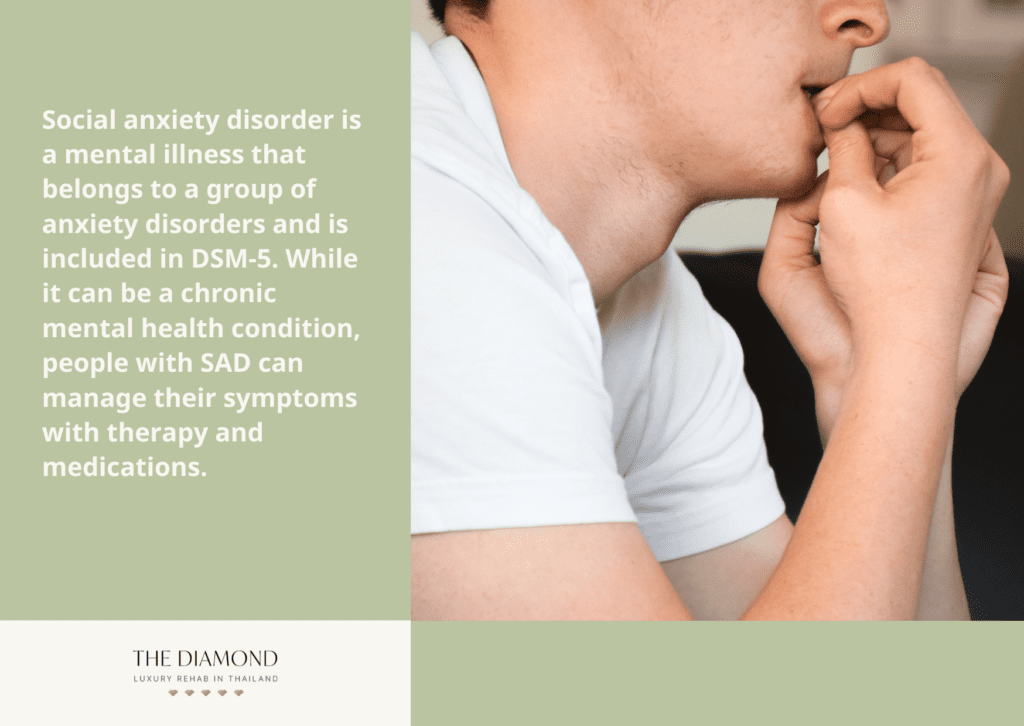
Yes, social anxiety disorder is a mental illness that belongs to a group of anxiety disorders and is included in DSM-5. While it can be a chronic mental health condition, people with SAD can manage their symptoms with therapy and medications.
That way, they can improve their communication with other people. Social anxiety is a treatable condition. However, it shouldn’t be confused with shyness. Shyness is closely related to a person’s comfort zone and every individual has a different comfort zone level. But SAD is much more than that; it’s a mental health condition that strongly affects a person’s quality of life.