Self-medication: definition, examples, signs, and effects


Table of content
- What is self-medication?
- How does self-medication work?
- Why do people self-medicate?
- What are examples of self-medication?
- What are the signs of self-medication?
- What are the risks associated with self-medicating?
- What are the benefits of self-medication?
- Can self-medication lead to addiction?
- How can one stop self-medicating?
- How to help someone who is self-medicating?
Self-medication (SM) is a globally prevalent and increasingly complex behavior in which individuals use medicines or substances to treat perceived health issues without professional guidance.
Examples of self-medication range from over-the-counter (OTC) drugs, prescription drugs, alcohol, illicit drugs, food, dietary supplements, and herbal remedies.
Signs of self-medication typically manifest as using substances to cope with stress, anxiety, or depression, increased tolerance, decline in productivity, dependence on substances for sleep, relying on substances to cope in social settings, and distress over difficulty accessing substances.
Risks of self-medication include incorrect diagnosis and treatment, adverse drug interactions, polypharmacy, dependence and abuse, masking serious illnesses, and antibiotic resistance.
The benefits of self-medication encompass convenience and quick relief, reduced healthcare burden, increased accessibility of treatment, and the promotion of preventive and proactive health behaviors.
What is self-medication?
Self-medication is the act of using drugs to treat conditions or symptoms that one has diagnosed on their own without any professional help. Additionally, it includes the on-and-off or ongoing use of prescription drugs, supplements, or home remedies. The World Health Organization (WHO) and the International Pharmaceutical Federation defines self-medication as act of a person selecting and utilizing drugs to address self-recognized minor health concerns or symptoms as mentioned in the article “Self-Medication and their Consequences: A Challenge to health Professional” authored by Kiranbir Chouhan and Shyam Baboo Prasad published in the Asian Journal of Pharmaceutical and Clinical Research in 2016.
Individuals experiencing physical or mental health issues sometimes self-medicate as a way to cope with their symptoms. However, this behavior has been linked to the development of substance use problems. Self-medication is a major contributor to the improper use of medicines, often leading to harmful drug reactions, increased resistance, unnecessary expenses, prolonged illness, and repeated reliance on medications.
How common is self-medication?
Self-medication is a widespread global practice. A comprehensive systematic review and meta-analysis titled “Global, WHO Regional, and Continental Prevalence of Self-medication from 2000 to 2018: A Systematic Review and Meta-analysis” by Shabnam Ghasemyani et al. published in the journal Annals of Public Health in 2022, found that approximately 67% of individuals worldwide reported at least one instance of self-medication. This high prevalence varies across diverse populations and geographic regions.Notably, Eastern Europe and Southeast Asia exhibit the highest reported rates, with approximately 74% of their populations engaging in self-medication.
In contrast, a more recent meta-analysis titled “Prevalence of self-medication during COVID-19 pandemic: A systematic review and meta-analysis”by Golnesa Kazemioula et al. published in the journal Frontiers in Public Health in November 2022, reported a slightly lower global prevalence of 48.6% during the pandemic period. Despite the overall decline, regional disparities persisted, with Asia recording the highest prevalence at 53%, while Europe reported a comparatively lower rate of 40.8%. The findings highlight how global health crises influence self-medication patterns through changes in healthcare access and behavior.
The prevalence of self-medication further differs significantly among specific population groups. According to the research article “Prevalence of self-medication in university students: systematic review and meta-analysis”by Meysam Behzadifar et al, published in the journal Eastern Mediterranean Health Journal in 2020, university students demonstrate a high tendency towards self-medication, with a global meta-analysis indicating a prevalence of 70.1%. This rate is even more pronounced among medical students, reaching 97.2%, compared to 44.7% among non-medical students, likely due to their enhanced medical knowledge and potentially easier access to pharmaceutical products.
How does self-medication work?
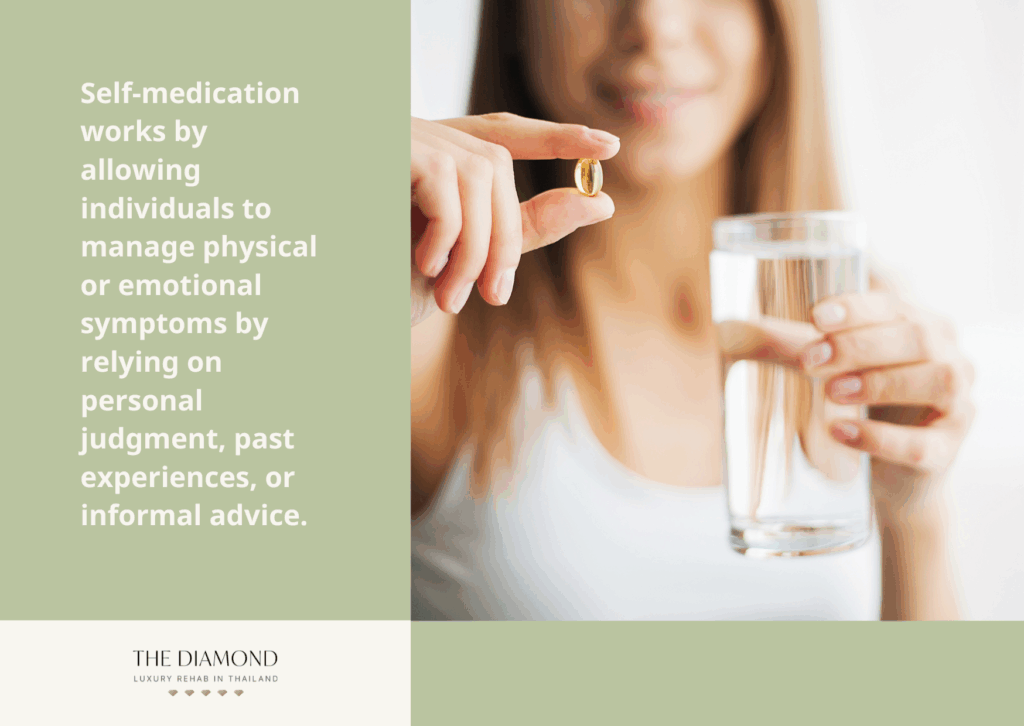
Self-medication works by allowing individuals to manage physical or emotional symptoms by relying on personal judgment, past experiences, or informal advice. The process typically begins with the recognition of a symptom such as pain, anxiety, or fatigue, followed by the decision to treat it using over-the-counter drugs, leftover prescriptions, or addictive substances and alcohol.
From a psychological perspective, self-medication serves as a coping mechanism for emotional distress. According to the Self-Medication Hypothesis (SMH), individuals typically use substances to manage symptoms of mental health conditions. This idea is discussed by Jennifer A. Robinson and James M. Bolton in Chapter 53: Substance Use in Response to Anxiety Disorders, published in the 2013 Principles of Addiction: Comprehensive Addictive Behaviors and Disorders, where they describe how people with anxiety often resort to substance use to self-soothe or regulate overwhelming emotions. This relief, whether physical or emotional, acts as a form of reinforcement. If the substance reduces discomfort or produces a sense of control or calm, the behavior is likely to be repeated. Over time, this reinforcement strengthens the habit, making self-medication a go-to strategy during future distress.
Self-medication exerts its effects by altering brain chemistry in ways that temporarily relieve psychological distress. Many commonly used substances modulate neurotransmitters such as dopamine, gamma-aminobutyric acid (GABA), and serotonin, leading to short-term improvements in mood, reward, and relaxation. For example, dopaminergic activation in the mesolimbic pathway—a key reward circuit—is triggered by substances like opioids, alcohol, and stimulants, which reinforces the behavior through pleasurable or soothing effects as noted in the article “Neurocircuitry of Addiction” by George F Koob and Nora D Volkow published in the journal Neuropsychopharmacology in 2010.
However, repeated use causes neuroadaptation—the brain adjusts by reducing its natural production of neurotransmitters, leading to tolerance and dependence. Over time, individuals begin to self-medicate not only to relieve the original symptom but to manage the distress caused by the absence of the substance itself. This creates a self-reinforcing cycle.
In essence, self-medication works by providing short-term symptom relief through psychological reinforcement and neurochemical effects, but at the risk of masking underlying conditions, reinforcing dependency, and delaying appropriate medical care.
Why do people self-medicate?
People self-medicate for a variety of reasons, often stemming from a desire to manage physical or emotional pain. Self-medication is influenced by a combination of individual, economic, physician-related, cultural, and media-driven factors. Those with prior medical knowledge, positive past experiences with medicines, or advice from friends and family feel confident in treating themselves, especially when drugs are easily available without prescriptions. Busy schedules, informal consultations, and viewing illnesses as minor further reduce the likelihood of seeking professional care. High consultation fees, diagnostic costs, and travel expenses—particularly without insurance—make self-treatment seem more affordable.
Overcrowded clinics, long waiting times, privacy concerns, and perceived over-reliance on costly tests additionally erode trust in doctors. In many communities, self-medication is culturally accepted and often encouraged through shared experiences, while media advertising and online health information promote medicines as safe and easy to use, fueling self-diagnosis. Together, these factors make self-medication appear convenient, cost-effective, and socially acceptable, despite its potential risks to health.
A 2023 article “Prevalence, Pattern, and Reasons for Self-Medication: A Community-Based Cross-Sectional Study From Central India” by Pragati Rathod et al.published in the journal Cureus in 2023, found that the most common reasons to self-medicate were saving time and perceiving the illness as too minor to require medical consultation, with pharmacists and family members serving as the main sources of drug information.
One of the most influential explanations for self-medication comes from psychiatrist E. J. Khantzian’s article titled “The Self-Medication Hypothesis of Substance Use Disorders: A Reconsideration and Recent Applications”published in the journal Harvard Review of Psychiatry in 1997. Khantzian proposed that individuals with substance use disorder (SUD) often self-medicate with drugs not to seek euphoria, but to relieve underlying psychological distress such as anxiety, depression, or trauma.
What are examples of self-medication?

Examples of self-medication are listed below.
- Over-the-counter (OTC) drugs: Over-the-counter (OTC) drugs or nonprescription drugs are among the most frequently used substances in self-medication. In a 2021 study titled “Self-Medication With Over-the-Counter Medicines Among the Working Age Population in Metropolitan Areas of Thailand”by Sineenart Chautrakarn et al. published in the journal Frontiers in Pharmacology, reported that 88.2% of respondents engaged in self-medication. The most commonly used drug categories were nonsteroidal anti-inflammatory drugs (NSAIDs) at 34.8%, antibiotics at 30.2%, and anti-allergic medications at 28.4%. These drugs are often selected for minor ailments due to their easy accessibility and perceived safety. Another research study “Over the counter drugs and self-medication: A worldwide paranoia and a troublesome situation in India during the COVID-19 pandemic” by Ishita Rayet al.published in the journal Annals of Medicine & Surgery in 2022, highlights that the most frequently self-prescribed substances include antipyretics, analgesics, antitussives, antidiarrheals, supplements such as vitamins and calcium, anabolic steroids, antibiotics, sedatives, homeopathic and herbal remedies.
- Prescription drugs: Self-medication often involves the misuse of prescription medications. Certain individuals hold onto medication prescribed for a previous ailment and reuse it if similar symptoms arise, without consulting a doctor for a current diagnosis or appropriate dosage. Another dangerous form of self-medication involves taking medication prescribed to others, often family members, as highlighted in the article “The Reasons for Self-Medication from the Perspective of Iranian Nursing Students: A Qualitative Study” by Maryam Janatolmakan et al. published in the journal Nursing Research and Practice in 2022. Examples of prescription medications include anti-anxiety drugs, opioid painkillers, and medications for attention-deficit hyperactivity disorder (ADHD).
- Alcohol: Alcohol is a widely used substance for self-medication. Many individuals turn to alcohol to cope with stress, anxiety, depression, or difficulty sleeping. As a central nervous system depressant, alcohol provides temporary feelings of relaxation and reduced anxiety. Certain individuals report using alcohol to “numb” emotional pain or to feel more “normal” when experiencing symptoms of depression. However, despite these short-term effects, regular self-medication with alcohol often leads to alcoholism, characterized by compulsive alcohol use, loss of control over intake, and negative emotional states when not drinking.
- Illicit drugs: Various illicit drugs are used for self-medication to manage both mental illness symptoms and physical pain.Marijuana is frequently used for its calming and relaxing effects. Stimulants like cocaine and methamphetamine are used to increase energy, focus, and feelings of well-being or a temporary boost in productivity. Opioids, including heroin, are used to induce feelings of peace, happiness, and relaxation, and to alleviate physical or emotional pain. The use of illicit drugs for self-medication carries significant risks of overdose and the development of substance use disorder (SUD).
- Food: Emotional eating is another example of self-medication where individuals use food as a way of coping with anxiety disorder, stress, depression, or other unpleasant emotions. This often involves consuming foods high in sugar, calories, and unhealthy fats, which provide temporary comfort but lead to negative consequences for physical health, such as weight gain, and worsen mental health issues in the long run. According to the article “The Association of Emotional Eating with Overweight/Obesity, Depression, Anxiety/Stress, and Dietary Patterns: A Review of the Current Clinical Evidence” by Antonios Dakanalis et al.published in the journal Nutrients in 2023, emotional eating is a key behavioral risk factor for obesity, depression, anxiety, and unhealthy eating patterns.
- Dietary supplements and herbal remedies: The use of dietary supplements, including vitamins and minerals, and herbal remedies, is a common form of self-medication. Individuals use these products to address perceived nutrient deficiencies or to treat various ailments based on the belief that they are natural and safe. While certain supplements and herbal remedies have beneficial effects, their regulation is often less stringent than that of pharmaceutical drugs, and they carry risks of interactions with other medications and are not effective for their intended use.
What are the signs of self-medication?
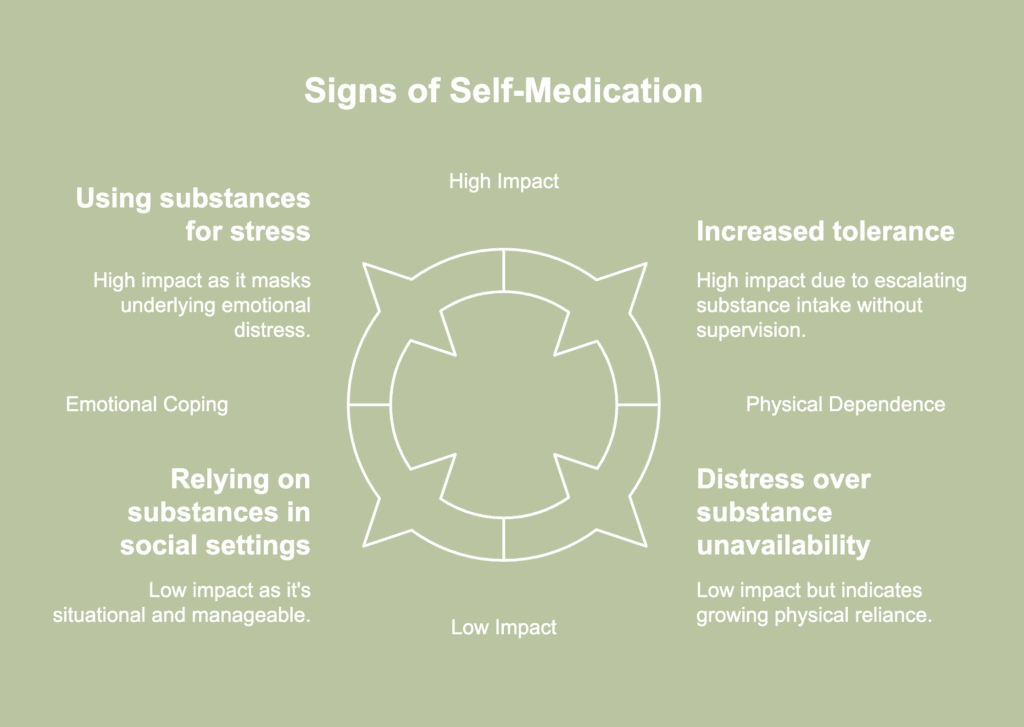
The signs of self-medication are listed below.
- Using substances to cope with stress, anxiety, or depression: Individuals use alcohol, nicotine, or sedatives to manage emotional distress or low mood. The research study titled “Self-medicating low mood with alcohol use: Examining the role of frequency of alcohol use, quantity consumed and context of drinking” by Rachel Mc Hugh and Orla McBride, published in the journal Addictive Behaviors in 2020, found that individuals with depressive symptoms often self-medicate with alcohol, especially in solitary settings.
- Increased tolerance: A common sign of self-medication is the gradual need for higher doses of a substance to experience the same level of relief. Whether it’s painkillers, sleep aids, or anxiety-relief medications, individuals who self-medicate often find that the initial dose becomes less effective over time. This increasing tolerance is the body’s way of adapting, which leads users to escalate their intake without medical supervision.
- Decline in productivity: A decline in performance at work or school typically signals self-medicating behavior. Individuals using substances to cope with emotional distress frequently experience difficulty concentrating, reduced productivity, and increased absenteeism. Responsibilities are neglected, and tasks are left incomplete, as the underlying mental health issues remain unaddressed. This disruption reflects how self-medication interferes with daily functioning, masking the root problem rather than resolving it.
- Dependence on substances for sleep: Using substances like alcohol or sedatives to sleep signals self-medication. Over time, the body becomes reliant on them, making it harder to sleep naturally. This disrupts sleep quality, leaving the person tired and dependent without addressing the root cause of the sleep issue.
- Relying on substances to cope in social settings: A key indicator of self-medication is relying on alcohol or other substances to feel comfortable or get through social events. Having a drink at a party for enjoyment is different from relying on one to manage a social interaction. For those with social anxiety, alcohol is often used as a form of self-medication, particularly in challenging settings like family gatherings. Although it eases discomfort in the moment, it fails to resolve the underlying issues needed for lasting recovery.
- Distress over difficulty accessing substances: Another sign of self-medication is feeling uncomfortable or preoccupied when access to your preferred substance becomes difficult. This isn’t about refilling essential prescriptions—it’s the unease that sets in when alcohol, recreational drugs, or unprescribed medications might not be available. Avoiding events where the substance isn’t offered, counting the days until replenishment, or feeling restless when supplies run low are all indicators that substance use is being relied on as a coping mechanism rather than a casual choice.
What are the risks associated with self-medicating?
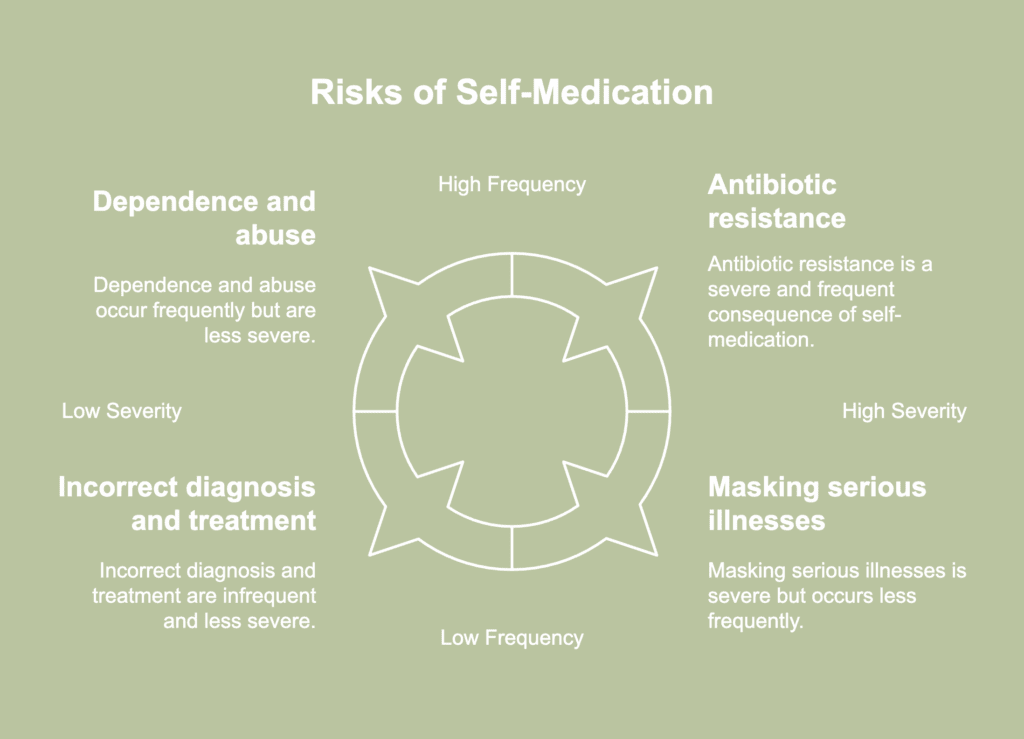
The risks associated with self-medicating are listed below.
- Incorrect diagnosis and treatment: One of the most significant risks of self-medicating is the likelihood of an incorrect diagnosis. Without a professional medical evaluation, individuals misinterpret their symptoms and select the wrong treatment. For example, a person experiencing chest pain assumes it is due to indigestion and takes antacids, when in fact it is a sign of a serious cardiac issue. Misdiagnosis leads to inappropriate medication use, which not only fails to treat the underlying condition but worsens it.
- Adverse drug interactions: According to the article “Risks of self-medication practices” by Maria Esperanza Ruiz, published in the journal Current Drug Safety in 2010, self-medication significantly increases the risk of adverse drug interactions. In patients over 65, adverse drug reactions occur two to three times more often, and when 10 medications are taken concurrently, the likelihood of an adverse interaction reaches 100%. Over-the-counter (OTC) drugs, herbal supplements, and prescription medicines, when taken together without supervision, lead to harmful interactions affecting drug effectiveness or causing toxicity.
- Polypharmacy: Polypharmacy is the use of multiple medications at once, and is a major risk factor in self-medication, particularly among older adults. Age-related changes in drug metabolism, combined with the use of both prescription and OTC drugs, increase the likelihood of adverse drug interactions, dosing errors, and reduced treatment effectiveness, as highlighted in the article “Polypharmacy. Pharmacokinetic perspectives” authored by P K Honig and L R Cantilena, published in the journal Clinical Pharmacokinetics in 1994. When patients self-medicate without informing healthcare providers, especially in fragmented care settings, the risk of toxicity and therapeutic failure rises significantly. This unmanaged combination of drugs leads to serious health complications, especially when involving medications with narrow therapeutic margins.
- Dependence and abuse: OTC medications, such as sleep aids, analgesics, cough suppressants, and even nicotine replacement therapy (NRT), have been reported to cause dependence and abuse. This risk increases when these substances are used frequently or in doses higher than recommended. These findings were highlighted in the article “Risks of self-medication practices” by Maria Esperanza Ruiz published in the journal Current Drug Safety in 2010.
- Masking serious illnesses: One of the major risks of self-medication is the masking of symptoms associated with serious medical conditions. When individuals use over-the-counter drugs to manage discomfort without consulting a healthcare professional, they inadvertently suppress important warning signs of underlying diseases. This leads to a significant delay in diagnosis and appropriate treatment. Such delays not only worsen health outcomes but additionally complicate the eventual clinical management of the condition.
- Antibiotic resistance: Self-medication with antibiotics contributes significantly to the rise of drug-resistant bacteria. Misuse, such as taking antibiotics without a prescription, incorrect dosing, or not completing the full course, allows pathogens to develop resistance. This leads to harder-to-treat infections, higher medical costs, and increased mortality. The issue is especially severe in countries where antibiotics are easily available over the counter without proper regulation, as noted in the article “Self-medication and antibiotic resistance: Crisis, current challenges, and prevention” by Irfan A Rather, published in the Saudi Journal of Biological Sciences in 2017.
What are the benefits of self-medication?
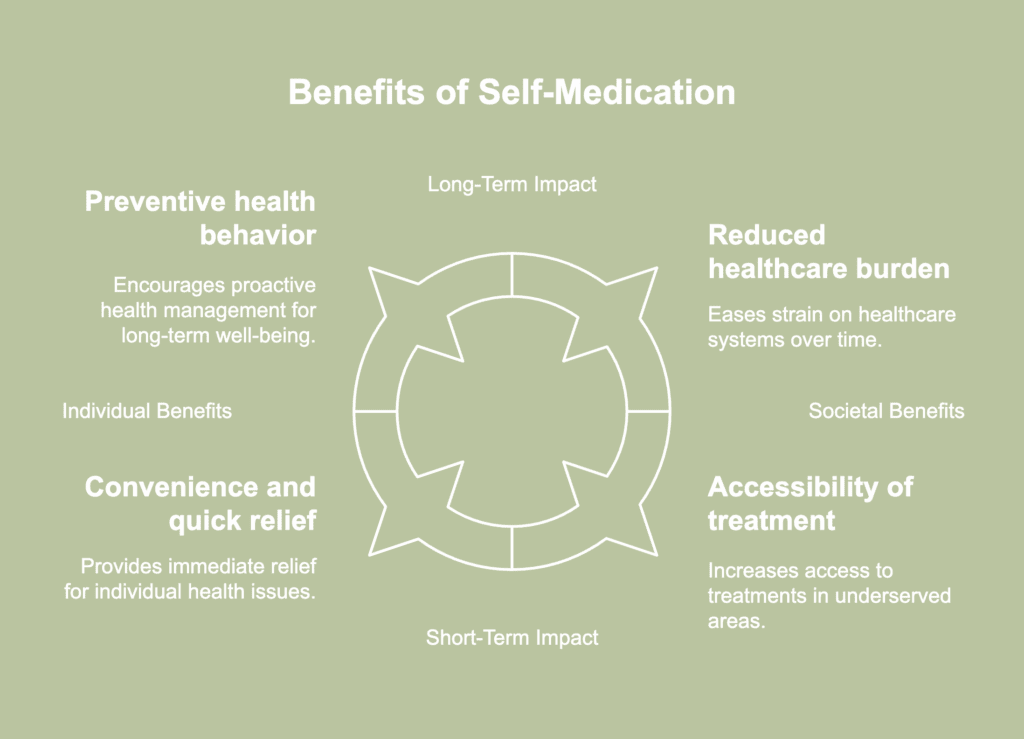
The benefits of self-medication are listed below.
- Convenience and quick relief: One of the primary short-term effects of self-medication is the convenience. Individuals promptly address common minor ailments without needing to wait for a doctor’s appointment. This provides immediate relief and empowers people to manage simple health issues on their own.
- Reduced healthcare burden: Responsible self-medication helps conserve medical resources and ease the strain on healthcare systems. When individuals manage minor ailments on their own, it allows doctors and clinics to focus on more serious or complex cases. According to the study “Knowledge attitude and convenience on self-medication practices among university students in Bangladesh exploration using structural equation modeling approach” by Mortuja Mahamud Tohan et al. published in the journal Scientific Reports in 2024, the World Health Organization (WHO) emphasizes that appropriate self-care for minor health issues significantly reduces the overall burden on healthcare facilities by saving both time and the costs associated with clinical consultations. Another research study titled “Benefits and Risks of Self Medication” by Carmel M. Hughes et al. published in the Drug Safety: an international journal of medical toxicology and drug experience in 2001,highlights that rational self-medication in overburdened settings lowers healthcare costs and shortens wait times for patients.
- Accessibility of treatment: Self-medication increases access to treatments, especially in communities with limited healthcare access or during times when medical help is not immediately available. Over-the-counter medicines allow people to obtain relief outside of normal clinic hours or in remote areas. According to the article “Benefits and Risks of Self Medication” by Carmel M. Hughes et al. published in the Drug Safety: an international journal of medical toxicology and drug experience in 2001,self-medication increases access to medication for the public and reduces the need for prescribed drugs under public health programs. This is particularly beneficial in underserved regions where pharmacies are more reachable than physicians.
- Preventive and proactive health behavior: Engaging in self-medication encourages people to be more proactive about their health. The article “The value of self-medication: summary of existing evidence” by Joshua Noone and Christopher M. Blanchette, published in the Journal of Medical Economics in 2018, suggests potential benefits of self-medication in preventive health strategies – for example, appropriate use of vitamins or prophylactic medications to manage chronic risk factors. Self-care literacy gained from years of experience translates into better recognition of early symptoms and timely responses, which is critical for chronic disease management. In the best scenarios, long-term responsible self-medication cultivates a population that is literate in basic health care, feels in control of their well-being, and collaborates more effectively with healthcare providers when professional care is needed.
Can self-medication lead to addiction?
Yes, self-medication can lead to addiction, particularly when individuals use drugs and substances without medical supervision. It often begins as an attempt to manage emotional distress such as anxiety, anger, depression, or trauma. People turn to substances not necessarily to feel euphoric, but to gain temporary relief from overwhelming emotions or psychological discomfort. According to the article “The Self-Medication Hypothesis of Substance Use Disorders: A Reconsideration and Recent Applications” by E. J. Khantzian, published in the journal Harvard Review of Psychiatry in 1997, individuals unconsciously select drugs that align with their emotional needs—for example, opioids to soothe inner rage or alcohol to alleviate feelings of loneliness and disconnection.
The article further explains that this short-term relief reinforces the behavior, creating a cycle that leads to addiction. Over time, the brain develops tolerance, requiring higher doses to achieve the same effect. What begins as occasional use progresses into physical and psychological dependence, where the drug is needed not just for relief but to avoid withdrawal symptoms.
Those who self-medicate often struggle with deeper issues such as emotional dysregulation, low self-esteem, or difficulties in maintaining relationships. When these psychological vulnerabilities combine with repeated substance use, the likelihood of addiction becomes much greater. Therefore, recognizing the connection between emotional pain and substance use is essential for early intervention, effective treatment, and long-term recovery.
How can one stop self-medicating?
One can stop self-medicating by addressing both the psychological triggers and the systemic factors that sustain the behavior. The first step is recognizing the underlying patterns that drive the behavior. Identifying triggers, whether emotional states, social environments, or specific stressors, is essential. Keeping a detailed record of mood changes, substance use, and situational contexts provides valuable insights into these patterns.
A practical recovery plan involves replacing impulsive drug use with evidence-based strategies such as cognitive behavioral therapy (CBT), mindfulness, or structured daily routines. This is especially important because emotional and contextual factors—such as trauma, loneliness, and unresolved psychological distress—often drive self-medication, as highlighted in the article“Self-medicating low mood with alcohol use: Examining the role of frequency of alcohol use, quantity consumed and context of drinking” by Rachel Mc Hugh and Orla McBride, published in the journal Addictive Behaviors in 2020. These interventions help regulate symptoms without relying on unsupervised chemical solutions.
Parallel to psychological support, lifestyle changes additionally play a critical role. Regular physical activity, meditation, and improved sleep have all been shown to reduce psychological distress, as highlighted by Mahindru et al. in the article “Role of Physical Activity on Mental Health and Well-Being: A Review” published in the journal Cureus in 2023.
Access to professional healthcare is essential in reducing self-medication. According to the article“A Systematic Review of Self-Medication Practices Among Adolescents” by Syed Ilyas Shehnaz et al. published in the Journal of Adolescent Health in 2014, regular consultations with doctors and pharmacists lead to accurate diagnoses and supervised treatment, lowering the risk of unsupervised drug use.
A strong social support system, including family, friends, and peer support groups, enhances accountability and provides emotional encouragement. For those dealing with both substance use and co-occurring mental health issues, integrated treatment approaches that address both conditions concurrently offer the best outcomes.
Systemic changes, such as reducing the availability of over-the-counter medications, promoting sleep hygiene, and conducting public awareness campaigns, further support long-term behavioral change. Furthermore, health education about the risks of drug interactions and long-term dependence fosters more informed and responsible health decisions.
How to help someone who is self-medicating?
To help someone who is self-medicating, begin with empathy instead of judgment. Self-medication often results from underlying emotional distress such as anxiety, trauma, or depression. Rather than using blame or criticism, open a calm and respectful conversation. A safe, non-threatening environment builds trust and invites honest communication.
Informing them about the risks of self-medication is important. While it offers temporary relief, long-term use often leads to dependence, worsened mental health, or the masking of serious conditions. Use credible sources to explain the dangers in a clear and supportive tone.
Suggest professional assistance and explore accessible support services. Participation in therapy or counseling addresses both substance use and the emotional issues beneath it. Introduce healthier coping strategies—physical activity, creative expression, meditation, and structured routines, proven to support emotional balance and reduce stress.
Maintain healthy boundaries while offering consistent support. Avoid enabling behaviors such as financial help for substances or hiding the consequences of misuse. Encourage social connection and involvement in peer support groups. Recovery requires time and patience, but steady, compassionate support plays a powerful role in their journey toward stability.