

Pregabalin (Lyrica) addiction: causes, symptoms, side effects, and treatment


Table of content
- Is pregabalin considered addictive?
- What is pregabalin (Lyrica) addiction?
- What are the causes of pregabalin addiction?
- What are the symptoms of pregabalin addiction?
- What are the side effects of pregabalin addiction?
- What are the symptoms of pregabalin (Lyrica) withdrawal?
- What are the available treatments for pregabalin addiction?
- What is the difference between pregabalin addiction and gabapentin addiction?

Pregabalin (Lyrica) addiction describes a clinical state marked by harmful pregabalin abuse involving persistent misuse of an anticonvulsant prescribed for neuropathic pain, seizure control and select nerve-related conditions.
The causes of pregabalin addiction include reinforcing psychoactive effects, self-medication, prior substance misuse history, co-occurring mental health conditions, extended use without close clinical review, easy access, social factors and environmental influences.
The symptoms of pregabalin addiction are using larger amounts or taking doses sooner than directed, increased tolerance, cravings, loss of control, secretive behavior, ongoing use despite clear harm, preoccupation with obtaining pregabalin, racing heart, unsuccessful attempts to quit, irritability, withdrawal symptoms and doctor shopping.
The side effects of pregabalin addiction include dizziness, sleepiness, coordination problems, gastrointestinal issues, weight gain, dry mouth, blurred vision, edema (swelling), severe allergic reactions and suicidal thoughts.
The available treatments for pregabalin addiction are medical detoxification, inpatient or outpatient rehabilitation programs, cognitive behavioral therapy (CBT), counseling, support groups and aftercare planning and ongoing support services.
Is pregabalin considered addictive?

Yes, pregabalin is considered addictive, with addictive potential rising under particular use patterns and personal vulnerabilities. Users report a calming change in tension and mood soon after dosing, creating strong reinforcement.
For certain individuals, such reinforcement turns pregabalin into a habit forming drug tied to daily coping. Risk rises with higher doses, particularly after rapid dose increases or unsupervised schedule changes.
Other people pursue a gentle high, and combination use with alcohol or opioids sharply raises medical danger. Pregabalin dependence develops as nerve signaling adapts, making abrupt stopping trigger uncomfortable withdrawal symptoms.
A 2021 report from Sahu et al., titled “A case of pregabalin addiction” outlined initiation of gabapentin at 300 mg twice daily for persistent jaw-injury pain, producing both analgesia and increased energy, followed by fatigue and irritability after discontinuation attempts.
Financial barriers and easier access prompted a switch to pregabalin, a structurally similar gamma-aminobutyric acid (GABA) analog. Early use failed to replicate prior effects, driving progressive self-escalation from therapeutic intake to up to 40 tablets daily.
Escalation resulted in serious consequences, including theft of pregabalin at work and subsequent job termination. Mounting debt and sale of household belongings followed, eventually causing family separation.
Is pregabalin addictive if taken as prescribed?
Yes, pregabalin taken as prescribed still carries a risk of addiction for certain individuals, although risk stays lower under close medical supervision. A genuine medical condition such as neuropathic pain or seizure disorders often leads to regular use, increasing familiarity with the drug’s subjective effects.
Certain patients notice a calming effect that feels rewarding beyond symptom control. Individual susceptibility, including prior substance misuse history, raises likelihood of using extra capsules or taking doses earlier than scheduled.
Higher doses increase psychoactive changes, making misuse more appealing even without original intent. Sensitivity to psychoactive effects varies, making proneness uneven across patient groups. Discontinuation after extended therapy sometimes produces withdrawal-related discomfort, reinforcing continued intake.
What is pregabalin (Lyrica) addiction?
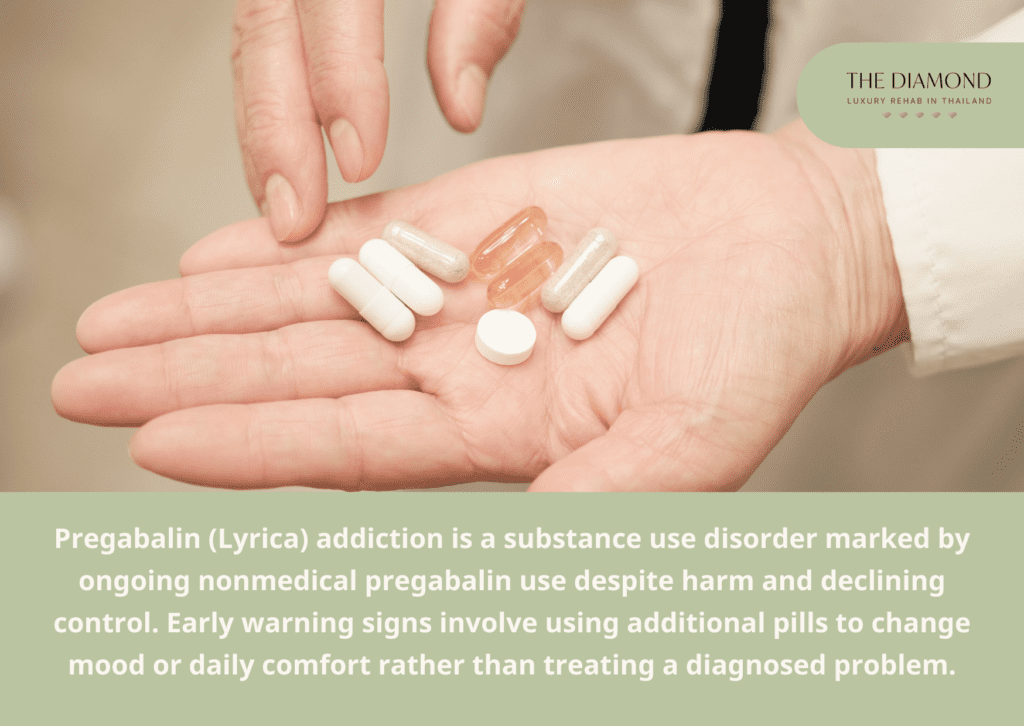
Pregabalin (Lyrica) addiction is a substance use disorder marked by ongoing nonmedical pregabalin use despite harm and declining control. Early warning signs involve using additional pills to change mood or daily comfort rather than treating a diagnosed problem.
Planning days around access, carrying spares just in case or feeling uneasy without a supply signals a growing grip on behavior. Dose escalation sometimes starts after perceived benefit fades, then transforms into a routine habit seemingly hard to interrupt.
How common is pregabalin addiction?
Statistics focused on pregabalin addiction remain scarce, because major surveillance systems seldom publish pregabalin-specific diagnostic rates. A 2021 study by Evoy et al., “Gabapentinoid misuse, abuse and non‑prescribed obtainment in a United States general population sample,” reported lifetime gabapentinoid use in 359 of 1,843 participants, representing 19.5% of respondents.
Among users, 121 individuals met criteria for misuse, abuse or non-prescribed access, equal to 33.7 percent of users or 6.6% of the full sample. Misuse or abuse alone appeared in 117 respondents, accounting for 6.3% overall.
Gabapentin misuse occurred in 81 participants, or 4.4% of respondents, while pregabalin misuse appeared in 51 participants, or 2.8%. Concurrent use of both medications was frequently reported, with 21 individuals indicating overlap.
Lifetime nonmedical use differs from an addiction diagnosis, so percent values act as rough markers of misuse involvement, not confirmed disorder.
What are the causes of pregabalin addiction?
Causes of pregabalin addiction refer to factors and conditions contributing to persistent misuse of pregabalin outside prescribed medical purposes. The causes of pregabalin addiction are listed below.
- Reinforcing psychoactive effects: Drowsiness and soothing sensations tend to feel immediately rewarding on a mental level. Noticeable mood lift encourages continued consumption during high-pressure moments or physical unease. Reward-driven repetition strengthens learned associations between pregabalin and relief-seeking habits. Such conditioning speeds movement from medically directed use into an unhealthy attachment to the drug.
- Self-medication: Self-directed use begins as an attempt to manage distress outside clinical guidance. Escalation becomes more likely once a person turns to medication as a first option for survival. In a 2023 paper by Servais et al., called “Misuse of Pregabalin: a qualitative study from a patient’s perspective,” numerous participants first encountered pregabalin in their home countries, either prescribed for pain or used recreationally, with Algeria showing higher festive use than Morocco. Use often intensified during migration, sometimes replacing more dangerous substances like tramadol or benzodiazepines. Intake frequently exceeded recommended doses, facilitated by easy access through streets or lenient prescribers. All reported psychiatric conditions—such as depression, anxiety, social isolation and self-harm—indicated self-medication to address unmet mental health needs.
- Prior substance misuse history: A past history of substance misuse increases the chances of seeking psychoactive reward from pregabalin. Familiarity with drug-seeking habits reduces hesitation around extra pills or borrowed supply. Reward circuitry responds more strongly under such history, making cravings harder to resist.
- Co-occurring mental health conditions: Underlying psychiatric challenges increase sensitivity to mood-altering substances. Pregabalin offers temporary stabilization for individuals struggling with anxiety or depressive symptoms. Symptom flare-ups increase temptation to raise amounts without professional advice.
- Extended use without close clinical review: Long treatment stretches without consistent follow-up allow pregabalin use to settle into coping. A slow drift from pain management into mood management raises misuse likelihood. Limited monitoring leaves early warning signs unnoticed until impairment begins affecting safety.
- Easy access: Easy access to pregabalin through refills, leftover prescriptions or shared medication lowers barriers to misuse. Convenient availability reduces pause for reflection, making excessive use feel simple. A 2023 publication authored by Gupta et al., “Very high dose of pregabalin abuse: A case report” detailed a case of extreme pregabalin abuse in a 30-year-old male from Punjab, India, highlighting easy availability as a major factor. The patient began use because of over-the-counter (OTC) access, in contrast to limited affordability and availability of poppy husk. Contributing factors included low cost, ready access and minimal social stigma. In India, pregabalin is not classified as a drug of abuse, enabling unrestricted OTC sales.
- Social factors: Social factors influence behavior when peers present pregabalin as safe or recreational. Conversations normalizing pill sharing reduce perceived risk and increase experimentation. Group settings encouraging intoxication raise the likelihood of combining pregabalin with alcohol or sedatives. Social approval strengthens continued misuse, especially among people seeking belonging.
- Environmental influences: Environmental influences such as chronic instability, unsafe housing or high-conflict relationships increase susceptibility by raising distress. Limited access to therapy or consistent healthcare additionally pushes more people toward medication as a primary way to cope. A stressful environment increases chances of escalating pregabalin use especially when negative emotions feel constant.
Why is pregabalin (Lyrica) addictive?
Pregabalin (Lyrica) is addictive because brain reward circuits respond to rapid shifts in nerve signaling and mood state. Users experience an observable lift or soothing feeling soon after a dose, making return use seem appealing.
Public health warnings describe a high potential for abuse, especially under nonmedical use aimed at intoxication. Certain people become prone to misuse once pregabalin serves as a shortcut for sleep, anxiety or emotional blunting.
Tolerance develops as the nervous system adjusts, reducing perceived benefit at earlier dose levels. Physical dependence follows, leaving withdrawal symptoms after abrupt discontinuation.
Can Lyrica be addictive if taken as prescribed?
Yes, Lyrica can be addictive even when taken as prescribed in certain situations. A prescription does not fully eliminate risk because pregabalin influences brain chemistry linked to relaxation and reward.
Regular use for nerve pain or seizure control increases familiarity with mood and bodily changes. Affected patients begin valuing those changes as much as symptom relief, increasing temptation to take more.
Vulnerability increases after medication changes happen without clinician direction, especially if timing becomes more frequent in pursuit of faster benefit. Regular dosing encourages tolerance, causing the body to adapt and anticipate ongoing consumption. Stopping treatment triggers withdrawal symptoms, increasing reliance.
What are the symptoms of pregabalin addiction?

Symptoms of pregabalin addiction describe a range of indicators linked to harmful patterns of pregabalin use. The symptoms of pregabalin addiction are listed below.
- Using larger amounts or taking doses sooner than directed: Using larger amounts or taking doses sooner than directed signals fading boundaries around pregabalin use. Extra pills enter the day to chase stronger mood shifts or quicker symptom quieting. Departing from a medical plan transforms medication use into unsupervised increases driven by personal judgment. Growing frequency then makes stopping feel harder, even after clear drawbacks appear.
- Increased tolerance: Initial amounts lose effectiveness, prompting dissatisfaction with prior intake levels. Physiological adaptation diminishes sensitivity to pregabalin’s effects. Escalation follows as stronger stimulation becomes necessary for similar relief. Taking higher amounts gets normalized, marking a key sign of addiction development.
- Cravings: Cravings appear as persistent urges for pregabalin that intrude on attention and decision-making. Thoughts circle back to taking more while a person tries to stay focused on work or family. Triggers such as fatigue and emotional strain intensify desire for another dose.
- Loss of control: A strong mental pull toward pregabalin turns into something common, even during busy days. Planning begins to revolve around keeping medication available, with anxiety rising near gaps in supply. Attempts to limit medication repeatedly fail despite clear intentions. Personal commitments, finances and relationships absorb the fallout as boundaries keep slipping.
- Secretive behavior: Concealment around medication use occurs as fear of scrutiny increases. Hiding pills, altering schedules or avoiding questions signals internal conflict about consumption. Less openness cuts off support and keeps harmful habits from being corrected early on.
- Ongoing use despite clear harm: Serious consequences sometimes land without changing behavior, and work performance drops or safety slips as a result. Affected persons tend to keep taking pregabalin despite mental fog or relationship conflict. Immediate comfort feels urgent, pushing long-term costs into the background. The gap between values and actions widens, creating guilt and deeper concealment.
- Preoccupation with obtaining pregabalin: Thoughts about supply dominate the day, pulling attention away from responsibilities and relationships. Daily organization centers on refills, backups or finding new sources of the drug. Shortages create agitation and urgency, leading to early requests or borrowing. Cognitive bandwidth narrows as substance-related thoughts control awareness.
- Racing heart: Palpitations arrive with sweating, restlessness or tremor, leaving the body on edge. Unpleasant physical sensations sometimes prompt taking more pregabalin in an attempt to settle the feeling. Pooled findings from large studies showed gabapentinoid use lasting five years or longer was associated with roughly a 44% increase in stroke risk, a 2025 paper by Dutta et al., “Cardiovascular safety of gabapentinoids gabapentin & pregabalin: A systematic review,” revealed.
- Unsuccessful attempts to quit: Repeated efforts to stop pregabalin use fail despite strong motivation. Strong urges build during the first days off medication, making willpower feel unreliable. Familiar routines around pills reassert control, pushing a person back into use after promises to cut back. Each failed attempt increases shame and secrecy, weakening motivation for another try.
- Irritability: Irritability is evident when pregabalin use stays central to mood regulation. Minor stressors provoke disproportionate reactions, creating conflict at home or work. Sleep disruption and nervous system activation intensify short temper and restlessness. Such volatility illustrates physical and mental effects of drug abuse by disrupting relationships, focus and daily stability.
- Withdrawal symptoms: Withdrawal symptoms after missed doses or sudden cessation signal physical dependence. Discomfort from withdrawal drives strong pressure to resume medication for short-term stabilization. A 2021 report by Ishikawa et al., titled “Pregabalin withdrawal in patients without psychiatric disorders taking a regular dose of pregabalin: A case series and literature review” described two clinical cases linked to pregabalin withdrawal. One involved a middle-aged man who used a standard pregabalin dose for two months for arm nerve pain, then abruptly stopped during a respiratory illness and soon developed breathlessness, appetite loss, insomnia and severe anxiety. The second case involved an older woman treated with 150 mg daily for ten years following shingles, who experienced extensive physical and psychological withdrawal symptoms after cessation, ultimately leading to a suicide attempt following escalating distress.
- Doctor shopping: Doctor shopping involves seeking multiple prescribers to secure extra pregabalin supplies. Inconsistent stories and frequent provider changes aim to bypass limits set by a single clinic. Such behavior increases medical danger through duplicate prescribing and lack of coordinated care.
What are the side effects of pregabalin addiction?

Side effects of pregabalin addiction describe the adverse outcomes linked to prolonged reliance on pregabalin. The side effects of pregabalin addiction are listed below.
- Dizziness: Excess pregabalin slows neural firing in balance pathways, leaving inner ear signals less precise. Head movement produces spinning sensations and unsteady footing, especially after standing quickly. Blood pressure shifts plus reduced alertness compound lightheadedness, raising fall risk on stairs. Driving becomes hazardous as spatial judgment lags behind motion cues.
- Sleepiness: Sedative properties become pronounced at elevated levels and dampens excitatory signaling, pushing the nervous system toward drowsiness. Daytime fatigue builds despite having full nights of sleep, and eyelids feel weighted during meetings. Reaction speed drops, so routine tasks take longer and errors increase. Alcohol co-use deepens somnolence and raises danger of breathing suppression.
- Coordination problems: Motor control suffers as cerebellar communication weakens under heavy pregabalin influence. Hands miss targets during fine tasks, such as buttoning a shirt. Gait turns staggered as well, increasing risk during walking or standing. Sports participation or tool operation becomes unsafe as muscle commands arrive out of sequence.
- Gastrointestinal issues: Digestive function grows disrupted through altered nerve signaling in the gut. Nausea follows large amounts, especially after rich meals. According to a 2023 paper by Ma et al., titled “Pregabalin induced balance disorder, asthenia, edema, and constipation in an elderly adult: A case report,” constipation is a common issue with pregabalin, likely resulting from the drug’s binding to calcium channels in gastrointestinal smooth muscle cells, leading to reduced motility.
- Weight gain: Lyrica increases appetite cues, leading to larger portions and more frequent snacking. Changes in appetite encourage increased food intake without matching energy expenditure. Water retention adds additional pounds, especially for people already prone to swelling. Reduced movement from daytime grogginess further supports weight gain by lowering energy burn.
- Dry mouth: Saliva production drops as pregabalin alters nerve input to salivary glands. Mouth tissues then feel sticky, and swallowing is less comfortable. People try to compensate with constant sipping or sugary mints, increasing cavity risk. Bad breath and throat irritation become more noticeable as moisture in the mouth stays low.
- Blurred vision: Visual sharpness fluctuates because pregabalin disrupts focus control and eye-muscle timing. Reading gets harder as clarity fades and returns without warning. Light sensitivity increases for certain users, making screens and headlights feel harsher. Driving and detail work are less safe as vision loses steadiness.
- Edema (swelling): Altered fluid regulation promotes abnormal accumulation within soft tissues. Ankles, feet or hands usually show visible swelling. Among psychiatric medications evaluated in a 2024 study by Engel et al., titled “Edema related to treatment with psychotropic drugs,” pregabalin showed the highest rate of severe edema at 1.46%, followed by mirtazapine at 0.8%. Swelling associated with pregabalin occurs with notable frequency and causes significant physical discomfort. Such discomfort interferes with adherence to prescribed treatment plans, raising clinical concern. Although swelling often resolves, daily functioning disruption still prompts some patients to discontinue medication.
- Severe allergic reactions: Severe allergic reactions involve an immune hypersensitivity response rather than a simple dose-related toxicity pattern. Pregabalin triggers swelling, hives or airway involvement in susceptible individuals, with angioedema serving as a serious example. Larger amounts intensify visible symptoms once a reaction starts by adding physiologic strain and complicating symptom tracking.
- Suicidal thoughts: Suicidal thoughts represent a serious psychiatric warning associated with certain antiseizure medicines, including pregabalin, in vulnerable patients. As per a 2022 study authored by Ibrahim et al., called “Suicidal ideation and behavior among subjects with substance abuse disorder related to pregabalin,” statistically significant suicide risk elevation appeared among patients engaged in ongoing pregabalin abuse with positive urine screening. Greater duration of misuse and higher usual or peak dosing correlated with worsening suicide risk scores, indicating a dose- and exposure-related contribution from pregabalin.
What are the complications of pregabalin addiction?
Complications of pregabalin addiction pertain to serious medical, psychological and social problems arising from sustained pregabalin misuse and difficulty reducing use safely. The complications of pregabalin addiction are listed below.
- Dangerous withdrawal episodes: Withdrawal gets dangerous after the nervous system adjusts to the constant presence of pregabalin. Abrupt quitting of the medication triggers severe anxiety, insomnia, tremor and agitation, leaving the body in a hyperactive state. Symptom intensity pushes people back into use, trapping recovery attempts in a cycle of stopping and restarting. Medical supervision matters because severe withdrawal escalates quickly and impairs basic functioning.
- Accidents from impaired coordination: Impaired coordination increases accident risk through slowed reaction speed and clumsy movement. Balance and timing problems make falls more likely, especially on stairs or uneven ground. Driving and machinery use become unsafe as judgment and motor control weaken.
- Worsening mood disorders: Preexisting depression or anxiety intensifies under chronic pregabalin reliance. Irritability, low mood and anxious rumination intensify between uses, creating unstable mental states. A 2014 article from Hall et al., “Changes in mood, depression and suicidal ideation after commencing pregabalin for neuropathic pain,” described five patients with prior depression whose mood stability declined shortly after starting pregabalin. Each experienced new or worsening depressive symptoms or suicidal ideation, with improvement following dose reduction or discontinuation. All five eventually stopped pregabalin therapy.
- Higher overdose danger: Escalating intake narrows safety margins between desired effects and toxic exposure. Central nervous system (CNS) suppression compounds respiratory and cardiovascular strain. Combination use with sedatives or opioids magnifies lethality. Overdose risk emerges from cumulative dose escalation and impaired self-regulation.
- Cognitive impairment: Cognitive impairment develops as high levels of pregabalin dull attention, memory and mental speed. Conversations are harder to follow and simple decisions start taking longer than usual. Findings of a 2019 study by Myhre et al., titled “Cognitive Effects of Perioperative Pregabalin: Secondary Exploratory Analysis of a Randomized Placebo-controlled Study” revealed perioperative pregabalin was associated with significant declines in executive function subdomains, particularly inhibition and working memory, compared with placebo.
- Financial strain: Financial strain grows once money begins flowing toward drug acquisition or clinic visits. Budget priorities then move away from essentials such as food and bills. Debt risk rises as spending turns impulsive and harder to track. Family conflict frequently follows as financial secrecy and shortages accumulate.
- Occupational decline: Work performance deteriorates as reliability drops under cognitive and physical impairment. Missed shifts, tardiness and reduced productivity begin affecting job standing. Chances of workplace accidents happening are more likely as coordination and judgment suffer. Resulting disciplinary action or job loss creates further instability.
- Relationship breakdown: Interpersonal tension starts with mistrust created by secrecy and reduced emotional availability. Communication suffers as priorities narrow around obtaining and taking pregabalin. Loved ones withdraw after repeated arguments or broken promises. Isolation deepens addiction vulnerability by removing one’s support networks.
Can you overdose on pregabalin (Lyrica)?
Yes, you can overdose on pregabalin (Lyrica). A Lyrica overdose involves extreme drowsiness, confusion and loss of coordination, sometimes progressing to coma. Risk increases sharply with alcohol, opioids or sedatives because combined depressant action slows breathing.
Some cases become fatal, especially under polysubstance use or in people with underlying respiratory compromise. After stabilization, drug withdrawal complicates recovery if dependence exists and medication stops abruptly.
In a 2020 paper by Isoardi et al., “Pregabalin poisoning and rising recreational use: a retrospective observational series,” patients presenting with pregabalin poisoning had a median dose of 1,200 milligrams (mg).
Co-ingestions occurred in 427 cases (88%), mostly involving sedating agents in 387 instances (79%), with opioids and benzodiazepines reported in 201 (41%) and 174 (36%) cases, respectively.
Pregabalin overdose generally causes mild sedation and, rarely, seizures, while coma typically occurs when combined with other sedatives. With global use increasing, pregabalin is becoming a more frequent factor in poisoning-related deaths.
What are the symptoms of pregabalin (Lyrica) withdrawal?
Symptoms of pregabalin (Lyrica) withdrawal refer to reactions occurring when someone reduces or stops pregabalin consumption after regular use. The symptoms of pregabalin (Lyrica) withdrawal are listed below.
- Insomnia: Stopping pregabalin disrupts normal neural calming pathways, making it difficult to initiate and maintain sleep. Restlessness and heightened alertness dominate nighttime hours, leaving individuals fatigued the next day. Attempts to rest are frustrated by racing thoughts and physical discomfort.
- Anxiety: Abrupt cessation triggers exaggerated stress responses in the brain, amplifying worry, tension and irritability. Situations previously manageable become overwhelming due to sudden loss of calming effects. Panic or nervous agitation tends to appear without obvious external triggers.
- Nausea: Gastrointestinal disturbances emerge as autonomic regulation readjusts after discontinuation. Stomach discomfort, queasiness and occasional vomiting appear despite normal dietary intake. Digestive upset creates persistent unease complicating everyday routines.
- Diarrhea: Intestinal movement speeds up during adjustment off of pregabalin. Cramping and frequent trips to the bathroom disrupt sleep and daily plans. Faster transit reduces absorption, producing loose stools and weakness. Dehydration and electrolyte loss become concerns during severe episodes, especially without adequate fluids.
- Headache: Sudden reduction of pregabalin disturbs neurotransmitter balance, causing vascular tension that triggers headaches. Pain intensifies with fatigue or sensory stimulation. Individuals experience pressure around temples or behind the eyes. According to a 2014 paper by Cory Toth, titled “Pregabalin: latest safety evidence and clinical implications for the management of neuropathic pain,” perioperative administration of pregabalin (PGB) 300 mg given one hour before surgery and again twelve hours later was associated with a higher incidence of adverse effects, including headache, compared with patients who received diazepam 10 mg using a comparable dosing schedule.
- New or worsening seizure: Abrupt discontinuation removes anticonvulsant support, allowing electrical activity in brain networks to escalate. A 2017 report authored by Du et al., “Seizure induced by sudden cessation of pregabalin in a patient with chronic kidney disease,” described the case of a woman in her early 50s whose long-term pregabalin use for neuropathic pain formed part of her ongoing treatment alongside several medications for existing conditions. Clinicians discontinued pregabalin and administered intravenous fluids, yet several days later dizziness progressed to unresponsiveness, severe hypertension, and a full body seizure with limb jerking and abnormal eye movements. Withdrawal from pregabalin emerged as the most likely cause after exclusion of alternative explanations, and symptom resolution followed reintroduction at a reduced dose adjusted for renal impairment.
- Sweating (hyperhidrosis): Sympathetic activation drives heat flashes and damp skin even in cool rooms. Night sweats disrupt rest and contribute to irritability and dehydration. Hydration support and paced taper planning help stabilize temperature control and reduce excessive perspiration.
- Agitation: Agitation builds as neural networks surge into a more activated state after pregabalin stops. Small frustrations trigger sharp reactions, especially in crowded or noisy settings. Heightened neuronal firing drives restlessness, irritability and difficulty settling during ordinary interactions. Physiological arousal rises alongside tension, producing a sense of internal pressure.
- Flu-like discomfort: Flu-like discomfort develops as autonomic balance turns unstable and the body reacts to withdrawal stress. Chills, sweating, body aches and general malaise mimic viral illness despite absence of infection. Appetite usually drops while fatigue rises, leaving the body feeling drained and heavy.
What are the available treatments for pregabalin addiction?

Available treatments for pregabalin addiction refer to medical and therapeutic approaches aimed at helping a person stop pregabalin safely, manage withdrawal and prevent relapse. The available treatments for pregabalin addiction are listed below.
- Medical detoxification: Medical detoxification provides supervised support during early discontinuation, especially after high intake or long use. Clinical monitoring tracks vital signs and neurologic status while withdrawal symptoms. A 2023 case report by Abhimanyu Vasudeva and Richa Tripathi called “Pregabalin Dependence and Management in a 55- Year-Old Female with Chronic Low Back Pain” explored the case of a patient who received referral to the Department of Psychiatry for assessment and management of pregabalin dependence. Clinicians initiated low-dose sertraline for mood stabilization, prescribed short-term clonazepam for calming effects and provided supportive psychotherapy to strengthen coping strategies. A structured taper reduced pregabalin to 75 mg daily for two weeks, followed by alternate-day dosing for another two weeks before cessation. One month later, overall wellbeing improved and pregabalin discontinuation occurred without significant complications.
- Inpatient or outpatient rehabilitation programs: Rehabilitation programs offer care focused on substance use habits, mental health needs and relapse prevention planning. Inpatient care removes access to pregabalin while providing clinical oversight and intensive therapy schedules. Outpatient care delivers regular sessions and monitoring while allowing work and family responsibilities to continue. Program structure supports routine rebuilding and coordinated support across recovery stages.
- Cognitive behavioral therapy (CBT): CBT targets maladaptive thought patterns driving repeated drug use. Sessions focus on recognizing internal triggers, restructuring automatic responses and strengthening decision-making skills. Practical strategies replace reliance on substances during challenging situations.
- Counseling: Counseling addresses psychological drivers linked to continued pregabalin use through therapeutic dialogue. Individual sessions explore stress responses, pain perception and decision-making habits connected to substance reliance. Guided discussion strengthens coping skills without pharmacological crutches during discomfort or anxiety. Personal insight gained through professional guidance supports sustained behavioral change and accountability.
- Support groups: Support groups connect people facing similar struggles, reducing isolation and shame common in recovery. Shared experiences offer practical strategies for cravings, setbacks and rebuilding structure in life. Meetings provide steady accountability through check-ins and consistent contact.
- Aftercare planning and ongoing support services: Committing to a personalized aftercare plan reinforces progress following primary treatment completion. Continued engagement includes follow-up appointments, peer support and coordinated medical oversight. Relapse prevention strategies remain active through accountability frameworks and goal-oriented guidance.
What is the difference between pregabalin addiction and gabapentin addiction?

The difference between pregabalin addiction and gabapentin addiction lies primarily in potency, onset and abuse potential, despite both being gabapentinoids. Pregabalin acts more quickly in the central nervous system and produces a stronger calming or euphoric effect, making it more prone to misuse.
Gabapentin, while structurally similar, has slower absorption and typically generates milder psychoactive effects, though dependence remains possible with high doses or prolonged use.
Both drugs share mechanisms of action by modulating calcium channels, but pregabalin’s higher bioavailability contributes to faster tolerance development and stronger reinforcement of addictive patterns.
A 2017 paper by U. Bonnet and N. Scherbaum, “How addictive are gabapentin and pregabalin? A systematic review” revealed pregabalin demonstrated a higher addictive potential than gabapentin, as indicated by stronger behavioral dependence, more frequent transitions from prescribed use to self-administration, and longer persistence of self-administrations.
Moreover, results of a 2019 study by Driot et al., “Patterns of gabapentin and pregabalin use and misuse: Results of a population‐based cohort study in France,” indicated that among new users, pregabalin misuse occurred in 12.8% of 8,692 individuals, compared with 6.6% of 1,963 gabapentin users.
Risk of overuse increased with factors such as initiating pregabalin over other gabapentinoids, being younger or middle-aged versus over 70, consulting multiple doctors for prescriptions, or having conditions like cancer, multiple sclerosis, neuropathic pain, depression or concurrent methadone therapy for opioid dependence.