

Nicotine replacement therapy (NRT): definition, how it works, options, and effectivity


Table of content
- What is nicotine replacement therapy (NRT)?
- What is the goal of nicotine replacement therapy?
- How does nicotine replacement therapy work?
- What are the nicotine replacement therapy (NRT) options?
- What are the benefits of nicotine replacement therapy?
- What are the risks of nicotine replacement therapy?
- How long does nicotine replacement therapy last?
- Is nicotine replacement therapy effective?
- How safe is nicotine replacement therapy?
- How soon after smoking can you start nicotine replacement therapy?
- Who can prescribe nicotine replacement therapy?
- What is the difference between nicotine replacement therapy and medication-assisted therapy?
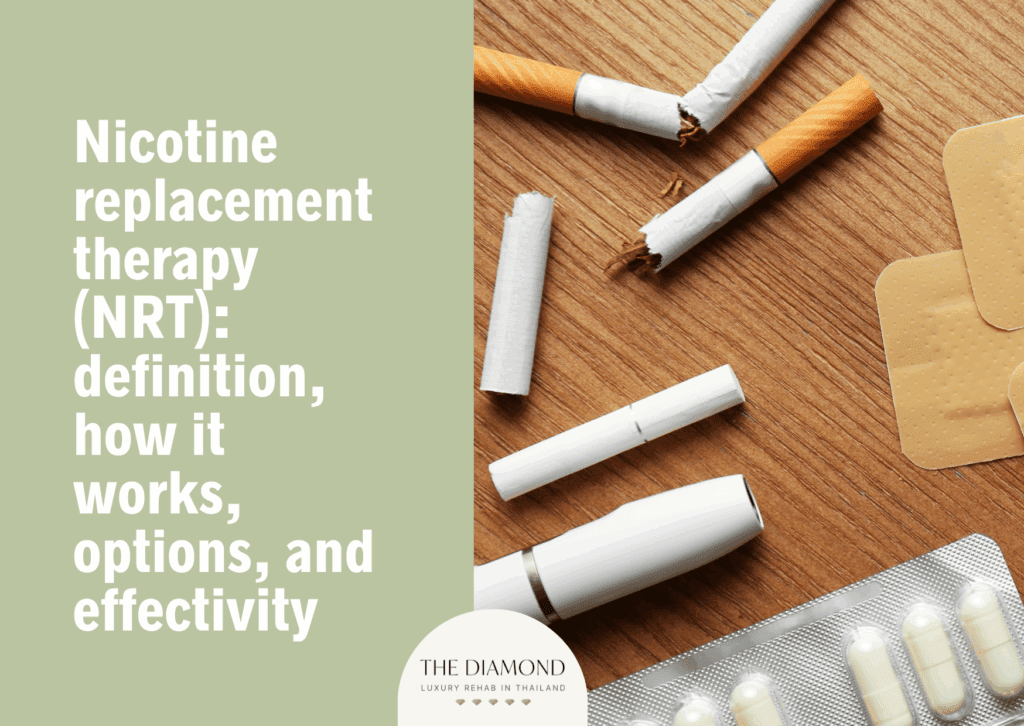
Nicotine replacement therapy (NRT) is the primary pharmacological treatment for helping tobacco-dependent individuals quit smoking. Since nicotine is the primary addictive substance in tobacco, providing it during abstinence helps reduce withdrawal symptoms and cravings, making quitting easier.
NRT works by giving the body a fraction of the nicotine in controlled doses, enough to activate the brain receptors, releasing dopamine to stabilize mood. It eases the transition away from smoking while lessening cigarettes’ rewarding effects.
NRT options include the nicotine patch, gum, lozenge, tablet, nasal spray, and an oral inhaler.
The effectiveness of NRT has been consistently proven through both clinical trials and real-world experiences. It remains one of the most trusted and widely used methods to help people quit smoking.
What is nicotine replacement therapy (NRT)?
Nicotine replacement therapy (NRT) is a US Food and Drug Administration (FDA) approved treatment for tobacco use disorders. It is a safe and effective method of treatment that helps individuals quit smoking by delivering controlled and low doses of nicotine.
NRT is particularly useful for managing tobacco addiction, as suddenly stopping tobacco use triggers intense cravings and withdrawal symptoms. By providing the body with small, controlled doses of nicotine through safer alternatives, NRT helps reduce dependence and gradually diminishes the urge to smoke.
According to the article “Nicotine Replacement Therapy: An Overview” by Umesh Wadgave and L Nagesh, published in the International Journal of Health Sciences in 2016, nicotine is the key substance in tobacco responsible for nicotine addiction, whereas most of the health risks from smoking are caused by other toxic components in cigarettes, such as tar. It is important to note that NRT is designed for people who wish to quit smoking. Different forms and dosages of NRT are recommended for different users.
What is the goal of nicotine replacement therapy?
The goal of nicotine replacement therapy (NRT) is to ease the transition from cigarette smoking to complete abstinence by addressing the physical aspect of nicotine dependence. NRT helps manage common nicotine withdrawal symptoms, intense cravings, and reduces the intensity of triggers. This supports individuals in resisting and gradually reducing the urge to smoke.
NRT delivers nicotine safely, helping individuals to gradually overcome their drug withdrawal and dependence on cigarettes. This improves their chances of long-term smoking cessation.
How does nicotine replacement therapy work?
Nicotine replacement therapy (NRT) works by giving the body a fraction of the nicotine it has become dependent on through smoking, thus helping to soothe the discomfort and reduce the intense desire for cigarettes during the quitting process. The research article “Nicotine Replacement Therapy: An Overview” by Umesh Wadgave and L Nagesh, published in the International Journal of Health Sciences in 2016, explains that at a neurochemical level, NRT activates nicotinic acetylcholine receptors (nAChRs) in the brain, particularly in the ventral tegmental area. This action leads to the release of dopamine in key regions, such as the nucleus accumbens and the frontal cortex. The release of dopamine helps in modulating mood, attention, and the brain’s reward system. By mimicking a few of nicotine’s effects, NRT helps individuals feel more stable and less restless during their transition away from smoking. Additionally, the article notes that NRT reduces the rewarding effects of cigarettes by supplying a steady dose of nicotine to manage cravings. However, it cannot completely prevent withdrawal symptoms, since no NRT product matches the speed or intensity of nicotine delivery achieved through cigarette smoke.
Further insights from the article “Nicotine Replacement Therapy” authored by Amritpal Sandhu et al. published in the book StatPearls, last updated in November 2023, highlight that nicotine affects the functioning of monoamine oxidase enzymes, known as MAO-A and MAO-B. These enzymes are important for the breakdown of dopamine and the development of addictive behaviors.
What are the nicotine replacement therapy (NRT) options?

The nicotine replacement therapy (NRT) options are listed below.
- Nicotine patch
- Nicotine gum
- Nicotine lozenge
- Nicotine tablet
- Nicotine nasal spray
- Nicotine oral inhaler
1. Nicotine patch
A nicotine patch is an external use only transdermal patch used in NRT and is available with or without a prescription. Nicotine patches are available in various strengths, with the most common being 21 mg, 14 mg, and 7 mg. Depending on the brand, they come in 5–25 mg versions for 16-hour wear or 5–52.5 mg versions for 24-hour wear.
The nicotine patch works by delivering a slow, consistent dose through the skin at a relatively steady rate, helping to manage cravings and withdrawal symptoms during the quitting process.
The nicotine patches are used based on a person’s smoking pattern. For individuals who smoke heavily, a higher dosage is usually recommended to provide adequate relief from withdrawal symptoms.
Nicotine patches are simpler to use than other forms of NRT, as a single application in the morning provides an all-day effect without the need for repeated use of products like gum or lozenges. A nicotine patch is typically applied once daily to clean, dry, hair-free skin—commonly on the upper arm or chest—and worn throughout the day. To reduce the risk of skin irritation, the application site needs to be rotated daily.
The time it takes for a nicotine patch to work varies by person. Relief usually comes after a few hours; however, the time to achieve maximum systemic absorption varies. The World Health Organization’s “Notes on the design of bioequivalence study: Nicotine Transdermal Patch” published on August 23, 2023 as a part of their Guidance Document reports peak plasma nicotine concentrations within 2–4 hours, whereas Jonathan R. Stevens et al. in “The Use of Transdermal Therapeutic Systems in Psychiatric Care: A Primer on Patches” published in the journal Psychosomatics in 2015 report peak levels occurring between 16 and 24 hours post-application.
According to the research article “Comparison of the effects of a 24-hour nicotine patch and a 16-hour nicotine patch on smoking urges and sleep” by Henri-Jean Aubin et al. published in the Nicotine & tobacco research: official journal of the Society for Research on Nicotine and Tobacco in 2006, the 24-hour nicotine patch was found to be more effective than the 16-hour patch in reducing morning smoking urges and the positive reinforcement associated with cravings.
The article “Nicotine Replacement Therapy to Help You Quit Tobacco” published by the American Cancer Society, last revised in October 2024, explains that the FDA has approved their use for up to 3 to 5 months; however, continuing them beyond this period is often encouraged if needed for sustained quitting success. Over time, users are advised to gradually shift to lower-dose patches before discontinuing use entirely.
2. Nicotine gum
Nicotine gum is a medicated chewing gum that delivers a controlled amount of nicotine into the body, designed to help individuals stop smoking. It is available over the counter (OTC) in 2mg and 4mg strengths, both regular and flavoured.
Nicotine gum works by delivering nicotine through the lining of the mouth. When chewed, it releases a controlled dose of nicotine that helps reduce withdrawal symptoms and cravings, allowing individuals to gradually reduce their tobacco dependence.
Nicotine gum is used by initially chewing it a few times to release nicotine, followed by placing it between the cheek and teeth for absorption through the oral lining. This “chew and park” technique needs to be repeated for approximately 30 minutes.
Nicotine gum begins to take effect within 15–30 minutes, as nicotine is rapidly absorbed through the buccal mucosa. According to the “Chapter 35 – Medications to Treat Addictions: Nicotine Replacement” by Aryeh I. Herman and Mehmet Sofuoglu, published in the book Interventions for Addiction Comprehensive Addictive Behaviors and Disorders, in 2013, users are instructed to chew the gum intermittently for about half an hour or until the taste fades away, allowing nicotine to be effectively absorbed.
The recommended duration for using nicotine gum is typically up to 12 weeks, with no more than 24 pieces to be used per day, as per the research titled “Treating Tobacco Use and Dependence: 2008 Update” published by the US Department of Health and Human Services in May 2008. Although certain individuals require them for longer periods, depending on their level of nicotine dependence.
3. Nicotine lozenge
Nicotine lozenges are a form of NRT medication available without a prescription. Lozenges are available in 1 mg, 1.5 mg, 2 mg, and 4 mg strengths as highlighted in the article “Nicotine Replacement Therapy” authored by Amritpal Sandhu et al. published in the book StatPearls, last updated in November 2023.
Nicotine lozenges work by delivering a clean form of nicotine without the harmful chemicals present in cigarettes. As a fast-acting NRT, it provides nicotine quickly to ease cravings and withdrawal symptoms.
Nicotine lozenges are designed to be placed between the gum and cheek, resembling small hard candies in appearance. As they dissolve slowly, nicotine is absorbed primarily through the lining of the mouth. A warm or tingling sensation occurs during this process.
Nicotine lozenges act quickly by gradually releasing nicotine as they dissolve in the mouth for over 20 to 30 minutes. This steady absorption delivers nicotine into the bloodstream, serving as a substitute for the nicotine previously obtained from cigarettes. Chewing or swallowing is not recommended.
Nicotine lozenges need to be taken for 12 weeks, starting with one lozenge every 1–2 hours during the first 6 weeks, then gradually reducing to every 2–4 hours in weeks 7–9, and every 4–8 hours in weeks 10–12. If continued use is needed beyond 12 weeks, it is important to consult a healthcare provider.
4. Nicotine tablet
Nicotine tablets are forms of NRT available without a prescription in a 2mg dose and are not marketed in the United States, as highlighted in the article “Nicotine Replacement Therapy” authored by Amritpal Sandhu et al. published in the book StatPearls, last updated in November 2023.
Nicotine tablets work by releasing nicotine as they dissolve in the mouth, allowing it to be absorbed sublingually. This bypasses the digestive system and leads to rapid absorption into the bloodstream.
A nicotine tablet is used by placing it under the tongue (sublingual). Nicotine sublingual tablets start working quickly, with nicotine reaching peak blood levels in about 20 minutes, as highlighted in the article “Pharmacokinetic investigation of a nicotine sublingual tablet” by L Molander and E Lunell, published in the European Journal of Clinical Pharmacology in 2001.
Nicotine sublingual tablets are typically used as part of a short-term smoking cessation program, generally for up to 10-12 weeks.
5. Nicotine nasal spray
Nicotine nasal spray is a prescription NRT that delivers nicotine through the nasal lining to reduce smoking withdrawal symptoms. The spray comes in a small pump bottle and is considered one of the fastest-acting NRT forms, closely mimicking the rapid nicotine delivery of smoking. It is available at a strength of 0.5mg per spray.
It works by rapidly absorbing nicotine into the bloodstream via nasal membranes, easing cravings. It is typically used by individuals with high nicotine dependence who need fast relief from cravings.
Nasal spray is administered by giving one spray in each nostril (1 mg total), up to 40 mg/day, with avoidance of sniffing, and with the patient starting with clear nasal passages and a slightly tilted head.
Nasal spray acts quickly, reaching peak plasma concentration (tmax) in about 11–13 minutes for a 1 mg dose—slower than cigarettes but faster than other nicotine treatments, as highlighted in the article “Clinical pharmacokinetics of nasal nicotine delivery. A review and comparison to other nicotine systems” by N G Schneider et al. published in the journal Clinical pharmacokinetics in 1996.
Nicotine nasal spray is limited to no more than 5 doses per hour or 40 doses per day. After 8 weeks, the dose is gradually reduced over 4–6 weeks until it is discontinued.
6. Nicotine oral inhaler
The nicotine oral inhaler is a prescription-only NRT shaped like a small plastic tube resembling a cigarette. It consists of a plastic mouthpiece and replaceable nicotine cartridges. It is available in 10 mg strength.
The inhaler works by releasing nicotine vapor when you take frequent, shallow puffs. The nicotine is absorbed mainly through the lining of the mouth and throat, providing a steady supply to reduce cravings and withdrawal symptoms.
The inhaler is administered using short, gentle puffs, much like sipping through a straw, without drawing smoke into the lungs. Cravings start to subside within minutes, with nicotine absorption peaking around 15 minutes. One cartridge provides roughly 20 minutes of use, either as four separate 5-minute sessions or continuous inhalation.
The oral inhaler is generally used for up to 3 months, followed by a gradual tapering of the daily inhaler dose over the next 6 to 12 weeks. Its safety and effectiveness beyond six months have not been evaluated, so extended use is not recommended.
What are the benefits of nicotine replacement therapy?

The benefits of nicotine replacement therapy are listed below.
- Improved smoking cessation rates: Nicotine replacement therapy (NRT) has been shown to improve smoking cessation rates significantly. NRT is effective with or without additional counseling and is available without a doctor’s prescription.
- Reduced withdrawal symptoms: NRT effectively reduces withdrawal symptoms experienced during smoking cessation by targeting the brain’s neurochemical pathways. According to the article “Reduction of abstinence-induced withdrawal and craving using high-dose nicotine replacement therapy” by Saul Shiffman et al. published in the journal Psychopharmacology in 2006, treatment with high-dose NRT significantly reduces withdrawal symptoms and cravings associated with smoking abstinence. The symptoms alleviated include craving, negative affect (such as irritability, frustration, sadness, and worry), restlessness, and attention disturbances like poor concentration. In addition, high-dose NRT was shown to improve positive mood, bringing it close to or even better than levels experienced while smoking.
- Flexible and accessible options: Various forms of NRT are available, including patches, gum, lozenges, inhalers, and nasal sprays, allowing individuals to choose the method that best suits their preferences and lifestyle. This flexibility enhances adherence to cessation efforts.
- Eliminates harmful components of smoke: Unlike cigarettes, NRT products do not contain tar, carbon monoxide, or the thousands of other harmful substances found in tobacco smoke. Thus, they allow nicotine-dependent individuals to receive the substance they are addicted to without exposing themselves to the major toxicants associated with smoking.
- Low abuse potential and safety profile: According to the report “Harm reduction in nicotine addiction Helping people who can’t quit” by the Tobacco Advisory Group of the Royal College of Physicians, published in October 2007, medicinal nicotine (such as that in NRT) has very low abuse potential and is safe for long-term use.
What are the risks of nicotine replacement therapy?

The risks of nicotine replacement therapy are listed below.
- Oral effects: A 2025 network meta-analysis titled “Nicotine replacement therapy and oral health: a network meta-analysis of adverse effects in randomized trials” by Gowri Sivaramakrishnan and Kannan Sridharan, published in the journal Evidence-Based Dentistry, highlighted several oral health risks associated with nicotine replacement therapy (NRT). The study reviewed 21 randomized trials and found that different forms of NRT were linked to specific adverse effects. Nicotine gum was significantly associated with the development of aphthous ulcers and gastric reflux, while nasal sprays typically caused mouth and throat irritation and disturbed taste.
- Gastrointestinal effects: NRT is commonly associated with gastrointestinal symptoms such as abdominal pain, dyspepsia, hiccups, nausea, vomiting, and diarrhea. These side effects are more frequent with oral forms like gum and lozenges due to nicotine’s direct contact with the digestive system.
- Central and cardiovascular effects: Certain users experience headaches, palpitations, and elevated blood pressure. These central nervous system and cardiovascular symptoms are usually mild but need to be monitored, especially in patients with pre-existing conditions. In a 2010 study titled “Adverse events associated with nicotine replacement therapy (NRT) for smoking cessation. A systematic review and meta-analysis of one hundred and twenty studies involving 177,390 individuals” by Edward J Mills et al. published in the journal Tobacco Induced Diseases in 2010, heart palpitations and chest pain occurred sporadically, affecting 3.6% of participants, while coughing was reported in 8.1% of cases.
- Nicotine poisoning (overdose): This occurs if NRT products are used incorrectly (e.g., using too much or while still smoking) or if children or pets accidentally ingest them. Symptoms include nausea, vomiting, increased salivation, abdominal pain, sweating, increased heart rate, rapid breathing, loss of coordination, tremors, headache, dizziness, and seizures.
- Potential for continued addiction: While NRT delivers nicotine more slowly and in lower doses than cigarettes, there is still a risk of becoming dependent on NRT products if used for an extended period.
- Interaction with other medications: Nicotine interacts with certain drugs, such as adenosine, cimetidine, and varenicline.
- Allergies: Individuals with hypersensitivity to nicotine or any component of the NRT product (e.g., soy in certain lozenges) have a risk of developing allergies and thus need to avoid it.
How long does nicotine replacement therapy last?
Nicotine replacement therapy (NRT) typically lasts between 8 and 12 weeks, depending on an individual’s level of nicotine dependence and their quitting progress. While the standard duration is often 8-10 weeks, extending treatment leads to significantly better outcomes.
A study titled “Long-term Nicotine Replacement Therapy” by Robert A Schnoll et al. published in the journal JAMA Internal Medicine in 2015, found that individuals who used nicotine patches for 24 weeks had higher quit rates at six months, compared to those on the standard 8-week regimen. Participants in the extended therapy group experienced fewer relapses, smoked fewer cigarettes, and had more tobacco-free days overall, supporting the clinical benefit of longer NRT duration in sustaining abstinence.
Is nicotine replacement therapy effective?
Yes, nicotine replacement therapy (NRT) is proven to be effective in helping people quit smoking. According to the research article “Nicotine replacement therapy versus control for smoking cessation” by Jamie Hartmann‐Boyce et al. published in the journal The Cochrane Database of Systematic Reviews in 2018, which analyzed over 136 clinical trials, NRT increased the likelihood of quitting by 50% to 60%.
A 2014 study titled “Effectiveness of pharmacologic therapies on smoking cessation success: three years’ results of a smoking cessation clinic” by Elif Yilmazel Ucar et al. published in the journal Multidisciplinary Respiratory Medicine, investigated how well different medications helped people quit smoking in a real clinic setting. The study looked at 422 patients who received both counseling and medication. The results found that NRT was the most successful. After a year, over half (52.8%) of the patients using NRT had quit smoking, which was significantly better than those using varenicline (32.5%) or bupropion (23%). The study further found that men were more likely to quit successfully, and the type of treatment made a difference.
How safe is nicotine replacement therapy?
Nicotine replacement therapy (NRT) is safe when used properly and under medical supervision. Most of the harm from smoking does not come from nicotine, but from the toxic chemicals and cancer-causing substances released when tobacco is burned. NRT products such as patches, gum, or lozenges do not contain these harmful chemicals, making them a much safer option for people trying to quit smoking.
A 2016 study titled “Prevalence and Impact of Long-term Use of Nicotine Replacement Therapy in UK Stop-Smoking Services: Findings From the ELONS Study” by Lion Shahab et al. published in the journal of Nicotine & Tobacco Research, found that people who quit smoking and used NRT for a long time had the same level of nicotine in their body as when they were smoking, but they didn’t increase their nicotine intake. Even those who relapsed and used NRT didn’t show higher levels of nicotine, suggesting that people naturally adjust how much nicotine they take in.
Long-term use of NRT is safe, especially compared to continuing to smoke. While no treatment is completely risk-free, the risks of using NRT are very small and manageable, especially when compared to the well-known dangers of smoking, which affect nearly every part of the body. Therefore, NRT is an important tool in helping people quit smoking and improve their health.
How soon after smoking can you start nicotine replacement therapy?
One can start nicotine replacement therapy as soon as they finish their last cigarette. There is no waiting required before starting the nicotine patch, gum, lozenge, nasal spray, or inhaler. Initiating NRT is strongly advised 1-2 weeks before cessation or immediately following the discontinuation of cigarette use.
What happens if you smoke while on nicotine replacement therapy?
If you smoke while on nicotine replacement therapy (NRT), you significantly compromise the effectiveness of the treatment and risk reinforcing or escalating your nicotine dependence. NRT is designed to deliver a controlled dose of nicotine to help ease withdrawal symptoms and support the transition to a smoke-free life. However, continuing to smoke while on NRT leads to excessive nicotine intake, which results in harmful side effects or even nicotine toxicity.
Early symptoms of nicotine toxicity include nausea, vomiting, abdominal pain, sweating, rapid heart rate, dizziness, tremors, headache, and, in severe cases, seizures. Nicotine products additionally pose poisoning risks to children and pets, even in small quantities.
Scientific evidence supports these concerns. A 2025 study, “Exploring relationships among smoking cessation app use, smoking behavioral outcomes, and pharmacotherapy utilization among individuals who smoke cigarettes” by Schuyler C. Lawson et al. published in the journal Addictive Behaviors, found that individuals who used NRT and abstained from smoking had significantly higher success rates in quitting.
Who can prescribe nicotine replacement therapy?
Nicotine replacement therapy (NRT) can be prescribed by a range of healthcare professionals depending on the product type and patient needs. General practitioners (GPs) often take the lead in prescribing both nicotine-based and nicotine-free medications as part of a comprehensive plan to help individuals quit smoking. Pediatricians are authorised to prescribe NRT for adolescent patients, especially when there is a clear clinical need and the benefits outweigh potential risks. Mental health professionals play a key role, particularly when tobacco use is associated with conditions like depression or anxiety. In such cases, NRT is integrated into broader behavioral health interventions.
In many regions, community pharmacies serve as accessible points of care by providing subsidised NRT without the need for a prescription. Common forms such as nicotine gums, lozenges, and patches are available over the counter (OTC) in pharmacies, supermarkets, and selected retail outlets, making it easier for individuals to begin cessation efforts. Support from local Stop Smoking Services further enhances access by offering structured cessation programs and connecting individuals with healthcare professionals authorised to prescribe NRT. Through this integrated approach, smokers receive both medical and behavioral support tailored to their quitting journey.
Is prescription required for nicotine replacement therapy?

No, prescription is not typically required for nicotine replacement therapy (NRT). Common forms such as nicotine patches, gum, and lozenges are widely available over the counter (OTC) in many countries, including the United States. These products are approved for use by individuals aged 18 and above without the need for a doctor’s prescription.
However, certain higher-dose or faster-acting NRT forms—notably nicotine nasal sprays and inhalers—do require a prescription. This distinction is due to their delivery method and potential for more rapid nicotine absorption, which warrants medical supervision.
According to the article “Nicotine Replacement Therapy” authored by Amritpal Sandhu et al. and published in the book StatPearls, last updated in November 2023, nicotine sprays and inhalers require a prescription, while other NRT products are available OTC.
What is the difference between nicotine replacement therapy and medication-assisted therapy?
The difference between nicotine replacement therapy and medication-assisted therapy lies in their approach and scope. While both aim to support individuals in quitting addictive substances, NRT focuses on nicotine alone, whereas MAT offers a more integrated, comprehensive approach. The differences are described in the table below.
| Nicotine replacement therapy | Medication-assisted therapy |
| Nicotine replacement therapy (NRT) is a specific type of MAT for people with nicotine dependence (tobacco use disorder). It aims at helping individuals quit smoking. | Medication-assisted therapy (MAT) is an evidence-based treatment that encompasses a broader range of treatments for various substance use disorders (SUD). |
| The goal of NRT is to provide a controlled, lower dose of nicotine to reduce withdrawal symptoms and cravings. | The goal of MAT is to combine medication with counseling and behavioral therapies for a “whole-patient” approach to recovery. |
| NRT is specifically used for nicotine/tobacco addiction. | MAT is commonly used to treat addiction to opioids, alcohol, and nicotine. |
| The active ingredient is nicotine, delivered through products like patches, gum, lozenges, inhalers, and nasal sprays. | The medications used vary depending on the substance, including nicotine-free drugs like bupropion and varenicline for smoking cessation, or buprenorphine and methadone for opioid addiction. |
| Certain forms of NRT, such as gum, patches, and lozenges, are available over the counter (OTC). | MAT requires a prescription and is usually given under medical supervision. |