
Dual diagnosis: definition, causes, symptoms, and treatment


Dual diagnosis is the presence of a mental health disorder and substance abuse in the same person at the same time, usually with no clear indication of which disorder occurred first. The causes of dual diagnosis include individual genetic makeup; environmental factors like stress, trauma, and adverse childhood experiences; the presence of a mental illness that triggers substance abuse and addiction issues; and an existing substance use disorder that precipitates a psychiatric disorder.
The symptoms of dual diagnosis include loss of control over substance use; development of tolerance and withdrawal; compulsion to use the drug of abuse; and engagement in risky behaviors. The psychosocial symptoms include extreme mood swings; cognitive difficulties; difficulties in managing daily chores; withdrawal from loved ones; and hallucinations and delusions.
The treatment options for dual diagnosis are detoxification, medications, behavioral therapy, integrated treatment, and self-help support groups.
What is dual diagnosis?
Dual diagnosis refers to the simultaneous presence of a mental illness and a substance use disorder in the same person, according to a 2020 article by John Otasowie published in the journal BJPsych Advances, titled “Co-occurring mental disorder and substance use disorder in young people: aetiology, assessment and treatment.” It is also known as co-occurring disorder, concurrent disorder, or co-morbidity. It is not a single diagnosis, but a combination of diagnoses.
In a dual diagnosis, it is challenging to determine whether the mental illness or the substance use disorder occurs first. However, the disorders involved have a reciprocal relationship.
How common is dual diagnosis?
Dual diagnosis occurs, on average, in 21.5 million adults in the United States, according to data from the 2022 National Survey on Drug Use and Health carried out by the Substance Abuse and Mental Health Services Administration (SAMHSA) and reported in their publication titled “Co-Occurring Disorders and Other Health Conditions” last updated on 29 March 2024. The condition occurs in 26% of all adults with psychiatric disorders and in 37% of those with substance use disorder, according to a 2024 article by Anees Bahji published in the Journal of Clinical Medicine, titled “Navigating the Complex Intersection of Substance Use and Psychiatric Disorders: A Comprehensive Review.” According to this paper, there are 76 million adults with either a psychiatric disorder or substance use problem and among this population, 18% have a dual diagnosis. The prevalence of dual diagnosis among children and adolescents being treated for psychiatric disorders ranges between 18% and 54%, with an average occurrence of 33%.
Dual diagnosis has been found to be high among prison inmates, with occurrence rates ranging between 18% and 56%, according to the findings of a study carried out in Australia and reported in a 2018 article by Young et al., published in the journal The Lancet: Public Health, titled “Dual diagnosis of mental illness and substance use disorder and injury in adults recently released from prison: a prospective cohort study.”
Why do mental disorders and substance use disorders (SUDs) occur together?
Mental disorders and substance use disorders (SUDs) occur together because of one or more of these reasons: shared risks between co-occurring diseases; a mental disorder contributing to SUD; and substance abuse causing a psychiatric illness to develop, according to a 2020 publication by the National Institutes on Drug Abuse (NIDA), titled “Common Comorbidities with Substance Use Disorders Research Report.” The shared risk factors for co-occurring mental health and substance use disorders include genetic variabilities and environmental influences.
For instance, there is a common genetic determinant of the risk of developing schizophrenia that is associated with both psychosis and SUD, according to a 2020 article by John Otasowie published in the journal BJPsych Advances, titled “Co-occurring mental disorder and substance use disorder in young people: aetiology, assessment and treatment.”
The environmental risk factors for dual diagnosis include chronic stress, trauma, and adverse childhood experiences. Authors Thomas M. Kelly and Dennis C. Daley in their 2013 article published in the journal Social Work in Public Health and titled “Integrated Treatment of Substance Use and Psychiatric Disorders” state that trauma is known to contribute to the development of both psychiatric disorders and SUDs while childhood physical and emotional neglect is associated with increased risk of multiple SUDs, psychosis, higher levels of aggression, and suicidal ideation. Individuals with a mental disorder tend to self-medicate with drugs of abuse to alleviate the symptoms of their condition and thereby, have an increased risk of developing an SUD.
On the other hand, the presence of either a psychiatric disorder or an SUD changes the brain’s chemistry and functionality in regions associated with the development of the other disorder. For example, regions in the brain associated with the perception of reward, decision-making, impulse control, and emotional regulation tend to be impaired by substances of abuse. These are also the regions that have been found to be compromised in substance use disorders and psychiatric disorders like depression and schizophrenia (NIDA, 2020).
Which disorder occurs first in a dual diagnosis?
It is difficult to determine which disorder occurs first in a dual diagnosis, according to a 2020 NIDA publication titled “Common Comorbidities with Substance Use Disorders Research Report.” Even though it is possible that one disorder manifests earlier, a directionality or causality still cannot be established in a dual diagnosis. This is because subclinical mental disorders that do not have a diagnosis are known to trigger drug use.
Additionally, individuals have imperfect recollections of when they started using drugs, making it difficult to ascertain which disorder occurs first. In an alternate observation, Ronald C. Kessler in a 2004 article published in the journal Biological Psychiatry, titled “The epidemiology of dual diagnosis” notes that mental disorders occur first in a dual diagnosis in the majority of people. Although the author notes that several studies have observed this chronological order of mental and substance use disorders, a predictive association cannot be confirmed because there also exists a reciprocal relationship between them.
What are the symptoms of dual diagnosis?
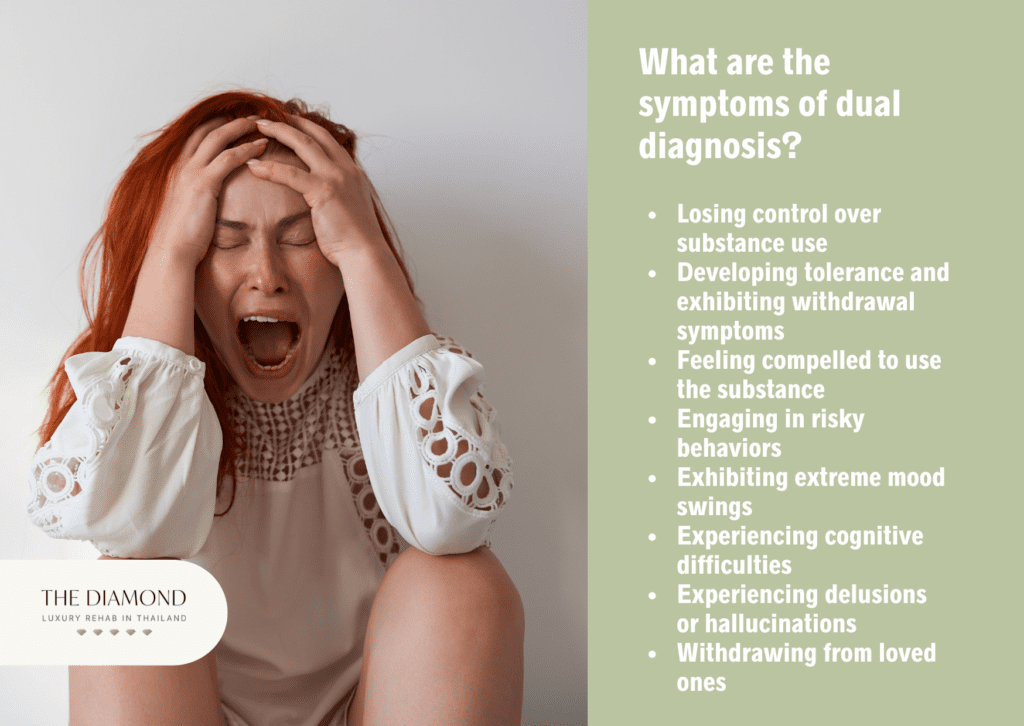
The symptoms of dual diagnosis are listed below.
- Losing control over substance use: Chronic substance abuse alters key brain areas associated with feeling pleasure and making rational decisions, according to an October 2015 publication by the National Institutes of Health, titled “Biology of Addiction: Drugs and Alcohol Can Hijack Your Brain.” Individuals with problematic substance use tend to consume more of the substance or continue using it for longer than intended even though they are aware of its adverse effects.
- Developing tolerance and exhibiting withdrawal symptoms: Misusing substances is known to lead to the development of a high degree of tolerance and withdrawal. Chronic substance abuse builds up tolerance as the body gets used to the presence of the substance and needs more of it to achieve the earlier degree of “high.” Dependence often accompanies tolerance and is characterized by the manifestation of withdrawal symptoms when the individual quits using the substance.
- Feeling compelled to use the substance: Chronic substance misuse alters the brain’s circuitry and is characterized by compulsive drug use even when the individual is aware of the negative physical, psychological, and social consequences of maintaining their addiction. Often, individuals “self-medicate” and consume drugs in an attempt to deal with the negative feelings and emotions triggered by their psychiatric disorder. They feel they are unable to function without the drug. Trying to avoid the painful and unpleasant symptoms of withdrawal is also another reason why individuals feel that they “must” take the drug.
- Engaging in risky behaviors: These behaviors include driving when intoxicated and/or engaging in activities that are illegal or reckless and have the potential to cause harm to the substance user or others.
- Exhibiting extreme mood swings: Extreme mood swings manifest rapidly, dramatically, and unpredictably. Substance use triggers chemical changes in the brain’s reward circuitry, which is a probable cause of mood swings. On the other hand, mood disorders like bipolar disorders–characterized by extreme mood swings–are the most common psychiatric illnesses co-occurring with substance use disorder, according to a 2005 article by Quello et al., published in the journal Science & Practice Perspectives, titled “Mood Disorders and Substance Use Disorder: A Complex Comorbidity.”
- Experiencing cognitive difficulties: Misuse of psychostimulant drugs like cocaine and methamphetamine triggers significant changes in the cognitive regions of the brain leading to cognitive deficits like memory impairment, learning difficulties, poor decision-making abilities, and impaired control of behaviors, according to a 2019 article by Manoranjan S. D’Souza published in the journal Frontiers in Psychiatry, titled “Brain and Cognition for Addiction Medicine: From Prevention to Recovery Neural Substrates for Treatment of Psychostimulant-Induced Cognitive Deficits.” On the other hand, cognitive impairment has a high prevalence rate of 77%, 64%, and 45% in major depressive disorder, bipolar disorder, and schizophrenia, respectively, according to a 2022 article by Wang et al., published in the journal Frontiers in Cellular Neuroscience, titled “Cognitive impairment in psychiatric diseases: Biomarkers of diagnosis, treatment, and prevention.”
- Experiencing delusions or hallucinations: Delusions and hallucinations are symptoms of psychosis, which is a prominent symptom of schizophrenia. Substances like alcohol, amphetamines, cocaine, hallucinogens, opioids, cannabis, and sedatives are also known to trigger hallucinations and/or delusions, according to the entry titled “Substance- and Medication-Induced Psychotic Disorders” published in the MSD Manual (Consumer Version) and authored by Carol Tamminga and last modified in September 2022.
- Withdrawing from loved ones: Individuals with a substance use disorder and/or a psychiatric illness tend to be socially isolated. A possible reason for their isolation is the stigma associated with mental health disorders. Often, individuals withdraw from their loved ones in an attempt to hide their substance use.
- Finding it difficult to navigate daily life: Individuals with a dual diagnosis have trouble maintaining healthy relationships and fulfilling professional obligations. Those with a substance use disorder tend to spend increasing amounts of time acquiring, consuming, and recovering from the effects of the substance and thus, are unable to focus on the chores of daily life. Cognitive difficulties and symptoms like hallucinations and delusions, whether induced or exacerbated by substance use or caused by a psychiatric illness, too, make it difficult for an individual with a dual diagnosis to navigate the demands of daily life.
What are the risk factors for dual diagnosis?

The risk factors for dual diagnosis are listed below.
- Genetics: It has been found that common genetic factors contribute to the co-occurrence of psychiatric illnesses and substance use disorders, according to a 2016 article by Carey et al., published in the journal Frontiers in Genetics, titled “Associations between Polygenic Risk for Psychiatric Disorders and Substance Involvement.” If an individual is genetically susceptible to developing psychiatric disorders, they are also vulnerable to problematic substance use. Bipolar disorder is genetically associated with problematic alcohol use, severe cocaine dependence, and cannabis and opioid use. Alcohol and nicotine dependence has been shown to possess significant genetic correlations with schizophrenia, major depressive disorder, and attention-deficit/hyperactivity disorder (ADHD), according to a 2021 article by Abdellaoui et al., published in the journal Drug and Alcohol Dependence, titled “Genomic relationships across psychiatric disorders including substance use disorders.” Cannabis use disorder has been found to be genetically associated with ADHD.
- Presence of a mental disorder: Individuals with a mental health disorder tend to use substances of abuse to self-medicate or alleviate the symptoms of their psychiatric condition and/or cope with the loneliness, alienation, and stigma associated with their mental health disorder. Additionally, psychiatric disorders are associated with changes in the way the brain functions so that the pleasurable effects of substances are enhanced. So, individuals with mental health disorders find it challenging to stop using the substance, according to a publication by the National Institutes of Health, titled “Substance Use and Co-Occurring Mental Disorders,” last reviewed in March 2024. Mental disorders are also known to increase the likelihood of an individual developing an addiction to a substance by reducing the awareness of its adverse health effects, according to a 2020 NIDA publication, titled “Common Comorbidities with Substance Use Disorders Research Report.”
- Presence of a substance use disorder: It has been shown that substance abuse triggers changes in brain chemistry that are also implicated in the development of mental disorders like schizophrenia, mood, anxiety, and impulse-control disorders (NIDA, 2020). For instance, alcohol and the designer drug ecstasy are known to deplete the levels of serotonin in the brain, which in turn, negatively affects mood and impulse control, according to a 2013 article by Thomas M. Kelly and Dennis C. Daley published in the journal Social Work in Public Health, titled “Integrated Treatment of Substance Use and Psychiatric Disorders.” Substances of abuse are known to exacerbate psychotic symptoms and alter their nature from acute to chronic manifestations, according to a 2012 article by Stephen Ross and Eric Peselow published in the journal Clinical Neuropharmacology, titled “Co-occurring psychotic and addictive disorders: neurobiology and diagnosis.”
- Trauma and adverse childhood experiences: Individuals with a history of physical and/or emotional trauma and adverse childhood experiences have an increased risk of developing both substance use and mental health disorders (NIDA, 2020). For instance, individuals with post-traumatic stress disorder (PTSD) tend to use substances to deal with feelings of anxiety and soothe the pain associated with their trauma. Authors Blanco et al., in their 2020 article titled “Traumatic Events in Dual Disorders: Prevalence and Clinical Characteristics” published in the Journal of Clinical Medicine state that childhood maltreatment is not only a strong predictor for having a dual diagnosis later in life but also a risk factor for developing a severe clinical profile.
- Stress: Stress is recognized as a strong risk factor in the development of several psychiatric disorders (NIDA, 2020) that, in turn, increases the risk of an individual developing a substance use disorder. Chronic high levels of stress change brain activity leading to decreased impulse and behavioral control and impaired dopamine signaling that tends to enhance the pleasurability of drugs.
How is dual diagnosis determined?
Dual diagnosis is determined after conducting a single biopsychosocial assessment using an integrated assessment tool, as mentioned in the chapter titled “Assessment” in the 2005 book
Treatment Planning for Person-Centered Care by Neal Adams and Diane Grieder. This means that the individual seeking diagnosis or treatment is not assessed separately by a mental health professional and an addiction expert. Usually, a psychologist or a psychiatrist with knowledge of both mental health and substance use disorders makes the diagnosis. Dual diagnosis is determined after carrying out a meticulous and comprehensive patient evaluation, asking about the symptoms of all the conditions involved to learn about their onset and evolution over time, and identifying psychosocial triggers like stress and trauma.
According to a 2020 NIDA publication, titled “Common Comorbidities with Substance Use Disorders Research Report,” patients seeking treatment for mental health illnesses should be assessed for substance use disorder and vice versa. When treating individuals for drug addiction, NIDA advises healthcare professionals to continue observing their patients during abstinence to determine if specific symptoms are triggered by substance use or withdrawal or whether these are caused by a co-occurring psychiatric illness.
Why is it important to address dual diagnosis early?
It is important to address dual diagnosis early because co-occurring conditions interact and adversely impact the prognosis of the other condition(s), according to a 2020 research report by the NIDA, titled “Common Comorbidities with Substance Use Disorders Research Report.” For instance, alcohol is known to worsen symptoms of schizophrenia, including hallucinations and delusions, and even induce psychotic episodes in vulnerable individuals. It is also crucial that dual diagnosis is addressed early because the presence of co-occurring disorders contributes to increased disease severity and complicates recovery, according to a 2013 article by Thomas M. Kelly and Dennis C. Daley published in the journal Social Work in Public Health, titled “Integrated Treatment of Substance Use and Psychiatric Disorders.”
For instance, individuals with opioid use disorders and severe mental illness are more likely to experience medical crises that necessitate repeated emergency visits, receive multiple prescriptions for psychiatric medicines, and experience increased suicidal ideation than those who have a severe mental disorder alone.
Dual diagnosis needs to be addressed early in young people because dually-diagnosed children and adolescents have an increased risk of negative outcomes compared to young people with a substance use disorder or a mental illness alone, according to a 2020 article by John Otasowie published in the journal BJPsych Advances, titled “Co-occurring mental disorder and substance use disorder in young people: aetiology, assessment and treatment.” These detrimental effects include repeated hospital visits, poor treatment outcomes, difficulty in forming and maintaining interpersonal relationships, homelessness, increased risk of attempting suicide, involvement in criminal activities, and premature death.
What are the treatment options for dual diagnosis?
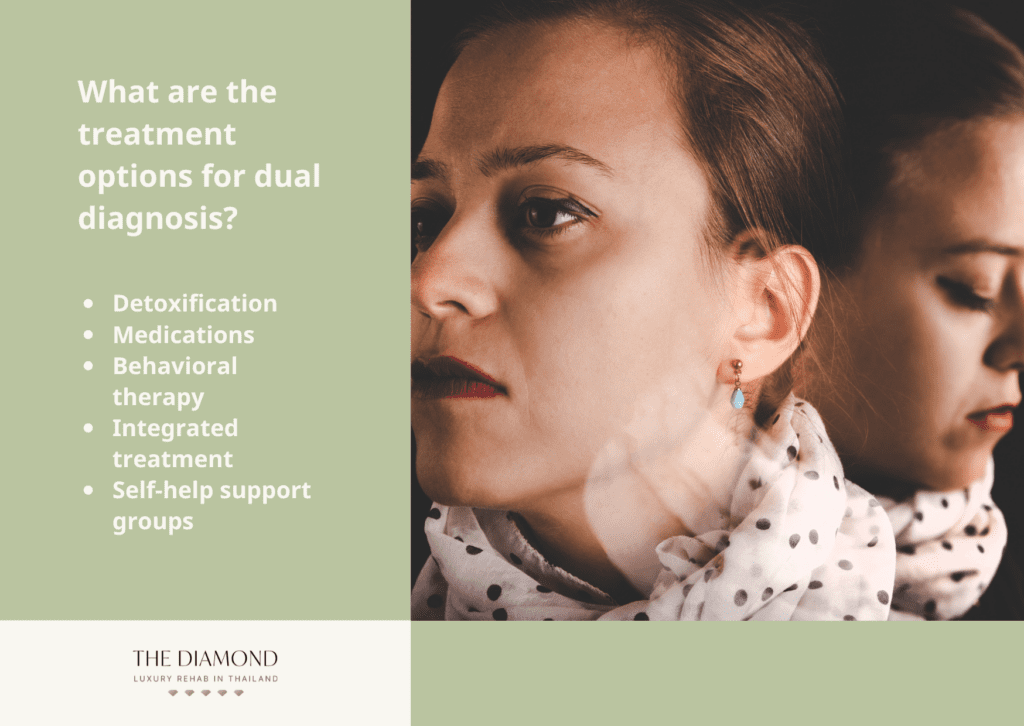
The treatment options for dual diagnosis are listed below.
- Detoxification: Alongside minimizing the physiological harm caused by a drug of abuse, the process of detoxification helps to stabilize and restore equilibrium in the brain regions associated with impulse control, behavioral responses, cognitive abilities, and feelings of pleasure. The functionality of these regions is compromised by chronic drug and alcohol use. By stabilizing the chemistry and functionality of these regions, detoxification promotes abstinence, eases the symptoms of psychiatric disorders, and improves overall well-being.
- Medications: Medications for treating both substance use and mental health disorders have the potential to be integral components within a broader treatment framework, according to Anees Bahji in a 2024 article published in the Journal of Clinical Medicine, titled “Navigating the Complex Intersection of Substance Use and Psychiatric Disorders: A Comprehensive Review.” Depending on the disease status of the individual, medicines are provided to individuals to address substance cravings and withdrawal symptoms and/or manage the symptoms of their psychiatric disorders. There are medications that address multiple problems, such as bupropion, which is used for treating nicotine dependence and depression, according to a 2020 publication by the NIDA, titled “Common Comorbidities with Substance Use Disorders Research Report.”
- Behavioral therapy: The National Institute of Mental Health in their publication titled “Substance Use and Co-Occurring Mental Disorders” last reviewed in March 2024 mentions that cognitive behavioral therapy (CBT), dialectical behavior therapy (DBT), contingency management, therapeutic communities, and assertive community treatment are effective behavioral therapies for adults with a dual diagnosis. Brief strategic family therapy, multidimensional family therapy, and multisystemic therapy are considered effective behavioral therapies for children and adolescents with co-occurring mental health and substance use disorders. Additionally, exposure therapy is deemed to be helpful in treating individuals with PTSD and cocaine use disorder while integrated group therapy is believed to be effective in treating patients with bipolar disorder and addiction issues (NIDA, 2020).
- Integrated treatment: Integrated treatment is treating two or more conditions simultaneously using multiple therapeutic interventions. According to a 2013 article by Thomas M. Kelly and Dennis C. Daley published in the journal Social Work in Public Health, titled “Integrated Treatment of Substance Use and Psychiatric Disorders,” the presence of comorbid disorders increases severity and makes recovery complicated because each disorder aggravates the symptoms of the other. There is substantial research to show that integrated treatment, such as an approach combining pharmacotherapy and psychotherapy, has superior efficacy in treating dual diagnosis than a treatment modality that focuses on a single disorder. A comprehensive dual-diagnosis treatment approach should also include interventions aimed at providing financial support and housing and social assistance that have the potential to enhance the quality of life of the patients (Bahji, 2024).
- Self-help support groups: Authors Laudet et al., in their 2000 article titled “Support, Mutual Aid and Recovery from Dual Diagnosis” published in the Community Mental Health Journal note that dually-diagnosed individuals who have a high level of social support and take part in dual-recovery mutual aid report decreased substance use, reduced mental distress, and increased emotional well-being. The authors mention that this positive association has been observed only for specialized mutual aid groups, such as Dual Diagnosis Anonymous, and not for conventional single-focus self-help groups. Dual-diagnosis peer support groups comprise individuals with lived experience of dual diagnosis and harbor similar concerns about co-occurring mental health disorders. Peer support during dual-diagnosis recovery lessens feelings of isolation, anxiety, and distress in individuals and teaches coping strategies to navigate the chores of daily life while dealing with the challenges of co-occurring disorders.
What can I expect with a dual diagnosis?
If you receive a dual diagnosis, you can expect yourself to be in denial. You will find it difficult to acknowledge that you abuse substances or have no control over their use. It is also possible that you choose to ignore the symptoms of your mental health condition, however alarming or debilitating they are, or believe that they will go away on their own. You will find it challenging to deal simultaneously with the effects of the disorders because co-occurring diseases tend to interact and exacerbate the symptoms of the other. Unfortunately, it is likely that acquaintances and loved ones will distance themselves from you.
If you receive a dual diagnosis, you are expected to find treatment for your condition. If the conditions involved in the dual diagnosis are left untreated, you will notice a worsening of symptoms alongside deteriorations in your interpersonal relationships, increased financial hardships, worsening of physical and mental health, and lapses at the workplace. So, your physician will suggest getting treatment for all conditions simultaneously. Fortunately, evidence-based integrated treatment options are available, and mental healthcare facilities personalize these programs to suit a patient’s unique medical and psychological needs, disease severity, life circumstances, convenience, and accessibility.
Co-occurring mental health conditions increase disease severity, require prolonged treatment, and complicate recovery, according to a 2013 article by Thomas M. Kelly and Dennis C. Daley published in the journal Social Work in Public Health, titled “Integrated Treatment of Substance Use and Psychiatric Disorders.” So, it is possible that initially there is a domino effect of relapse, and if you experience a setback in one treatment, you will notice a setback in the treatment of the other condition as well. However, symptoms improve if you stick with the treatment plan.
How can I help a loved one with a dual diagnosis?
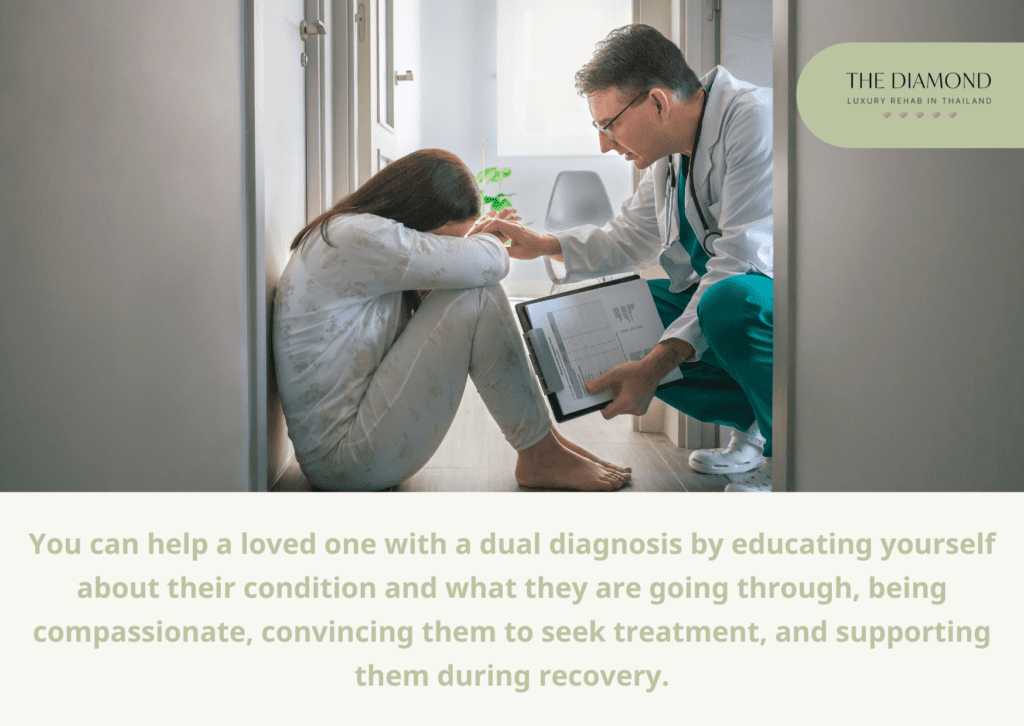
You can help a loved one with a dual diagnosis by educating yourself about their condition and what they are going through, being compassionate, convincing them to seek treatment, and supporting them during recovery. Learn about dual diagnosis as a condition and the specific co-occurring diseases your loved one has.
Also, educate yourself about the treatment options available to your loved one and what the journey of recovery entails so that you are better able to understand them, anticipate their needs, and support them during a challenging phase. Be available for your loved one when they want to confide in you or share their anxieties, fears, or concerns. Be patient, non-judgmental, and compassionate when you interact with them. Do not shame or blame them for their condition. Choose your words carefully so that they convey your love and support. Refrain from engaging in enabling behaviors, such as lending money that will fuel substance use or covering up for your loved one’s lapses.
Often, individuals with dual diagnosis are in denial about their condition. Encourage them to seek treatment and help them choose the right treatment option. Show your support by taking part in the family therapy sessions that the treatment plan is likely to incorporate. Remember that the dual diagnosis recovery process is long and often complicated. Relapse is possible and normal. So, be patient with your loved one and encourage them by celebrating small milestones.