
Drug dependence: types, symptoms, causes, and treatment


Table of content
- What is drug dependence (substance dependence)?
- What are the two types of substance dependence?
- What are the symptoms of drug dependence?
- What are the causes of drug dependence?
- How does drug dependence develop?
- What are the risk factors for drug dependence?
- What are the substance dependencies recognized by the DSM classification?
- What are the treatments for drug dependence?

Drug dependence (substance dependence) refers to the compulsive and continuous or regular drug-seeking behavior that an individual engages in to either experience its euphoric effects or avoid or seek relief from the distressful physical and/or psychological symptoms that occur due to the absence of the drug in the body. Drug dependence is considered pathological when the drug-taking individual continues taking the substance despite being aware of its negative physical, psychosocial, and behavioral implications or is unable to reduce or stop its usage due to withdrawal syndrome.
The two types of substance dependence are physical dependence and psychological dependence. The common symptoms of drug dependence are developing tolerance to the substance, experiencing withdrawal symptoms when usage is stopped or reduced, using the drug inappropriately, losing control over use, and continuing use despite its adverse outcomes.
The causes of drug dependence are excessive or prolonged use of an addictive substance, changes in the brain caused by the substance, developing tolerance to the drug, and the appearance of withdrawal symptoms when usage is stopped or the dose is reduced. The treatments for drug dependence include tapering, detoxification, medications, psychotherapy, dual diagnosis treatment, and inpatient treatment.
What is drug dependence (substance dependence)?
Drug dependence (substance dependence) is the physical and psychological state of an individual where they exhibit compulsive behavior to use a drug or a substance continuously or at regular intervals either to experience its psychic effects or to alleviate the distress caused by its absence, as noted by P. K. Gupta in the chapter titled “Drug toxicity, dependence, and abuse” from the book Fundamentals of Toxicology published in 2016. The state of dependence indicates that the body needs a substance to function normally.
Authors Szalavitz et al., in their 2021 article titled “Drug dependence is not addiction—and it matters” and published in the journal Annals of Medicine clarify that drug dependence is not always pathological, for instance, when an individual uses medications like insulin, an anti-hypertensive agent, or a blood thinner to manage a chronic condition. It is problematic only when the individual continues using the drug despite its adverse physical, behavioral, and psychosocial effects or when withdrawal syndrome makes it challenging to stop or reduce use.
Is drug dependence the same as addiction?
No, drug dependence is not the same as addiction, as clarified in this 2021 article by Szalavitz et al., published in the journal Annals of Medicine, titled “Drug dependence is not addiction—and it matters.” Dependence is the natural biological effect of long-term drug use that causes specific adaptations in the brain manifesting as withdrawal symptoms when the drug is discontinued or its usage is reduced.
On the other hand, addiction is a chronic disease that causes changes in the brain leading to the individual losing control over their drug cravings even when the negative effects of their addictive behavior are evident. There are instances where individuals experience withdrawal without having an addiction while addiction is possible without the manifestation of withdrawal symptoms.
Is drug dependence the same as drug tolerance?
No, drug dependence is not the same as drug tolerance. Tolerance refers to the state where an individual’s body has become less responsive to a drug after using it for a long time. They need more of the drug to experience the earlier level of effect. On the other hand, drug dependence is the state where the drug user’s body and brain have become accustomed to the presence of the drug and are unable to function without it.
Dependence alters the brain in ways so that when the drug is stopped or the dosage is reduced, the individual experiences distressful withdrawal symptoms. Tolerance and dependence are indicators of drug use. However, while drug tolerance refers to the amount of the substance needed by the individual to experience the desired effects, dependence refers to the state where the body has become dependent on the drug to function normally.
Is drug dependence the same as drug abuse?
No, drug dependence is not the same as drug abuse in terms of the way both conditions manifest, as explained by Douglas H. Ruben in the chapter titled “Drug Dependence” from the Encyclopedia of Applied Psychology published in 2004. Drug abuse is the misuse of illicit, prescription, or over-the-counter drugs in excessive amounts or for purposes other than those for which they were originally intended. It is a powerful precursor to developing drug dependence, which is a state marked by clearly measurable periods of tolerance and withdrawal stemming from chronic drug use.
Withdrawal syndrome is associated with only drug dependence. On the other hand, drug abuse is episodic. Drug abusers are intermittent users and experience little to no withdrawal symptoms after stopping or reducing usage. Furthermore, drug dependence is associated with significant behavioral, cognitive, and psychomotor impairment. These retardations are not always apparent in the case of drug abuse.
Although they exhibit different symptoms, the fifth edition of the Diagnostic and Statistical Manual of Mental Disorders (DSM), published by the American Psychiatric Association combines drug dependence (substance dependence) and drug or substance abuse into a single diagnostic category, substance use disorder.
What are the two types of substance dependence?
The two types of substance dependence are listed below.
- Physical dependence
- Psychological dependence
1. Physical dependence
Physical dependence refers to the physical condition where the body has adapted itself to the presence of a drug and relies on it to function normally. It is characterized by the appearance of withdrawal symptoms when the drug is stopped or its dosage is reduced. It is the natural biological repercussion of prolonged usage of a substance, according to this 2021 article by Szalavitz et al., published in the journal Annals of Medicine, titled “Drug dependence is not addiction—and it matters.”
2. Psychological dependence
Psychological dependence refers to the behavioral and psychological components of substance use disorder. This state is characterized by a loss of control over cravings and compulsive and recurrent use of drugs despite their negative physical, psychosocial, and behavioral consequences. It is indicated by drug cravings even after prolonged periods of abstinence.
Physical dependence refers to a physiological state of adaptation while psychological dependence is a state of needing a specific psychoactive substance either to derive positive feelings of satisfaction and pleasure from it or to avoid the negative physical and/or psychological effects associated with its withdrawal. Psychological dependence is more associated with drug-seeking behavior than physical dependence and thus, believed to contribute more to the development of addiction.
What are the symptoms of drug dependence?
The symptoms of drug dependence are listed below.
- Developing tolerance: There is an increasing need to take more of the substance to derive the same effect or a significantly decreased effect while continuing to use the same amount of the substance.
- Experiencing withdrawal syndrome: The common withdrawal symptoms that appear when the drug is stopped or its dose is reduced include muscle aches and spasms, anxiety or agitation, increased heart rate, nausea and vomiting, diarrhea, depression, difficulty concentrating, detaching from reality, and hallucinations.
- Misusing the substance: The drug is taken in greater amounts or for longer periods than originally intended.
- Losing control over drug use: The individual is unable to reduce or control usage despite their willingness or persistent attempts to do so.
- Engaging in compulsive drug-seeking activities: The individual spends a significant amount of time seeking, consuming, and recovering from the effects of the drugs. Individuals who abuse prescription medications exhibit classic drug-seeking behaviors like requesting higher doses, claiming that they have lost their prescriptions, exaggerating symptoms, frequently requesting early refills, and doctor shopping.
- Continuing usage despite adverse outcomes: The individual continues to use drugs despite being aware of their adverse physical, psychosocial, and behavioral consequences.
What are the causes of drug dependence?
The causes of drug dependence are listed below.
- Inappropriate use: Excessive and/or prolonged use of drugs is associated with the development of tolerance that in turn, increases the chance of developing drug dependence.
- Alterations in the brain: Inappropriate drug use is associated with adverse effects in the regions of the brain involved in decision-making, judgment, and behavioral regulation, according to a June 2018 release by the National Institute on Drug Abuse, titled “Understanding Drug Use and Addiction DrugFacts.” Impaired functionality in these regions causes an individual to seek drugs despite the negative consequences of taking the substance.
- Tolerance: Chronic drug exposure reduces the body’s sensitivity to the effects of the substance, and the individual increasingly needs more of it to experience the earlier levels of euphoria and/or derive physical relief from a symptom. However, it is also possible to develop tolerance to certain drugs within hours and days after taking a single dose of the substance, according to a 1987 article by Miller et al., published in the Journal of Substance Abuse Treatment, titled “The relationship of addiction, tolerance, and dependence to alcohol and drugs: a neurochemical approach.”
- Withdrawal syndrome: Withdrawal syndrome is associated with drug dependence. The extent of dependence magnifies as the drug-taking individual takes more of the substance to avoid experiencing the distressful symptoms of withdrawal.
How does drug dependence develop?
Drug dependence develops as a consequence of prolonged and/or excessive drug use, or drug abuse, which eventually builds up a tolerance to the substance and leads to the emergence of withdrawal syndrome. Individuals use drugs to cope with painful emotions like depression, anxiety, and loneliness. Several drugs of dependence with mood-altering properties and considerable abuse and diversion potential are known to contribute to the development of dependence, according to a 1993 article by L.A. Carr published in the journal Primary Care, titled “The pharmacology of mood-altering drugs of abuse.” These drugs cause dependence by changing the normal functions of the central nervous system. However, Walsh et al., in their 2009 article titled “Cocaine Abuse Versus Cocaine Dependence: Cocaine Self-Administration and Pharmacodynamic Response in the Human Laboratory,” published in the journal Drug and Alcohol Dependencenote that risk factors like the genetic makeup and personality of the individual, and familial, social, and environmental factors determine the transition from drug abuse to drug dependence.
What are drugs of dependence?
Drugs of dependence are controlled substances that have the potential for misuse and trafficking, according to a release by the Department of Health, Government of Victoria (Australia) titled “Drugs of dependence and drug-dependent persons,” which was last reviewed on 3 March 2023. These are chemical substances with properties that alter how the brain and the body function. These include medicines with proven therapeutic benefits but with a high potential for abuse, dependence, and diversion as well as illicit drugs.
The common drugs of dependence are central nervous system depressants, such as alcohol and medicines like benzodiazepines and barbiturates; stimulants, such as cocaine, amphetamine, and methamphetamine; hallucinogens, such as LSD (lysergic acid diethylamide), mescaline, and psilocybin or mushrooms; dissociative drugs, such as phencyclidine or magic dust, ketamine, and dextromethorphan (DXM); cannabinoids like marijuana and hashish; and opioids and narcotics, such as illicit drugs like heroin and opium and pain medicines like morphine.
Nicotine-containing products like cigarettes, cigars, spit tobacco, chew, and snuff are also drugs of dependence. According to a release by the National Institute on Drug Abuse, titled “Commonly Abused Drugs” that was last revised in March 2011, anabolic steroids available as juice, pumpers, and gym candy, and inhalants, such as solvents like paint thinners, glues, and gasoline and gases like aerosol propellants, propane, and laughing gas are some compounds that are commonly abused.
What are the stages of drug dependence?
The stages of drug dependence are listed below.
- Initial use: Initial use of drugs stems from seemingly innocuous causes like being prescribed an opioid medication to manage pain or a psychoactive drug to treat a mental health issue. Peer pressure and wanting to experiment with drugs to seek novelty are the reasons behind adolescents starting to use drugs.
- Abuse: This stage involves increased use of the drug in an improper way. For instance, the individual decides to take higher doses of a prescription medicine or use it more frequently than prescribed. Using a prescription drug for purposes other than what it was intended for, such as taking it in large doses to get a high, also constitutes an instance of drug abuse.
- Tolerance: Chronic use or misuse of a drug with addictive potential triggers changes in brain chemistry that result in the development of tolerance. Tolerance is the condition where the individual needs increasing amounts of the drug or more frequent dosages to experience the same effect.
- Dependence: Dependence refers to the state where the individual’s brain and body become accustomed to the presence of the drug and are unable to function properly without the substance. The development of physiological dependence is associated with withdrawal syndrome, where the individual experiences distressful effects if they stop taking the drug or reduce the dosage.
- Problematic use: This state refers to the individual’s tendency to engage in compulsive drug-seeking behaviors that are sometimes risky and secretive and prioritize the use of drugs over meaningful social, occupational, and recreational activities.
- Addiction: Addiction refers to the stage where the individual displays uncontrollable and compulsive use of a drug and is unable to stop using it despite attempting to do so or being aware of its adverse physical, behavioral, and psychosocial effects. Often there is a denial of their problematic use of the drug.
How do tolerance and withdrawal contribute to drug dependence?
Tolerance and withdrawal contribute to drug dependence by modifying the way the brain and the body function. According to a June 2018 release by the National Institute on Drug Abuse, titled “Understanding Drug Use and Addiction DrugFacts,” many drugs trigger feelings of euphoria by affecting the reward circuit of the brain. This reinforces the drug-taking behavior. Long-term use of drugs causes neurochemical changes that affect functions like decision-making, judgment, behavior, and learning. As a result, the individual taking the drug feels compelled to continue usage despite being aware of the negative effects of the substance.
Prolonged drug use makes the cells in the reward circuit less sensitive to the effects of the drug. The individual develops drug tolerance and needs more of the substance to experience the earlier levels of high. Tolerance contributes to excessive drug use, which, in turn, makes the brain and the body reliant on the drug to function normally. This is a state of dependence. Drug-dependent individuals tend to develop withdrawal syndrome where the body, in an attempt to maintain a state of balance, activates counter-regulatory mechanisms when the substance is withdrawn, according to a StatPearls [Internet] publication titled “Withdrawal Syndromes” by Gupta et al., that was last updated on 29 April 2023. These counter-regulatory mechanisms trigger unpleasant side effects, or withdrawal symptoms, which are opposite of what the drug produces. The individual feels compelled to take the substance and continues taking it to avoid experiencing the discomfort of drug withdrawal.
What are the risk factors for drug dependence?
The risk factors for drug dependence are listed below.
- Genetic predisposition: Data from adoption, twin, and family studies suggests that genetic predisposition is a significant factor in the development of drug dependence, and there are specific genetic factors that trigger each type of substance dependence, according to a 2010 article by Joel Gelernter and Henry R. Kranzler titled “Genetics of drug dependence” and published in the journal Dialogues in Clinical Neuroscience. A person’s genetic makeup constitutes 40-60% of their risk of developing drug dependence, according to a release by the Genetic Science Learning Center (University of Utah) titled “Genes and Addiction.”
- History of childhood abuse and trauma: Experiencing childhood abuse and interpersonal trauma increases the risk of developing substance use disorder later in life, according to a 2022 article by Alhammad et al., published in the journal Cureus, titled “Family, Individual, and Other Risk Factors Contributing to Risk of Substance Abuse in Young Adults: A Narrative Review.”
- Peer risk factors: Alhammad et al., (2022) note that peer factors significantly influence individuals to start abusing drugs. However, the authors also note that usually, common beliefs shared with peers and family troubles influence individuals to seek out drug-using peer groups.
- Parental substance abuse: The heritability of substance abuse disorder is believed to be as high as 70%. So, children of parents who abuse substances are at an increased risk of developing drug dependence, according to Ivanov et al., in the chapter titled “Children of Parents with Substance Use Disorder” from the book Neuropathology of Drug Addictions and Substance Misuse, published in 2016.
- Early initiation: Early use of drugs is associated with an increased risk of developing substance use disorder because of the harmful effects of drugs on the developing brain, according to a July 2011 publication by the National Institute on Drug Abuse (NIDA), titled “Drugs, Brains, and Behavior: The Science of Addiction–Drug Misuse and Addiction.” The prefrontal cortex in a still-developing brain is especially vulnerable to the effects of acute and chronic drug abuse. This region of the brain is associated with executive functions like exercising self-control and exhibiting behavioral autonomy, according to a 2000 article by M. Lyvers published in the journal Experimental and Clinical Psychopharmacology, titled “Loss of control” in alcoholism and drug addiction: a neuroscientific interpretation.” Early initiation of drugs increases the risk that the individual will continue taking drugs.
- Individual risk factors: Individual factors like ethnicity, gender, socio-economic status, a propensity for seeking adventure or novelty, experiencing grief or loss, and facing significant life challenges increase the risk of abusing drugs, according to Alhammad et al., (2022). Personality traits like impulsivity, rebelliousness, and lack of emotional regulation, and easy access to drugs are the other individual risk factors that contribute to inappropriate drug use, according to a 2021 article by Nawi et al., published in the journal BMC Public Health, titled “Risk and protective factors of drug abuse among adolescents: a systematic review.” Social isolation, lack of care, and the physical and emotional stress of chronic diseases are known to contribute to inappropriate drug taking in older adults.
- Familial risk factors: Nawi et al., (2021) mention that the presence of familial factors like low parental education, poor maternal psychological health, lack of or poor supervision, prenatal maternal tobacco use, negligence, and having uncontrolled access to pocket money increases the risk of developing drug addiction.
- Co-occurring disorders: The presence of mental disorders, such as anxiety, depression, bipolar disorder, attention deficit hyperactivity disorder, borderline personality disorders, schizophrenia, and antisocial personality disorder, is implicated in substance abuse and the development of drug dependence.
- Method of administration: Drugs when smoked or injected reach the brain within a few seconds after administration and produce powerful euphoric feelings. However, this high is short-lived. So, the individual is compelled to take the drug often to re-experience the pleasurable state(NIDA, July 2011).
- Absence of protective factors: The presence of several environmental and biological protective factors has been shown to mitigate the risk of abusing drugs even when other risk factors are present. These protective factors include parental supervision and support, academic success, positive interpersonal relationships, community resources, and anti-drug policies in school (NIDA, July 2011). Nawi et al., (2021) note that traits like optimism and a high level of mindfulness, a willingness to maintain one’s health and a strong opinion against substance abuse, being engaged in a structured activity, and possessing strong religious beliefs are powerful protective factors.
What are the substance dependencies recognized by the DSM classification?

The substance dependencies recognized by the DSM classification are listed below.
- Alcohol dependence: Alcohol dependence is the repetitive or compulsive consumption of alcohol despite being aware of its considerable physical, behavioral, and psychosocial problems. It is associated with cravings, development of tolerance, and manifestation of withdrawal symptoms when usage is discontinued. According to DSM-5 and DSM-5-TR, alcohol dependence and alcohol abuse are clubbed under alcohol use disorder.
- Opioid dependence: Opioid dependence is the repetitive or compulsive use of opioids, such as morphine and heroin, despite knowing about the significant physiological, behavioral, and psychosocial problems caused by these substances. The condition is associated with the development of tolerance and the triggering of withdrawal symptoms when usage is stopped. According to DSM-5 and DSM-5-TR, opioid dependence and opioid abuse are integrated into a single diagnosis, opioid use disorder.
- Sedative, hypnotic, or anxiolytic dependence (including benzodiazepine dependence and barbiturate dependence): Sedative, hypnotic, or anxiolytic dependence refers to cravings for the drug often associated with unsuccessful attempts to reduce use, the development of physical withdrawal symptoms when the drug is stopped, and a compulsion to take the drug despite the physical, psychological, and interpersonal problems caused by its use, according to a February 2022 publication by the Harvard Medical School titled “Sedative, Hypnotic or Anxiolytic Drug Use Disorder.”
- Cocaine dependence: Cocaine dependence is a chronic stress state characterized by compulsive and usually uncontrollable use of cocaine despite its adverse effects on the physical, mental, and cognitive health of the individual. The progression from cocaine abuse to severe cocaine dependence typically occurs more rapidly than with other substances like alcohol, according to a 2001 article by Charles A. Dackis and Charles P. O’Brien published in the Journal of Substance Abuse Treatment, titled “Cocaine dependence: a disease of the brain’s reward centers.”
- Cannabis dependence: Cannabis dependence is characterized by maladaptive and uncontrollable use of cannabis and difficulty stopping its use despite its distressful effects. Adolescents have an increased risk of developing cannabis use disorder characterized by cannabis dependence even at low levels of usage, according to a StatPearls [Internet] release titled “Cannabis Use Disorder” authored by Jason Patel and Raman Marwaha and last updated on 20 March 2024.
- Amphetamine dependence: Amphetamine dependence refers to the repetitive or continuous use of amphetamine despite the significant negative consequences of the drug. This state of dependence is independent of tolerance to the drug or the appearance of withdrawal symptoms on stopping use. According to DSM-5 and DSM-5-TR, amphetamine dependence is integrated into the diagnosis of amphetamine abuse. Amphetamines are stimulants that include prescription drugs for attention deficit hyperactivity disorder, such as Adderall, Concerta, and Ritalin, and the illegal street drug methamphetamine. Prescription amphetamines are also used for treating obesity and narcolepsy and tend to be abused by individuals for their sleep- and appetite-suppressing properties.
- Hallucinogen dependence: Hallucinogen dependence refers to a pattern of compulsive and repetitive use of hallucinogens despite their considerable negative physiological, behavioral, and interpersonal repercussions. The condition is associated with the development of tolerance and the appearance of withdrawal symptoms when usage is stopped, according to a 2023 article by Jones et al., published in the journal Addictive Behavior Reports, titled “Associations between individual hallucinogens and hallucinogen misuse among U.S. Adults who recently initiated hallucinogen use.” Hallucinogens are often called “psychedelic” drugs and some common ones are LSD, ecstasy, ketamine, psilocybin, and salvia. These drugs alter the mood, perception, and behavior of the users.
- Inhalant dependence: Inhalant dependence is a condition marked by the repetitive and uncontrollable misuse of inhalants despite the adverse physical, behavioral, and psychosocial problems caused by these substances. The condition is associated with the development of tolerance and the triggering of withdrawal symptoms when usage is stopped. The DSM-5 and DSM-5-TR include inhalant dependence and abuse under the single diagnostic category of inhalant use disorder. Some common types of inhalers that people tend to abuse to get a “high” are aerosols like air fresheners, deodorants, hair sprays, and spray paints; gases, such as butane that is emitted by lighter fluid, computer cleaning sprays, freon, helium, propane, and nitrous oxide or laughing gas, which is found in whipped cream containers; and solvents like correction fluids, quick-drying glue, felt-tip markers, gasoline, nail polish removers, and paint thinners, according to a release by the National Institutes of Health, titled “Substance use – inhalants” and last reviewed on 4 May 2024.
- Polysubstance dependence: Polysubstance dependence refers to the concurrent use or misuse of multiple drugs of abuse to experience a multitude of effects or as an attempt to ease the side effects of one substance with another.
- Phencyclidine (or phencyclidine-like) dependence: Phencyclidine (PCP) dependence refers to the condition where individuals exhibit two or more of these symptoms for over a year: consuming more PCP than intended; spending considerable time seeking, consuming, and recovering from the effects of PCP; being unable to control or cut down on use; developing tolerance; continuing usage despite its negative and/or disruptive behavioral, psychosocial, and physiological effects; and using it while disregarding the dangers that taking the substance is apt to cause, such as when driving.
- Other (or unknown) substance dependence: Other (or unknown) substance dependence is an approximate synonym of other (or unknown) substance use disorder. It refers to a maladaptive pattern of using an intoxicating substance other than those included in the following categories: alcohol; cannabis; caffeine; hallucinogen; inhalant; opioid; tobacco; stimulant; or sedative, hypnotic, or anxiolytic. It presents as at least two of these symptoms for over a year: consuming more of the substance or for longer periods than intended; being unable to cut down on use despite trying; experiencing cravings; spending significant time seeking, consuming, and recovering from the effects of the drug; developing tolerance; continuing usage despite its negative physical, behavioral, or psychosocial effects; continuing usage at the cost of meaningful occupational, social, and recreational activities; and using it in situations where it is risky to do so, such as while driving.
- Nicotine dependence: Nicotine is a dependence-forming chemical found in tobacco products. Nicotine dependence refers to tobacco addiction and is marked by compulsive use, cravings, inability to quit even if the individual tries to, development of tolerance, and appearance of withdrawal symptoms.
What are the treatments for drug dependence?
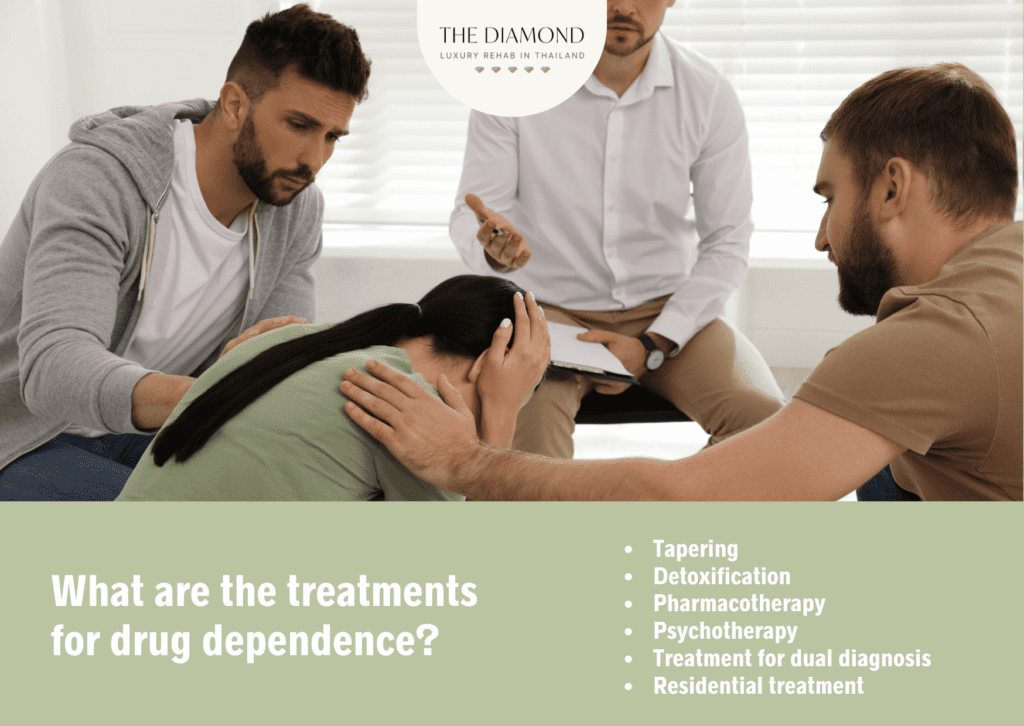
The treatments for drug dependence are listed below.
- Tapering: Withdrawal syndrome is strongly associated with drug dependence, and some withdrawal symptoms are life-threatening. So, individuals undergoing treatment for drug dependence are tapered off from a drug to help the body adjust to having less of the substance and manage withdrawal symptoms.
- Detoxification: Detoxification refers to the process of flushing out a drug of dependence from a person’s body. It should be carried out under medical supervision if the individual has a high risk of experiencing severe withdrawal symptoms or suffers from underlying medical conditions. Less addictive substances that produce similar effects as those of illegal drugs are provided to reduce the severity of withdrawal symptoms that tend to appear in a drug-dependent individual during detoxification.
- Pharmacotherapy: Medicines are prescribed to manage withdrawal symptoms, treat addiction, and prevent relapses. Methadone and buprenorphine are used to treat opioid dependence. Naltrexone is used to manage opioid dependence and alcohol dependence.
- Psychotherapy: Modalities like supportive psychotherapy, motivational interviewing, outpatient counseling, family therapy, and participation in self-help groups have been shown to be beneficial in treating drug dependence.
- Treatment for dual diagnosis: It is recommended that individuals with dual diagnosis or co-occurring substance use and mental health disorders are treated for both problems, according to a release by the National Library of Medicine (National Institutes of Health) titled “Drug Use and Addiction” that was last updated on 15 December 2023.
- Residential treatment: Residential treatment, also known as rehabilitation, involves staying in an inpatient facility where diverse modalities of treatment are administered under medical supervision to manage a drug use problem.
- Additional interventions: Interventions like resting or sleeping more, increasing hydration, taking specific vitamins, and engaging in relaxation activities are prescribed to help an individual undergoing treatment for drug dependence.
How can you stop drug dependence?
You can stop drug dependence by seeking professional help in the form of counseling, detoxification, and rehabilitation. You can join a peer support group, which is usually run by recovering addicts who share their lived experiences and suggest actionable tips to inspire and help others to reduce drug use. You can learn about your drug triggers and take steps to avoid them.
For instance, you can avoid people and places associated with drugs, learn how to resist drug temptations, practice stress management and relaxation techniques that do not involve using drugs, and distract yourself with activities like exercising and listening to music if you experience cravings, according to a release by the Department of Health and Aged Care (Australian Government), titled “How to reduce or quit drugs” that was last updated on 4 March 2020.