

Cryptocurrency addiction: definition, effects, symptoms, and treatment


Cryptocurrency addiction is a type of behavioral addiction marked by compulsive trading and spending excessive time and money buying and selling cryptocurrencies despite experiencing financial losses, functional impairment, and harmful health effects.
The effects of cryptocurrency addiction are financial hardships, strained relationships, physical and mental health problems, reduced workplace and/or school performance, a decrease in the well-being of children, and emotional distress.
The symptoms of cryptocurrency addiction are a preoccupation with trading activities, spending excessive time and money buying and selling crypto, continuing to trade despite experiencing negative health and psychosocial effects, trading to cope with emotional stress, and failing to stop or cut back trading despite wanting to.
The treatments for cryptocurrency addiction are cognitive behavioral therapy, psychodynamic therapy, motivational interviewing, dialectical behavior therapy, family therapy, support groups, holistic therapy, and inpatient and intensive outpatient programs.
What is cryptocurrency addiction?
Cryptocurrency addiction is a behavioral condition characterized by compulsive and excessive trading tendencies that lead to functional impairment, financial losses, physical and mental health problems, and relationship troubles. It is considered as a form of gambling addiction. It is to be noted that gambling disorder is the only type of clinically diagnosable behavioral addiction recognized by the American Psychiatric Association’s Diagnostic and Statistical Manual of Mental Disorders, Fifth Edition, Text Revision (DSM-5-TR). Cryptocurrency addiction is associated with multiple negative effects and has the potential to become a public health concern.
What is cryptocurrency?

Cryptocurrency is a type of digital or virtual currency that individuals use over the internet. It has no physical form and exists only on a virtual peer-to-peer network with no central clearing authority. Its supply and flow are determined by network protocols. It has no intrinsic value, meaning that it cannot be redeemed against another product, like gold. Cryptocurrency is colloquially known as crypto.
Cryptocurrency trading is powered by blockchain technology that facilitates the conversion of data into an electronic format, the recording and storage of transactions, and the tracking of assets across a digital network.Blockchain technology works in a way that makes it impossible to create counterfeit currency or double-spend. However, the cryptocurrency market is unregulated and highly volatile.
Why is cryptocurrency addictive?
Cryptocurrency is addictive because it is a highly volatile asset that is traded with the expectation of earning dubious but substantially large amounts of profits. It is a high-risk and speculative product that is subject to rapid price fluctuations. Features like the ability to trade in cryptocurrencies in 24/7 marketplaces, the potential to make quick profits and losses, and a “fear of missing out” make cryptocurrency addictive. Traders obsess over price movements and make impulsive decisions based only on short-term considerations. As a result, trading decisions are driven by the exhilaration of risk-taking, similar to what happens in gambling.
Is cryptocurrency addiction a form of gambling addiction?
Yes, cryptocurrency addiction is a form of gambling addiction for a section of individuals who exhibit gambling behaviors, personality traits, and demographic characteristics that are similar to those seen in addicted gamblers and high-risk stock traders, according to a 2023 article by Johnson et al., published in the journal Addictive Behaviors, titled “Cryptocurrency trading and its associations with gambling and mental health: A scoping review.” Cryptocurrency trading is similar to trading in high-risk stocks and is driven by motives like thrill-seeking and a desire to earn high returns, both of which characterize problematic gambling behaviors as well. More than half of those who gamble regularly also trade cryptocurrencies, and crypto trading is linked to gambling disorder, according to a 2021 article by Mentes et al., published in the journal Psychiatry and Clinical Psychopharmacology, titled “Development and Verification of Problematic Cryptocurrency Trading Scale.”
It must be noted that all individuals who engage in cryptocurrency trading are not addicted to the gambling aspect of the activity. A percentage of individuals regard cryptocurrency trading as a form of long-term investment. They are motivated by incremental profits earned over an extended period, typically based on core market and investing principles, unlike those who have an online gambling addiction.
What are the causes of cryptocurrency addiction?
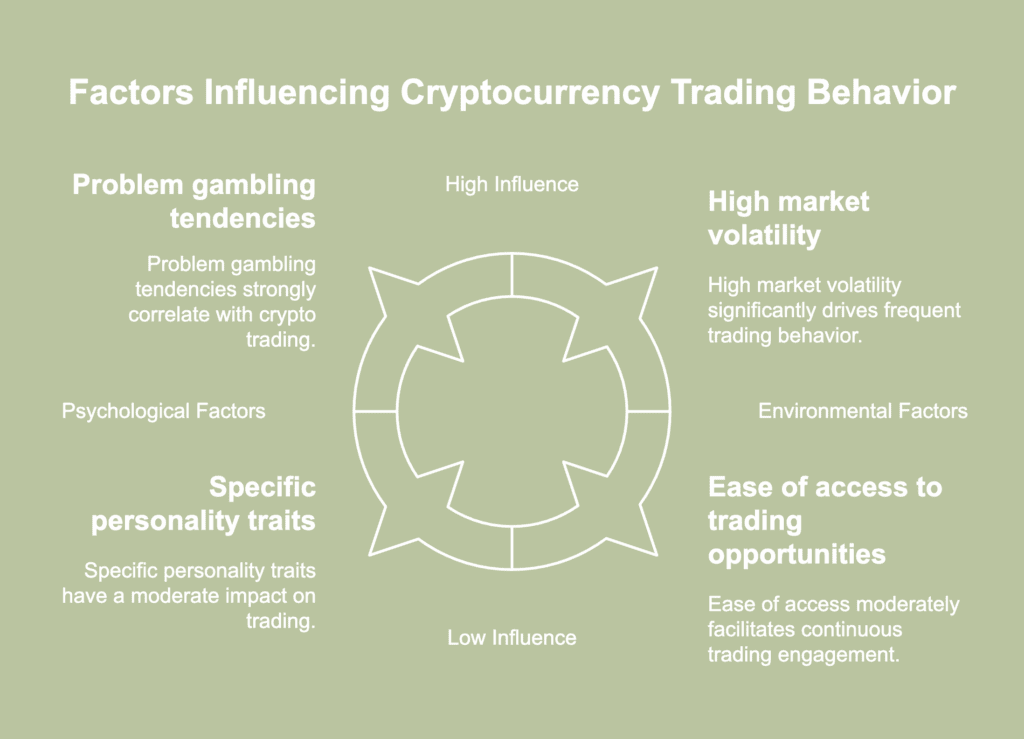
The causes of cryptocurrency addiction are listed below.
- Problem gambling tendencies: Scientific evidence suggests that individuals with problem gambling behaviors tend to trade in cryptocurrencies, according to a 2024 article by Mosbey et al., published in the International Journal of Mental Health and Addiction, titled “The Harmful Consequences of Cryptocurrency Speculation and Associated Risk Factors.” Findings from studies quoted in this article indicate that individuals who take part in day trading and sports betting are more likely to trade in cryptocurrencies. Pathological gamblers and individuals with problematic crypto trading behaviors tend to share personality traits that make gambling-like behaviors appealing to them. For instance, crypto traders report experiencing feelings of “rush” during market upswings and are motivated by a desire to earn quick profits. The findings from another study reported in this article note that an increase in cryptocurrency trading correlates with an increase in gambling activities.
- Specific personality traits: It has been observed that crypto traders with problematic and risky investing habits tend to exhibit greater neuroticism (negative affect) and impulsivity compared to those who do not engage in risky investing, according to a 2023 article by Yığman et al., published in the journal Psychiatric Danubina, titled “A NEW DANGER OF BEHAVIORAL ADDICTION: CRYPTOCURRENCY WITH MOBILE INVESTING.” The authors suggest that risky crypto investors tend to score lower on extraversion, conscientiousness (self-regulation), and agreeableness (compassion and kindness for others) scales than those who do not exhibit gambling behaviors. Additionally, individuals who are attracted to problematic cryptocurrency trading behaviors tend to exhibit personality traits like risk-taking and stimulus-seeking and harbor overconfidence biases (Mosbey et al., 2024).
- High market volatility: The highly volatile nature of the cryptocurrency market attracts individuals who are overly confident, seek sensations, and desire quick and large payoffs, which are also traits that mark problem gamblers. It has been observed that the more volatile the market, the greater is the frequency of trading, according to a 2024 article by Weiss-Cohen et al., published in the International Journal of Mental Health and Addiction, titled “When Vegas Comes to Wall Street: Associations Between Stock Price Volatility and Trading Frequency Amongst Gamblers.”
- FOMO (“fear of missing out”): FOMO is regarded as a probable predictor of crypto trading (Mosbey et al., 2024). FOMO refers to a mindset where individuals feel anxious, believing that they are missing out on pleasurable and/or rewarding experiences, which others are enjoying or capitalizing on. Among cryptocurrency traders, FOMO is associated with feelings of regret that they failed to buy or sell at the right time. A powerful social media culture of endorsements of crypto products by influencers and crypto advisors drives FOMO by creating a sense of urgency and the need to act immediately.
- Peer pressure: Disordered crypto trading behaviors are fueled by social learning and reinforcement, according to a 2021 article by Delfabbro et al., published in the Journal of Behavioral Addictions, titled “The psychology of cryptocurrency trading: Risk and protective factors.” Social media posts and forum entries encourage individuals to trade in cryptocurrency and then boast about their gains. This is a form of peer pressure that fuels a compulsion among individuals to trade in crypto in a way that is not always profitable financially.
- Success stories: Promoters of specific crypto coins highlight stories of gains made by buying at very low prices. They promote stories of individuals who have become millionaires by buying and selling cryptocurrencies. These stories thus serve as powerful messages that motivate individuals to intensify their trading activities.
- Visionary thinking and behavioral tendencies: There are individuals who possess a visionary mindset that drives them to perceive possibilities and opportunities beyond what is currently real or available. This mindset drives them to be bold and experimental. Investing in a nascent cryptocurrency market that is currently outpacing digital transactions carried out via traditional banks and financial institutions attracts visionary thinkers. Additionally, these individuals are intrigued by the possibilities that cryptocurrency will unfold as computing technology expands. By investing in crypto markets, these individuals derive the thrill of being a part of an unknown yet exciting future.
- Illusion of control: An illusion of control is believed to be a highlight of problematic crypto trading behaviors (Delfabbro et al., 2021). This behavior manifests as a tendency to overestimate the influence of one’s actions over uncontrollable situations. Crypto trading is not entirely a game of chance. To an extent, it involves strategizing and using one’s financial knowledge to buy and sell profitably. Crypto traders tend to be well-educated and financially savvy. There is a tendency among them to believe that by researching the fundamentals of a project and analyzing charts and the current macroeconomic environment, they will be able to secure a market edge and thus, not lose. This false sense of security compels individuals to trade more frequently or undertake greater risks.
- Attempts to recoup losses from crypto trading: The cryptocurrency market is very volatile and unregulated. Traders often fail to realize that crypto price movements are unpredictable and investments are as likely to be wiped out totally as they are to grow 100x in a short time. Unaware that they are, in reality, engaging in a risky game of chance, a section of crypto traders tend to attempt to recover their losses by buying more crypto coins, thereby triggering an addiction. Trying to win back losses is a classic behavioral trap that is common in the investing world.
- Ease of access to trading opportunities: A 24/7 marketplace makes it easy for crypto traders to engage in trading activities and remain preoccupied. Preoccupation makes it difficult to detach from an activity and has the potential to turn intermittent engagement into an addiction (Delfabbro et al., 2021).The anonymity offered by these digital marketplaces is an additional lure for traders. Anonymity also lowers inhibitions and social accountability, thereby encouraging individuals to engage more in risky behaviors.
- Gamification of crypto trading : A number of crypto marketing platforms and trading apps are designed to resemble carnival games or casinos. Multiple such platforms have features like the ability to notify social media connections and/or forum members about buys. These attempts at “gamifying” crypto trading add elements of novelty, thrill, competition, and social engagement and validation that attract individuals and keep them hooked to trading. Mobile apps are known to exploit specific behavioral traits associated with gamblers by pushing notifications and offering bonuses for increased trading volume, which serve as cues and trigger powerful and uncontrollable urges to trade.
What are the effects of cryptocurrency addiction?
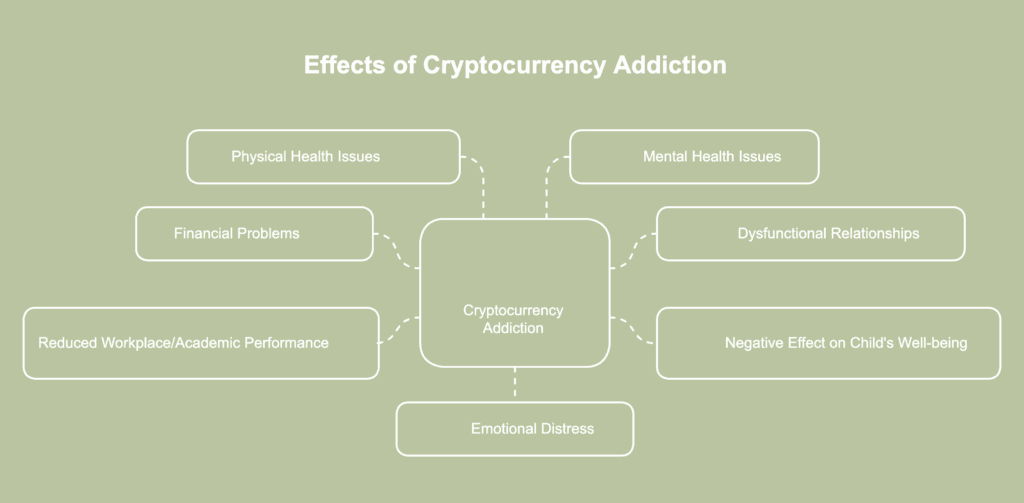
The effects of cryptocurrency addiction are listed below.
- Financial problems: Cryptocurrency traders have been observed to face financial problems like failing to pay bills on time, pawning or selling possessions to obtain money, and incurring debts, according to a 2022 article by Mehmet Uçar published in the Asian Pacific Journal of Tropical Medicine, titled “Imminence: Cryptocurrency addiction and public health.” Cryptocurrency addicts have reduced savings and less money available to spend on family members and recreational activities. Compulsive and uncontrolled cryptocurrency trading habits have been known to cause individuals to lose their homes; commit illegal acts like embezzlement, theft, and fraud to finance their addictive habits; and even go bankrupt.
- Dysfunctional relationships: Addictive cryptocurrency trading habits damage interpersonal relationships in multiple ways and have the potential to disintegrate families and cause breakups or divorce. Individuals engaging in compulsive and uncontrolled crypto trading ignore familial responsibilities and destabilize their family’s finances. Arguing and/or lying about money and debts fracture close relationships and erode trust. Relationships are also adversely affected when the individual addicted to crypto trading ignores the well-being of their loved ones and/or abuses family members emotionally and physically.
- Negative effect on a child’s well-being: When a parent’s emotional and cognitive resources are engaged in maintaining an addiction, their children tend to be neglected. Nutritional deficiencies and instances of missing school are noticed among children of parents who have a gambling disorder. It has been observed that parental problem gambling increases the risk of children being exposed to financial distress, child abuse, and domestic violence, according to a 2022 article by Suomi et al., published in the journal Addictive Behaviors, titled “Parental problem gambling and child wellbeing: Systematic review and synthesis of evidence.” It has been observed that children whose parent(s) exhibit problem gambling behaviors have an elevated risk of developing physical and behavioral health issues and severe psychological problems like anxiety, depression, and suicidal tendencies.
- Reduced workplace and/or academic performance: Cryptocurrency traders tend to stay on the internet until late at night. These disrupted sleep cycles adversely affect their productivity the next day in school or the workplace. It is possible that they lose their jobs or are unable to secure gainful employment due to poor academic performance.
- Physical health issues: It is possible for cryptocurrency addiction to trigger and/or exacerbate physical health problems. For instance, staring at their screens for extended periods and staying awake till late at night to trade strains the eyes and causes headaches. Addiction to crypto trading leads to sleep disorders and eyesight problems as well as cardiac complications that manifest as a high heart rate and elevated blood pressure levels.
- Mental health issues : Cryptocurrency addicts are known to experience mental health issues like low self-esteem, anxiety, mood swings, manic depression, substance abuse, and suicidal tendencies (Mehmet Uçar, 2022).
- Emotional distress: Dysfunctional relationships, financial hardships, and family instability caused by breakup, divorce, or loss of child custody cause significant emotional distress. Additionally, a percentage of individuals who are addicted to cryptocurrency trading feel distressed and/or guilty when they witness the economic and/or emotional burden they have inflicted on their loved ones or realize that they are unable to quit the habit despite intending to.
What are the symptoms of cryptocurrency addiction?
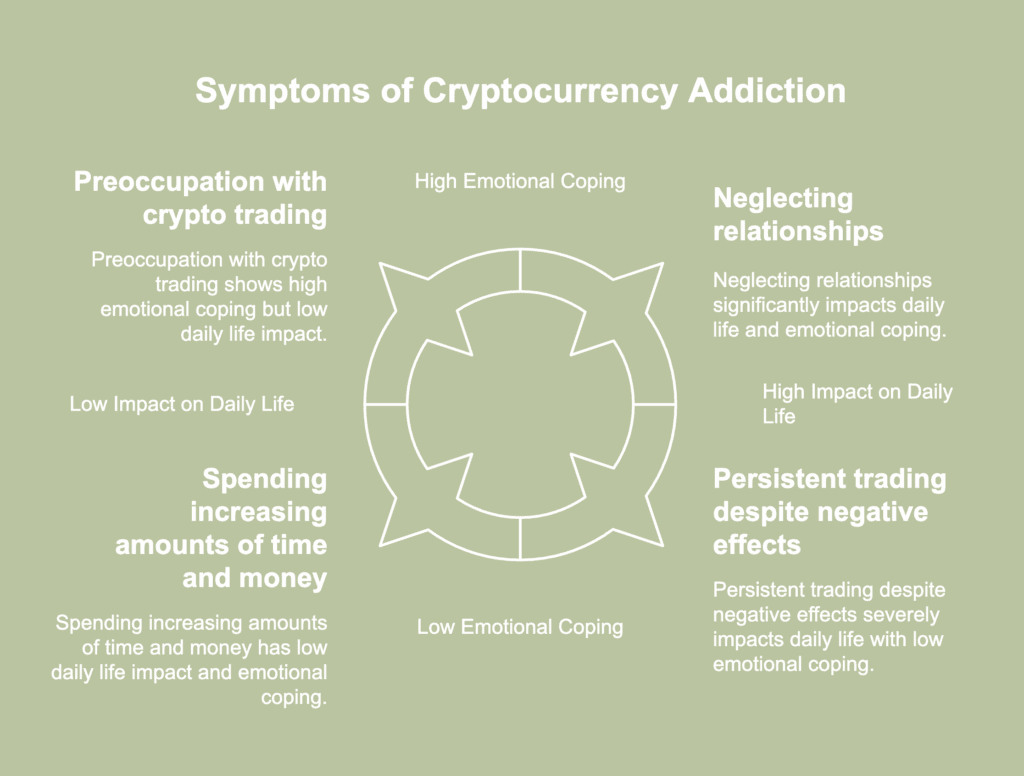
The symptoms of cryptocurrency addiction are listed below.
- Preoccupation with crypto trading: A crypto addict tends to spend excessive amounts of time thinking about cryptocurrencies and on trading activities. They are unable to refrain from checking crypto prices and their cryptocurrency wallets, according to a2024 article by Senocak et al., published in the International Journal of Caring Sciences, titled “Development of the Cryptocurrency Addiction Scale: A Methodological Study.” This is the “salience” aspect of any addiction, and cryptocurrency addicts typically choose to check crypto market updates first, even if there are messages from loved ones on their phones.
- Spending increasing amounts of time and money on trading activities: Cryptocurrency addicts spend increasing amounts of time and money on trading activities due to the development of tolerance. They spend more time and money than they intend to, typically due to the compulsivity that characterizes all forms of addiction. The addicted individual feels compelled to trade more to experience the earlier degree of excitement and/or pleasure. They also feel a powerful and uncontrollable urge to trade. They put off purchasing essential personal and/or household items in order to spend money on trading. They borrow or steal money, or sell or pawn personal and/or household possessions to acquire money for trading.
- Persistent trading despite negative effects : Individuals addicted to cryptocurrency trading continue to trade despite experiencing adverse effects like strained relationships, financial hardships, declining workplace and/or academic performance, and physical and mental health problems that are caused or aggravated by their addictive habits. Their addiction creates conflicts in their lives. The signs include arguing with and/or lying to loved ones about the time and money spent on trading, facing pressure from friends and family members to stop trading, and alienating and/or boring others who are not interested in cryptocurrencies by continuously talking about the subject. Continuously trying to recover losses from crypto trading by trading more is a sign that the individual has lost control over their habits.
- Neglecting relationships, responsibilities, and meaningful activities due to excessive trading: Individuals addicted to cryptocurrency trading neglect interpersonal relationships, professional and personal obligations, and forego meaningful social, occupational, and recreational activities in order to engage in trading. They strain existing relationships by lying about their trading habits and/or venting their anger, frustration, and/or anxiety about their crypto losses on their loved ones. Their workplace and/or academic performance suffers because they tend to think about crypto markets even when they are not trading.
- Failing to stop trading despite wanting to: The impulsive and compulsive nature of cryptocurrency addiction makes it challenging for individuals who are addicted to stop trading even if they want to and/or after multiple unsuccessful attempts to stop or cut back. They feel anxious and stressed if they are unable to check the markets or their wallets. It is possible that they experience physical and/or psychological problems if they abstain from trading. These unpleasant effects disappear when the individual trades again. These manifestations indicate withdrawal effects, a development that contributes to the maintenance of addiction and triggers relapses.
- Trading as an emotional coping strategy: Trading in cryptocurrencies is a manifestation of the “mood modification” aspect of addiction. Individuals who are addicted engage in trading activities to distract themselves from their problems in life and feel better emotionally. They seek the pleasure and excitement of trading to cope with mental stress. These motivations contribute to the maintenance of addiction by inducing psychological dependence.
What are the treatment options for cryptocurrency addiction?
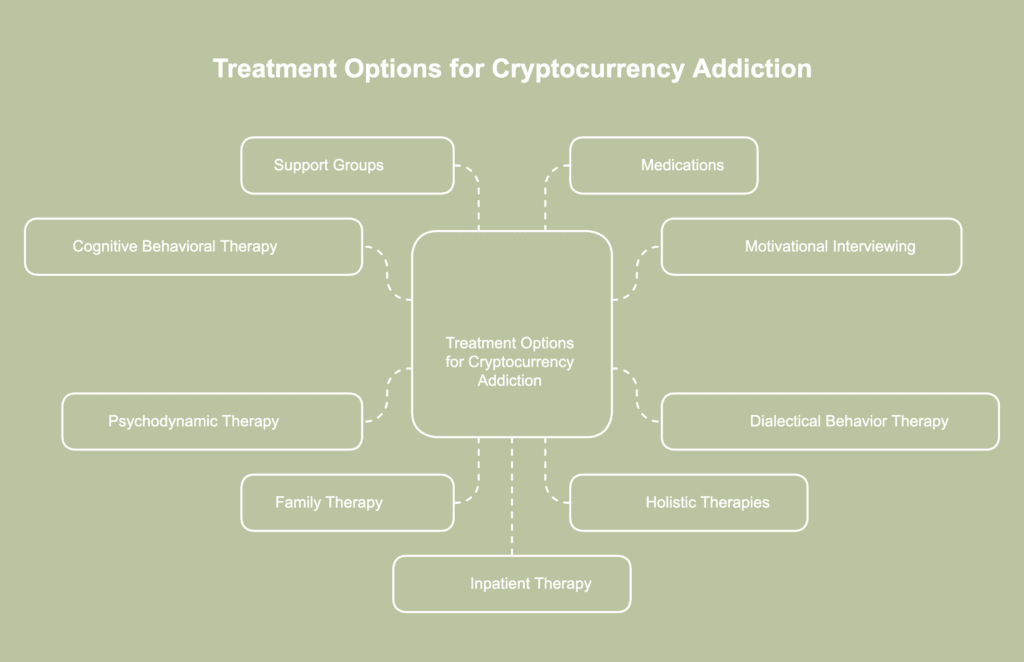
The treatment options for cryptocurrency addiction are listed below.
- Cognitive behavioral therapy (CBT): CBT has the potential to drive positive change by identifying and altering cognitive distortions and fallacies that underlie the compulsive behaviors associated with cryptocurrency addiction. Components of CBT, such as rectifying skewed thought patterns associated with FOMO and the habitual checking and refreshing of crypto apps for alerts and notifications, and learning relapse prevention strategies, are effective in curbing addictive tendencies.CBT works best for highly motivated and insightful individuals. The efficacy of CBT is enhanced if therapy is combined with behavioral management techniques like limiting access to the internet and unsubscribing from crypto mailing lists.
- Motivational interviewing (MI): Cryptocurrency addiction has not yet been classified as a definitive disorder according to DSM-5-TR. So, individuals exhibiting problematic crypto trading behaviors tend not to believe that they have an addiction problem or that their compulsive habits need to be treated. The interventions used for gambling treatment are also effective in addressing crypto addiction. Motivational interviewing strives to initiate change talk and address ambivalence in patients toward making positive transformation.
- Dialectical behavior therapy (DBT): Greater crypto trading frequency is positively correlated with anxiety and depression. Crypto traders report high levels of mental stress that arise as a consequence of trading in a highly volatile and unpredictable market. It is also possible that individuals seek the sense of empowerment and financial independence offered by crypto trading to distract themselves from the stressors in their lives. DBT has the potential to treat crypto addiction by increasing mindfulness, decreasing mental distress, and enhancing distress tolerance in individuals, thereby empowering them to overcome impulsive and compulsive behaviors.
- Psychodynamic therapy : Psychodynamic therapy focuses on helping individuals get to the root of their compulsive behaviors by fostering self-awareness, insight, and emotional growth. It allows them to resolve the conflicts and/or emotional distress or trauma that have likely led to their addiction. Additionally, psychodynamic psychotherapy is able to reduce feelings of guilt and shame, address maladaptive defense mechanisms, end the profit-chasing cycle, and spur motivation to make positive change.
- Family therapy: Family members are known to influence the initiation and development of and abstinence from addictive behaviors. Family-oriented therapeutic interventions involving family members and/or concerned significant others have the ability to treat cryptocurrency addiction by improving interpersonal communication and resolving conflicts. By improving interpersonal dynamics, family therapy helps loved ones understand and empathize with the struggles of the individual with a cryptocurrency addiction and thus, create a supportive healing environment.
- Holistic therapies : Holistic therapies for cryptocurrency addiction adopt a “whole-person” treatment approach to address the emotional and spiritual aspects of addictive disorder. These include non-traditional interventions like meditation and mindfulness-based activities. Mindfulness training has been shown to improve non-reactivity scores. Non-reactivity is the ability to observe one’s thoughts and emotions and allow them to fade away without reacting. Mindfulness training, thus, has the ability to reduce impulsivity that is associated with cryptocurrency addiction.
- Support groups: Self-help support groups like Gamblers Anonymous (GA) are modeled on Alcoholics Anonymous and follow the 12-step methodology. These groups provide peer support and a platform to share one’s struggles while cultivating a sense of belonging and accountability that promotes long-term and sustainable recovery. More favorable treatment outcomes are positively correlated with greater GA participation.
- Medications: Medications are used to alleviate the symptoms of mental health conditions like anxiety, depression, and bipolar disorder that contribute to the maintenance of cryptocurrency addiction. These medications include drugs to improve mood and reduce compulsive behaviors.
- Inpatient therapy: Inpatient treatment is typically recommended for patients with a severe behavioral addiction problem that has not responded to treatment or during an acute crisis.
- Intensive outpatient programs: Intensive outpatient programs are advised for individuals with behavioral addictions that are not severe and do not require 24/7 medical supervision.
How can you overcome cryptocurrency addiction?
You can overcome cryptocurrency addiction by first moving past denial and acknowledging that there exists a problem and it needs to be fixed. Understand the severity of your problem by speaking to your loved ones. Honestly examine your life and find out how cryptocurrency addiction has affected your financial situation, interpersonal relationships, your physical and mental health and the well-being of your loved ones, and your workplace and/or school performance.
Get in touch with a mental healthcare professional to receive an assessment. Delete all trading apps from the digital devices you use, turn off notifications related to crypto markets, unfollow social media influencers who post on cryptocurrency, unsubscribe from crypto newsletters, and leave groups and forums where cryptocurrency is discussed to prevent being exposed to cues.
Close all crypto accounts you hold. If you do not want to sell the crypto coins you own and want to hold on to them for a longer period, ask a trusted loved one who is also knowledgeable about cryptocurrency to manage your account. This will help you focus on your recovery journey. Identify your trading triggers and take steps to avoid these. Engage in activities that are not related to crypto trading but provide comparable levels of intellectual and emotional stimulation so that you are not bored. Learn and practice coping strategies that will help you overcome mental stress, enhance self-regulation, and manage impulsivity.
These activities include exercising, practicing gratitude, talking with a loved one, taking up a new hobby, meditating, doing a chore, and listening to music. Finally, seek help from a mental healthcare professional to discuss therapy that will quicken the recovery process and promote lasting abstinence.
How to help someone with cryptocurrency addiction?
To help someone with cryptocurrency addiction, learn about addiction and its neurobiological roots, and the volatile nature of the cryptocurrency market. This knowledge will help you understand how an individual is rendered powerless by addiction. When you realize that addiction is not a moral flaw, you will be more compassionate and empathetic toward your loved one who has cryptocurrency addiction. You will be able to communicate with them without judgment.
Support them by listening actively and striving to understand their perspectives, struggles, and concerns. Express your support by choosing loving and empowering words. Show them that you understand and validate their feelings by summarising and repeating to them what they have said. Encourage your loved ones to adopt healthy habits to replace their addiction to cryptocurrency. The best way to encourage them is to be a role model.
Create an environment devoid of triggers and stressors that increase the risk of relapsing. Ensure that they attend counseling sessions and follow a healthy lifestyle. Support their recovery by offering tangible support like accompanying them to the therapist’s office, being their exercise partner, and preparing healthy meals for them.