
Binge drinking: definition, effects, causes, symptoms, and stopping



Binge drinking is defined as a problematic alcohol use pattern that brings up blood alcohol concentration to 0.08% or more. This happens when men drink five or more alcoholic beverages and a female, four or more, within two hours.
The short-term effects of binge drinking are decreased motor abilities, slower reflexes, reduced attention span, slowed breathing, sleepiness, nausea, vomiting, lowered blood pressure, shakes, blackouts, and next-day hangovers. Severe short-term effects include an increased risk of vehicle accidents, falls, drownings, burns, and alcohol poisoning.
The long-term effects of binge drinking are the development of alcohol use disorder, heart and/or liver diseases, strokes, high blood pressure, and cancer. Young adults who binge drink experience lingering cognitive deficits.
The causes of binge drinking include self-medicating negative emotions or the symptoms of an existing mental illness; yielding to peer pressure; seeking novel experiences; celebrating special occasions; reducing social anxiety; and seeking distraction.
The symptoms of binge drinking include overindulgence; anxiety or shame about one’s drinking habits; inability to limit drinking; inability to drink moderately; frequent blackouts; irritability and/or tiredness after a night of drinking; concerns of loved ones; uninhibited behavior after drinking; defensiveness about drinking behaviors; declining health; and interpersonal problems.
To stop binge drinking, an individual must set limits on the number of drinks they consume; practice resisting peer pressure to drink; intersperse alcoholic beverages with non-alcoholic drinks; sip alcohol slowly; and eat a filling meal before a drinking session.
What is binge drinking?
Binge drinking is a pattern of excessive alcohol use that causes blood alcohol concentration (BAC) to become 0.08%–0.08 grams of alcohol per deciliter–and higher, as defined by the National Institute on Alcohol Abuse and Alcoholism (NIAAA). This typically happens if a male has had five or more drinks and a female has consumed four or more drinks within two hours. Younger individuals and those who have a smaller body size reach the same BAC after having fewer drinks.
The Substance Abuse and Mental Health Services Administration (SAMHSA) defines binge drinking as males consuming five or more alcoholic beverages and women, four or more, at the same time or over a couple of hours on at least one day in the last month, as noted by the NIAAA in their report titled “Understanding Alcohol Drinking Patterns” last updated in December 2024. A clarifier adds that a “standard drink” contains 0.6 fl oz (fluid ounce) or 14 grams of pure alcohol, which is equivalent to 5 ounces (148 milliliters) of wine containing about 12% alcohol, 8-9 ounces (237-266 milliliters) of malt liquor containing about 7% alcohol, 12 ounces (355 milliliters) of regular beer containing about 5% alcohol, or 1.5 ounces (44 milliliters) of hard liquor or distilled spirits like whiskey, rum, gin, or vodka that contain about 40% alcohol.
How common is binge drinking?
The prevalence of binge drinking is 17% in the United States, according to a report published by the U.S. Centers for Disease Control and Prevention (CDC) titled “Data on Excessive Alcohol Use” dated 6 August 2024. More than 90% of those who report drinking excessively binge drink. The data obtained from the 2023 National Survey on Drug Use and Health (NSDUH) and published by the NIAAA in their report titled “Understanding Binge Drinking” last updated in October 2024 reveals the pattern of binge drinking among various age groups. Among pre-teens and teenagers, 2.0% of 8th graders, 5.4% of 10th graders, and 10.2% of 12th graders engaged in binge drinking in the previous two weeks.
About 28.9% of full-time college students aged 18-22 years reported binge drinking during the last month, according to data from the 2022 NSDUH survey. Among women who drank alcohol, 1 in 4 reported binge drinking in the previous month. They have reported having, on average, three episodes every month. About 12.0% of adults aged 65 and more engaged in binge drinking during the last month, according to 2023 NSDUH data. To express more granularly, the rate of binge drinking among older males is 12-14% and 3-4% in older females.
How many units of alcohol is considered binge drinking?
More than six units of alcohol consumed in a single session by men and women is considered binge drinking, according to the National Health Service (NHS) of England. The Office for National Statistics (ONS) regards binge drinking as consuming during a single session more than eight units of alcoholic beverages for men, and more than six units for women. Six units of alcohol are equivalent to three standard (or two larger glasses) of 13.5% strength wine or three pints of standard lager.
Is binge drinking alcoholism?
No, binge drinking is not alcoholism, as explained by the NIAAA in their report titled “Understanding Alcohol Drinking Patterns” last updated in December 2024. Binge drinking is a manifestation of alcohol misuse, which is a pattern of unhealthy alcohol use behaviors where the individual drinks in a way, situation, frequency, or amount that increases the possibility of harming themselves or others around them. Alcoholism, now known as alcohol use disorder (AUD), is a medical condition that is marked by a loss of control over the use of alcohol despite being aware of the harm it is causing. It is possible for binge drinking to be caused by the presence of alcoholism. On the other hand, persistent binge drinking raises the risk of an individual developing alcoholism. However, all binge drinkers are not addicted to alcohol, and not all will progress to alcoholism.
What are the differences between binge drinking and alcoholism?
The differences between binge drinking and alcoholism stem from the specific behavioral traits associated with them, the intent of the individuals who engage in these behaviors, and their repercussions. These differences are described in the table below.
| Binge Drinking | Alcoholism |
|---|---|
| Binge drinking is a behavior. | Alcoholism or alcohol use disorder (AUD) is a mental health condition that has a specific set of diagnostic criteria outlined in the Diagnostic and Statistical Manual of Mental Disorders. |
| It is a pattern of excessive alcohol use where a male consumes five or more drinks and a female, four or more, in two hours. | It is a long-term pattern of problematic alcohol use that is defined by behavioral traits like uncontrollable and compulsive use of alcohol despite the evidence of harm, and not by a specific amount of alcohol consumed. |
| It is typically episodic. | It is a chronic disorder. |
| Binge drinking is not graded for severity. | AUD is graded as mild, moderate, and severe based on the number of diagnostic criteria an individual exhibits. |
| An individual who is binge drinking typically consumes excessively large amounts of alcohol within a short period, and it is usually weeks or months before they engage in binge drinking again. | Individuals with alcoholism tend to drink every day and continue to consume the same amount of alcohol till they are compelled to increase the dose after developing tolerance. |
| It is not inevitable that binge drinking leads to the development of tolerance and/or dependence. | Increasing levels of tolerance and/or dependence are the cardinal features of alcoholism. |
| Binge drinking is typically associated with an individual’s recreational activities, such as drinking to celebrate an event or to relax. | An individual with alcoholism typically drinks to experience a “high,” alleviate stress, and/or avoid the distress of withdrawal. |
| Binge drinkers usually consume alcohol in social settings. | Individuals addicted to alcohol consume the substance in any place and at any time, even in situations where it is physically hazardous to do so, such as when driving a vehicle. |
| Binge drinkers are able to stop drinking after a single binging session, return to sober life, and abstain from alcohol for weeks, months, or years. | An inability to quit using the substance characterizes alcoholism and contributes to the chronicity of the disorder. |
| Binge drinkers do not experience cravings for alcohol, which makes it possible for individuals who engage in binge drinking to remain sober for extended periods. | Cravings are a key feature of alcoholism and one that contributes to the relapsing nature of the disorder. |
| Binge drinkers are able to remain sober without needing to seek treatment. | Individuals with alcoholism require addiction treatment to achieve and maintain sobriety. |
| A binge drinker is not always an individual who is addicted to alcohol. | An individual with alcoholism does not always consume alcohol in amounts that would qualify as binge drinking. |
| It is possible for binge drinking to be caused by alcoholism. | Binge drinking has the possibility of causing alcoholism, but this is not an inevitable progression. |
Can binge drinking lead to alcoholism?
Yes, binge drinking can lead to alcoholism. Regular binge drinking increases the likelihood of an individual developing alcoholism or alcohol use disorder. The NIAAA in their 2021 release titled “The Cycle of Alcohol Addiction” notes that binge drinking is one of the stages in the addiction cycle. It was found in a study that both occasional and frequent male and female binge drinkers aged 50 years and above had a significantly greater risk of developing alcohol dependence and alcoholism than current drinkers who did not binge drink, according to a 2011 article by Chou et al., published in The Journal of Clinical Psychiatry, titled “Binge drinking and Axis I psychiatric disorders in community-dwelling middle-aged and older adults: results from the National Epidemiologic Survey on Alcohol and Related Conditions (NESARC).”
Young adults who binge drink frequently have a heightened risk of developing alcoholism in the future because the developing brain is extremely vulnerable to the negative effects of alcohol, according to a 2018 article by Jones et al., published in the journal Alcohol Research Current Reviews, titled “Effects of Binge Drinking on the Developing Brain.”
Binge drinking exposes an individual to the rewarding effects of alcohol. The reward circuitry of the brain is activated, which reinforces the drinking behavior and motivates repeat use. Binge drinking regularly activates the brain’s reward circuitry repeatedly so that multiple neurochemical changes are triggered. These changes lead to the formation of maladaptive patterns of responding to alcohol-related stimuli that manifest as powerful cravings. The neurochemical changes also lead to habit formation that eventually contributes to compulsive and uncontrollable use, which are the cardinal features of alcoholism. However, 9 out of 10 binge drinkers do not develop alcoholism.
Can binge drinking cause alcohol withdrawal?
Yes, binge drinking can cause alcohol withdrawal especially if the drinking episodes take place frequently. Alcohol depresses the activity of the central nervous system. When alcohol enters the body during a binge-drinking episode, the brain compensates for the substance’s depressant effects by heightening the responsiveness of the neurons to signals being transmitted by other neurons. The neurons remain in this excitatory state for several days after the binge-drinking episode and during the period of abstinence when alcohol has been eliminated from the body. This hyper-excitatory state triggers alcohol withdrawal symptoms.
The severity of withdrawal in binge drinkers depends on the individual’s baseline health, the frequency and duration of the binging episodes, the amount of alcohol consumed, and the presence of medical issues. All binge drinkers do not experience alcohol withdrawal upon stopping use.
What are the effects of binge drinking?

The effects of binge drinking are listed below.
- Short-term effects: The short-term effects of binge drinking include impaired motor control and slower reflexes; decreased attention span; slow breathing; depression; feelings of hostility; sleepiness; lowered blood pressure; and blackouts. Nausea, vomiting, shakes and tremors, and experiencing a hangover the next day are common short-term effects. The NIAAA warns in its publication titled “Understanding Binge Drinking” last updated in October 2024 that even a single episode of binge drinking has the potential to cause acute pancreatitis in individuals with existing pancreatic disease. Impaired cognitive abilities and motor skills and slowed reaction times increase the risk of getting involved in vehicle accidents, falls, burns, and drownings. Lowering of inhibitions is another short-term effect of binge drinking. It increases the likelihood of an individual engaging in risky behaviors like having unprotected sex. Such behavior, in turn, raises the chances of unwanted pregnancy and contracting sexually transmitted diseases. Other short-term and severe effects include alcohol poisoning that is potentially life-threatening and manifesting violent or suicidal behaviors. Binge drinking by pregnant women endangers their fetuses and increases the risk of miscarriages, stillbirths, or fetal alcohol spectrum disorders.
- Long-term effects: The long-term effects of binge drinking include an increased risk of developing alcohol dependence or alcohol use disorder, high blood pressure, liver disease, heart disease, strokes, digestive issues, weakened immune system, and cancers of the liver, breast, colon, mouth, throat, and esophagus. Developing anxiety and depression and experiencing cognitive problems like poor memory and impaired ability to learn are the typical long-term mental effects of binge drinking. Social and occupational effects include poor work performance and interpersonal problems that, in turn, are likely to lead to joblessness and social isolation. The long-term effects of binge drinking on the adolescent brain are especially severe and include loss of gray and white matter and reduction in cortical thickness, according to a 2018 article by Jones et al., published in the journal Alcohol Research Current Reviews, titled “Effects of Binge Drinking on the Developing Brain.” Adolescents who frequently binge drink are found to suffer from deficits in attention, memory, and social skills that persist into adulthood (NIAAA, 2024).
What happens to the brain when you binge drink?
When you binge drink, your brain exhibits neurochemical changes that affect various regions and their specific functionalities. At BAC levels between 0.03% and 0.12%, alcohol activates the basal ganglia’s reward system and triggers a surge of dopamine that produces feelings of euphoria, induces a sense of calm and relaxation, and loosens inhibitions. At BAC levels between 0.08% and 0.25%, alcohol disrupts the functioning of the frontal, temporal, occipital, and parietal lobes causing effects like blurred vision, slurred speech, and impaired motor skills. The individual exhibits mood swings, experiences nausea or vomiting, and is unable to think rationally.
At a BAC level of 0.18-0.3%, the cerebellum and the hippocampus are impacted adversely. The cerebellum controls balance and coordination while the hippocampus is associated with forming new memories. The individual is unable to stand or walk unaided and exhibits blackouts or gaps in memory. In sections of users, temporary loss of consciousness occurs when BAC reaches these levels. A BAC of 0.25% severely disrupts physical, mental, and sensory functions.
A BAC level of 0.35% increases the risk of an individual slipping into a coma because their breathing, circulation, and motor reflexes have slowed down to dangerous levels. Death is possible at BAC levels of 0.45% and higher when paralysis of the respiratory and circulatory regions of the brain causes asphyxiation. This is alcohol poisoning.
It is worth noting that the changes happening in the brain due to binge drinking vary in individuals. For instance, alcohol-naive individuals who binge drink have an increased risk of going into a coma at lower BAC levels than those who are addicted to alcohol and thus have a higher tolerance for the substance.
Why is binge drinking dangerous?
Binge drinking is dangerous because it raises the risk of an individual progressing to alcohol use disorder, developing serious medical and psychiatric health issues, engaging in violent and/or suicidal acts, and experiencing a potentially fatal overdose. There is an increased chance of the individual indulging in risky behaviors, such as driving when intoxicated and engaging in unprotected sex, that harm them and/or those around them, Binge drinking is regarded as one of the causes of alcohol poisoning. It is a potentially life-threatening situation where the heart rate, breathing, and body temperature are affected, leading to coma and death in severe cases.
According to data collected by the CDC and published by the NIAAA in their release titled “Understanding Binge Drinking” last updated in November 2024, excessive alcohol use resulted in 1,78,000 casualties in the U.S. in 2020-2021, and 1 out of 3 deaths among these were caused by binge drinking.
Why do people binge drink (causes of binge drinking)?
People binge drink for reasons like needing to self-medicate, celebrating an event, conforming to peer pressure, seeking novelty, alleviating social anxiety, and/or attempting to kill boredom or loneliness. Alcohol produces feelings of euphoria, so individuals are known to self-medicate negative emotions like stress, anxiety, and depression using alcohol. For instance, individuals binge drink to unwind after a hard day at work or to deal with the grief and emotional turbulence of stressful life events like the death of a loved one or the ending of a close, intimate relationship. Individuals who are feeling lonely or bored because they lack a meaningful pursuit in life turn to alcohol to fill the void. Individuals also engage in binge drinking to alleviate social anxiety and feel relaxed and confident when interacting with strangers at a party.
Binge drinking as a way of experimenting with and exploring new freedoms is common among young adults, according to a 2018 article by Krieger et al., published in the journal Alcohol Research Current Reviews, titled “The Epidemiology of Binge Drinking Among College-Age Individuals in the United States.” The authors also note that peer pressure plays a significant role in binge drinking among college-going young adults and that living on campus contributes to increases in instances of heavy drinking.
Who is likely to binge drink?
Individuals who are likely to binge drink include those who tend to use alcohol to self-medicate symptoms of mental health problems like anxiety and depression, are undergoing stressful life events like the death of a loved one or breakdown of a romantic relationship, are unable to resist peer pressure to drink, and/or use alcohol to manage symptoms of social anxiety so that they are able to fit in a crowd. It is believed that individuals with specific personality traits like impulsivity are likely to engage in binge drinking because they do not pause between drinks to take stock of how much they drank or to ponder over the negative consequences of drinking too much. Young adults who are most likely to binge drink include individuals who live in a college environment and those who lack protective factors like positive parental involvement, according to a 2018 article by Krieger et al., published in the journal Alcohol Research Current Reviews, titled “The Epidemiology of Binge Drinking Among College-Age Individuals in the United States.”
What are the symptoms of binge drinking?
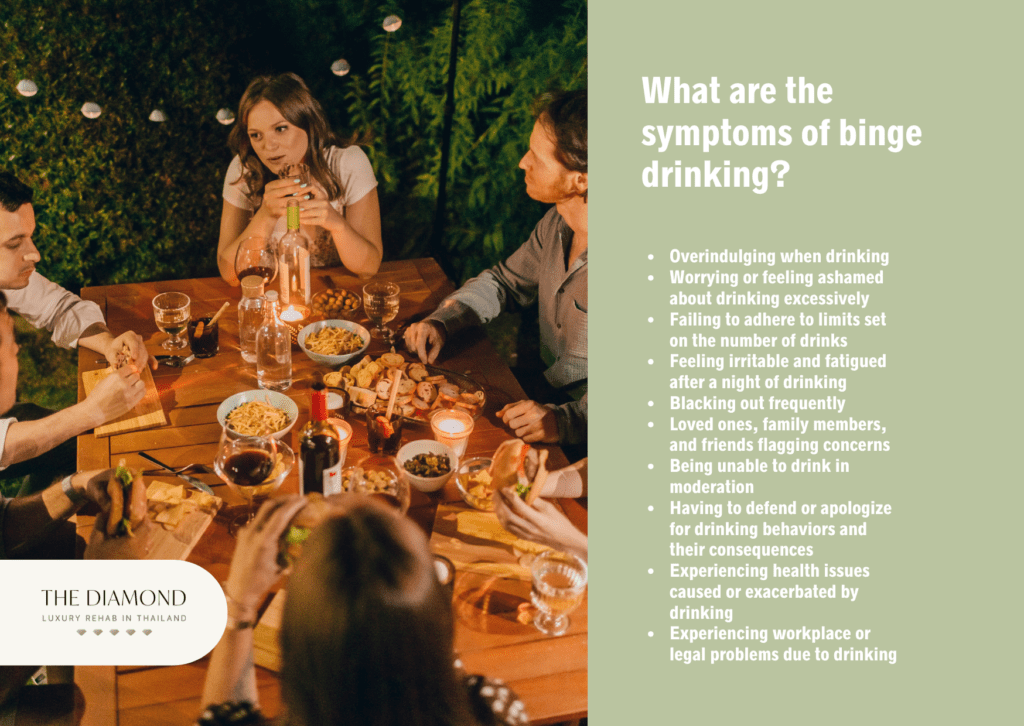
The symptoms of binge drinking are listed below.
- Overindulging when drinking: Binge drinkers typically do not drink every day. However, they tend to overindulge whenever they are drinking. For instance, a binge drinker does not drink throughout the week but ends up finishing one or two bottles of wine when they are partying over the weekend.
- Worrying or feeling ashamed about drinking excessively: Binge drinkers are sober in between their drinking episodes. So, they are able to be objective and rational about their behaviors around alcohol. If an individual is worrying or feeling guilty about their excessive use of alcohol, it is likely that they know intuitively they have a problem.
- Failing to adhere to limits set on the number of drinks: Binge drinkers who are aware and ashamed of their drinking habits attempt to alter their behaviors by setting limits on how many drinks they will consume in a single session. However, they persistently fail to adhere to these limits.
- Feeling irritable and fatigued after a night of drinking: Waking up anxious, irritable, and without feeling rested even after sleeping for eight hours after drinking are signs of consuming excessive amounts of alcohol.
- Blacking out frequently: According to the NIAAA in a release titled “Interrupted Memories: Alcohol-Induced Blackouts” updated in November 2024, blackouts tend to occur when the BAC level is 0.16% and higher. At these BAC levels, the drinker’s cognitive abilities are severely impaired.
- Loved ones, family members, and friends flagging concerns: Loved ones, friends, and co-workers of an individual are often the first people to notice aberrant and/or unhealthy behaviors and voice their concerns. Their observations take on added significance when a binge drinker tends to black out frequently and thereby, has no memory of their drinking episodes.
- Being unable to drink in moderation: Never being able to drink in moderation is a serious warning sign of binge drinking.
- Behaving without inhibitions after every drinking episode: Alcohol in the bloodstream loosens normal inhibitions and makes an individual behave in a manner that they wouldn’t do in a sober state.
- Having to defend or apologize for drinking behaviors and their consequences: Having to persistently defend or apologize for one’s drinking behavior and its negative consequences is a sign that an individual is using alcohol irresponsibly and has a problem.
- Experiencing health issues caused or exacerbated by drinking: Chronic binge drinking causes medical conditions like increased blood pressure and heart rate and mental issues like depression and anxiety. Moreover, excessive drinking complicates existing health issues by exacerbating the symptoms of a disorder and causing adverse drug-drug interactions.
- Experiencing workplace or legal problems due to drinking: Persistently experiencing workplace or legal problems due to one’s drinking habits is a sign that these behaviors are problematic and disruptive. Frequent binge drinking impairs performance at the workplace or school, causes an individual to miss work or report to work late, and makes it difficult for them to concentrate on tasks. Binge drinkers are known to miss appointments or social activities and/or get involved in drunk driving incidents.
How to stop binge drinking?
To stop binge drinking, you must set hard limits on the number of drinks you consume, drink water or a non-alcoholic beverage after an alcoholic drink, take only small sips from your alcoholic drink instead of gulping it down mindlessly, and eat before you commence a drinking session. Adhere to the limits by writing them or setting up phone reminders. Let a friend or a family member know about these limits and ask them to keep you in check during a drinking session. Keep a count of how many drinks you are having and the alcohol content in them. Learn how to resist peer pressure by being assertive but polite when declining an offer of a drink.
How to help someone with a binge drinking problem?
To help someone with a binge drinking problem, make them recognize and accept that they have a problem, support them as they set limits on their drinking, and encourage them to find and pursue leisure activities that do not involve drinking. There is a misconception that infrequent binge-drinking episodes are harmless. So, binge drinkers tend to believe that they do not have problematic drinking habits. Flag your concerns to help them realize their problem. If they are unable to drink in moderation, rein them in by reminding them about the alcohol limits that they had set.
How to prevent binge drinking?
To prevent binge drinking, find healthier ways to cope with emotional stress that do not involve the use of alcohol, shift to drinking alcohol-free “mocktails” or beers, and choose non-drinking activities to address issues like loneliness and boredom. Choose social interactions where drinking is not involved over drinking events and avoid interacting with peers who continue to pressure you into having another drink even after you refuse. Practice breathing and relaxation exercises to create a state of calm and seek the help of a licensed therapist or counselor to address the mental health issues that are contributing to the binge drinking problem. Do not stock alcohol at home so that you are not tempted to drink out of boredom.