

Antihistamine addiction: can you get addicted, symptoms, side effects, withdrawal, and treatment


Table of content
- Can you get addicted to antihistamines?
- What is antihistamine addiction?
- What are the most commonly abused antihistamines?
- What are the symptoms of antihistamine addiction?
- What are the side effects of antihistamine addiction?
- What are the risk factors for antihistamine addiction?
- What are the symptoms of antihistamine withdrawal?
- What are the available treatments for antihistamine addiction?
Antihistamine addiction refers to persistent reliance on antihistamine substances for non-medical relief or mood alteration, with sedative effects creating stronger appeal for repeated misuse.
You can get addicted to antihistamines once repeated intake fosters strong sedation-seeking patterns beyond medical intent. A reinforcing loop forms as each stronger hit encourages further reliance on a substance-driven soothing effect.
The symptoms of antihistamine addiction include dizziness, dry mouth, drowsiness, escalating dosage, persistent cravings, withdrawal discomfort, psychosis and cognitive slowing.
The side effects of antihistamine addiction are nausea or vomiting, fatigue, headache, difficult or painful urination, blurred vision, rapid heartbeat, poor coordination and irritability.
The symptoms of antihistamine withdrawal include intense itching, sweating, akathisia, anxiety, mood swings, rebound allergy symptoms and hallucination.
The available treatments for antihistamine addiction are detoxification, cognitive behavioral therapy (CBT), support groups and counseling.
Can you get addicted to antihistamines?
Yes, you can get addicted to antihistamines. Frequent use of antihistamine products sometimes sparks a cycle driven by pursuit of sedation or a brief sense of calm rather than medical need. Certain users escalate doses after chasing stronger relief, even when fatigue and slowed reactions begin to appear.
Histamine’s influence on alertness contributes to a noticeable slump, encouraging further intake for predictable comfort. A cycle forms as neural circuits respond to each dose through altered histamine signaling.
Heightened desire develops because sedation linked to blocked histamine pathways delivers brief comfort for stressed individuals. Escalating use follows as users chase longer sedation driven by histamine’s interaction with central receptors. Difficulty stopping grows once cravings dominate decision-making and overshadow safer options.
What is antihistamine addiction?
Antihistamine addiction describes a pattern in which antihistamine products become a steady source of comfort instead of a short-term remedy for allergy flare-ups. Various individuals start relying on such drugs to drift into sleep faster, even on nights without discomfort.
A strong pull toward the familiar drowsy feeling then shapes bedtime habits. Heavy reliance reduces morning clarity along with overall motivation. Affected persons notice slower thinking and reduced coordination after long stretches of use.
How common is antihistamine addiction?
Antihistamine addiction is common, as out of all overdose deaths in the United States from 2019 to 2020, 13,574 (14.7%) were antihistamine-positive, meaning the drug appeared in reports or on certificates, according to a 2022 publication from Dinwiddie et al., titled “Notes from the Field: Antihistamine Positivity and Involvement in Drug Overdose Deaths — 44 Jurisdictions, United States, 2019–2020.”
A smaller portion, 3,345 (3.6%), was considered antihistamine-involved and contributed to the fatal outcome. Nearly all positive and involved cases (over 99% in both groups) featured first-generation H1 antihistamines known for strong sedative and anticholinergic effects. Diphenhydramine (Benadryl) appeared most often, found in 9,645 (71.1%) positive deaths and 2,226 (66.5%) involved deaths.
Why is using antihistamines addictive?
Using antihistamines is addictive because blocking histamine receptors influences brain reward systems in a direct, noticeable way. A sedative effect settles over a user in a predictable pattern, giving a drop in alertness numerous individuals start relying upon for quick relief from pressure.
Hallucinogenic reactions appear in situations involving large quantities, pulling certain users toward repeat trials driven by curiosity. A short euphoric lift sometimes follows heavier use, adding another layer of reinforcement that strengthens interest in frequent dosing.
Motivation shifts once a person starts linking steady comfort to a pill instead of internal regulation. Daily plans begin revolving around access because consistent dosing feels easier than managing stress without chemical support.
What are the most commonly abused antihistamines?
Most commonly abused antihistamines refer to anti-allergy medications sold over-the-counter and frequently misused for noticeable psychoactive effects at high portions. The most commonly abused antihistamines are listed below.
- Benadryl: Benadryl, known generically as diphenhydramine, is prescribed mostly for allergy relief yet gains attention from individuals drawn to its strong sedative impact. Various users treat the drug as a shortcut for quick unconsciousness during restless nights, creating an unhealthy pattern far from its intended purpose. Curiosity about deeper drowsiness often encourages larger amounts, setting the stage for benadryl addiction. Escalating misuse eventually weakens concentration and coordination, leaving individuals stuck in a cycle built around heavy fatigue.
- Zyrtec: Zyrtec, or cetirizine, earns misuse partly from subtle calming qualities that encourage repeated dosing for comfort. Individuals drawn to uninterrupted relaxation occasionally reach for the drug during stressful evenings, creating patterned behavior. According to a May 2024 update of the continuing education activity “Cetirizine” by Naqvi et al., poor storage of cetirizine in shared households often leads to childhood overdoses, as children gain access to bottles left within reach. Most cases resolve without medical intervention, with drowsiness and noticeable sedation appearing as the main effects.
- Allegra: Allegra, known as fexofenadine, is prescribed mostly for seasonal allergies yet draws misuse from individuals searching for clarity during high-stress periods. Certain people take extra tablets hoping for a smoother lift in mood, even though the medication was designed strictly for symptom relief. Higher amounts interfere with alertness along with overall steadiness, creating strain during routine tasks.
What are the symptoms of antihistamine addiction?
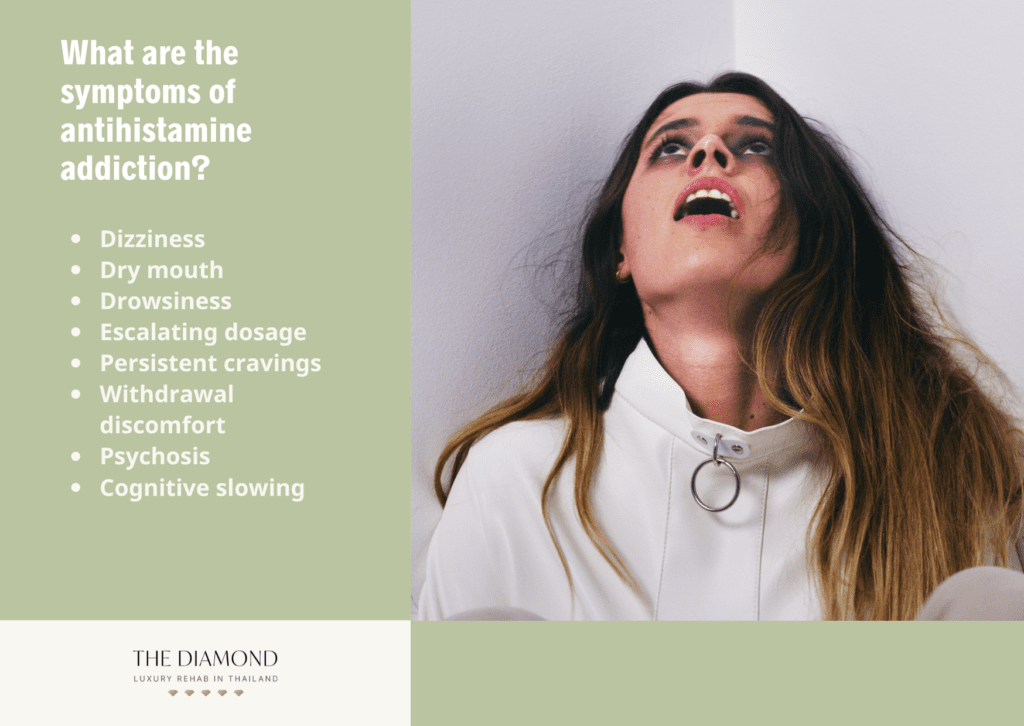
Symptoms of antihistamine addiction describe warning signs showing a shift from ordinary allergy relief toward compulsive use. The symptoms of antihistamine addiction are listed below.
- Dizziness: Dizziness signals excessive antihistamine exposure because balance systems struggle under strong pharmacologic interference. A person experiencing repeated episodes begins adjusting movement patterns to compensate for sudden shifts in stability. Lightheadedness appears even during light movements, reflecting the drug’s sedative influence on the nervous system. Such incidents disrupt concentration and make ordinary tasks feel unpredictable, prompting increased sedentary activity.
- Dry mouth: Dry mouth emerges as a consistent indicator of heavy antihistamine use since salivary glands lose normal output under continued influence. The uncomfortable symptom goes ignored as affected people focus on sedative relief or mild euphoria. Long-standing dryness interferes with eating, speaking and oral health, showing repeated intake affects more than just the nervous system.
- Drowsiness: Pronounced drowsiness suggests antihistamine consumption exceeding therapeutic levels because alertness systems slow in a noticeable, prolonged manner. Individuals find themselves fighting unwanted sleepiness throughout demanding activities requiring focus and full attention. Persistent drowsiness additionally reduces productivity and increases the risk of accidents.
- Escalating dosage: A shift toward consistently larger portions illustrates a growing adaptation to strong antihistamine effects. Users increase amounts to chase stronger effects, demonstrating tolerance usually associated with excessive consumption. Days gradually revolve around identifying amounts that recreate earlier sensations, placing the individual in a constant cycle of self-adjustment.
- Persistent cravings: Cravings highlight an internal shift in which the medication begins occupying more cognitive space than intended. Individuals think repeatedly about timing, access and expected sensations, revealing a growing attachment to chemical influence. The constant urge to take another dose interrupts focus on daily responsibilities and personal obligations.
- Withdrawal discomfort: Withdrawal discomfort appears once the body has adapted strongly to continuous intake, creating tension in the absence of another dose. Individuals report uncomfortable symptoms only fading after renewed consumption. Experiencing withdrawal symptoms reflects brain networks struggling to stabilize without the familiar sedation and euphoric sensations.
- Psychosis: Episodes of psychosis occur when antihistamine use reaches high levels or is sustained for long periods, causing unusual perceptions or disconnection from reality. Individuals reporting the state describe confusion and distorted thinking. As per a February 2025 study by Mosca et al., called “Over-the-counter Psychosis: A Systematic Review of the Misuse of Antihistamines, Cough Medicines, and Decongestants and the Risk of Developing Psychosis,” misuse of over-the-counter (OTC) antihistamines, particularly dextromethorphan (DXM), poses a significant risk for psychosis, including paranoia, hallucinations, and thought disturbances. DXM stands out as being especially associated with long-term patterns of repeated use.
- Cognitive slowing: Cognitive slowing and poor focus are results of the combined impact of sedation and repeated interference with normal brain signaling. A January 2025 review by Clark et al., “Diphenhydramine: It is time to say a final goodbye,” revealed sedation is a key effect of all first-generation antihistamines, particularly strong with diphenhydramine. Through blocking histamine’s role as a neurotransmitter in the central nervous system, the drug produces memory problems and difficulty concentrating. In older adults, repeated exposure to anticholinergic effects raises the risk of dementia, including Alzheimer’s disease.
How do I know if I’m addicted to antihistamines?
You are possibly addicted to antihistamines if you notice a growing dependence on the drugs beyond allergy relief or sleep aid. Frequent cravings for repeated doses, even when symptoms are absent, signal antihistamine use is becoming habitual.
Relying on sedation or a calming effect to get through difficult emotions indicates a transition from occasional use to persistent need. Difficulty reducing consumption despite awareness of negative effects, such as drowsiness or slowed thinking, is another warning sign.
Certain individuals experience irritability, restlessness or trouble sleeping when doses are skipped, showing early withdrawal symptoms. Impaired focus, memory lapses and slowed reaction times additionally appear as consequences of excessive intake.
You are likely to notice physical issues like dry mouth or dizziness as well. The continued drive to use antihistamines despite physical or mental effects highlights the development of a harmful pattern. Seeking repeated relief through the same drug, rather than healthier alternatives, fuels dependence.
What are the side effects of antihistamine addiction?
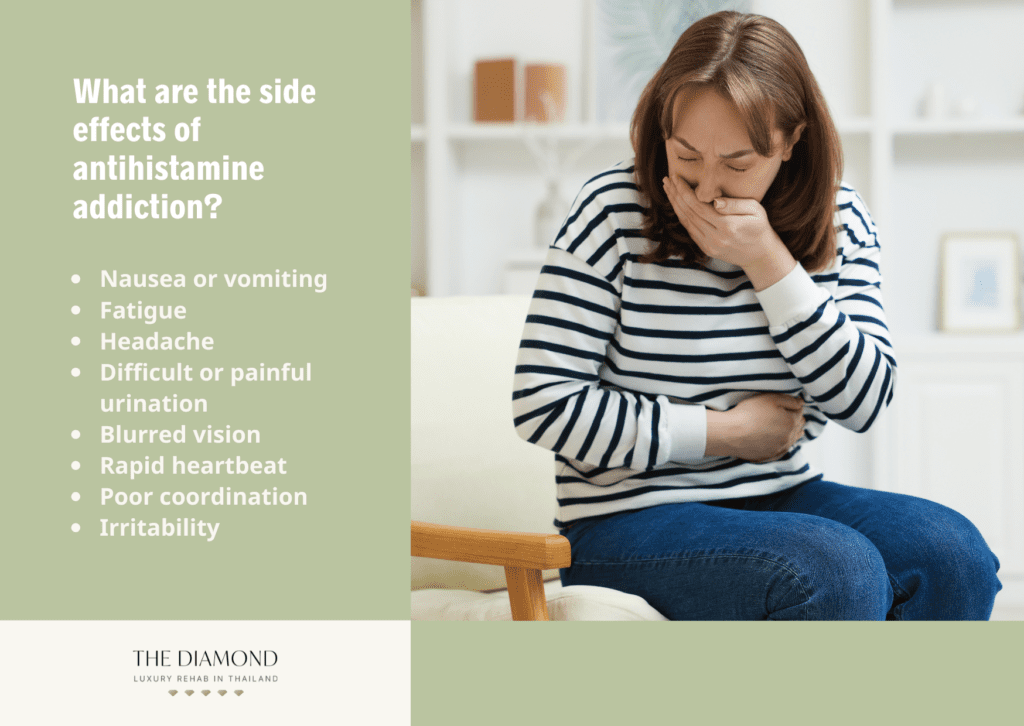
Side effects of antihistamine addiction refer to harmful reactions emerging from prolonged substance-driven intake of allergy drugs used outside medical guidance. The side effects of antihistamine addiction are listed below.
- Nausea or vomiting: Nausea or vomiting develops because heavy antihistamine exposure disrupts normal digestive rhythms and slows stomach function. Individuals experience sudden waves of queasiness shortly after large doses due to nervous system interference. Episodes of nausea and vomiting tend to reduce appetite, making routine activities harder to sustain.
- Fatigue: Fatigue develops as sedating effects from antihistamines leave individuals unusually tired throughout the day. Productivity suffers because energy reserves feel drained long before the day ends. Persistent fatigue encourages longer naps and reduced engagement in normal tasks.
- Headache: Headaches surface because strong antihistamine use disturbs nerve activity involved in tension control. A 2021 paper by Assadi et al., titled “Could the Use of Antihistamines Have Triggered Reversible Cerebral Vasoconstriction Syndrome? A Case Report” described a previously healthy 38-year-old woman who arrived at an emergency department with a sudden, severe bi-frontal headache worsened by movement, bright environments, and loud sounds, accompanied by nausea and vomiting. Her symptoms eased after several hours, leaving a mild band-like ache. Four days later, she returned with a far stronger and more persistent headache following the same pattern but lasted longer and felt more intense. Magnetic Resonance Angiography (MRA) confirmed a diagnosis of reversible cerebral artery vasoconstriction, or RCVS, a condition marked by abrupt, powerful headaches. A new exposure to loratadine appeared in her recent history before the episode began.
- Difficult or painful urination: Difficult or painful urination reflects strong anticholinergic effects tightening urinary pathways. Muscles responsible for release struggle to coordinate, creating pressure and discomfort during each attempt. Individuals strain to release urine and notice discomfort growing with continued use.
- Blurred vision: Blurred vision results from heavy antihistamine influence interfering with smooth eye-muscle coordination. Individuals struggle to read small print or maintain precision during screen use as visual sharpness fluctuates. The side effect slows work involving detail and increases accident risk.
- Rapid heartbeat: Cardiac rhythm changes because the body attempts to counter disrupted neurotransmitter activity triggered by frequent intake. A 2021 report by Courtney L. Andersen and Joseph D. Tobias, “Cardiac Arrest Following the Administration of Intravenous Diphenhydramine for Sedation to an Infant With Congenital Heart Disease,” outlined a case involving a 3-month-old with heart disease who went into cardiac arrest minutes after receiving IV diphenhydramine (1.25 mg/kg) for sedation. Diphenhydramine interferes with cardiac sodium flow, widening the QRS complex—an ECG measure called Q, R, and S waves reflecting ventricular activation—and slowing depolarization, the process preparing heart cells for contraction. Resulting instability includes rapid heartbeat, conduction delays, loss of coordination between the upper and lower chambers and serious ventricular rhythm disorders. Reactions occur with short or extended exposure, through IV or oral routes, during overdoses or standard dosing.
- Poor coordination: Poor coordination develops once antihistamines disrupt communication between the brain and the muscles responsible for steady movement. Motor signals lose efficiency, producing noticeable delays between intention and physical response. The mismatch complicates tasks requiring accuracy, such as navigating stairs, handling tools or maintaining balanced posture.
- Irritability: Mood instability occurs when one’s use of antihistamine hampers chemical balance responsible for keeping mood responses stable. Regulatory systems begin firing unevenly, creating abrupt shifts in tone or patience during interactions. Mood fluctuations interfere with clear communication and make conflict resolution harder, even in low-pressure situations.
Can you overdose on antihistamines?
Yes, you can overdose on antihistamines. An antihistamine overdose occurs when a person takes too much of the drug for the body to process safely, leading to toxic effects on the brain, heart and other organ systems.
High amounts disrupt normal nerve signaling and trigger life-threatening reactions escalating quickly without medical care. Intense agitation or heavy sedation typically appear first as the drug overwhelms neural pathways.
Heart rhythm problems follow because excessive antihistamine levels interfere with electrical control of cardiac function. Breathing slows, and the body struggles to maintain sufficient oxygen levels during the crisis.
Certain cases include seizures or loss of consciousness as the amount of medication is beyond what the body is capable of processing safely. Prompt medical attention becomes essential once early signs of drug overdose start to appear.
What are the risk factors for antihistamine addiction?
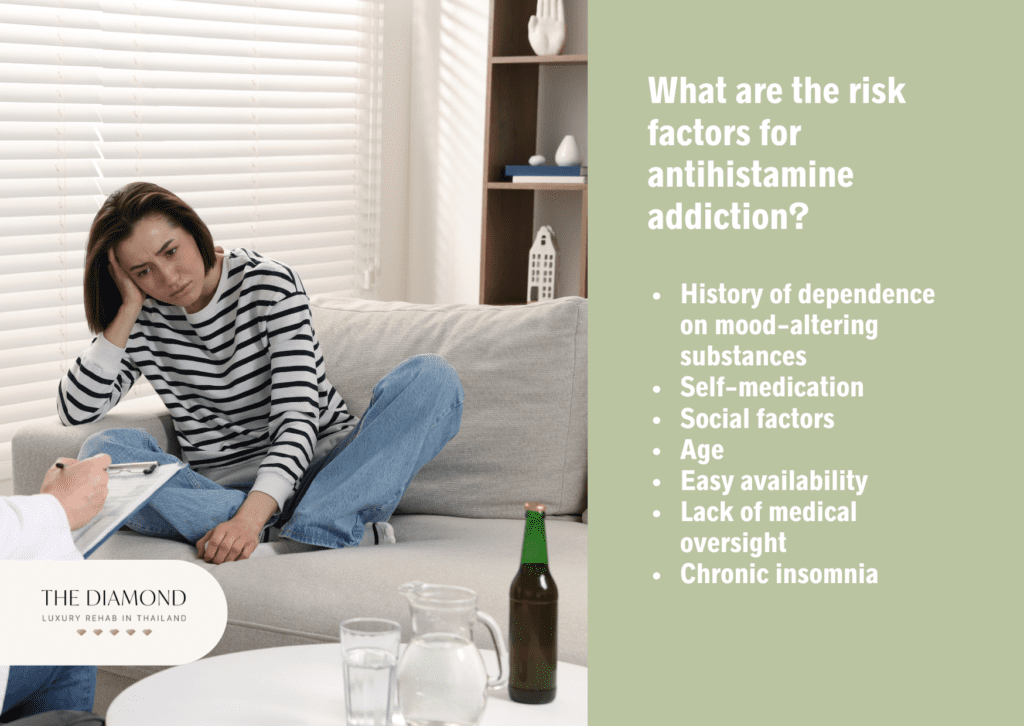
Risk factors for antihistamine addiction refers to personal traits, health patterns or environmental conditions increasing the likelihood of developing compulsive reliance on allergy medication. The risk factors for antihistamine addiction are listed below.
- History of dependence on mood-altering substances: Prior misuse of mood-changing substances increases vulnerability toward antihistamine addiction because familiar patterns of seeking relief through chemicals are already established. Personal history shapes expectations, leading an individual to view antihistamines as another tool for internal regulation. Such thinking builds an easier path toward routine dosing beyond responsible limits.
- Self-medication: Individuals relying on personal judgment instead of professional advice interpret everyday symptoms as signals requiring more antihistamines. The pattern leads to frequent exposure because the person treats antihistamines as a universal fix for usual discomforts. A study titled “Self-medication practice of antihistaminics H1 blocker among undergraduate medical students in a tertiary care hospital” published in 2019 by Jindal et al., found 200 of 220 respondents used antihistamines for self-medication. Reported reasons were allergic rhinitis (39%), sinusitis (34%), urticaria (14%), motion sickness (7%) and bug bites (6%). Participants cited urgency, lower cost, quicker access to relief and mild symptoms as key motivations for managing the conditions independently. The results point to a strong pattern of unsupervised antihistamine use in routine health situations.
- Social factors: Influence from peers normalizes frequent antihistamine use, especially in circles where sedative products appear harmless. Pressure to join group habits weakens personal boundaries and increases willingness to explore stronger effects. Shared environments offering easy access further strengthen self-defeating habits. Social approval encourages continued use even when personal reservations begin forming.
- Age: Age affects risk because younger individuals tend to approach medications with limited knowledge regarding consequences, increasing the chance of unsafe experimentation. Older adults additionally face higher vulnerability due to slower drug clearance and greater sensitivity to sedating properties. A 2021 study by Schifano et al., titled “Focus on Over-the-Counter Drugs’ Misuse: A Systematic Review on Antihistamines, Cough Medicines, and Decongestants” reported diversion and misuse of several OTC pharmaceuticals, with decongestants, cough or cold products and antihistamines appearing most frequently. Adolescents and young adults showed the highest vulnerability to such patterns of misuse.
- Easy availability: Easy access increases likelihood of addiction because unrestricted supply invites frequent, unmonitored use. Individuals with ready access rarely pause to weigh consequences before reaching for another portion. Convenience eventually supports habit formation as the drug becomes part of everyday routines.
- Lack of medical oversight: Limited professional guidance encourages choices unsupported by clinical judgment. Individuals remain unaware of safe limits, interactions and risks associated with escalating use. The condition creates fertile ground for misuse because warning signs pass unnoticed. Absence of monitoring allows addictive patterns to form quietly.
- Chronic insomnia: Long periods of disrupted sleep push individuals toward predictable nighttime relief from antihistamines. Fatigue lowers patience for non-pharmacological solutions, making quick sedation feel essential. Nightly repetition forms a cycle growing stronger with each episode of poor rest. Dependence develops because the mind begins linking sleep success exclusively to antihistamine use.
What are the symptoms of antihistamine withdrawal?
Symptoms of antihistamine withdrawal pertain to a collection of reactions emerging after frequent use stops abruptly. The symptoms of antihistamine withdrawal are listed below.
- Intense itching: Intense itching or pruritus appears because abrupt withdrawal removes the antihistamine blockade keeping skin receptors muted. Nerve fibers respond with heightened sensitivity once the substance leaves the system, creating a surge of irritation. Findings of a 2019 study called “Pruritus after discontinuation of cetirizine” authored by Chung et al., showed a clear temporal link between cetirizine discontinuation and the onset of pruritus, often occurring quickly within days and recurring upon re-exposure. The exact mechanism remains unclear, potentially involving rebound histamine activity or changes in receptor sensitivity following prolonged suppression.
- Sweating: Sweating increases as the autonomic system attempts to regain control without the drug’s suppressive influence. Temperature regulation becomes erratic, producing sudden sweating even during light activity. Fluctuations in body temperature disrupt concentration and heightens physical discomfort throughout the day.
- Akathisia: Akathisia emerges when withdrawal triggers restlessness due to unstable neurotransmitter activity. According to a 2017 paper by Cornett et al., called “Medication-Induced Tardive Dyskinesia: A Review and Update,” prolonged antihistamine exposure has links to tardive dyskinesia (TD), a movement disorder marked by involuntary, repeated motions involving the face, tongue, lips, trunk and limbs, with documented reports emerging after lengthy use. Hydroxyzine, a first-generation antihistamine, has recorded TD onset after roughly 7.5 months of continued intake. Certain antihistamines trigger acute dyskinesia without prior long-term use. Excessive doses produce facial dyskinesia featuring uncontrolled mouth and tongue movements. Reported cases describing acute dyskinesia from unspecified antihistamines and facial dyskinesia following overdose highlight dose-dependent toxicity.
- Anxiety: Anxiety occurs as withdrawal removes the sedating influence previously dulling internal stress signals. Neural pathways respond with heightened alertness, creating nervousness often disproportionate to external circumstances. Daily commitments become harder to manage due to racing thoughts and reduced emotional steadiness.
- Mood swings: Mood swings happen as withdrawal dismantles the consistent effect previously flattening an affected person’s emotional reactivity. Irritability alternates with low motivation because regulation systems fluctuate during adjustment. Interactions with others feel strained due to unpredictable changes in tone.
- Rebound allergy symptoms: Rebound allergy symptoms return sharply after antihistamine withdrawal because histamine responses surge beyond prior levels. Nasal congestion, watery eyes or skin irritation flare quickly as histamine pathways reactivate. Rebound allergic reactions disrupt working capacity and sleep, forcing the individual to adapt rapidly. The symptoms confirm the body remains highly responsive to histamine triggers following cessation.
- Hallucination: Hallucination becomes possible during severe withdrawal episodes because neurochemical instability distorts sensory processing. Visual or auditory distortions create fear or confusion during otherwise ordinary situations. Judgment declines because signals entering the brain lose reliability. Hallucination serves as a serious indicator of withdrawal stress requiring immediate clinical attention.
What are the available treatments for antihistamine addiction?
Available treatments for antihistamine addiction refer to the range of medical and behavioral interventions designed to help individuals reduce dependence on antihistamines. The available treatments for antihistamine addiction are listed below.
- Detoxification: Detoxification offers a supervised process designed to clear antihistamines from the body while stabilizing vital functions. Medical staff introduce supportive medicines when needed to reduce physical strain during early withdrawal. A 2010 paper by Gracious et al., titled “The Importance of Taking a History of Over-the-Counter Medication Use: A Brief Review and Case Illustration of ‘‘PRN’’ Antihistamine Dependence in a Hospitalized Adolescent” outlined the case of a 15-year-old girl with escalating depressive and psychotic features who developed severe withdrawal after abruptly stopping heavy diphenhydramine use. Clinicians attempted a taper, then introduced naltrexone when progress stalled. The medication started at 25 mg and increased to 50 mg once daily. Naltrexone produced fast improvement, easing withdrawal within two days while her mood steadied under lithium and quetiapine.
- Cognitive behavioral therapy (CBT): CBT strengthens recovery by exploring habits driving repeated antihistamine use and replacing unhelpful patterns with sustainable strategies. Patients practice skills to improve problem-solving, emotional regulation and response flexibility during stressful moments. Each session builds awareness of internal cues linked to cravings. Greater insight encourages confident decision-making and reduces reliance on substance-based solutions.
- Support groups: Support groups create a setting where individuals facing similar struggles form accountability networks. Participants exchange practical guidance, setbacks and progress in a respectful space. Shared insight builds motivation, reinforcing consistent recovery behaviors. Group connection helps each member feel less isolated during difficult stages.
- Counseling: One-to-one guidance helps individuals recognize patterns linked to prolonged antihistamine reliance. Sessions emphasize practical coping strategies fitting personal circumstances and stressors. A skilled counselor offers direction during emotional fluctuations linked to withdrawal. Each meeting enhances clarity, helping the person craft healthier routines anchored in stability.
When is antihistamine addiction counseling necessary?
Antihistamine addiction counseling becomes necessary once repeated use interferes with clear judgment, stable mood or basic daily responsibilities in a noticeable way. Rising tension between personal goals and continued dosing further signals a point where outside guidance becomes important.
Individuals struggling to cut back alone reach a stage where structured support offers direction no longer sustained independently. Escalating cravings or conflict with work and relationships additionally strengthen the case for professional involvement as part of addiction treatment.
Counseling offers a space to examine triggers pushing continued use and to build practical strategies for restoring control. Various patients discover patterns previously unnoticed until guided discussion brings such influences into focus.