

Addiction relapse: definition, causes, stages, prevention, and help


Table of content
- What is addiction relapse?
- What are the causes of addiction relapse?
- What are the symptoms of addiction relapse?
- What are the stages of relapse?
- What are the risk factors for addiction relapse?
- What are the substances with the highest relapse rates?
- How do you prevent addiction relapse?
- What should you do after a relapse?
- What is the difference between addiction relapse and addiction withdrawal?
Addiction relapse refers to the resumption of substance use after a period of abstinence or significant reduction in its use. It indicates a return to the previous pattern of substance consumption, often accompanied by a loss of control over its use.
Causes of addiction relapse include exposure to internal and external triggers, overconfidence, negative feelings and boredom, lack of support, untreated mental health conditions, changes in routine, and neglecting self-care.
The stages of addiction relapse encompass emotional, mental, and physical relapse. Emotional relapse occurs when individuals experience behaviors and feelings that unknowingly pave the way for relapse, even if they aren’t actively thinking about using substances. Mental relapse follows, marked by an internal conflict where the person battles between the temptation to use and the commitment to remain sober. Physical relapse is the final stage, where substance use resumes, signaling a breakdown in earlier defenses against relapse.
Prevention of addiction relapse involves recognizing and managing personal triggers, building a strong support system, and practicing consistent self-care. By developing healthy coping strategies, maintaining accountability through support networks, and adhering to a structured recovery plan, individuals significantly reduce the risk of relapse and strengthen their path to long-term sobriety.
Individuals with addiction relapse are helped by offering empathy and understanding them, rather than making judgments. Providing emotional support and reminding them that relapse is a common part of recovery helps foster a sense of acceptance and motivation to move forward. Encouraging open communication, helping them reconnect with their support system, and working together to create a revised recovery plan with healthy coping strategies are key measures in supporting their continued recovery journey.
What is addiction relapse?
Addiction relapse refers to the recurrence of substance use following a period of sobriety or significant reduction. It signifies a return to previous patterns of consumption, often characterized by a diminished capacity for self-regulation. It’s a full-blown return to substance use, as opposed to a lapse, which is a brief “slip” where a person drinks or uses substances but then immediately stops again.
Individuals recovering from addiction relapse often struggle to maintain sobriety due to the lasting changes that drug and alcohol addiction causes in the brain, making it challenging to resist the urge to use even after periods of abstinence. According to the research article “Addiction Relapse and Its Predictors: A Prospective Study” by Asghar Mohammadpoorasl et al. published in the Journal of Addiction Research & Therapy in 2012, relapse is a common and complex phenomenon influenced by both individual and socio-environmental factors. It is not solely a personal failure but a reflection of broader challenges in maintaining sobriety.
How common is addiction relapse?
Addiction relapse rates are typically around 40% to 60% in individuals recovering from substance use disorders (SUDs), as highlighted in the article “Drugs, Brains, and Behavior: The Science of Addiction Treatment and Recovery” published by the National Institute on Drug Abuse in 2011.
Another 2023 study “Habits and Routines of Adults in Early Recovery From Substance Use Disorder: Clinical and Research Implications From a Mixed Methodology Exploratory Study” by Robert H. Kitzinger, Jr. et al. published in the journal Substance Abuse: Research and Treatment, 85% of people recovering from SUD relapse within the first year.
Is relapse part of addiction recovery?
Yes, relapse is part of the addiction recovery process. However, it doesn’t mean the person’s recovery efforts were vague or the treatment failed. Rather it is very tough to break free from chronic habits and patterns.
Addiction is a chronic condition, and similar to any other chronic disease, managing it involves setbacks. While it is common for people in early addiction recovery to experience setbacks, it’s important to distinguish between momentary lapses (which are normal) and returning to old habits (which are not). The phrase “relapse is part of recovery” is misleading, as it suggests that using drugs is somehow a part of not using drugs. To truly recover, one needs to make fundamental changes in their lives.
What are the causes of addiction relapse?
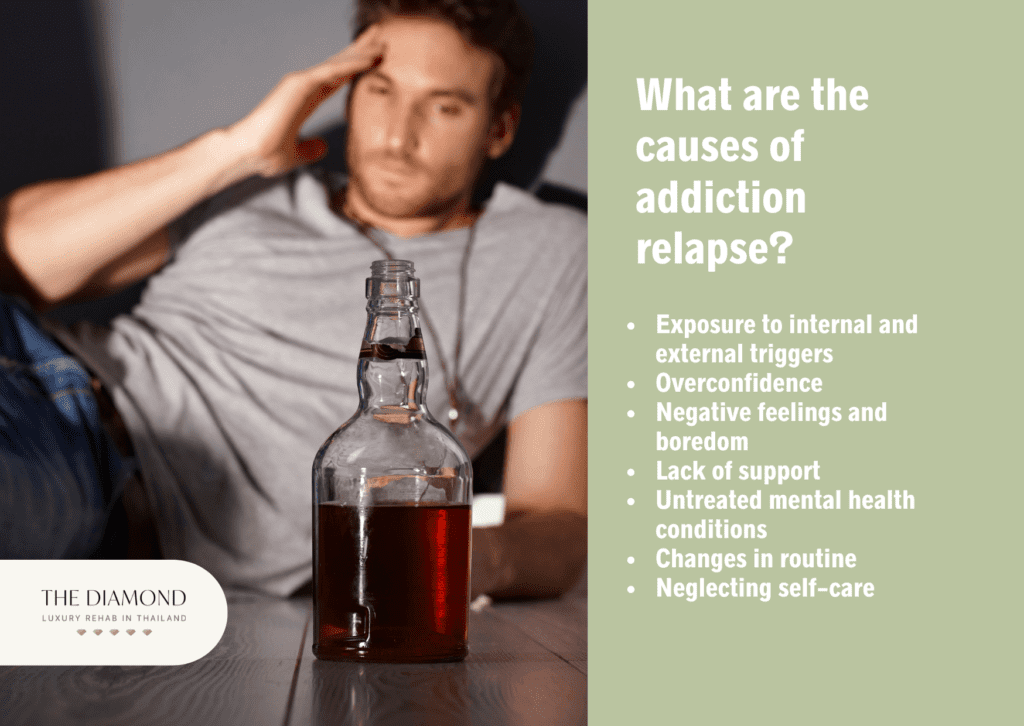
The causes of addiction relapse are listed below.
- Exposure to internal and external triggers: Addiction relapse is influenced by both internal and external triggers. Internal triggers include emotions, thoughts, or feelings, that lead someone back to substance use after a period of abstinence. External triggers include environmental or social factors such as people, places, or objects associated with past substance use, as well as situations like parties or stressful events.
- Overconfidence: Overconfidence is another noticeable factor in addiction relapse. After achieving a period of sobriety, individuals begin to believe that they have fully conquered their addiction and are capable of using substances in moderation without falling back into old habits. This underestimation of addiction’s power leads to risky behavior, such as occasional use, which often escalates over time. The false sense of control quickly progresses, causing a gradual return to previous levels of substance abuse and increasing the likelihood of a full-blown relapse.
- Negative feelings and boredom: Individuals struggling with intense feelings such as loneliness, anger, shame, or guilt, relapse to substances as a way to numb or escape from the emotional pain. The desire to avoid confronting these negative emotions typically leads to addiction relapse. Similarly, when individuals lack engagement, structure, or meaningful activities in their lives, they re-start using substances to fill the void, creating a dangerous loop that reverses the progress made during recovery.
- Lack of support: A strong support system is important in the journey towards recovery, and its absence significantly increases the risk of relapse. Without a network of supportive family, friends, or professional counselors, individuals struggle to maintain their sobriety. The lack of encouragement, guidance, or accountability leaves them vulnerable to falling back into old habits. Isolation, in particular, amplifies these risks. Being disconnected from a recovery community or experiencing loneliness often makes individuals feel unsupported, which pushes them toward substance use as a way to cope with the emotional void.
- Untreated mental health conditions: Co-occurring mental health disorders, such as depression or anxiety, complicate addiction recovery if not treated alongside the addiction itself. These conditions intensify emotional struggles, making it harder to stay sober. Additionally, unresolved trauma from past experiences heightens vulnerability to relapse, as individuals turn to substances to escape or cope with lingering pain. Treating both addiction and mental health issues simultaneously is essential for long-term recovery.
- Changes in routine: Significant life changes, such as losing a job, moving, or ending a relationship, disrupt healthy habits and destabilize a person’s recovery, increasing the risk of relapse. Additionally, becoming complacent and neglecting recovery activities like therapy or support groups leave individuals more vulnerable to returning to substance use. Maintaining structure and commitment to recovery is key to preventing relapse.
- Neglecting self-care: Recovery from addiction involves more than just avoiding substances. It’s important to take care of physical, emotional, and mental health. Neglecting these areas makes it more likely to relapse. By taking good care, improving overall well-being, building resilience, and staying in recovery, ultimately leading to a healthier life free from substance use.
What are the symptoms of addiction relapse?

The symptoms of addiction relapse are listed below.
- Isolation: One of the earliest symptoms of a potential relapse is social isolation. The absence of social interaction fosters feelings of loneliness, pessimism, and detachment, which create the conditions for substance use. Without the protective factors that come from social engagement, isolation breeds negative thoughts and increases the desire to use substances as a way to cope.
- Behavior changes: Behavior changes include developing new compulsive habits related to substance use, seeking out friends who use substances, revisiting places where substance use occurred, or engaging in risky behaviors. Recognizing these behaviors and seeking support is important to prevent relapse.
- Negative emotions: Negative emotions include feeling overwhelmed, stressed, or inability to cope with emotions. These negative emotions trigger the desire to use substances as a way to cope or escape. When individuals are unable to manage these negative emotions effectively, they turn to substance use as a temporary relief solution.
- Defensiveness: Defensiveness refers to avoiding discussions about substance use or recovery. When individuals become defensive or avoid conversations about their substance use, it indicates that they are struggling with their recovery or feeling guilty about their behavior. This defensiveness is a way to protect themselves from facing the reality of their situation or from feeling judged by others.
- Neglecting responsibilities: Neglecting responsibilities is a common symptom of addiction relapse, as the individual’s focus shifts toward satisfying their addiction rather than managing daily tasks. This manifests as missed work, strained relationships, and neglect of personal health. As the addiction takes priority, professional and personal obligations often suffer, leading to isolation and further difficulties.
- Reappearance of withdrawal symptoms: In certain cases, physical symptoms of relapse re-emerge, even after a period of detox and recovery. Withdrawal symptoms such as sweating, shaking, or nausea return as the body craves the substance it once relied on. These physical signs suggest that the person is nearing relapse, and recognizing them early is important. Seeking professional help at this stage prevents a relapse and supports continued recovery.
What are the stages of relapse?
The stages of relapse are listed below.
- Emotional relapse: Emotional relapse occurs when negative emotions and behaviors inadvertently lead individuals back to substance use. People often struggle to recognize these emotional warning signs, leading to denial or ignorance. In the chapter “Relapse Prevention for Alcohol and Drug Problems” by G. Alan Marlatt and Katie Witkiewitz, published in the book Relapse Prevention, Second Edition, Maintenance Strategies in the Treatment of Addictive Behaviors in 2005, it is highlighted that negative emotional states are a significant predictor of emotional relapse. Signs of emotional relapse include isolation, such as avoiding support groups and neglecting self-care, like poor eating or sleeping habits. When these early warning signs go unnoticed, individuals start to feel restless, irritable, and dissatisfied. This emotional state eventually leads them to consider using substances as a way to escape or manage these negative feelings. Recognizing and addressing these symptoms early helps prevent the progression toward a full relapse.
- Mental relapse: Mental relapse is a state of internal conflict where individuals struggle between their desire to use substances and their commitment to sobriety. As mental relapse advances, the strength to remain sober diminishes, while the desire to escape reality intensifies. The article “Addiction Relapse Prevention” authored by Nicholas Guenzel and Dennis McChargue, and published by StatPearls last updated in 2023, describes the signs of mental relapse. These signs of mental relapse include cravings, thinking about past drug or alcohol use triggers, minimizing or exaggerating the effects of past substance use, making excuses for use, being dishonest about substance use, trying to limit or control substance use, seeking situations that lead to relapse, and planning to use substances again. During the bargaining stage, individuals make excuses for using substances in specific situations, like during holidays or vacations. They consider using substances occasionally or switching to a different addictive substance, believing they control their use.
- Physical relapse: Physical relapse is the final stage of relapse, where individuals begin using substances once again. In the 2022 article “Lapse and Relapse Rates in Narcotics Anonymous versus Methadone Maintenance Treatment: A 12-Month Prospective Study” by Fahimeh Mohseni et al. published in the Iranian Journal of Psychiatry, researchers identified two distinct stages of relapse in participants undergoing Narcotics Anonymous or Methadone Maintenance Treatment: a “lapse” stage and a “relapse” stage. It is important to recognize that even a minor slip quickly leads to uncontrolled substance use. Additionally, a single lapse triggers obsessive thoughts about using substances, making it more difficult to resist the urge.
What are the risk factors for addiction relapse?
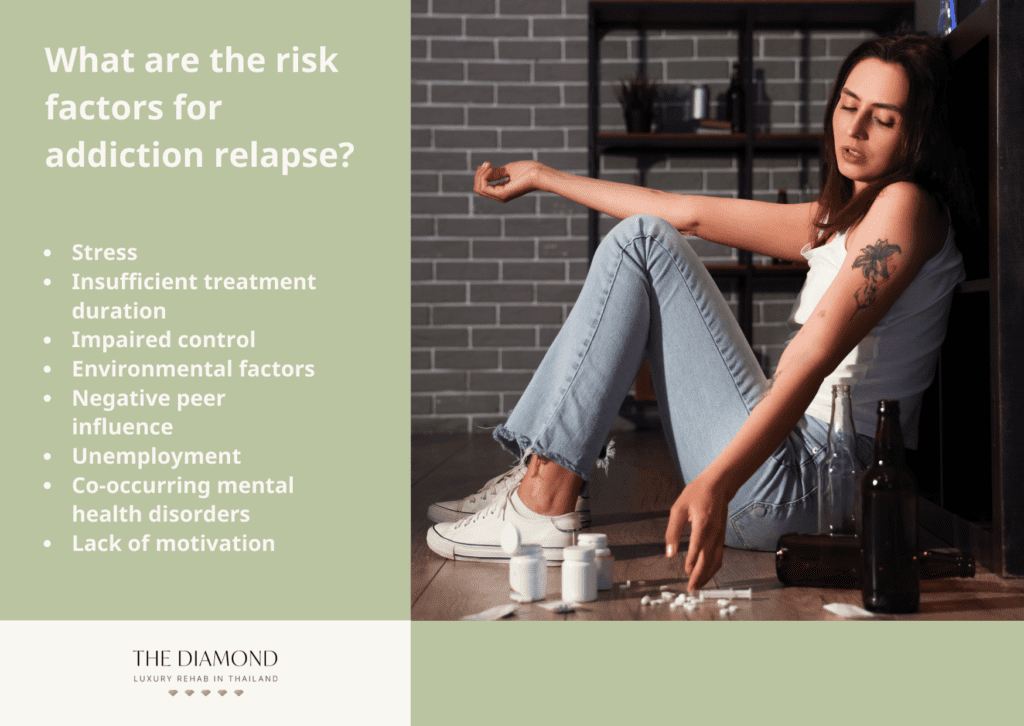
The risk factors for addiction relapse are listed below.
- Stress: Stress is a major factor contributing to addiction relapse. Stressful life incidents involving work, family, or health trigger cravings for substances, as individuals revert to drug use as a way to cope. Stress leads to feelings of anxiety, depression, or frustration, which drive people back toward harmful coping mechanisms like substance use. Individuals in recovery rely on drugs, alcohol, or compulsive behaviors like gambling or overeating to manage negative emotions brought on by stress. When confronted with stress during recovery, they seek the same temporary relief, increasing the likelihood of relapse.
- Insufficient treatment duration: Shorter stays limit recovery and resilience, leaving individuals more vulnerable to relapse when exposed to triggers and negative influences. According to a 2024 study, “Determinants and prevalence of relapse among patients with substance use disorder in a rural population: A retrospective observational study” by Chawin Suwanchatchai et al. published in the Journal of Substance Use and Addiction Treatment, patients who are hospitalized for 1 to 3 months were more likely to relapse after treatments, as the underlying cause of addiction is not fully addressed.
- Impaired control: Impaired control is a significant risk factor for addiction relapse, primarily due to deficits in inhibitory control, which make it difficult for individuals to resist cravings and impulsive behaviors. The research article “Impulsivity as a vulnerability marker for substance-use disorders: Review of findings from high-risk research, problem gamblers, and genetic association studies” by Antonio Verdejo-Garcı´a et al. published in the Journal of Neuroscience and Biobehavioral Reviews in 2007, highlights that poor inhibitory control predisposes individuals to substance use and plays a critical role in relapse after periods of abstinence. Furthermore, chronic substance use worsens these deficits, making it harder for individuals to maintain control over their behavior in the face of cravings or stress. Impaired control undermines long-term recovery efforts by weakening a person’s ability to manage impulses and resist the urge to use substances, thus increasing the likelihood of relapse.
- Environmental factors: Environmental factors play a significant role as a risk factor for addiction relapse by triggering cravings and prompting the resumption of substance use in individuals who are in recovery. These cues are external stimuli that have previously been associated with drug or alcohol use, and when encountered, they evoke strong memories or feelings that compel an individual to use substances again, even after a period of abstinence.
- Negative peer influence: Negative peer influence is a major risk factor for addiction relapse, as recovering individuals often face social pressure from peers who continue to use substances. These peers encourage relapse, ignoring its dangers, and creating easy access to drugs or alcohol. Emotional vulnerability and the desire for belonging lead individuals back to these social circles, where substance use is normalized, making it harder to stay sober. A 2024 study “Determinants and prevalence of relapse among patients with substance use disorder in a rural population: A retrospective observational study” by Chawin Suwanchatchai et al. published in the Journal of Substance Use and Addiction Treatment, found that socializing with addicted friends and relatives significantly increases the risk of substance use relapse.
- Unemployment: In a research study “Unemployment and Substance Use: A Review of the Literature (1990-2010)” by Dieter Henkel published in the journal Current Drug Abuse Reviews in 2011, unemployment significantly increased the likelihood of relapse compared to those who were employed, with unemployed individuals relapsing more frequently and severely. Specifically, 45% of unemployed individuals relapsed within the first six months after treatment compared to 23% of employed individuals.
- Co-occurring mental health disorders: Co-occurring mental health disorders, such as depression, or anxiety, significantly increase the risk of relapse, as highlighted in the findings of a research study titled “Inpatients in substance use treatment with co-occurring psychiatric disorders: a prospective cohort study of characteristics and relapse predictors” by Helle Wessel Andersson et al. published in the journal BMJ Psychiatry in 2023. These conditions often exacerbate cravings and make it more difficult to maintain sobriety.
- Lack of motivation: Individuals who lack motivation to change or who enter treatment due to external pressures (e.g., legal or family obligations) have a higher risk of relapse. Recovery requires intrinsic motivation.
Who is most likely to relapse into addiction?
People who are most likely to relapse into addiction include those with co-occurring mental health disorders, those exposed to strong cravings and triggers, unemployed individuals, and men facing peer pressure.
Individuals with co-occurring mental health disorders such as anxiety, or depression are among the highest risk groups. These individuals frequently use substances as a way to cope with emotional distress, which exacerbates their dependence and increases the chance of relapse when mental health symptoms worsen.
Additionally, those experiencing strong cravings and environmental triggers are at high risk for relapse. A study titled “Association of Drug Cues and Craving With Drug Use and Relapse” by Nilofar Vafaie and Hedy Kober, published in the journal JAMA Psychiatry in 2022, reviewed 237 studies with over 51,788 participants to understand the link between drug cues, cravings, and relapse. The study found that cravings and cues, such as seeing drugs or drug-related items, more than doubled the risk of relapse (odds ratio 2.05), emphasizing the importance of addressing cravings in addiction treatment.
Unemployment and financial instability are significant factors. People without stable employment are more likely to relapse due to the stress and lack of routine that accompanies unemployment as outlined in the article “Unemployment and Substance Use: An Updated Review of Studies from North America and Europe” by Carina Nolte-Troha et al. published in the journal Healthcare (Basel, Switzerland) in 2023. The article further highlights that business cycles and economic downturns further influence addiction relapse, particularly during recessions.
Men are generally more prone to relapse than women, particularly in social settings where substance use is normalized or under peer pressure. A study titled “Gender differences in relapse situations” by A. Rubin et al. published in the journal Addiction in 1996, found that men often relapse more frequently, with many relapsing alone or with same-sex friends. Moreover, men tend to report more positive mood states during relapse episodes, while women, in contrast, are more likely to experience depressive symptoms before relapsing.
Is it common to relapse multiple times?
Yes, it is common to relapse multiple times during the process of recovery from addiction. Relapse is a normal part of the recovery process and is seen in other chronic illnesses like hypertension and asthma, where relapse rates are similarly high. It does not indicate treatment failure but rather a need to adjust or restart the treatment plan. However, relapsing with the same drug dosage is dangerous or even deadly, as the body’s tolerance decreases during abstinence, increasing the risk of overdose.
A 2019 study titled “How Many Recovery Attempts Does it Take to Successfully Resolve an Alcohol or Drug Problem? Estimates and Correlates From a National Study of Recovering U.S. Adults” by John F. Kelly et al. published in the journal Alcoholism: Clinical and Experimental Research, found that people make an average of 5 recovery attempts before successfully overcoming a substance use disorder.
When is addiction relapse most likely to occur?
Addiction relapse is most likely within the first 90 days of recovery, often occurring during the first year. During this period, the brain and body are still adjusting to life without the substance, and individuals are in the process of developing new coping strategies for cravings and stress while establishing healthier routines.
Cravings are particularly intense in this phase, and individuals struggle to consistently apply these new coping mechanisms, making them vulnerable to relapse. The transition from the structured environment of inpatient treatment to independent living is another critical time, as individuals do not yet have fully integrated their newly acquired skills or established a strong support network.
What are the substances with the highest relapse rates?

The substances with the highest relapse rates are listed below.
- Alcohol: Alcohol has one of the highest relapse rates among addictive substances. According to a research study titled “Rates and Predictors of Relapse after Natural and Treated Remission from Alcohol Use Disorders” by Rudolf H. Moos and Bernice S. Moos, published in the journal Addiction in 2006, the relapse rates vary significantly based on whether individuals sought help. The study found that among those who sought help through treatment or Alcoholics Anonymous, 62.4% achieved remission by the three-year mark, compared to only 43.4% of those who did not seek help. Over a longer period, relapse rates were notably higher for individuals who did not seek help, with 60.5% relapsing within 16 years. In contrast, the relapse rate for those who sought help was lower, at 42.9% over the same time frame.
- Opioids: Relapse rates for opioid addiction are notably higher compared to other forms of substance addiction. In the 2017 study “A Comparative Study of Factors Associated with Relapse in Alcohol Dependence and Opioid Dependence” by Maithili Kadam et al. published in the Indian Journal of Psychological Medicine, the research highlights an alarming relapse rate of up to 91% among individuals recovering from opioid addiction.
- Cocaine: The relapse rate for individuals recovering from cocaine dependence is notably high. A research study titled “A National Evaluation of Treatment Outcomes for Cocaine Dependence” by D.D. Simpson et al. published in the Archives of General Psychiatry in 1999, found that 23.5% of individuals reported weekly cocaine use within the first year following treatment. While this marked a significant reduction from the 73.1% who used cocaine weekly before treatment, 18% of the individuals had returned to another drug treatment program during the same period. The study further highlighted that patients with more severe addiction issues or shorter stays in treatment (fewer than 90 days) experienced higher relapse rates.
- Cannabis: Individuals with cannabis use disorder (CUD) face a relapse rate of approximately 6.6% over an average follow-up of 3.6 years, according to the study “Probability and Predictors of Cannabis Use Disorders Relapse: Results of the National Epidemiologic Survey on Alcohol and Related Conditions (NESARC)” by Ludwing Flórez-Salamanca et al. published in the journal Drug and Alcohol Dependence in 2013. The study found that the longer a person remains in recovery, the lower their likelihood of relapse. However, there is an increased risk of relapse in cases where individuals have a history of behavioral issues or the development of depression after beginning treatment.
How do you prevent addiction relapse?
To prevent addiction relapse, it is essential to follow a structured approach that includes identifying and managing triggers, maintaining a strong support system, and practicing self-care. Start by recognizing personal triggers—whether emotional, social, or environmental—that lead to substance use, and develop healthy coping mechanisms like mindfulness or physical activities.
Build and maintain a strong network of support through family, friends, and support groups such as Alcoholics Anonymous (AA) or Narcotics Anonymous (NA) to stay accountable. Adhere to a structured recovery plan, attending therapy sessions and participating in aftercare programs to continuously address the underlying issues of addiction.
Practice self-care by maintaining a healthy lifestyle with proper diet, exercise, and emotional well-being strategies such as meditation or journaling. Avoid high-risk situations, stay committed to sobriety through daily reflection, and have a relapse prevention plan in place, including who to contact for immediate support. Following these steps significantly reduces the chances of relapse and strengthens the recovery journey.
What should you do after a relapse?
After a relapse, taking swift action is essential to regain control and prevent further substance use. Begin by acknowledging the relapse without letting guilt or shame take an overview of it as a learning experience rather than a setback. Reach out to a support network, such as a sponsor, family member, or therapist, for emotional support and guidance. This connection helps reduce feelings of isolation and provides an opportunity to reassess the recovery plan. Having people who encourage, understand, and offer guidance strengthens the recovery journey.
Next, reflect on the specific triggers that led to the relapse. Identifying these triggers—whether they are people, places, or emotional states—allows strategies to be developed for managing or avoiding them in the future. Setting SMART (specific, measurable, achievable, relevant, and time-bound) goals for both short-term and long-term recovery helps maintain motivation. These goals need to focus on personal growth, physical and mental well-being, and relationship-building, creating a clear roadmap for moving forward.
Incorporate coping strategies such as mindfulness and relaxation techniques to manage stress and reduce cravings. Practices like meditation, deep breathing, or yoga encourage present-moment awareness and self-reflection. Adopting a healthy lifestyle—through regular exercise, a balanced diet, and sufficient sleep—improves overall well-being, making it easier to stay on the recovery path. Pay attention to HALT symptoms (hungry, angry, lonely, tired) that trigger cravings and respond by healthily addressing those needs. Journal writing provides a therapeutic outlet for processing emotions and tracking progress. Lastly, seeking professional help through therapy or counseling offers specialized guidance and support to strengthen long-term recovery and prevent future relapses.
How do you help someone after a relapse?
To help someone after a relapse, approach the situation with empathy and understanding rather than judgment. Start by offering emotional support, letting them know that relapse is a common part of recovery and does not signify failure. Encourage open communication and listen actively to their feelings and concerns. Help them reconnect with their support system, whether it’s a sponsor, therapist, or a recovery group, to reestablish accountability and guidance. Assist in identifying the triggers that led to the relapse and encourage the creation of a revised recovery plan, including setting new, realistic goals. Encourage healthy coping strategies like mindfulness, relaxation techniques, and maintaining a balanced lifestyle to manage stress. Lastly, remind them of the importance of seeking professional help if needed, such as counseling or therapy, to reinforce long-term recovery efforts and prevent future relapses.
What is the difference between addiction relapse and addiction withdrawal?

The difference between addiction relapse and addiction withdrawal lies primarily in their nature and timing. Addiction relapse refers to a return to substance use after a period of sobriety, often triggered by psychological, emotional, or environmental factors. In contrast, addiction withdrawal is the body’s physical response to the absence of a substance it has become dependent on, characterized by unpleasant or even dangerous physical and psychological symptoms.
The timing varies between the two. Relapse typically occurs after a period of abstinence, which ranges from days to years, whereas drug withdrawal begins almost immediately after reducing or stopping the substance, with symptoms peaking within a few days and gradually decreasing.
Relapse is often seen as a temporary setback in the long-term recovery process, with treatment programs accounting for its possibility, while withdrawal is a short-term but intense challenge, where physical discomfort becomes a major barrier to recovery if not properly managed.
Lastly, the treatment approaches vary significantly. Relapse prevention focuses on long-term strategies like therapy, behavioral modifications, and support groups to manage triggers and cravings. Withdrawal management, on the other hand, involves immediate medical intervention, such as detoxification and medication, to ensure safe recovery from the physical effects of stopping substance use.