
13 Ways on how to stop a panic attack


Table of content
- 1. Search counseling
- 2. Consume medicines
- 3. Employ deep breathing
- 4. Admit that you are having a panic attack
- 5. Close your eyes
- 6. Train mindfulness
- 7. Find a focal point
- 8. Apply muscle-relaxation methods
- 9. Think of your favorite place
- 10. Engage in light exercise
- 11. Cut back on caffeine
- 12. Manage stress
- 13. Eat a healthy diet
- Why should a panic attack be avoided?
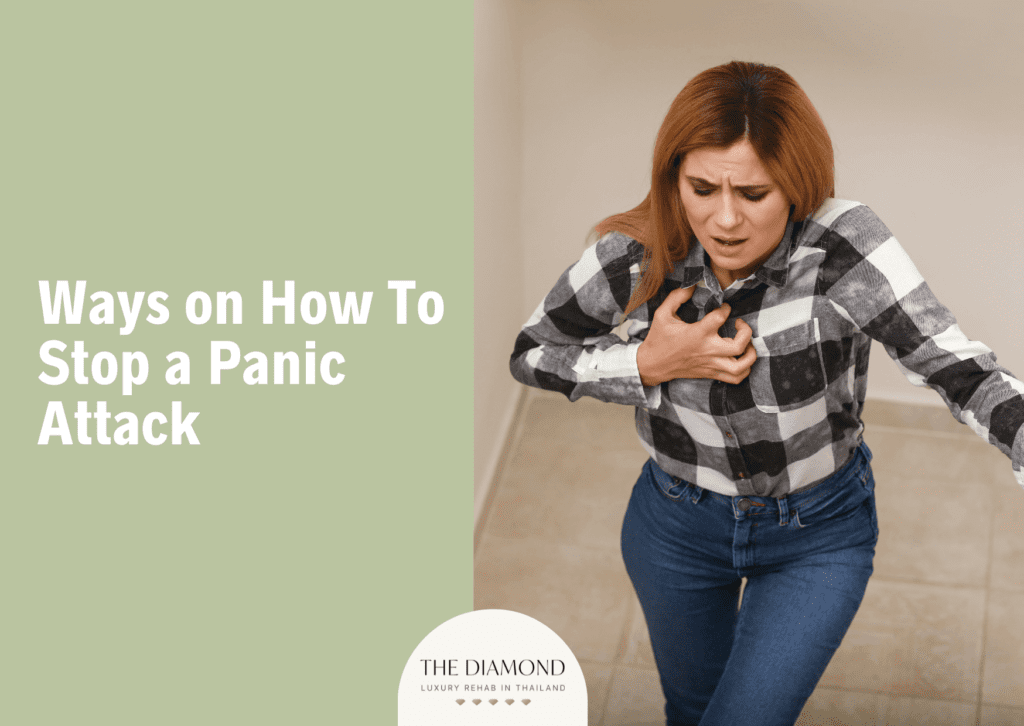
A panic attack is an episode of intense fear with strong physical reactions when there is no real threat or danger. People experience panic attacks a few times in their life, but it happens when their life really is in danger.
However, panic attacks often occur when there is no apparent threat or risk of harm. The latter case is a problem that leads to panic disorder, which requires a well-structured treatment.
Panic attacks seem scary, but there are various strategies that help avoid or manage them. The ways on how to stop a panic attack are listed below.
- Search counseling
- Consume medicines
- Employ deep breathing
- Admit that you are having a panic attack
- Close your eyes
- Train mindfulness
- Find a focal point
- Apply muscle-relaxation methods
- Think of your favorite place
- Engage in light exercise
- Cut back on caffeine
- Manage stress
- Eat a healthy diet
1. Search counseling
Searching for counseling entails pursuing the assistance of a mental health counselor or therapist. This approach recognizes the intricate nature of panic attacks and their potential association with trauma, stress, or pre-existing mental health disorders such as anxiety.
People with panic attacks, especially ones that happen frequently, must schedule an appointment to see a therapist for regular counseling. There are many types of therapies, but therapists usually choose cognitive-behavioral therapy (CBT). This kind of therapy works in a simple and straightforward manner. Its main goal is to help patients change the way they see challenging or stressful situations and find new ways to handle them.
One good example is therapy at Diamond Rehab Thailand, which offers an opportunity to discuss potential triggers and learn coping strategies in a safe environment. The therapist focuses on the patient’s well-being and allows them to express themselves without being judged or criticized.
Generally speaking, CBT focuses on helping patients identify negative thought patterns to replace them with more realistic alternatives. This is important because thoughts influence emotions and behavior. During CBT sessions, patients learn skills to cope with the triggers of their panic attacks.
Counseling is usually performed in the form of individual therapy, but group therapy sessions are just as useful. The length of treatment depends on the severity of symptoms and the underlying causes of panic attacks.
The biggest obstacle for most people is changing their mindset into developing more positive thought patterns. However, therapy is a process. The therapist works closely with the patient to help them overcome their problem.
What makes counseling important is its evidence-based effectiveness. For example, a 2018 study by Reinecke et al., in Translational Psychiatry found that four weekly sessions of exposure-based CBT contributed to changes in the neural pathways involved in symptoms of a panic attack. The therapy helped regulate excessive brain activity, especially in regions associated with monitoring threats, storing fearful memories, and managing emotions in an unhealthy way.
The benefits of counseling for the prevention or management of panic attacks are numerous. They include challenging dysfunctional thoughts or ideas, lessening the perceived threat, reducing the intensity of symptoms, and learning skills for better functioning.
Counseling is more challenging than other strategies on this list mainly because it involves changing mindset and is involved in analyzing or modifying thought processes. Most importantly, it’s one of the best techniques because it tackles the root cause of panic attacks in each patient.
2. Consume medicines
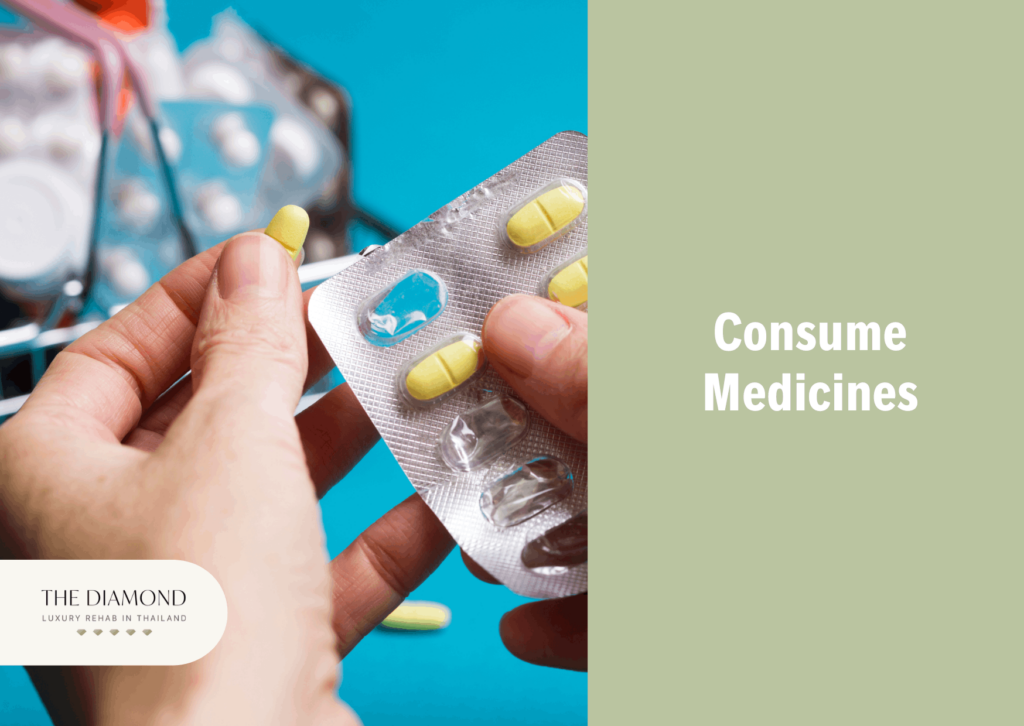
Consuming medicines refers to the use of prescribed medication to stop a panic attack. This strategy entails taking prescription drugs created especially to treat anxiety disorders and panic attacks.
People need to take medicines for their panic attacks such as benzodiazepines (e.g. Xanax), antidepressants such as selective serotonin reuptake inhibitors (SSRIs), serotonin-norepinephrine reuptake inhibitors (SNRIs), and anti-anxiety medications. It’s important to take medications exactly as instructed by a healthcare professional.
Benzodiazepines and anti-anxiety medications work to relieve symptoms of anxiety and thereby reduce the intensity of a panic attack. Antidepressants do the same; their main job is to lessen the severity of panic.
The biggest obstacle here is that benzodiazepines are habit-forming. Doctors prescribe them for short-term use to reduce the risk of addiction. Patients receive antidepressants for long-term use instead, if necessary.
Medications are important because panic attack episodes tend to be severe and debilitating. Plus, they are beneficial for persons with underlying mental health problems such as anxiety, post -traumatic stress disorder (PTSD), panic disorder, or depression.
Taking medications is easier than other strategies on this list, but it’s important to stick to recommendations. Make sure not to rely on medications alone. Combine this strategy with other approaches.
This is one of the best techniques for avoiding or managing panic attacks because it promotes calmness and relaxation, thereby reducing the power of triggers that cause episodes of panic.
3. Employ deep breathing
Deep breathing is a simple technique where a person focuses on inhaling through the nose and exhaling through the mouth. While inhaling, feel the air slowly fill the chest and abdomen. Exhale and feel the air leaving the body. To get the best effects, inhale and count to four before exhaling.
This strategy works by reducing symptoms of anxiety and panic attacks, including hyperventilation and shortness of breath. The deep breathing technique increases the supply of oxygen to the brain and stimulates the parasympathetic nervous system. That way, deep breathing promotes a sense of calmness.
The obstacle with this technique is failing to focus on deep breaths. Concentrating on every inhale or exhale is important because it reduces the power of the trigger that causes a panic attack.
The strongest advantage of deep breathing is that it’s an entirely natural way to calm down and its effectiveness has been scientifically confirmed. A study by Ma et al., published in the June 2017 issue of Frontiers in Psychology found that participants who practiced deep breathing saw improvements in attention levels and emotional well-being. The subjects additionally had lower levels of the hormone cortisol, which confirmed that deep breathing lowers stress.
The benefits of deep breathing include improved levels of relaxation, alertness, and comfort. At the same time, this technique lowers anger, confusion, depression, and anxiety levels.
Compared to other strategies, deep breathing is easy as long as a person keeps focusing on taking deep breaths. It’s one of the best techniques because it doesn’t just help prevent a panic attack in stressful situations, it additionally stops a panic attack episode in people who are experiencing it.
4. Admit that you are having a panic attack
Admitting that you are having a panic attack is a critical step toward managing and eventually stopping it. This entails recognizing and accepting the symptoms and sensations associated with panic attacks, which include a racing heart, shortness of breath, sweating, shaking, and a sense of impending doom or loss of control.
When having a panic attack, make sure to acknowledge it. More precisely, recognize it’s an episode of a panic attack and not a heart attack. The main difference between the two is that a heart attack typically transpires in response to physical activity, while a panic attack has the potential to manifest while at rest.
The duration of the two conditions is different as well. Panic attacks usually pass within 20 minutes or so and resolve on their own. On the other hand, a heart attack frequently persists and gets worse over time, a 2020 article titled, “Panic Attack vs. Heart Attack: How to Tell the Difference” from Beth Israel Deaconess Medical Center explained.
Acknowledging it’s a panic attack helps a person feel better because it’s less dangerous than a heart attack. Plus, admitting it’s the episode of panic allows a person to remind themselves it’s a temporary situation. It is bound to go away and they’re going to be okay.
A tiny obstacle here is not knowing the difference between a panic attack and a heart attack. That’s why it’s important to learn the differences between the two.
What makes this strategy important is that it’s easy to confuse a panic attack for a heart attack. Believing the latter is the problem is likely to cause even more stress and panic. Additionally, admitting it’s a panic attack is beneficial because it gives a more calming effect on the mind.
This technique is easier than others on this list, but it’s one of the best tips for avoiding or managing panic attacks because it enables a person to become aware of their situation. As a person acknowledges they’re having a panic attack, the power of the trigger of the episode decreases, which helps relieve symptoms.
5. Close your eyes
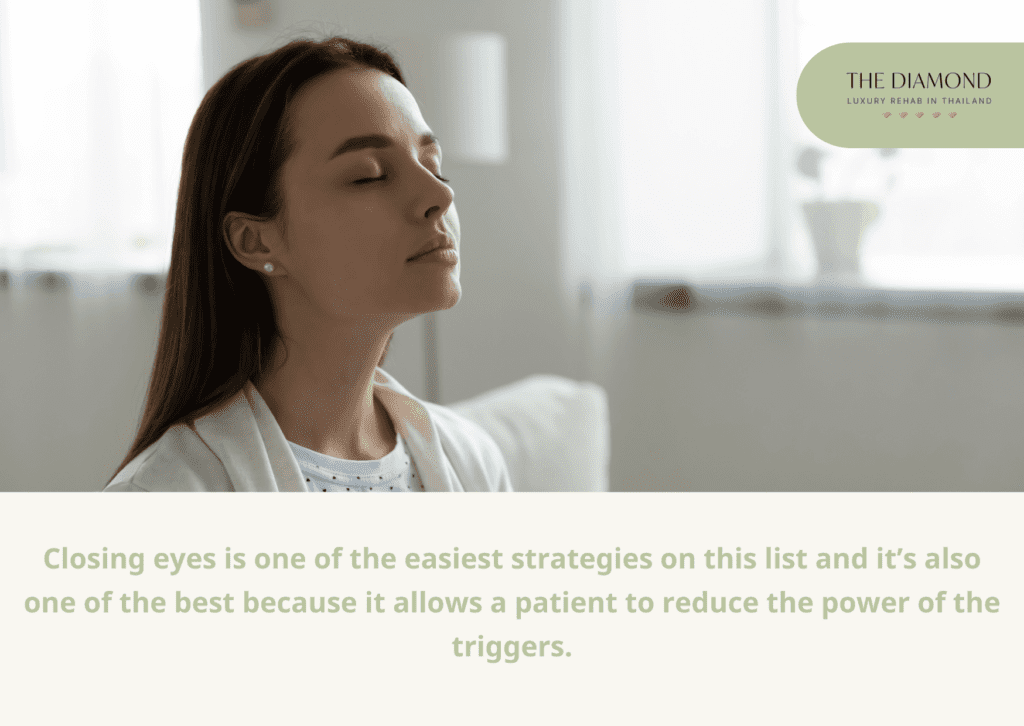
Closing one’s eyes helps halt a panic attack by calming the mind and lowering visual input. With this method, one closes their eyes and concentrates on breathing or a peaceful mental image. People are able to focus more intently on their internal states and recover control over their thoughts and emotions by blocking out exterior visual distractions.
Panic attacks usually have triggers i.e. situations that overwhelm a person and induce physical reactions. A person often feels threatened, but the situation itself isn’t dangerous. In these cases, a useful thing to do is to just close your eyes for a few seconds.
Closing your eyes in presence of triggers, especially in a fast-paced environment, makes it easier to focus on deep breathing. It blocks the extra stimuli and helps take a person out of the situation, at least figuratively. This promotes calmness and aids in the prevention or management of a panic attack.
The potential obstacle with this strategy is not being aware of the triggers of a panic attack. That’s why going to therapy regularly is important. The therapist works closely with the patient to identify triggers behind their panic attack episodes.
What makes this simple strategy important is that it provides an instant sense of calmness. One of the most significant benefits is gaining more control over the situation.
Closing eyes is one of the easiest strategies on this list and it’s one of the best as well because it allows a patient to reduce the power of the triggers.
6. Train mindfulness
Training mindfulness is a technique used to stop a panic attack by focusing the mind on the present moment and acknowledging thoughts and feelings without judgment. It entails being in the here and now while tuning into internal experiences, external stimuli, and mental processes.
Train mindfulness by being present in the moment. The focus of a person’s attention must be on the present rather than past or future panic attacks. Mindfulness additionally involves recognizing one’s own emotional state.
Practicing meditation is a great way to become more mindful in life. An easy way to be more mindful is to focus on physical sensations a person is familiar with. A good example is feeling the texture of jeans on your hands or digging your feet into the ground.
Mindfulness works by keeping a person grounded in reality. This is important because panic attack episodes cause symptoms such as detachment from reality, which tend to worsen the physical symptoms. Mindfulness promotes calmness and relaxation, thereby empowering a person to avoid focusing on the triggers of their panic attacks.
Potential obstacles in training mindfulness include over-exerting oneself and failing to listen to gut instincts. Mindfulness doesn’t indicate a person must ignore their gut feeling, but simply promotes focusing on the present to bring more rational decisions or conclusions. Although practicing mindfulness demands work, when done correctly, one need not exert excessive effort.
The importance of mindfulness is its incredible potential to reduce panic and depressive symptoms, even in persons with panic disorder. It is particularly beneficial when combined with cognitive-behavioral therapy.
According to a 2016 paper by Kim et al., published in the journal Psychiatry Investigation, this kind of approach teaches patients to recognize their thoughts as objects worthy of observation.
Patients additionally learn how to comprehend their typical thought patterns, including catastrophic misinterpretation. People with frequent panic attacks usually demonstrate anticipatory anxiety, which contributes to their symptoms. Mindfulness therapy is beneficial because it decreases anticipatory anxiety and symptoms of avoidance.
Practicing mindfulness is challenging. People often believe they can’t do it. However, with proper guidance, it’s entirely possible. That’s why therapy is important. Nowadays, there are numerous experts that teach people to meditate. Everything else comes naturally as long as a person is motivated.
Training mindfulness is one of the best strategies for the prevention or management of panic attacks because it stops overthinking. A great deal of triggers behind panic attack episodes stems from overthinking the past and future. With mindfulness, the main focus is in the present.
7. Find a focal point
Finding a focal point is a strategy used to stop a panic attack by redirecting attention away from distressing thoughts and sensations and towards a specific object or thought. Regaining emotional regulation and lessening the severity of panic attacks are both achieved through this method.
Find a focal point or object by picking one object in clear sight and focusing on it. This isn’t just about looking at the object. The goal is to note everything about it, all its characteristics.
The technique works by directing the attention to something else, rather than a panic attack or situations that trigger it. As a person finds and focuses on a focal point, their mind isn’t concentrated on a panic attack or its causes anymore. That is why the triggers of panic attacks become less powerful, which aids in stopping or preventing the episodes.
One obstacle in this strategy is the inability to focus on different characteristics of the object. A good way to resolve this problem is to act as if someone asked you to describe the object. How are you going to describe it in your mind? Focus on all details from top to bottom.
The most significant importance and benefits of this strategy are its simplicity and increased levels of calmness. The power of the triggers goes down thus making a person more resilient to negative stimuli.
Finding a focal point is quite simple, it’s easier than other strategies. What makes it one of the best ways to stop a panic attack is that it works instantly. Whether a person wants to prevent a panic attack or stop the current episode, this strategy helps them out.
8. Apply muscle-relaxation methods

Applying muscle-relaxation methods is a technique used to stop a panic attack by focusing on relaxing the body’s muscles. This technique involves consciously tensing and then relaxing different muscle groups in the body, starting from the toes and working up to the head.
There are several ways to practice a muscle relaxation technique. One of the easiest methods is to start relaxing muscles consciously one at a time. Start with simple muscles such as fingers and move to other parts of the body.
To get the best results from this strategy, it’s useful to attend muscle relaxation therapy. During therapy sessions, patients learn how to tense the muscles before releasing the tension. Patients additionally learn to relax muscles without tensing them beforehand. Muscle relaxation therapy teaches to relax specific muscles and how to practice rapid relaxation.
Muscle relaxation methods work by reducing tension and promoting relaxation during a panic attack episode. Keep in mind that muscle tension is a symptom of anxiety. The muscle relaxation techniques aim to relax the whole body and thereby stop a panic attack or reduce the intensity of the symptoms.
The challenging practice of releasing or tensing muscles is the sole obstacle to this approach. However, when a person with panic attacks learns how to do so, it becomes a lot easier.
Muscle relaxation methods are important because they help stop a panic attack in its tracks. They are beneficial because these methods control the body’s response to negative situations.
While harder than other techniques on this list, muscle relaxation methods are among the best ways to stop a panic attack because they allow a person to gain more confidence and power.
9. Think of your favorite place
Thinking of one’s favorite place is a technique used for stopping a panic attack by shifting the mind’s focus to a tranquil and positive setting. This approach is imagining oneself in a place that provides comfort and relaxation, such as a beloved vacation destination, a childhood home, or a peaceful natural scene.
When having a panic attack, it’s useful to think of your favorite place or a place that you associate with relaxation, joy, and happiness. A person with a panic attack must picture oneself at their favorite place and focus on as many details as possible.
For example, if that place is a beach, imagine digging your toes into the sand, waves hitting the shore or the smell of the ocean. If that place is a forest, imagine walking through a path with all trees and bushes, and birds singing. Visualize that place vividly. It needs to feel exactly as if you’re standing there at the moment.
Thinking of a favorite place is a part of the guided imagery technique, which works by lowering stress and anxiety. The main goal is to use mental imagery to achieve a more relaxed state of mind.
The sole obstacle in this technique is the weak power of visualization, but it is possible to resolve this potential difficulty through regular practice.
What makes this technique important is that visualizing nature is just as effective as spending time in nature for reducing anxiety, as per a 2018 study by Jessica Nguyen and Eric Brymer published in Frontiers in Psychology.
The benefits of this strategy involve moving attention away from worry or negative stimuli, bringing the natural power of the mind into healing and health, and reducing the power of triggers.
Visualizing your favorite place seems challenging at first, but make sure to practice regularly. Keep in mind that the place must be quiet and calming. Visualizing hectic, busy streets isn’t the answer.
Picturing a favorite place is one of the best strategies for stopping a panic attack because it shifts focus from the negative stimuli to something that is calming and relaxing.
10. Engage in light exercise
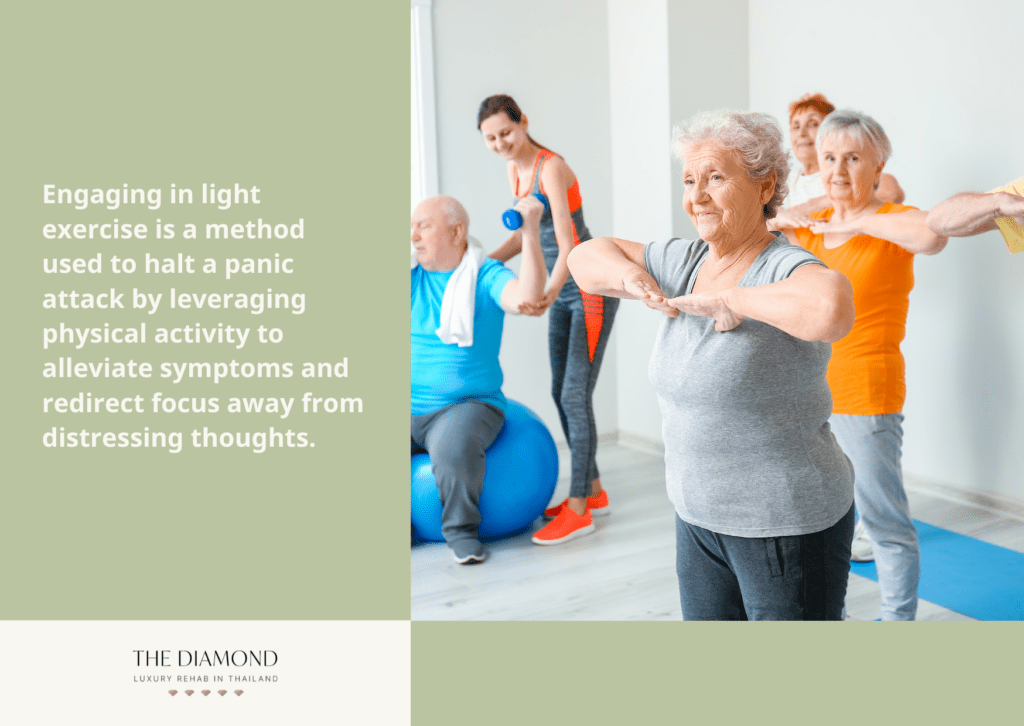
Engaging in light exercise is a method used to halt a panic attack by leveraging physical activity to alleviate symptoms and redirect focus away from distressing thoughts. This method entails making soft bodily movements that encourage calm and lessen the physiological excitation linked to panic episodes.
Since physical activity is important for mental health, it’s useful to exercise for at least 30 minutes three to five days a week to relieve symptoms of stress and anxiety, according to an article titled, “Exercise for Stress and Anxiety” from the Anxiety & Depression Association of America (ADAA).
People who aren’t physically active have the option to consult their doctor first. The good idea is to start with moderate activities such as swimming, walking, or yoga, then proceed to more challenging exercises such as jogging.
Light exercise works by reducing symptoms of anxiety and improving mental well-being. Physical activity releases endorphins, feel-good chemicals in the brain, which improve mood and relax the body. That’s why regular exercise reduces the number and severity of panic attacks.
One small obstacle here is starting with vigorous activities, which tends to contribute to panic attacks. For that reason, it’s useful to start small and work your way up, as the body adjusts to exercise. This is important for people who are generally not active.
The greatest importance of light exercise is its positive effect on mental well-being. Other benefits include an energy boost, better sleep, a healthier body, and increased confidence.
Engaging in light exercise is easier than other strategies because it’s a simple and straightforward process that people are able to easily implement in their lifestyle. What makes it one of the best approaches for stopping a panic attack is that regular physical activity is crucial for a healthy mind and body.
11. Cut back on caffeine
Reduce or entirely avoid caffeine intake. If doing so is difficult, start by alternating between decaf and regular coffee. Slowly change to more decaf until the intake of caffeine is significantly reduced.
This strategy works because caffeine contributes to symptoms of anxiety and may worsen panic attack episodes. A review from General Hospital Psychiatry confirmed that drinking around five cups of coffee a day induces panic attacks and increases anxiety in people with panic disorder. Cutting back on caffeine is a good way to prevent the worsening of panic attacks and anxiety symptoms.
The only obstacle for most people is that they have to cut down their coffee intake. A vast majority of people can’t imagine starting their day without a cup of coffee, and it’s usually caffeinated.
The importance of this strategy is that it allows a person to eliminate a factor that plays a huge role in the worsening of their panic attacks and anxiety. Other effects include being less jittery, sleeping better, and having the opportunity to manage panic attacks in a natural manner.
Cutting back on caffeine is not as challenging as other tips, but it can be tricky for people who drink high amounts of this beverage. However, it’s one of the best strategies to try because caffeine intake is high in the general population. By reducing the intake of caffeine, a person becomes more resilient to negative stimuli i.e. is less likely to react to negative stimuli with a panic attack and anxiety.
12. Manage stress
There are many ways to manage stress. Options include taking breaks, self-care, socializing, exercising regularly, finding a hobby, helping others, practicing yoga, among others. The main objective is to experiment with different techniques to find the best stress management strategy that suits each person’s needs the most.
Stress management works because, for many people, the trigger of a panic attack episode is a stressful situation. By learning to manage stress and cope with it in a healthy way, people can reduce the frequency and intensity of their panic attacks. When a person knows to control stress, their response to negative or stressful stimuli changes. This can stop a panic attack episode or prevent it from occurring in the first place.
While this strategy works for everyone, a potential obstacle is that people tend to ignore stress. It’s not uncommon for people to think it will go away on its own. Stress isn’t something to ignore; a proactive approach is necessary.
The greatest importance of stress management is that a person becomes empowered to tackle one of the root causes of their panic attacks. Other benefits include a calmer mind, more relaxed breathing, and management of physical symptoms associated with panic attack episodes.
Stress management isn’t harder than other strategies, but it’s useful to be motivated to act promptly to cope with stress. This is one of the best strategies for stopping a panic attack because the symptoms will subside as soon as the person manages stress and feels calm.
13. Eat a healthy diet
In order to stop or prevent panic attack episodes, it’s necessary to modify your diet. That means certain foods are best to limit or avoid. These include sugar, fried foods, and heavily processed and refined foods. Instead, enrich your diet with fruits, vegetables, healthy fats, whole grains, and protein-rich foods to improve physical and mental health alike.
This strategy works because foods that are abundant in sugar, additives, and other unhealthy ingredients can cause unpleasant physical reactions. These physical reactions can affect mood and contribute to irritability, anxiety, and even panic episodes.
The only obstacle here is one’s reluctant attitude to change diet. But, nutrition plays an important role in physical and mental health alike. Making diet changes is necessary.
The importance of dietary changes is that they are an integral component of a healthy lifestyle, which is important for the management of panic attacks too. Other benefits include higher energy levels, lower risk of various health problems, and improved brain functioning.
Compared to other strategies, this one isn’t as difficult, but it does require effort and willpower. It’s one of the best approaches to stop a panic attack because most people aren’t even aware the food they eat could contribute to how they react to negative stimuli.
Why should a panic attack be avoided?
Panic attacks should be avoided because they can lead to serious complications when left unresolved. When left untreated, panic attacks, especially in panic disorder or anxiety, can affect every aspect of a person’s life.
For example, recurrent panic attacks can lead to the development of specific phobias, such as fear of leaving home. With the fear of leaving home comes a higher risk of health problems, including weight gain, diabetes, and cardiovascular diseases.
Additionally, people with panic attacks are at a higher risk of frequent medical care for health concerns and other medical problems. They may also develop a problem at work or school. Their productivity suffers as well as their relationship with colleagues and coworkers.
It’s not uncommon for people with frequent panic attacks to develop depression, anxiety or other psychiatric disorders. At the same time, they’re also at a higher risk of financial problems, substance abuse, and suicidal thoughts and tendencies.
What is a panic attack?
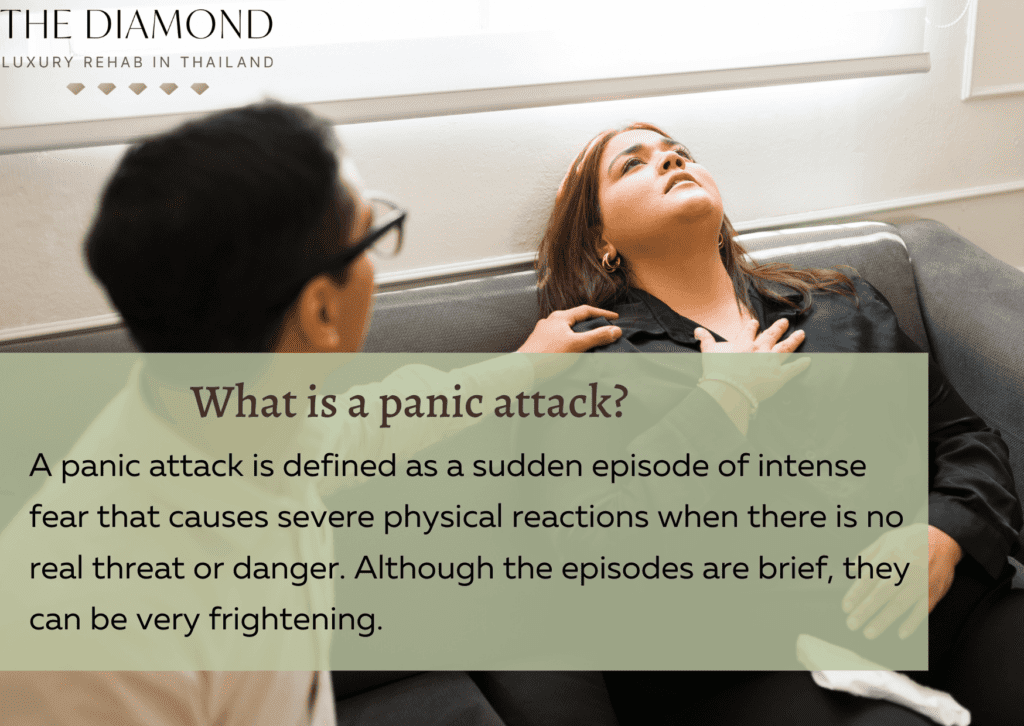
A panic attack is defined as a sudden episode of intense fear that causes severe physical reactions when there is no real threat or danger. Although the episodes are brief, they can be very frightening.
A panic attack is not the same thing as a panic disorder. Every individual may have a few panic attacks in their lifetime. The episodes end when they resolve the trigger or situation that’s causing the attacks. That said, persistent or recurrent panic attack episodes and fears of experiencing them indicate the presence of a panic disorder.
While isolated panic attacks don’t require specific treatment, recurrent episodes do.
Symptoms of panic attacks can be physical and behavioral. Physical symptoms of panic attacks include rapid heart rate, sweating, trembling or shaking, shortness of breath, and tightness in the throat. Other physical symptoms include chills, hot flashes, nausea, headache, chest pain, abdominal cramps, dizziness, tingling sensation, or numbness.
Behavioral symptoms of panic attacks include avoiding places or situations that cause panic attack episodes, relying on others when leaving home, and making significant life changes. For example, a person may restrict or reorganize life or activities to make sure help is always available in case of a panic attack.
It’s also useful to mention panic attacks may include cognitive symptoms such as derealization and depersonalization. People may also experience psychosocial symptoms such as fear of losing control, fear of dying, and concern about the present or future consequences of panic attacks.
When it comes to diagnosis, people who experience panic attacks should see their healthcare provider. The main objective is to determine whether a patient has panic attacks, panic disorder, or some other mental condition. To do so, the doctor will perform a physical exam, order blood tests or urine tests, including imaging tests, and refer a patient to psychiatric evaluation.
Psychiatric evaluation is particularly important because a psychiatrist is able to diagnose the underlying problem i.e., whether a patient has a panic disorder or they’re just struggling with panic attacks.
What causes panic attacks?
It’s not entirely clear what causes panic attacks. They occur suddenly and without warning, but in many cases, there is a trigger behind the panic attack episodes. Mayo Clinic reports that the body’s fight-or-flight response to danger could be implicated in panic attacks. It’s natural to panic when exposed to real threats or danger. However, the causes of panic attacks that occur due to no real threat or danger are still unknown. Several factors could play a role instead of just one. Potential causes of panic attacks are listed below.
- Changes in brain function: Panic attacks are associated with overactivity in some regions of the brain, including the amygdala. The amygdala is the main part of the brain implicated in panic attacks. Changes in brain areas that are in charge of emotions and imbalances of neurotransmitters can also contribute to panic attack episodes. For example, a reduced number of serotonin receptors could be associated with panic attacks.
- Genetics: Being in stressful situations can provoke panic attacks in people with a genetic predisposition for anxiety, according to a paper from the journal Genes. Evidence confirms that genetic mutations are linked to panic attacks. Good examples are COMT Val158Met polymorphism and genes such as ADORA2A, NPY, DRD2, and GABRB3. There is no single specific gene that leads to panic attacks. Multiple genes and mutations are involved. This explains why someone is more likely to have panic attacks and panic disorder if their family members have it as well, especially parents and siblings.
- Temperament: Some people have a temperament that is more sensitive to stress and prone to negative emotions. These personal traits could contribute to the development of panic attacks.
- Major stress: Panic attacks often occur due to major stress or life trauma, particularly when the affected person doesn’t healthily process them. The stress associated with other mental health problems could also pave the way to panic attacks. People who are facing major life changes, which are also linked to higher stress levels, may be more susceptible to panic attacks.
How are panic attacks managed or treated?
Panic attacks are managed or treated with medications, psychotherapy, or self-help strategies. Treatment options depend on the underlying cause of panic attacks.
WebMD explains that the first thing a person should do about their panic attacks, especially if they happen frequently, is to see a healthcare provider. The healthcare professional will perform a physical exam to make sure the symptoms aren’t associated with a specific disease affecting the body.
If a patient doesn’t have a medical condition, the doctor will advise them to see a psychologist or psychiatrist. The mental health expert evaluates a patient’s mental health and diagnoses the underlying problem, such as panic disorder. They also recommend the most suitable treatment approach.
People with panic attacks may benefit from counseling that helps them understand the triggers of their panic attacks. During therapy sessions, patients learn to cope and handle triggers in a healthier way. The more a person learns about triggers and situations that cause panic attacks, the less power these episodes have on them. Therapy sessions also allow patients to learn relaxation techniques that make it easier for them to go through panic attacks.
Deep breathing is a great example of a relaxation technique that a person with panic attacks should know. Focusing on every inhale and exhale lessens the intensity of a panic attack and helps a person feel better.
People with panic attacks may also need medications. The doctor may prescribe antidepressants or anti-anxiety medications to lower the intensity of symptoms, but only when necessary. People who need to take drugs for their panic attacks should do so exactly as instructed and stick to the recommended dosage.
Besides doctor-recommended treatments, patients can also rely on self-help strategies to manage or treat their panic attacks. Good examples are yoga, regular exercise, getting enough sleep, meditation, and avoiding alcohol and drugs.
Are panic attacks curable?
Yes, panic attacks are curable, and people can achieve full recovery. However, the cause of panic attacks plays a role here. People can have panic disorder, but it can be managed with a well-structured treatment approach. But panic disorder can never be cured permanently.
Keep in mind that not all panic attacks are linked to panic disorder. For many people, it’s entirely possible to overcome their episodes of panic and learn to cope with triggers in a healthier manner.
The causes of panic attacks also include other mental health issues besides panic disorder. Managing these mental health problems can reduce the frequency and intensity of panic attacks. As long as the underlying disorder is kept under control, a person can prevent panic attacks.
When it comes to curing or managing panic attacks, the most important thing is to be proactive. It’s necessary to adhere to the treatment protocol and be motivated to work on recovery. There’s a lot that everyone can do to manage or stop their panic attacks, which is why it’s useful to employ tips from this post.