

12 steps to overcome Internet addiction


Table of content
- 1. Acknowledge the internet addiction
- 2. Consider getting professional help
- 3. Create a structured daily schedule
- 4. Practice mindfulness and self-awareness
- 5. Set strict device-free times
- 6. Identify your personal triggers
- 7. Seek support from your network
- 8. Find alternate offline activities
- 9. Use productivity tools
- 10. Limit social media consumption
- 11. Create physical technology-free zones
- 12. Set goals for digital balance
- How can parents manage internet addiction in teens?

Overcoming internet addiction refers to the process of reducing excessive online use and restoring balanced daily functioning. It involves setting boundaries around digital activity and limiting time spent on nonessential platforms to regain control over behavior and improve overall well-being.
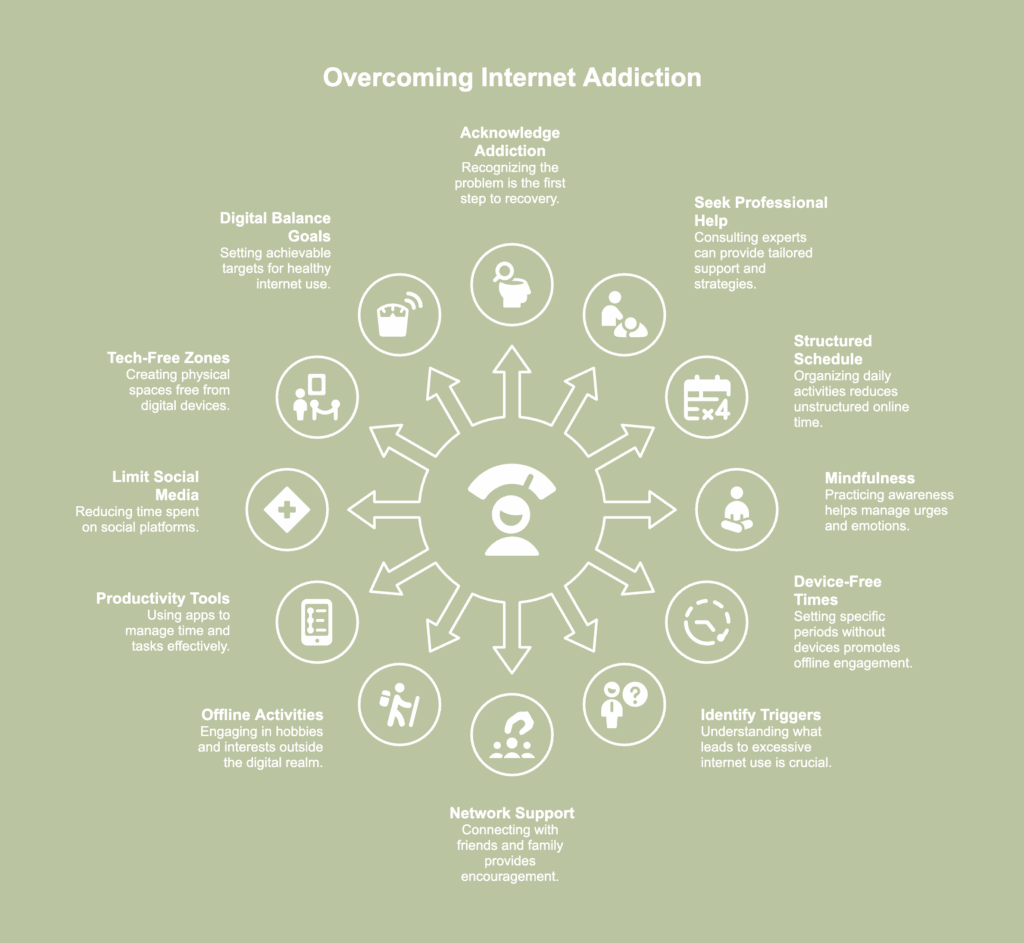
The 12 steps to overcome internet addiction describe a recovery approach modeled after traditional substance programs, guiding individuals through reduced reliance on computer and online activity. The 12 steps to overcome internet addiction are listed below.
- Acknowledge the internet addiction
- Consider getting professional help
- Create a structured daily schedule
- Practice mindfulness and self-awareness
- Set strict device-free times
- Identify your personal triggers
- Seek support from your network
- Find alternative offline activities
- Use productivity tools
- Limit social media consumption
- Create physical technology-free zones
- Set goals for digital balance
1. Acknowledge the internet addiction
Acknowledging the internet addiction involves openly recognizing excessive online behavior as a genuine concern rather than dismissing frequent screen use as a harmless habit. Honest admission breaks denial and creates a foundation for meaningful change.
Recognition of internet addiction requires reviewing daily patterns, identifying triggers and noting consequences affecting work, school or relationships. Careful self-assessment highlights preoccupation with digital activity and unsuccessful efforts to cut back.
Mental health professionals often refer to severe patterns as internet addiction disorder (IAD), a term used to describe persistent, disruptive online activity. Understanding clinical terminology clarifies severity and reduces confusion about whether habits qualify as a problem.
Admission does not involve shame or self-criticism; instead, acceptance promotes responsibility and forward movement. Transparency with trusted family members or counselors encourages outside perspective.
2. Consider getting professional help
When one considers getting professional help, personal limits are recognized through guidance from licensed clinicians trained in behavioral health. Professional involvement offers structured assessment, allowing accurate identification of severity, co-occurring conditions and functional impairment.
Qualified providers design individualized care plans focusing on triggers, routines and reinforcement cycles. Access to expert internet addiction treatment ensures evidence-based strategies grounded in cognitive and behavioral research.
According to a 2024 paper by Chadha et al., titled “Internet Addiction Management: A Comprehensive Review of Clinical Interventions and Modalities,” psychotherapeutic treatment for internet addiction includes cognitive behavioral therapy (CBT), dialectical behavior therapy (DBT), mindfulness-based strategies and family or group counseling.
CBT focuses on identifying and modifying harmful thoughts and behavioral responses linked to excessive internet use. DBT teaches distress tolerance, emotional awareness and emotion regulation skills.
Mindfulness practices increase awareness of thoughts and behaviors while promoting greater self-control. Family and group therapy improve communication and establish appropriate boundaries within relationships.
Medication management primarily addresses co-occurring mental health conditions. No medication currently carries approval specifically for internet addiction, although research has examined agents such as naltrexone for reducing cravings and compulsive tendencies related to persistent digital engagement.
3. Create a structured daily schedule

Creating a structured daily schedule means organizing each day with clearly defined periods for work, study, rest and leisure. A written plan reduces idle time, since unplanned hours increase screen use.
Consistency fortifies routine, allowing the brain to adjust to predictability instead of constant digital stimulation. Time blocks for offline responsibilities restore balance between obligations and recreation.
Internet dependency frequently thrives in disorganized environments, making structured planning a protective factor against behavioral addictions. A schedule must include realistic goals and not rigid expectations, as overly strict rules tend to trigger frustration and relapse.
Prioritizing sleep, physical activity and face-to-face interaction improves cognitive clarity and emotional stability. Scheduled technology windows prevent constant phone checking and create healthier digital boundaries.
4. Practice mindfulness and self-awareness
Mindfulness and self-awareness shift attention inward and build conscious control over digital habits. Recovery strengthens once individuals observe thoughts and urges without acting on impulse.
Mindfulness trains the mind to pause before opening an app, interrupting automatic cycles sustaining compulsive use. Regular practice increases recognition of triggers such as boredom, stress or loneliness fueling prolonged screen time.
Self-awareness extends beyond emotions and includes noticing physical tension, sleep disruption and concentration decline linked to heavy internet engagement. Guided breathing exercises, brief meditation sessions and body scans sharpen present-moment focus and reduce mental restlessness.
A 2024 study by Samanta et al., “Mindfulness as a Path to Freedom from Internet Addiction in Adolescents: A Narrative Review,” revealed mindfulness-based interventions demonstrate both direct and indirect effects on excessive internet usage.
One report cited in the review reported reduction of internet addiction in nearly 87.5% of participants. Reported benefits include increased self-awareness, strengthened self-control, improved sleep quality and reduced smartphone addiction.
Mindfulness practices lowered impulsivity and craving while enhancing emotional regulation and metacognitive awareness. Meditation lessens relapse and withdrawal symptoms, regulates mental distress and builds patience.
5. Set strict device-free times
Intentional separation from screens reduces digital dependence. Designating specific hours each day for complete disconnection restores attention span and reduces mental overstimulation.
Evening restrictions, particularly before sleep, protect circadian rhythm and improve rest quality. Morning boundaries prevent immediate immersion into notifications and allow focus on personal priorities.
Consistency remains essential, since irregular enforcement weakens lasting change. Clear device-free time blocks help address behaviors linked to phone addiction and reinforce healthier routines.
Shared household agreements strengthen accountability and reduce conflict around digital expectations. Physical cues, such as placing devices outside bedrooms or workspaces, support adherence to boundaries.
6. Identify your personal triggers

Lasting recovery depends on understanding what drives repeated online behavior. Identifying personal triggers involves examining emotional states, physical surroundings and daily patterns connected to prolonged screen exposure.
Common triggers include boredom, stress, loneliness or avoidance of difficult responsibilities. Situational cues such as remaining alone late at night or keeping devices within constant reach further intensify digital overuse.
Emotional discomfort frequently acts as a powerful catalyst, pushing individuals toward online distraction for temporary relief. Recording observations in a journal clarifies specific times of day linked to stronger urges.
Once triggers are identified, alternative coping strategies become easier to implement, including physical activity or structured social interaction.
7. Seek support from your network
Meaningful change becomes more sustainable with consistent involvement from others. Seeking support from trusted friends, family members or mentors creates a safety net during moments of vulnerability.
A 2023 paper by Lu et al., called “The relationship between social support and Internet addiction among Chinese college freshmen: A mediated moderation model” stated that according to the compensation model, unmet real-life needs increase motivation for internet use.
The network use satisfaction theory explains how online activity fulfills various psychological and social needs. Once those needs are satisfied online, individuals engage more frequently and for longer periods, eventually leading to internet dependence.
Open conversations about goals and setbacks reduce secrecy, a pattern that often sustains an unhealthy relationship with the internet. Support networks provide practical assistance, such as shared activities or reminders reinforcing healthier technology habits.
Professional guidance is necessary when patterns resemble computer addiction and interfere with work, education or relationships. Counselors and support groups offer feedback and coping strategies grounded in mental health principles. Peer encouragement builds motivation, particularly when progress feels slow or discouraging.
8. Find alternate offline activities
Replacing screen-based habits with meaningful offline activities enables long-term change. Finding alternate pursuits reduces idle periods triggering prolonged internet use.
Productive options include physical exercise, creative hobbies, volunteer work or in-person social gatherings. Engaging the body and mind in tangible experiences restores balance and improves overall well-being.
Offline activities provide natural dopamine regulation through achievement and social connection rather than digital stimulation. Skill-based hobbies, including music or craftsmanship, build confidence and redirect focus toward measurable progress. Face-to-face interaction improves communication skills and reduces reliance on virtual validation.
9. Use productivity tools
Strategic use of productivity tools introduces structure into daily digital habits. Applications tracking screen time provide measurable data, allowing individuals to recognize usage trends with accuracy.
Website blockers restrict access to distracting platforms during designated work or study periods. Timers based on focused work intervals encourage sustained attention while building mental discipline.
Data feedback from monitoring tools increases self-awareness and highlights progress over weeks of consistent effort. Goal-setting features promote intentional technology use aligned with priorities.
Certain platforms generate reports summarizing daily and weekly activity, offering objective insight into usage trends. When used consistently, productivity tools transform digital environments into controlled spaces backing up recovery goals.
10. Limit social media consumption

Constant exposure to social platforms intensifies compulsive browsing patterns and reduces sustained attention. Limiting social media consumption begins with setting clear time limits to prevent aimless scrolling throughout the day.
Various smartphones include built-in apps and settings tracking social media use and allowing daily restrictions, tools often recommended in strategies addressing social media addiction. Reducing notifications decreases impulsive checking and lowers the urge to engage in doomscrolling.
Content curation plays a critical role as well, since unfollowing accounts triggering comparison or negativity reduces emotional reactivity. Scheduled access windows encourage intentional interaction instead of habitual opening of different sites.
Logging out after each session adds a small barrier discouraging automatic return. Removing certain apps from the home screen minimizes visual cues linked to overuse.
Results of a 2023 study by Chemnad et al., “The interplay between social media use and problematic internet usage: Four behavioral patterns” showed individuals using one primary social media app tend to devote significantly less time to other platforms.
Problematic attachment typically develops around three main drivers: visual content and reels, peer conversations or browsing network content and news. Greater time spent on WhatsApp was associated with higher problematic internet use (PIU) compared with heavier Instagram or Facebook use.
11. Create physical technology-free zones
Designating physical boundaries within the home reduces constant exposure to screens and interruptions. Creating tech-free spaces establishes clear environmental cues separating rest, work and connection from device use.
Bedrooms, dining rooms or study corners serve as specific areas where devices remain absent. Removing screens from such spaces lowers digital noise and encourages present-moment awareness.
Physical separation strengthens change because environment directly shapes habit formation. A consistent rule, such as keeping phones outside sleeping areas, improves sleep quality and mental clarity.
Shared agreements among household members increase accountability and maintain respect for tech-free expectations. Visual reminders, including storage baskets or charging stations outside common rooms, strengthen the boundary.
12. Set goals for digital balance
Long-term improvement depends on defining a realistic vision for digital habits. Setting goals for digital balance begins with establishing clear objectives regarding daily screen time and overall computer use.
Measurable targets provide direction, replacing vague intentions with structured benchmarks. Short-term goals, such as reducing nightly browsing, create early wins building motivation. Balanced planning requires distinguishing between necessary tasks and recreational ones.
Weekly reviews of progress reveal recurring tendencies and identify areas needing adjustment. Goals must remain flexible enough to adapt to academic, professional or personal demands.
How can parents manage internet addiction in teens?

Parents can manage internet addiction in teens by first observing patterns in adolescent online usage and identifying warning signs of excessive screen exposure. Next, establish clear household rules regarding device access, including defined time limits and designated offline hours.
Then, create structured daily schedules balancing academics, physical activity and family interaction. Afterward, designate technology-free zones within the home to reduce constant digital stimulation.
In addition, maintain open communication with teenagers about online habits, encouraging honest discussion about stress, peer influence and digital pressures. Introduce monitoring tools or parental controls to track usage while explaining the purpose behind supervision.
Model responsible technology behavior, since consistent adult habits strengthen credibility. Finally, seek professional guidance to manage teen internet addiction if symptoms persist, particularly when academic performance or emotional stability decline.
In a 2024 paper by Theopilus et al., titled “Digital Interventions for Combating Internet Addiction in Young Children: Qualitative Study of Parent and Therapist Perspectives,” parents and therapists recognized three digital interventions: Google Family Link, YouTube Kids and Apple parental control.
Google Family Link was the most familiar, with parents using features such as screen time monitoring, screen time limits and app management, although usage often declined due to difficulty establishing appropriate rules.
YouTube Kids was used to filter inappropriate content, though numerous children preferred alternative platforms. Therapists recommended parental control software while acknowledging limited technological knowledge.
Reported advantages included assisting remote monitoring and supervision, filtering inappropriate content, enabling continuous oversight and offering creative approaches to educating both parents and children.