

How to break sugar addiction: strategies, cravings, and detox



Sugar addiction refers to a psychological and physiological dependence on consuming sugary foods or beverages, characterized by cravings, loss of control over intake, and withdrawal symptoms when sugar consumption is reduced or eliminated. Sugar addiction isn’t recognized as a clinical diagnosis in the same way as substance addictions, certain individuals do exhibit behaviors akin to addiction when it comes to consuming sugar.
Strategies to break sugar addiction include gradual reduction of sugar intake, consumption of natural sweeteners, regular exercise, stress management, adequate sleep, behavioral therapy, and prescribed medications.
Sugar cravings are effectively managed by adopting a holistic approach that addresses both dietary habits and lifestyle factors. Focusing on eating balanced meals, keeping healthy snacks readily available, and using stress relaxation techniques are important measures that are undertaken.
Detoxing from sugar addiction involves cutting out added sugars like those in drinks, desserts, and processed foods. Opt for whole foods, stay hydrated, exercise regularly, and choose nutrient-dense meals to stabilize energy levels and curb cravings effectively.
What are the most effective strategies for breaking sugar addiction?

The most effective strategies for breaking sugar addiction are listed below.
Gradual reduction of sugar intake: Gradually reducing sugar intake, helps weaken sugar cravings over time. The article “Tips for Cutting Down on Sugar” published by The American Heart Association, last updated in 2024, recommends halving the amount of sugar added to foods and beverages allowing taste buds to get accustomed.
Consumption of natural sweeteners: Replacing sugary foods with healthier alternatives, such as dates, honey, and jaggery, satisfies the sweet tooth while providing essential nutrients. A study titled “Replacement of refined sugar by natural sweeteners: focus on potential health benefits,” authored by Shiza Arshad et al. and published in the journal Heliyon in 2022 indicates that these natural sweeteners do not pose the same health risks as refined sugar, such as diabetes mellitus, cardiovascular diseases, obesity, cancer, glucose intolerance, and hypertension. Instead, they offer benefits like antioxidant and anti-inflammatory properties, being rich in minerals, low in fat and cholesterol, and containing bioactive compounds.
- Regular exercise: Regular physical activity releases neurotransmitters like endorphins and dopamine, which help reduce sugar addiction by providing a similar euphoric effect to consuming sugar-rich foods. The neurobiological pathways involved in drug addiction and sugar addiction share common neural receptors, neurotransmitters, and pleasure centers in the brain as supported in the research study “Sweet preference, sugar addiction and the familial history of alcohol dependence: shared neural pathways and genes” by Jeffrey L Fortuna, published in the Journal of Psychoactive Drugs in 2010. Another research study titled “Sugars, exercise and health” authored by Roberto Codella et al. and published in the Journal of Affective Disorders in 2017, highlights exercise as an effective complementary therapeutic strategy. It demonstrates that exercise efficiently and positively addresses physiological imbalances caused by various morbid conditions, including sugar addiction.
Stress management: In the research article “Food cravings mediate the relationship between chronic stress and body mass index” published by Ariana Chao et al. in the Journal of Health Psychology in 2015, it is reported that both perceived stress and exposure to chronic stressors are linked to heightened food cravings for sugar which results in its greater intake and high body mass index (BMI). They manifest as a heightened lack of control, hunger, binge eating, and consumption of palatable, non-nutritious foods. Therefore, engaging in mindfulness practices such as yoga, meditation, walking, or other forms of exercise help reduce stress, thereby potentially alleviating sugar addiction.
Adequate sleep: Ensuring sufficient sleep is vital for regulating hormones and reducing sugar addiction. According to a study titled “Fiber and Saturated Fat Are Associated with Sleep Arousals and Slow Wave Sleep” authored by Marie-Pierre St-Onge et al. and published in the Journal of Clinical Sleep Medicine in 2016, increased intake of sugar is associated with more awakenings during the night. Additionally, sleep deprivation increases cravings for high-calorie and sugary foods.
Behavioral therapy and other treatments: To help people break sugar addiction, a multi-pronged approach is used that includes behavioral therapy, dietary advice, group support, and changes to daily routines. One specific type of therapy, called cognitive behavioral therapy (CBT), helps people understand and modify the thought patterns and behaviors that trigger sugar cravings.
Prescribed medications: While therapy is the primary treatment for sugar addiction, research suggests medications are beneficial too. A 2016 study titled “Neuronal Nicotinic Acetylcholine Receptor Modulators Reduce Sugar Intake” authored by Masroor Shariff et al.published in the journal PLOS One, investigated medications that target nicotinic acetylcholine receptors (nAChRs). The study revealed that varenicline, a U.S. Food and Drug Administration-approved medicine for smoking cessation, significantly reduced sugar intake, especially with long-term use. Interestingly, two other nAChR medications, cytisine, and mecamylamine, exhibited similar effects on sugar consumption.
How to stop sugar cravings?
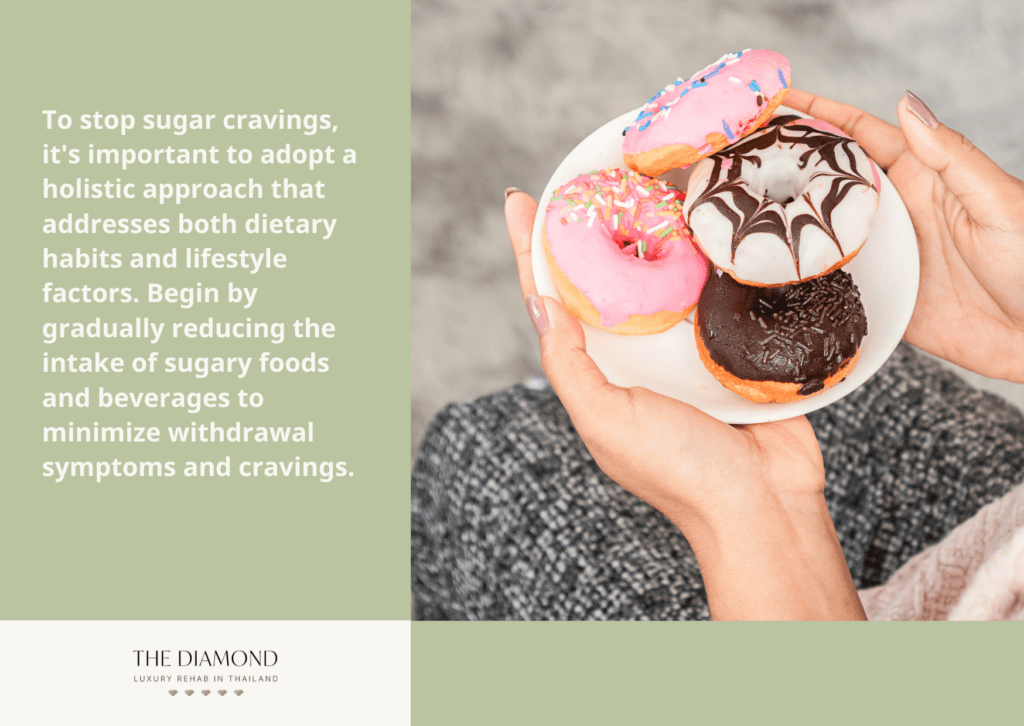
To stop sugar cravings, it’s important to adopt a holistic approach that addresses both dietary habits and lifestyle factors. Begin by gradually reducing the intake of sugary foods and beverages to minimize withdrawal symptoms and cravings. Focus on maintaining balanced meals that include protein, healthy fats, and fiber, as these nutrients help stabilize blood sugar levels and reduce the urge for sweets.
Staying well-hydrated with water throughout the day helps manage cravings, as dehydration sometimes mimics feelings of hunger. Choosing whole foods like fruits, which contain natural sugars, fibers, and nutrients, satisfy cravings more healthily.
Keep tempting foods out of easy reach, and instead, stock up on healthier alternatives like fresh fruits or nuts. If a craving does arise, consider satisfying it with a small portion of a healthier sweet option to prevent overindulgence.
Additionally, managing stress through relaxation techniques such as meditation or exercise, ensuring adequate sleep, and keeping healthy snacks readily available contribute to successfully managing and reducing sugar cravings over time. Last but not least, reach out to someone you trust, whether a family member, friend, or health professional, for support in minimizing your sugar cravings and staying accountable.
What helps with sugar cravings?
Sugar cravings are helped with the practices listed below.
A balanced approach to food: A balanced diet that includes complex carbohydrates, fiber-rich foods, and adequate protein is prioritized to balance blood sugar levels, thereby reducing the likelihood of cravings.
Making sustainable dietary changes: To manage cravings effectively, store tempting foods out of sight and opt for healthier alternatives like fresh fruits or nuts. If a craving occurs, satisfy it with a small portion of a healthier sweet option to avoid overindulgence and support healthier eating habits.
Chewing gum: The study titled “Short-term effects of chewing gum on snack intake and appetite” authored by Marion M. Hetherington and Emma Boyland and published in the journal Appetite in 2007, investigates how chewing gum affects appetite and snack intake. The researchers found that chewing gum suppresses appetite, particularly reducing the desire for sweets, and subsequently decreasing snack intake.
Behavioral therapy: Through therapy, particularly cognitive behavioral therapy (CBT), people with sugar addiction learn to identify and change the unhelpful thought patterns and behaviors that fuel their cravings. Therapy sessions help them establish healthier habits, develop coping mechanisms, and address the underlying psychological factors that contribute to their sugar dependence.
Opting for natural sweeteners: Individuals seeking to reduce their consumption of refined sugars explore the use of natural sweeteners as a potential strategy. Stevia, honey, maple syrup, and agave nectar represent examples of such alternatives. These sweeteners possess a demonstrably lower glycemic index compared to refined sugar, translating to a more moderate impact on blood sugar levels. Their incorporation into a dietary regimen, exercised with appropriate moderation, contributes to a reduction in overall sugar intake.
Going for a brisk walk: Engaging in moderate-intensity physical activity, such as a brisk walk outdoors, is a successful strategy for mitigating sugar cravings. This approach offers a twofold benefit. Firstly, it removes the individual from the immediate presence of tempting sugary foods. Secondly, exercise stimulates the release of endorphins, which are neurochemicals associated with positive emotions, potentially reducing the intensity of the craving. If outdoor activity is not feasible, performing brief sets of high-intensity exercises like burpees, push-ups, or bodyweight squats offers a comparable alternative.
What should you eat when craving sugar?
When craving sugar, you should eat the food items listed below.
Fruits: Fruits contain naturally occurring sugars that offer energy and enhance their flavor. Substituting junk food with fruits satisfies the body’s craving for sweetness. According to research titled “Whole Fruits and Fruit Fiber Emerging Health Effects” by Mark L. Dreher, published in the journal Nutrients in 2018, whole fruits offer numerous health benefits. These include protecting gastrointestinal health, reducing the risk of cardiovascular disease, type 2 diabetes, asthma, and chronic obstructive pulmonary disease (COPD), promoting weight management, defending against colorectal and lung cancers, and enhancing psychological and overall well-being.
Date palms: Date palm is renowned for its natural sweetness, and is cultivated extensively across Africa and the Middle East. Rich in bioactive components, dates are known for their abundance of carbohydrates, fibers, and essential minerals such as copper, iron, calcium, magnesium, and potassium. According to a research article titled “Replacement of refined sugar by natural sweeteners: focus on potential health benefits” by Shiza Arshad et al. published in the journal Heliyon in 2022, dates offer protective effects against diseases like cardiovascular issues, diabetes, cancer, and alzheimer’s disease. Additionally, dates promote gut health and fertility. They help mitigate oxidative damage, protect the liver, offer anti-cancer benefits, and safeguard against kidney damage due to their antioxidative properties.
Sweet potatoes: Sweet potatoes are nutritious, sweet, and filling, packed with carbs, fiber, and essential vitamins like A, C, and potassium as evidenced by the study titled, “Sweet potato, raw, unprepared (Includes foods for USDA’s Food Distribution Program)” published by U.S. Department of Agriculture (USDA) in 2019. They satisfy sugar cravings by adding calories and healthy balance to meals.
Eggs: Eggs are high in protein, which helps control appetite and cravings. Research such as “Energy Intake and Satiety Responses of Eggs for Breakfast in Overweight and Obese Adults—A Crossover Study” by Jennifer B Keogh and Peter M Clifton, published in the International Journal of Environmental Research and Public Health in 2020, indicates that consuming an egg in breakfast led to greater overall satiety and reduced postprandial sugar levels in the blood, thereby reducing hunger and lowering overall daily calorie intake.
Greek yogurt: Greek yogurt, rich in protein and probiotics, is a creamy and pleasant treat that helps manage sugar cravings. Protein burns more slowly than carbohydrates, making greek yogurt a great choice. Flavor it with cinnamon, known for its potential anti-inflammatory and blood sugar regulating effects.
Dark chocolate: Dark chocolate is a popular choice for satisfying sweet cravings, rich in polyphenols that support cognitive and heart health with antioxidant and anti-inflammatory benefits, as outlined in the research article “Dark chocolate: An overview of its biological activity, processing, and fortification approaches” by Sharmistha Samanta et al. published in Current Research in Food Science in 2022. Dark chocolate contains nearly five times more polyphenols than milk or white chocolate, with lower sugar content. Enjoy in moderation, limiting yourself to one serving or less per day due to its sugar and fat content.
How do you detox from sugar addiction?

To detox from sugar addiction, embark on a sugar detox effectively by eliminating added sugars from your diet, increasing your intake of whole foods, staying hydrated, and incorporating physical activity to support overall health and reduce cravings. Sugar detox involves eliminating sugar from the diet for a designated period, often around 30 days. Sugar detoxes don’t have strict rules, but the focus is on cutting out added sugars. This involves paying attention to nutrition labels and avoiding sugary sodas, desserts, processed foods, and even condiments like ketchup, which contain up to four grams of sugar per tablespoon.
The article “Added Sugars” published by The American Heart Association, last updated in May 2024, recommends women to limit their daily intake of added sugars to no more than 6 teaspoons, and men to no more than 9 teaspoons.
Begin by reducing or eliminating sources of added sugars such as sugary drinks, candies, and processed snacks. Instead, focus on whole foods that provide complex carbohydrates, fiber, and essential nutrients. Hydration is crucial for flushing out excess sugars from the bloodstream and supporting overall detoxification. Drinking plenty of water throughout the day helps maintain hydration levels and curb cravings for sugary beverages.
Incorporating regular physical activity into the routine helps regulate blood sugar levels and boosts insulin sensitivity, aiding in more efficient sugar processing by the body. Quality sleep is essential for hormone balance and overall health; aim for 7-9 hours per night to support natural detoxification processes and reduce cravings for sugary foods that disrupt sleep patterns.
Additionally, prioritize nutrient-dense foods that promote stable blood sugar levels, such as leafy greens, whole grains, lean proteins, and healthy fats. These choices help stabilize energy levels and minimize cravings for sugary snacks. By adopting these strategies, you effectively support the body in detoxing from sugar, promoting overall health and well-being.
What happens when a sugar addict abruptly stops consuming sugar?
When a sugar addict abruptly stops consuming sugar it results in withdrawal symptoms. Withdrawal symptoms from reducing sugar intake vary based on how quickly sugar is cut down and how rapidly the body adapts. Symptoms typically arise because the body has developed a tolerance to high sugar levels and adjusts to lower intake. The research article “Sugar Habit Hacker: Initial evidence that a planning intervention reduces sugar intake” by Matthew Brittain et al. published in the Journal of Behavioral Addictions in 2021, suggests that sugar consumption provokes psychological and physical responses similar to substance use disorders (SUD), characterized by impaired control, social impairment, risky use, and pharmacological indicators like tolerance and withdrawal. The physical symptoms include headaches, nausea, fatigue, and dizziness.
Another research article “Sugar intake from sweet food and beverages, common mental disorder and depression: prospective findings from the Whitehall II study” by Anika Knüppel et al. published in the journal Scientific Reports in 2017, found that sugar intake from sweet foods and beverages increases the risk of mood disorders in men, with limited evidence for recurrent mood disorders in both sexes. Other psychological symptoms of sugar withdrawal include depression, anxiety, disturbances in sleep patterns, cravings, and lack of motivation and concentration.
When should you seek medical help for sugar cravings?
You should seek medical help for sugar cravings if they are persistent and intense, making it difficult to focus on other tasks or leading to compulsive eating. In the article “Compulsive Overeating as an Addictive Behavior” by Caroline Davis, published in the journal Current Obesity Reports in 2013, the research suggests that chronic binge eating shares psychological and behavioral characteristics with drug addiction. This perspective views dependence on highly palatable food such as sugar, fats, and salt, accompanied by emotional and social distress, as similar to addictive disorders.
These cravings have a significant impact on health, potentially contributing to issues such as weight gain, obesity, diabetes, or other metabolic disorders. Symptoms of anxiety, depression, or stress related to cravings become challenging to control despite various strategies, so seeking medical advice is important.
Suspecting sugar cravings indicate underlying nutritional deficiencies, such as magnesium. Behaviors like hiding sugary food consumption or feeling guilty afterward signal a need for professional guidance. Consulting a healthcare professional helps identify and address these underlying causes effectively. They provide tailored treatments or interventions, addressing issues such as hormonal imbalances, psychological factors, or nutritional deficiencies, to promote overall well-being and healthier habits.
How long does it take to recover from sugar addiction?

It takes about four weeks to recover from sugar addiction, according to a 2020 study titled “Changes in Food Cravings and Eating Behavior after a Dietary Carbohydrate Restriction Intervention Trial” authored by Katherene O.-B. Anguah et al. and published in the journal Nutrients. The study found that a substantial reduction in food cravings was observed following a four-week low-carbohydrate (CHO) diet. The majority of craving subscales, including those for sweets, high fat, fast-food fats, CHO/starches, and total cravings, exhibited this decrease.
Furthermore, in an article titled “Does Consuming Sugar and Artificial Sweeteners Change Taste Preferences?” authored by Carole Bartolotto and published in The Permanente Journal in 2015, it is suggested that using a two-week challenge to reset palates helps individuals transition more easily to a healthier diet with less sugar and alternative sweeteners.