
How does drug rehab work?



Drug rehab works by offering a methodical strategy to assist people in overcoming addiction and taking back control of their life. A customized treatment plan is usually implemented after an examination to determine the person’s level of addiction and any underlying problems.
Detoxification is often the first step, where the body is gradually cleared of the drug, usually under medical supervision, to manage withdrawal symptoms safely. Once detox is completed, the focus shifts to therapy, which includes individual counseling, group therapy, and behavioral treatments to address the emotional and psychological aspects of addiction.
Rehabilitation takes place across various settings, each catered to different levels of care and personal needs. For people with serious addictions or who need medical monitoring, inpatient rehab offers a disciplined setting perfect for 24/7 treatment in a residential facility. Outpatient rehab is more flexible for people with mild addiction or strong support networks because it permits them to live at home while attending regular therapy sessions.
Rehab clinics additionally assist patients in developing coping mechanisms to avoid relapse and provide support for co-occurring mental health disorders. After treatment, ongoing care, such as support groups or follow-up counseling, is often recommended to ensure long-term recovery.
How effective is drug rehab?
Drug rehab is highly effective, with 68% of 1,939 patients from a 2004 study by Hser et al., titled, “Relationship Between Drug Treatment Services, Retention, and Outcomes” attaining positive outcomes at the nine-month follow-up.
Favorable treatment outcomes were characterized by patients refraining from drug use for a minimum of 30 days before the nine-month follow-up, avoiding criminal behavior, and residing independently within the community.
These results were associated with increased retention rates and the completion of treatment programs. The success rates of patients in residential programs were slightly lower (59.9%) than those in outpatient drug-free programs (73.3%).
The significance of continuing treatment for a minimum of ninety days is emphasized by the paper. Long-term patients of drug rehab (those under treatment for 90 days or more) were much more likely to see positive results.
What makes drug rehab successful?
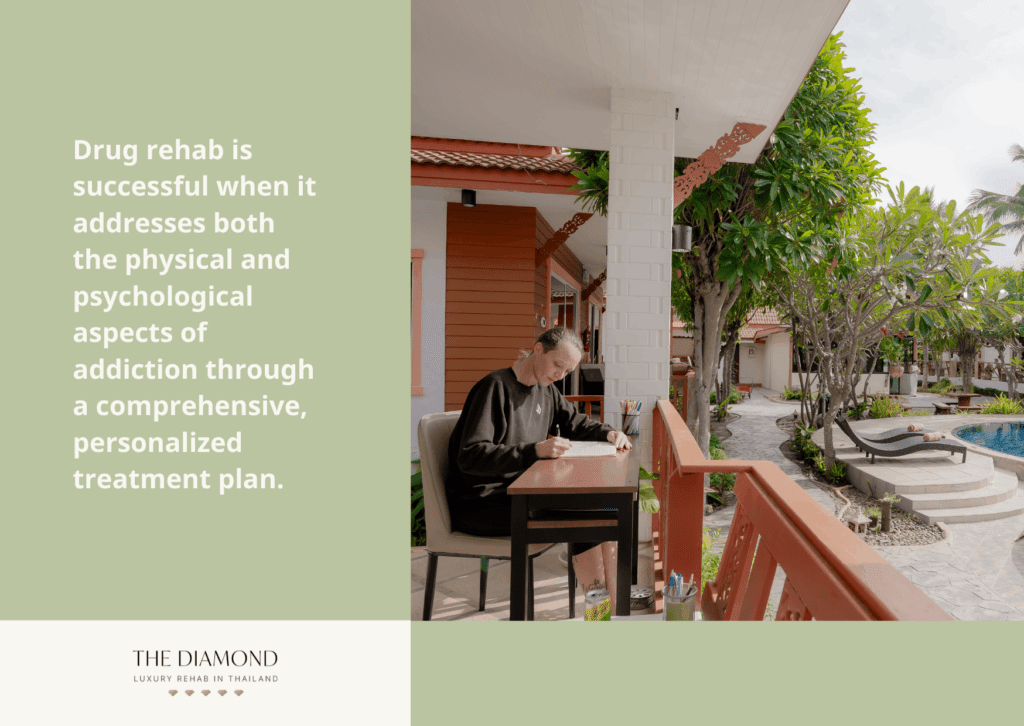
Drug rehab is successful when it addresses both the physical and psychological aspects of addiction through a comprehensive, personalized treatment plan. Detoxification under medical supervision and behavioral therapy to identify and cope with risk factors for relapse are critical components.
Success further depends on the individual’s commitment to the process, the quality of care provided, and ongoing support through aftercare programs. People who complete a good treatment program are given the skills and coping processes they need to prevent relapse and reestablish healthier lifestyles.
The effectiveness of rehab is ultimately measured by the individual’s ability to maintain sobriety and achieve long-term addiction recovery.
Is addiction cured in drug rehab?
No, addiction is not typically cured in drug rehab, but it is effectively managed in the treatment facility. Addiction is considered a chronic condition, much like diabetes or heart disease, which means it requires ongoing attention and care to prevent relapse.
Although people receive the necessary tools for long-term recovery during rehab, it frequently takes a lifetime of dedication to staying active in aftercare programs, therapy, and support networks to maintain sobriety. Effective addiction treatment results in a stable and rewarding life; yet, addiction necessitates continuous management rather than one-time cure.
How much does drug rehab cost?
The cost of drug rehab varies from a minimum of $55 for in-prison therapeutic communities to a maximum of $918 for adult residential treatment programs, as per a 2008 study from the Journal of Substance Abuse Treatment titled, “The Economic Costs of Substance Abuse Treatment: Updated Estimates and Cost Bands for Program Assessment and Reimbursement.”
The paper further stated that methadone maintenance treatment expenses range from $87 to $112 weekly, with treatment episode expenditures between $4,277 and $13,395. In contrast, non-methadone outpatient programs incur weekly costs of $74 to $221, with episode costs ranging from $1,132 to $2,099.
A higher weekly cost of $243 to $598 is associated with intensive outpatient programs, which provide more comprehensive care. Episode costs range from $1,384 to $5,780. One important element affecting the overall cost of therapy is the average duration of stay in a program. Costs associated with treatment episodes are inevitably higher in programs with longer average stays.
Luxury or high-end facilities that provide supplementary services, including private accommodations, gourmet meals, and holistic therapies, typically charge between $20,000 and $100,000 per month.
Is drug rehab covered by insurance?
Yes, drug rehab is often covered by insurance, but the extent of coverage depends on the specific insurance plan and the type of treatment required. Under the Affordable Care Act (ACA), addiction treatment is considered an essential health benefit, which means most insurance plans, including those offered by employers and through government programs like Medicaid, must cover certain forms of substance abuse treatment.
However, coverage tends to vary, with particular plans paying for only certain types of rehab, such as outpatient services, while others cover inpatient stays or specific therapies. Insurance additionally sets limits on the duration of treatment or requires pre-authorization. It’s important for individuals to check with their insurance provider to understand their specific benefits and any out-of-pocket costs related to rehab.
How long does drug rehab last?
Drug rehab lasts for an average of 30 to 90 days, with certain extended care programs lasting six months to a year. It is worth noting that the length of drug rehab varies significantly depending on the type of treatment program, the individual’s needs, and the severity of the addiction.
In general, short-term programs, such as residential detoxification, often last around 30 days, providing intensive support during the initial recovery phase. Lengthier programs—60 to 90 days or longer—offer a more thorough approach and give participants more time to address ingrained problems and forge effective coping strategies.
Can I get time off work to attend drug rehab?
Yes, you can get time off work to attend drug rehab. The Family and Medical Leave Act (FMLA) in the United States allows eligible employees to take up to 12 weeks of unpaid leave within a 12-month period for serious health conditions, which includes substance use disorders.
During this time, your job is protected, meaning your employer cannot fire you for taking leave to attend rehab. To qualify for FMLA, you must work for a company with 50 or more employees and have been employed there for at least 12 months.
However, it is important to notify your employer of your need for leave in advance, and provide medical documentation if required. Furthermore, plenty of companies provide Employee Assistance Programs (EAPs) that give private counseling and assistance for problems associated with addiction; in certain cases, these programs even include choices for taking time off for treatment.
It’s essential to check your company’s specific policies and the legal requirements in your region, but generally, seeking treatment for addiction is recognized as a valid reason to take time off work under federal law.