
Childhood trauma and addiction: relationship, dual diagnosis, and treatment


Table of content
- What is childhood trauma?
- What is the relationship between childhood trauma and addiction?
- How is a dual diagnosis of childhood trauma and addiction determined?
- What are the treatments for childhood trauma and addiction dual diagnosis?
Childhood trauma refers to any scary, dangerous, or life-threatening incident that a child experiences between 0-17 years of age. Experiencing or witnessing incidences of violence and abuse; suffering neglect; growing up in a household where mental health and/or substance use problems were present; experiencing financial hardship and/or unstable housing situations; and witnessing parental separation are instances of childhood traumatic events. These events have the potential to trigger addiction during adulthood.
Childhood trauma and addiction have a dose-responsive relationship, meaning that the greater the number of traumatic events experienced in childhood, the more the risk of developing addiction during adulthood. The degree of risk varies according to the nature of the trauma experienced, gender, and ethnicity.
A dual diagnosis of childhood trauma and addiction is ascertained after screening for childhood trauma, the presence of trauma-related symptoms, the severity of the trauma, coping strategies, and the presence of substance abuse. A positive screening leads to a thorough assessment of the nature and extent of the traumatic event and the severity of the addiction problem. Mental health professionals gather the information needed to make the diagnosis using simple “yes” and “no” questions, written questionnaires, structured clinical interviews, and standardized tests and quizzes.
The treatments for childhood trauma and addiction dual diagnosis include cognitive behavioral therapies, trauma-focused therapies like the Seeking Safety intervention and the T.A.M.A.R (Trauma, Addictions, Mental Health and Recovery) Program, support groups, psychotherapy, holistic therapies, and medication-assisted treatment. An integrated treatment approach where both conditions are managed simultaneously is considered to be the most effective method for treating childhood trauma and addiction dual diagnosis. Often, detoxification and medication are the first steps of an integrated treatment method.
What is childhood trauma?
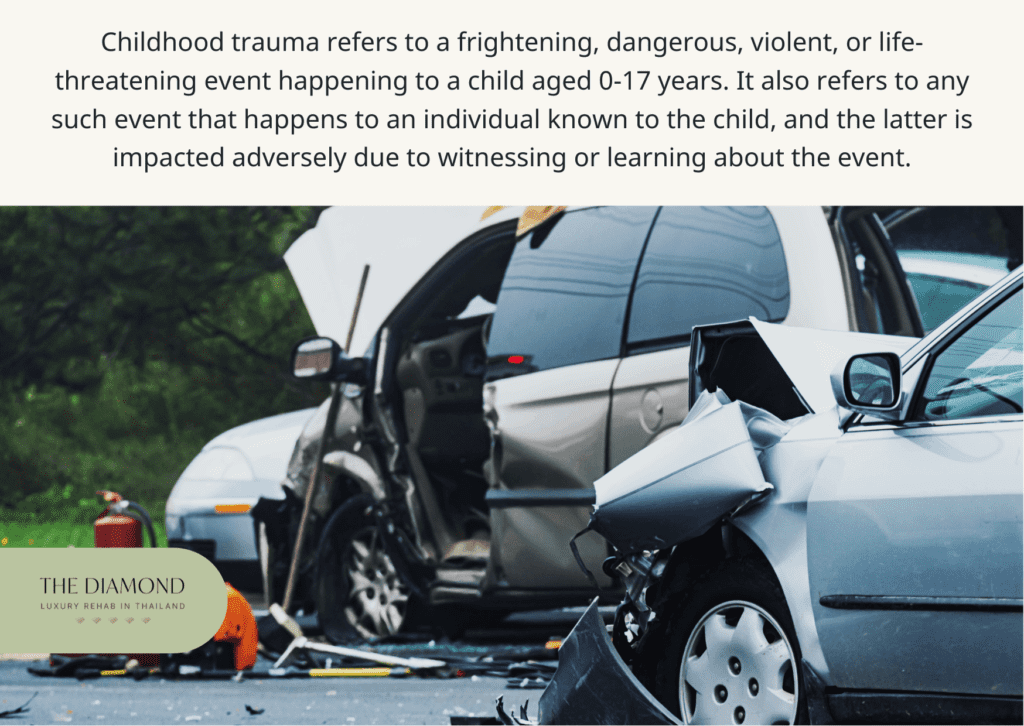
Childhood trauma refers to a frightening, dangerous, violent, or life-threatening event happening to a child aged 0-17 years. It also refers to any such event that happens to an individual known to the child, and the latter is impacted adversely due to witnessing or learning about the event. These traumatic events, referred to as adverse childhood experiences (ACEs), include, per the U.S. Centers for Disease Control and Prevention, experiencing violence, physical, emotional, or sexual abuse, and/or physical and/or emotional neglect; growing up in a household where one or more members have mental health disorders, substance use problems, and/or have been incarcerated; witnessing parental separation or divorce that triggers feelings of abandonment; and experiencing financial hardship, homelessness and/or unstable housing situation, and/or discrimination. These experiences are not traumatic for every child because everyone interprets and deals with an event differently. However, childhood trauma has the potential to adversely affect the brain and health of a growing child and contribute to the development of severe psychiatric disorders, such as addiction, later in life.
What is the relationship between childhood trauma and addiction?
The relationship between childhood trauma and addiction is a dose-responsive one. The greater the exposure to childhood traumatic events, the more the likelihood of adverse adult outcomes like alcohol dependence and injection drug use, according to a 2010 publication by Wu et al., published in the journal Addictive Behaviors, titled “Childhood trauma and health outcomes in adults with comorbid substance abuse and mental health disorders.” The convergence of several different forms of childhood traumatic events increases the risk of developing addiction, according to a 2019 article by Zarse et al., published in the journal Cogent Medicine, titled “The adverse childhood experiences questionnaire: Two decades of research on childhood trauma as a primary cause of adult mental illness, addiction, and medical diseases.”
However, according to a 2020 article by Bryant et al., published in the journal Addictive Behaviors Reports, titled “Association of adverse childhood experiences (ACEs) and substance use disorders (SUDs) in a multi-site safety net healthcare setting,” physical abuse, sexual abuse, and parental addiction are the strongest predictors of developing substance use disorder during adulthood. The relationship between childhood trauma and addiction is influenced by gender and ethnicity.
For instance, according to a 2023 article by Broekhof et al., published in the journal Addictive Behaviors Reports, titled “Adverse childhood experiences and their association with substance use disorders in adulthood: A general population study (Young-HUNT),” adult females who have experienced childhood trauma are more likely to abuse alcohol than illicit drugs. This association was the strongest in instances where emotional neglect, sexual abuse, and physical abuse were involved. Adult males who have experienced childhood trauma are more likely to abuse illicit drugs than alcohol.
Physical abuse, parental divorce, and witnessing violence are the strongest predictors of this relationship. There is an increased probability of tobacco, alcohol, and marijuana use among Hispanic populations in the U.S. who have experienced childhood trauma compared to their non-Hispanic peers, according to a 2021 article by Rogers et al., published in the journal Child Abuse & Neglect, titled “The impact of childhood trauma on substance use trajectories from adolescence to adulthood: Findings from a longitudinal Hispanic cohort study.”
Can childhood trauma lead to addiction?
Yes, childhood trauma can lead to addiction, according to Mustafa al’Absi in a 2020 article published in the book series International Review of Neurobiology, titled “The influence of stress and early life adversity on addiction: Psychobiological mechanisms of risk and resilience.” Childhood trauma induces changes in the brain’s architecture and functionality and contributes to the dysregulation of the stress response system, emotional modulation, reward mechanisms, cognitive functionalities, and delay discounting that trigger high-risk behaviors like drug use.
Does childhood trauma always lead to addiction?
No, childhood trauma does not always lead to addiction. According to the chapter Understanding the Impact of Trauma from the 2014 publication by the Substance Abuse and Mental Health Services Administration (US) titled “Trauma-Informed Care in Behavioral Health Services,” some individuals are able to develop resilient responses to trauma, such as discovering healthy coping mechanisms like bonding more with the family and/or the community, redefining their sense of purpose, revising their life’s priorities, and practicing altruism. These people do not feel the urge to self-medicate to reduce stress and hence, they have a decreased risk of developing addiction.
Positive environmental factors, such as good parenting, supportive peer relationships, and a safe neighborhood too, confer resilience in individuals who have experienced childhood trauma, according to Mustafa al’Absi in a 2020 article published in the book series International Review of Neurobiology, titled “The influence of stress and early life adversity on addiction: Psychobiological mechanisms of risk and resilience.”
According to a 2022 article by Erica M. Webster published in the journal Global Pediatric Health, titled “The Impact of Adverse Childhood Experiences on Health and Development in Young Children,” having the support of a trusting adult in childhood lessens the adverse impact of childhood trauma and thus, potentially decreases the risk of developing addiction. The particular genetic makeup of an individual–the presence or absence of a mutation or the occurrence of a genetic variant–determines whether or not a person who has experienced childhood trauma will develop addiction later in life, according to a 2019 article by Jiang et al., published in the journal Frontiers in Psychiatry, titled “Epigenetic Modifications in Stress Response Genes Associated With Childhood Trauma.”
When does childhood trauma result in addiction?
Childhood trauma results in addiction when it occurs at high levels and there is an absence of resilience factors, according to a 2019 article by Zarse et al., published in the journal Cogent Medicine, titled “The adverse childhood experiences questionnaire: Two decades of research on childhood trauma as a primary cause of adult mental illness, addiction, and medical diseases.” The Adverse Childhood Experiences (ACE) questionnaire is used to screen for trauma. According to Zarse et al., higher ACE scores are associated with increased risk and earlier initiation of nicotine, alcohol, and illicit drug use. The authors note that an ACE score of 4 or more and having a history of parental alcohol abuse significantly raises the risk of the individual developing alcoholism later in life. Likewise, having an alcoholic family member and experiencing sexual abuse increases the risk of developing alcohol addiction during adulthood.
How often does childhood trauma lead to addiction?
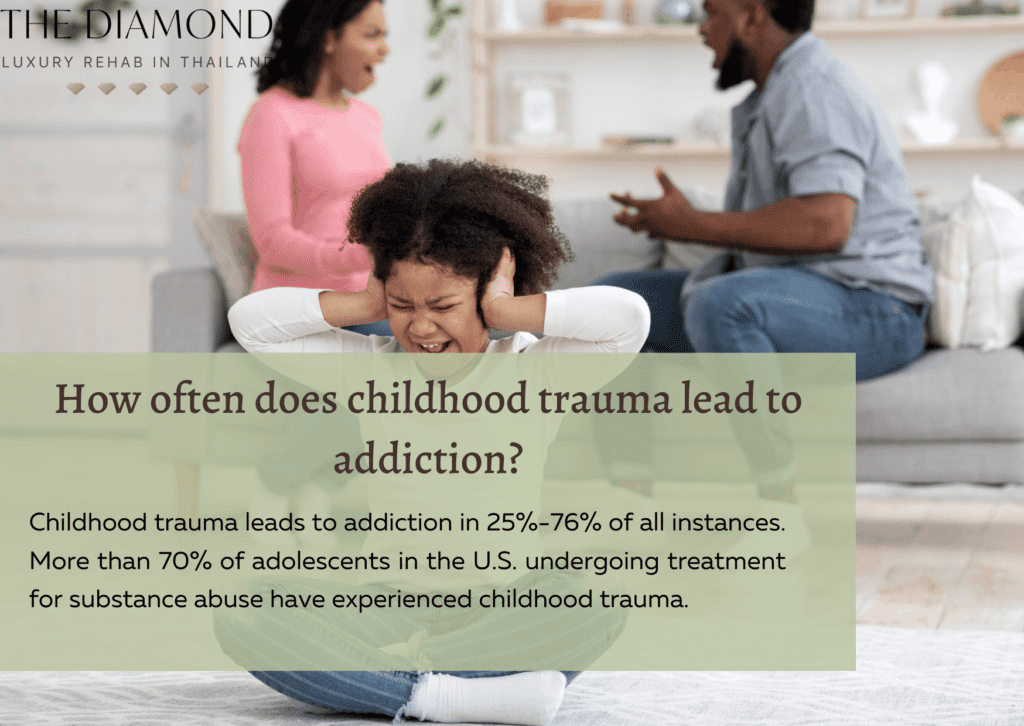
Childhood trauma leads to addiction in 25%-76% of all instances. More than 70% of adolescents in the U.S. undergoing treatment for substance abuse have experienced childhood trauma. A teenager is three times more likely to develop addiction later in life if they have experienced physical or sexual abuse or assault, according to a June 2008 release by The National Child Traumatic Stress Network titled “Understanding the Links Between Adolescent Trauma and Substance Abuse.”
The prevalence of childhood trauma leading to addiction is 22% to 74% in the case of alcohol dependence, as mentioned in a 2020 article by Zhang et al., published in the journal Psychiatry Research, titled “Prevalence of childhood trauma measured by the short form of the Childhood Trauma Questionnaire in people with substance use disorder: A meta-analysis.” The authors mention that childhood emotional abuse accounted for 27.1%, physical abuse 20.2%, and sexual abuse 15.3% of the cases in a study on individuals with alcohol dependence. The study suggests that there is a greater correlation between childhood neglect and abuse and developing a severe form of substance abuse later in life.
How does childhood trauma lead to addiction?
Childhood trauma leads to addiction through a complex interplay of neurobiological, psychiatric, and emotional mechanisms. In a 2020 article published in the book series International Review of Neurobiology, titled “The influence of stress and early life adversity on addiction: Psychobiological mechanisms of risk and resilience,” author Mustafa al’Absimentions that a dysregulated stress response system resulting from chronic childhood trauma is at the root of addiction problems later in life. The activation of the stress response system manifests as anxiety, hyperarousal, a sense of alarm, hypervigilance, increased blood pressure, rapid heartbeat, and fast breathing. Stress has a significant role in initiating and maintaining addiction and triggering relapse (Mustafa al’Absi, 2020).
A June 2008 release by The National Child Traumatic Stress Network titled “Understanding the Links Between Adolescent Trauma and Substance Abuse,” points to the self-medication hypothesis of substance abuse to explain how trauma is a risk factor for developing addiction. Traumatized individuals turn to drugs and alcohol to numb the powerful rush of emotions associated with their traumatic memories or to deal with trauma reminders. Memories of traumatic incidents tend to make individuals with co-occurring traumatic stress and addiction problems crave substances, according to a 2002 article by Coffey et al., published in the journal Drug and Alcohol Dependence, titled “Trauma and substance cue reactivity in individuals with comorbid posttraumatic stress disorder and cocaine or alcohol dependence.” They tend to seek drugs of abuse for the mood-enhancing properties that these substances possess. These substances then become their means to induce feelings of pleasure, lessen depression, soothe their anxiety, and suppress the state of arousal caused by the increased levels of stress hormones in their bodies.
Who is most vulnerable to addiction after childhood trauma?
Individuals who have experienced childhood traumas that were interpersonal, intentional, and prolonged are most vulnerable to addiction, according to a 2014 article by Michael D. De Bellis and Abigail Zisk published in the journal Child and Adolescent Psychiatric Clinics of North America, titled “The Biological Effects of Childhood Trauma.” The number of adverse childhood experiences also influences the risk of developing addiction later in life. For instance, adults who have experienced 4 or more ACEs have the most pronounced risk of developing addiction in adulthood, according to a 2022 article by Erica M. Webster published in the journal Global Pediatric Health, titled “The Impact of Adverse Childhood Experiences on Health and Development in Young Children.” Individuals with a history of childhood trauma are at an increased risk of developing substance use problems if they have post-traumatic stress disorder, according to a 2010 article by Khoury et al., published in the journal Depression and Anxiety, titled “Substance use, childhood traumatic experience, and Posttraumatic Stress Disorder in an urban civilian population.”
Mustafa al’Absi in a 2020 article published in the book series International Review of Neurobiology, titled “The influence of stress and early life adversity on addiction: Psychobiological mechanisms of risk and resilience” mentions how genes interact with the environment to shape stress response and direct how stress influences the risk of developing addiction. The presence of specific genetic characteristics negatively impacts the stress response and reward regulation mechanisms and/or increases the risk of developing depression and hence, makes a person vulnerable to developing addiction. Additionally, there are gender differences in the effect of childhood trauma on the risk of developing addiction. Early life trauma impacts women more profoundly than men and as a result, makes them more vulnerable to addiction later in life. Mustafa al’Absi refers to multiple resilience studies and notes that children who do not grow up in a positive social environment–characterized by good parenting, safe neighborhoods, and enriching and supportive peer relationships–are more vulnerable to addiction after experiencing childhood trauma.
What are the addiction types associated with childhood trauma?
The addiction types associated with childhood trauma are listed below.
- Drug addiction and childhood trauma
- Alcohol addiction and childhood trauma
1. Drug addiction and childhood trauma
Childhood trauma increases the likelihood of an individual developing drug addiction later in life, according to a 2020 article by Tammy C. Ayres published in the journal Deviant Behavior, titled “Childhood Trauma, Problematic Drug Use and Coping.” The study cited in the article indicates that maladaptive coping mechanisms are at the root of problematic drug use in individuals who have experienced childhood trauma.
People who have experienced childhood trauma are prone to developing severe mental health issues like depression, post-traumatic stress disorder, suicidal tendencies, and personality disorders. Drug addiction is also related to a decreased quality of life. Authors Georgsdottir et al., in their 2021 article titled “This Is the Result of Something Else”: Experiences of Men That Abused Drugs and Had Experienced Childhood Trauma, published in the American Journal of Men’s Healthsuggest that under the influence of drugs, individuals report improved mental health, and consequently, begin to believe that substances are the only way to help them cope with their struggles.
2. Alcohol addiction and childhood trauma
There is a robust and positive relationship between experiencing childhood trauma and developing alcohol addiction later in life, according to a 2012 article by Kathleen T. Brady published in the journal Alcohol Research: Current Reviews, titled “Childhood Trauma, Posttraumatic Stress Disorder, and Alcohol Dependence.” Childhood trauma increases the chances of an individual developing a host of physical health, psychiatric, emotional, employment, and legal problems later in life. These individuals are susceptible to using alcohol as a means of coping with their problems, a maladaptive coping behavior that, in turn, leads to excessive and problematic alcohol use.
According to Brady, the risk of alcohol addiction in victims of childhood abuse or neglect remains consistently high into middle adulthood. People with alcohol dependency and a history of sexual abuse are more likely to relapse and relapse more quickly in the first year after completing inpatient treatment than those who have not faced abuse.
How is a dual diagnosis of childhood trauma and addiction determined?
Dual diagnosis of childhood trauma and addiction is determined using an integrated evaluation instrument during a single biopsychosocial assessment, according to Neal Adams in the chapter named Assessment from the 2005 book titled “Treatment Planning for Person-Centered Care.” This means that the patient is not separately assessed by a mental health expert and an addiction expert. The use of an integrated assessment approach stems from the view that patients are “whole” persons and have multiple needs and problems that do not always fit into a single diagnostic category.
Screening to determine whether an individual has experienced childhood trauma and whether they have trauma-related symptoms involves asking simple “yes” and “no” questions, according to the chapter Screening and Assessment from the 2014 publication by the Substance Abuse and Mental Health Services Administration (US) titled “Trauma-Informed Care in Behavioral Health Services.” Individuals with a history of trauma are screened for trauma-related symptoms, severity of a specific trauma, presence of trauma-related disorders, coping styles, and substance abuse. A positive screening warrants further analysis or an assessment, which is conducted by a mental health professional trained in carrying out assessment and evaluation processes. The assessment is carried out to define and determine the nature and extent of the issue and involves the use of multiple tools like detailed written questionnaires to be completed by the patient, extensive structured clinical interviews, past and current medical records, and related information from loved ones and associates, other behavioral health professionals, and agencies. The Adverse Childhood Experiences (ACE) test, the Childhood Trauma Screener (CTS), the Brief Adverse Childhood Experiences Questionnaire, the Childhood Trauma Questionnaire—Short Form (CTQ-SF), and the Childhood Experience of Care and Abuse (CECA) interview are some commonly used tests and quizzes to assess multiple aspects of childhood trauma and its impact.
What are the signs that addiction is linked to childhood trauma?
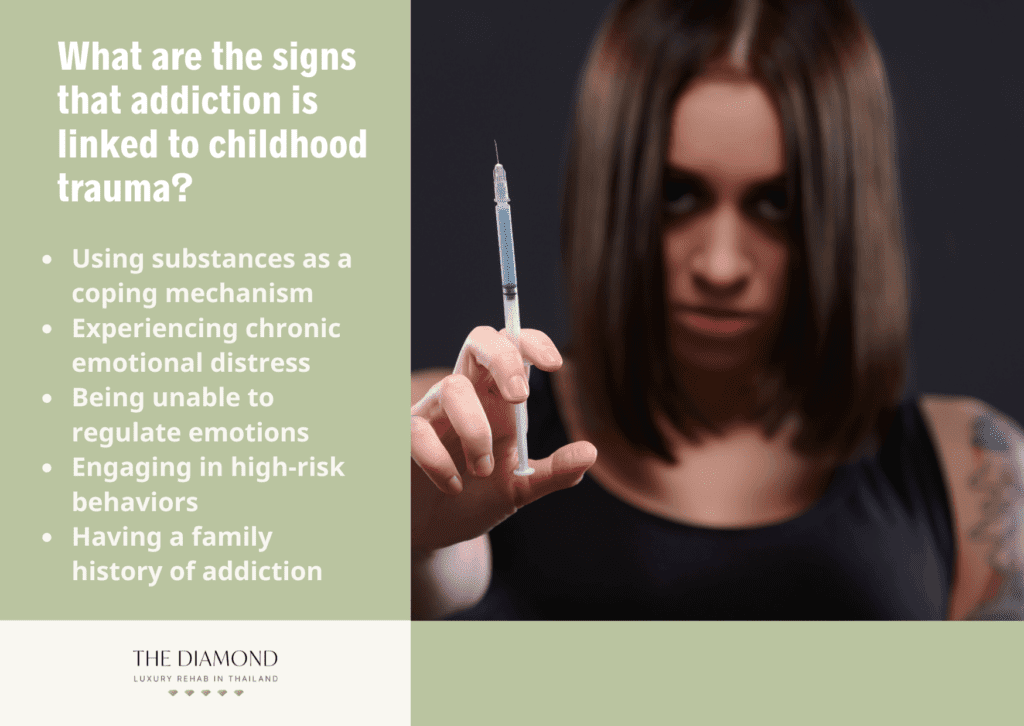
The signs that addiction is linked to childhood trauma are listed below.
- Using substances as a coping mechanism: Individuals who have experienced childhood trauma tend to abuse substances to self-medicate or improve low mood associated with a dysregulated stress response mechanism, according to a 2010 article by Khoury et al., published in the journal Depression and Anxiety, titled “Substance use, childhood traumatic experience, and Posttraumatic Stress Disorder in an urban civilian population.”
- Experiencing chronic emotional distress: Childhood trauma triggers negative emotional states and causes a person to experience persistent symptoms of emotional distress like anxiety and depression, according to a 2022 article by Aslı Burçak Taşören published in the journal Current Psychology, titled “Childhood maltreatment and emotional distress: The role of beliefs about emotion and psychological inflexibility.” Individuals with a history of childhood trauma tend to avoid emotions, sensations, feelings, thoughts, and behaviors, which in turn, adds a degree of psychological inflexibility to their mental makeup. Their emotional schemas and rigid beliefs contribute to the maintenance of negative emotions. Being unable to regulate one’s emotions and maladaptive coping behaviors contribute to the traumatized individual experiencing chronic emotional distress.
- Being unable to regulate emotions: Individuals who have experienced childhood trauma have difficulty regulating emotions like anxiety, sadness, anger, and shame, according to the chapter Understanding the Impact of Trauma from the 2014 publication by the Substance Abuse and Mental Health Services Administration (SAMHSA) titled “Trauma-Informed Care in Behavioral Health Services.” Traumatized people tend to self-medicate–by abusing substances–in an attempt to control their emotions. Chronic substance abuse, in turn, aggravates emotional dysregulation, thereby triggering a vicious cycle.
- Engaging in high-risk behaviors: Engaging in high-risk behaviors, such as harming oneself, is an attempt to cope with persistent emotional distress, according to a 2014 publication by the SAMHSA. Self-harm or self-destructive behaviors are associated with childhood sexual abuse and other forms of severe trauma and stem from feelings of helplessness, being trapped, and “damaged.” Often, individuals who have experienced childhood trauma recreate or relive a past traumatic experience in their current lives in an attempt to integrate, process, and heal from it. These people tend to engage in high-risk behaviors like getting into toxic relationships and driving recklessly.
- Having a family history of addiction: The mere presence of one or more family members with alcoholism increases the risk of children in the household experiencing adverse experiences, according to a 2002 article by Anda et al., published in the journal Psychiatric Services, titled “Adverse childhood experiences, alcoholic parents, and later risk of alcoholism and depression.” The risk of addiction increases as the number of adverse childhood experiences increases. Substance abuse by a family member contributes to elevated levels of stress, household dysfunction, and intergenerational transmission of trauma. These factors increase the risk of developing addiction during adulthood.
What are the treatments for childhood trauma and addiction dual diagnosis?

The treatments for childhood trauma and addiction dual diagnosis are listed below.
- Cognitive behavioral therapies: Cognitive behavioral therapy (CBT) has been shown to minimize post-traumatic symptoms, according to Georgsdottir et al., in their 2021 article titled “This Is the Result of Something Else”: Experiences of Men That Abused Drugs and Had Experienced Childhood Trauma, published in the American Journal of Men’s Health. CBT approaches have also been shown to be effective in treating drug and alcohol use disorders, according to a 2017 article by Kathleen M. Carroll and Brian D. Kiluk published in the journal Psychology of Addictive Behaviors, titled “Cognitive Behavioral Interventions for Alcohol and Drug Use Disorders: Through the Stage Model and Back Again.”
- Trauma-focused therapies: The Seeking Safety (SS) intervention is a widely practiced CBT-based trauma-focused model for addiction treatment. It has been shown to be effective in reducing symptoms of traumatic stress to a medium to large extent and those of substance use to a small to medium extent in diverse populations, according to a 2023 article by Sherman et al., published in the journal Brain and Behavior, titled “Seeking safety intervention for comorbid post‐traumatic stress and substance use disorder: A meta‐analysis.” However, it is not yet evident if SS shows more promising results if it is delivered alongside other trauma-focused treatments like cognitive processing therapy (CPT), pharmacological measures, or complementary and integrative health treatments like trauma-informed yoga. The T.A.M.A.R (Trauma, Addictions, Mental Health and Recovery) Program is a federally-funded program designed to treat women with a history of trauma and addiction, according to a June 2017 release by the National Association of State Mental Health Program Directors (NASMHPD) titled “TAMAR: Trauma, Addictions, Mental health, and Recovery.” It seeks to help patients develop healthy ways to deal with pain and distress, get over feelings of helplessness and hopelessness, boost their self-image, regain a sense of safety and meaning in their lives, function as productive members of society, and move forward with their dreams and aspirations.
- Support groups: Support groups offer individuals dealing with childhood trauma and addiction dual diagnosis a safe space to share their struggles and find support, encouragement, and inspiration from people with similar life experiences. Support groups fill the void between the sympathy offered by loved ones who don’t always know what words to say or how best to help and the medical care provided by healthcare professionals who are unable to touch and heal a traumatized soul.
- Psychotherapy: Patients who have experienced trauma tend to self-medicate with substances of abuse to soothe the feelings of distress associated with traumatic stress symptoms, such as hypervigilance, hyperarousal, intrusive re-experiencing, and flashbacks. On the other hand, substance abuse tends to aggravate the symptoms of traumatic stress. The goal of psychotherapy for individuals with substance abuse and a history of trauma, whether delivered in individual or group settings, is to teach them healthy coping skills to manage their distress without feeling compelled to resort to using substances, according to a 2006 article by Julian D. Ford and Eileen Russo published in the American Journal of Psychotherapy, titled “Trauma-Focused, Present-Centered, Emotional Self-Regulation Approach to Integrated Treatment for Posttraumatic Stress and Addiction: Trauma Adaptive Recovery Group Education and Therapy (TARGET).” These skills include emotional regulation and cognitive restructuring. Cognitive restructuring helps a person reframe the narrative surrounding their trauma experiences and perceive their feelings of anger, memories of “defeat,” a sense of alienation, and the belief that they have been permanently tainted or changed by event(s) in a different and positive light. Emotional regulation helps an individual identify, acknowledge, and normalize emotions they were unwilling to tolerate and accept earlier. Being able to modulate emotions allows them to reduce the amount of attention they allocate to the substance-related cues that they associate with distraction and instant gratification.
- Medication-assisted treatment: Medication-assisted treatment has the potential to improve symptoms of both diseases in a dual diagnosis scenario. Medicines help manage withdrawal symptoms during detoxification and aid in reducing cravings and maintaining abstinence. The efficacy of psychotherapy is enhanced when an individual has been weaned off from the destabilizing influence of substances because alcohol and illicit drugs are known to aggravate psychiatric symptoms. Psychopharmaceuticals like mood-stabilizing drugs, anti-depressants, and anxiety-reducing drugs reduce several symptoms of traumatic stress and improve the quality of life of the patient. For instance, there is a “dose-response” relationship between childhood trauma and sleep problems in adulthood, according to a 2018 article by Brindle et al., published in the journal Psychosomatic Medicine, titled “The relationship between childhood trauma and poor sleep health in adulthood.” Poor sleep health is also associated with increased severity of substance use disorder. So, sleeping pills have the potential to improve the symptoms of both childhood trauma and addiction.
- Holistic therapies: Holistic complementary practices like mindfulness, yoga, meditation, art therapy, and equine-assisted therapy help patients with childhood trauma and addiction dual diagnosis manage symptoms like emotional stress, anxiety, and depression. Additionally, these practices provide alternative and safer outlets for self-expression, promote self-discovery, instill a greater sense of purpose and meaning in life, and aid emotion regulation.
How is addiction treated in childhood trauma survivors?
Addiction is treated in childhood trauma survivors using an integrated approach that is grounded in the premise that each disorder influences the progression and severity of, and recovery from the other and hence, should be treated concurrently. According to a 2012 article by J. Michael Sullivan and Katie Evans published in the Journal of Psychoactive Drugs, titled “Integrated Treatment for the Survivor of Childhood Trauma Who Is Chemically Dependent,” the ideal therapeutic approach is to blend mental health, 12-step programs, and other substance abuse treatment methodologies. When addiction is involved, detoxification and medication are usually the first steps of an integrated treatment approach. Detoxification and medication help a patient go through the withdrawal phase safely. Depending on the severity of the addiction, these treatments are delivered either in an inpatient or outpatient facility.
Individuals with post-traumatic stress tend to respond less favorably to addiction treatments and are more likely to discontinue treatment, thereby increasing their chances of relapsing. According to a 2009 article by McGovern et al., published in the journal Addictive Behaviors, titled “A cognitive behavioral therapy for co-occurring substance use and posttraumatic stress disorders,” cognitive behavioral therapy decreased substance use and increased the rate of addiction treatment completion in a population of patients with co-occurring traumatic stress and substance abuse.
How is childhood trauma treated in people with addiction?
Childhood trauma is treated in people with addiction by following the fundamental tenets of trauma-focused care. According to Georgsdottir et al., in their 2021 article titled “This Is the Result of Something Else”: Experiences of Men That Abused Drugs and Had Experienced Childhood Trauma, published in the American Journal of Men’s Health, trauma-focused care is person-centered, adopts a holistic approach, and involves responding to the symptoms and repercussions of trauma while considering the physical, mental, social, and cultural factors influencing the person and their unique situation.
Trauma-focused talk therapy is recommended for patients with addiction who are experiencing traumatic stress. In the realm of addiction therapy, the goal of trauma-focused eye movement desensitization and reprocessing (TF-EMDR) therapy is to support addiction treatment by improving the symptoms of underlying trauma. In a 2017 article by Wiebren Markus and Hellen K. Hornsveld published in the Journal of EMDR Practice and Research, titled “EMDR Interventions in Addiction,” the authors cite studies that have shown that TF-EMDR has the potential to improve symptoms of trauma, reduce cravings, prevent relapse, and maintain abstinence in diverse populations. Contrary to popular notion, the patient doesn’t need to be sober before EMDR therapy is administered. Experts suggest pursuing a blended approach where TF-EMDR therapy is administered concurrently with treatment for addiction.
How can addiction be prevented in individuals with childhood trauma?
Addiction can be prevented in individuals with childhood trauma with early intervention and support programs and by helping patients build resilience by teaching them healthy coping strategies. The School-Based Health Alliance, a non-profit organization that acts as the national voice for school-based healthcare across the US, mentions the significance of delivering trauma-informed care in schools and recommends initiatives like trauma-focused cognitive behavioral therapy (TF-CBT), Cognitive Behavioral Intervention for Trauma in Schools (CBITS), Bounce Back, Child and Family Traumatic Stress Intervention (CFTSI), and Seeking Safety to reduce the impact of trauma on children. The Alliance suggests utilizing community resources, conducting resiliency assessments to identify vulnerable children, and collaborating with schools to roll out these initiatives.
According to a 2014 article by Arellano et al., published in the journal Psychiatric Services, titled “Trauma-Focused Cognitive Behavioral Therapy: Assessing the Evidence,” TF-CBT has been shown to reduce symptoms of traumatic stress. The World Health Organization notes that TF-CBT is also effective in managing the symptoms of traumatic stress in adults, according to a publication by the American Psychological Association titled “How to cope with traumatic stress” that was last updated on 17 October 2023. TF-CBT reduces the chances of trauma survivors developing post-traumatic stress disorder, which is a major predictor of substance use disorder. Community resources like support groups are helpful in creating protective barriers and mentoring students so that the latter are able to experience healing, become more resilient, and develop coping skills that do not involve the use of drugs or alcohol.