
10 Causes of addiction


The causes of addiction are the underlying triggers or mechanisms that lead individuals to develop compulsive behaviors related to substance use. Addiction is accompanied by a lack of control, despite its harmful consequences. There are multiple factors behind the causes of addiction which together contribute to the onset and progression of addiction, shaping how individuals respond to substances or behaviors that become addictive.
Understanding the causes of addiction is important for developing effective prevention and treatment strategies, as it allows for a more targeted and personalized approach to addressing the specific addiction. By identifying the root cause and analyzing the various factors of addiction, it becomes easier for healthcare providers to address them as a whole. In treatment, understanding these causes allows for customized therapies, such as behavioral counseling, medication-assisted treatments, or holistic approaches that target the individual’s unique needs, thereby increasing the chances of long-term recovery and reducing the likelihood of relapse.
The causes of addiction are listed below.
- Genetics
- Environmental causes
- Coping mechanism for emotional and mental distress
- Trauma
- Mental illness
- Peer pressure
- Lack of awareness
- Neurochemical changes
- Prolonged substance use
- Lack of support and access to treatment
1. Genetics
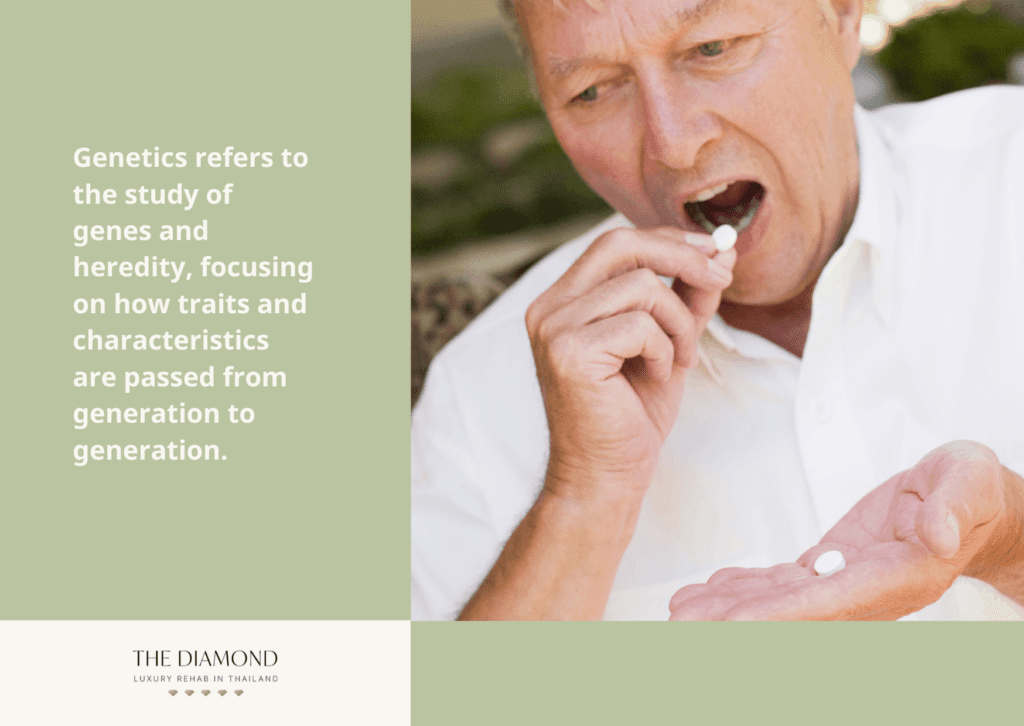
Genetics refers to the study of genes and heredity, focusing on how traits and characteristics are passed from generation to generation. Genetics plays a significant role in determining an individual’s susceptibility to various substance use disorders (SUDs).
According to the research article “The Genetic Basis of Addictive Disorders” by Francesca Ducci and David Goldman, published in the journal The Psychiatric Clinics of North America in 2012, genetic predisposition to addiction plays a significant role in addictive behaviors. The estimates range from 39% to 72% for different substances, such as hallucinogens and cocaine respectively. The article found that key genes, such as ADH1B and ALDH2 are associated with alcohol metabolism, and genes CHRNA5-CHRNA3-CHRNB4 are linked to nicotine addiction and are substance-specific.
2. Environmental causes

Environmental causes of addiction refer to external influences in a person’s surroundings that contribute to the likelihood of substance abuse. These factors include family dynamics, cultural beliefs, and peer influences that shape an individual’s attitudes and perceptions toward drug use, often playing an important role in the development of addictive behaviors. Unlike genetic predispositions, environmental causes affect behavior and decision-making through individuals’ experiences and interactions with their surroundings, particularly during formative years. This external influence shapes how one views substance use and vulnerability to addiction.
In the research article “Meta-Analysis of Individual and Environmental Factors that Influence People’s Addiction Tendencies” authored by Saideh Safari Hajat Aghaii et al. published in the International Journal of High Risk Behaviors & Addiction in 2012, the significant role of environmental factors in shaping addiction is emphasized. The study shows that environmental factors of addiction like access to substances, family members’ addiction and conflicts, cultural norms, and peer influence, have a stronger impact on addiction, with an effect size of 0.61, compared to individual factors, which have an effect size of 0.45. These environmental factors increase substance exposure and reinforce addictive behaviors.
3. Coping mechanism for emotional and mental distress
Coping mechanisms are strategies individuals employ to manage stressful situations. They are either adaptive, helping to navigate challenges effectively, or maladaptive, leading to negative consequences. When healthy coping mechanisms are ineffective, individuals resort to maladaptive practices such as substance abuse to self-medicate or temporarily alleviate distress. This behavior ultimately leads to dependence and addiction.
In the research article“Coping Mechanisms” by Emad B. Algorani and Vikas Gupta, published in the book StatPearls in 2023, the authors emphasize that emotional and mental distress often significantly contributes to the development of addiction due to maladaptive coping mechanisms. Individuals experiencing stress, anxiety, depression, or trauma frequently resort to substances like drugs or alcohol as a way to cope with overwhelming emotions. While these maladaptive strategies—such as avoidance, emotional suppression, and disengagement— offer temporary relief, they ultimately heighten the risk of addiction by neglecting the underlying emotional issues. This pattern of substance use as a coping mechanism leads to dependence and addiction, creating a cycle of emotional distress and substance abuse.
4. Trauma
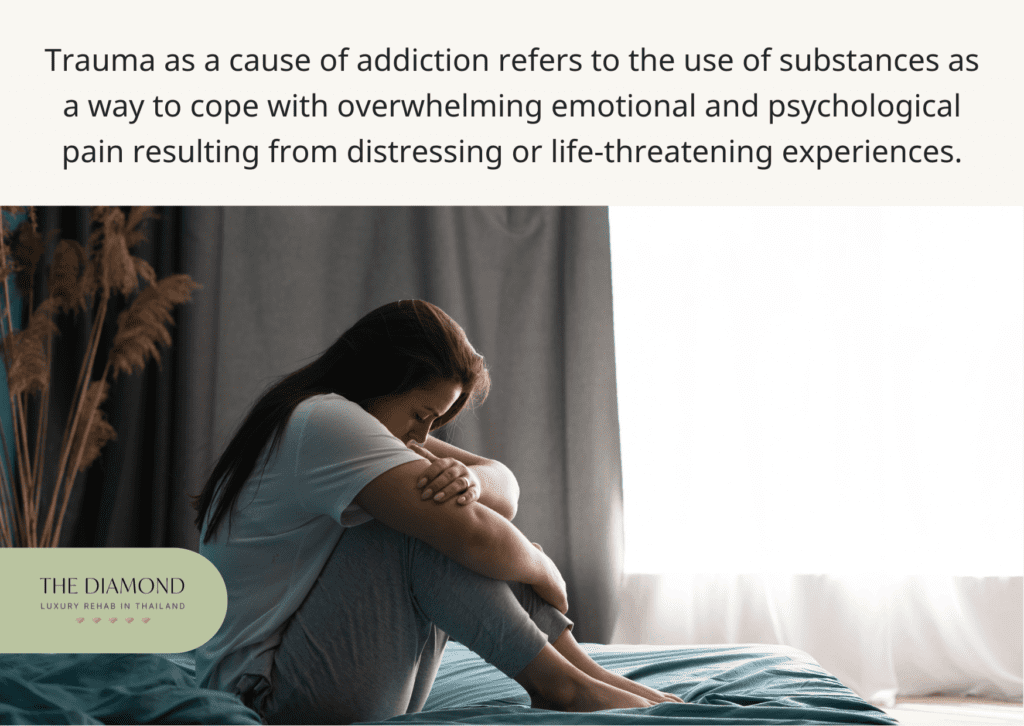
Trauma as a cause of addiction refers to the use of substances as a way to cope with overwhelming emotional and psychological pain resulting from distressing or life-threatening experiences. These substances, such as drugs or alcohol, are often employed as a way to numb or escape trauma-related symptoms, but over time, this coping mechanism evolves into dependency and addiction. Common examples of traumatic events include physical or sexual assault, life-threatening situations, unexpected loss of a loved one, violence, or exposure to war.
According to the research article “Substance Use, childhood traumatic experience, and Posttraumatic Stress Disorder in an urban civilian population” authored by Lamya Khoury et al. published in the journal Depression and Anxiety in 2010, the severity and types of childhood trauma are strongly correlated with increased levels of substance use, particularly involving alcohol, cocaine, heroin, and marijuana.
The research further highlighted gender-specific patterns in trauma-related substance use. Women who experienced sexual abuse were more likely to develop dependencies on cocaine and marijuana, while men with a history of physical abuse had higher rates of current cocaine use and lifetime heroin use. Another key finding of the study is identifying a “dose-response” effect. This means that higher levels of childhood trauma and addiction are directly linked to greater severity of substance use disorder (SUD) in adulthood. This effect was particularly notable in cases involving alcohol, cocaine, and marijuana. Additionally, the study underscores the significant role of trauma, especially childhood trauma, in contributing to the development of both SUDs and posttraumatic stress disorder (PTSD).
5. Mental illness
Mental illnesses are medical conditions that involve alterations in emotions, thinking, behavior, or a combination of these. They are linked to difficulties in interpersonal relationships, and social, occupational, and family functioning.
Mental illness significantly impairs a person’s ability to manage daily activities of life. Depending upon their severity, they range from mild conditions like anxiety and depression to more severe disorders such as schizophrenia or bipolar disorder. The relationship between mental illness and addiction is often described as a co-occurring disorder, meaning that both conditions influence and exacerbate each other.
Mental illness, particularly psychotic disorders, significantly correlates with addiction, as outlined in the article “Co-Occurring Psychotic and Addictive Disorders: Neurobiology and Diagnosis” authored by Stephen Ross and Eric Peselow published in the journal Clinical Neuropharmacology in 2012. The research study shows that individuals with conditions like schizophrenia have a higher prevalence of substance use disorders (SUDs), often using substances like alcohol, nicotine, and cocaine to self-medicate or manage symptoms. This co-occurrence leads to worse treatment outcomes, increased relapse rates, and more severe psychiatric and legal issues. The study stresses that treating both conditions is essential, as untreated mental illness drives substance abuse, worsening both disorders.
6. Peer pressure
Peer pressure is the social influence exerted by people within the same group, often leading individuals to engage in behaviors they do not choose otherwise. It involves both positive and negative actions, although the term is commonly associated with undesirable activities such as substance abuse. Peer pressure mainly affects adolescents and young adults, shaping behaviors as they seek approval and validation from their peers.
The study titled “Peer Pressure and Substance Use in Emerging Adulthood: A Latent Profile Analysis” by Angela Keyzers et al. published in the journal Substance Use & Misuse in 2020, examined the influence of peer pressure on substance use in emerging adults. The findings revealed that there are three distinct profiles of perceived peer pressure: negative peer pressure, positive peer pressure, and no perceived peer pressure. Those who experienced negative peer pressure were significantly more likely to engage in behaviors such as binge drinking, lifetime alcohol use, and lifetime marijuana use. On the other hand, individuals experiencing positive peer pressure were less likely to engage in substance use compared to those who reported no peer pressure. The study highlighted that peer pressure plays a complex role in substance use among emerging adults, with peer influence either encouraging or discouraging risky behaviors which is based on whether the pressure is positive or negative.
7. Lack of awareness
Lack of awareness refers to a person’s inability to fully understand the risks and consequences especially when associated with substance use or addictive behaviors.
It is due to a lack of awareness people engage in repeated substance use, unaware of the potential harm. This further exacerbates and increases the likelihood of addiction and prevents individuals from seeking help before the problem worsens.
The research article “Impaired self-awareness in human addiction: Deficient attribution of personal relevance” authored by Scott J. Moeller and Rita Z. Goldstein, published in the journal Trends in Cognitive Sciences in 2014, explores the strong connection between addiction and impaired self-awareness. This impairment arises from dysfunctions in key brain areas, particularly the ventromedial prefrontal cortex (vmPFC) and anterior cingulate cortex (ACC), which are important for assessing the personal relevance of behaviors and stimuli. People suffering from addiction tend to have an increased sensitivity to drug-related cues while overlooking the importance of non-drug-related factors, such as personal relationships or the negative impact of their behavior. This lack of self-awareness reinforces their substance use, even in the face of harmful consequences. The authors propose that therapeutic interventions focusing on improving self-awareness and targeting these brain regions be essential in successfully treating addiction.
8. Neurochemical changes
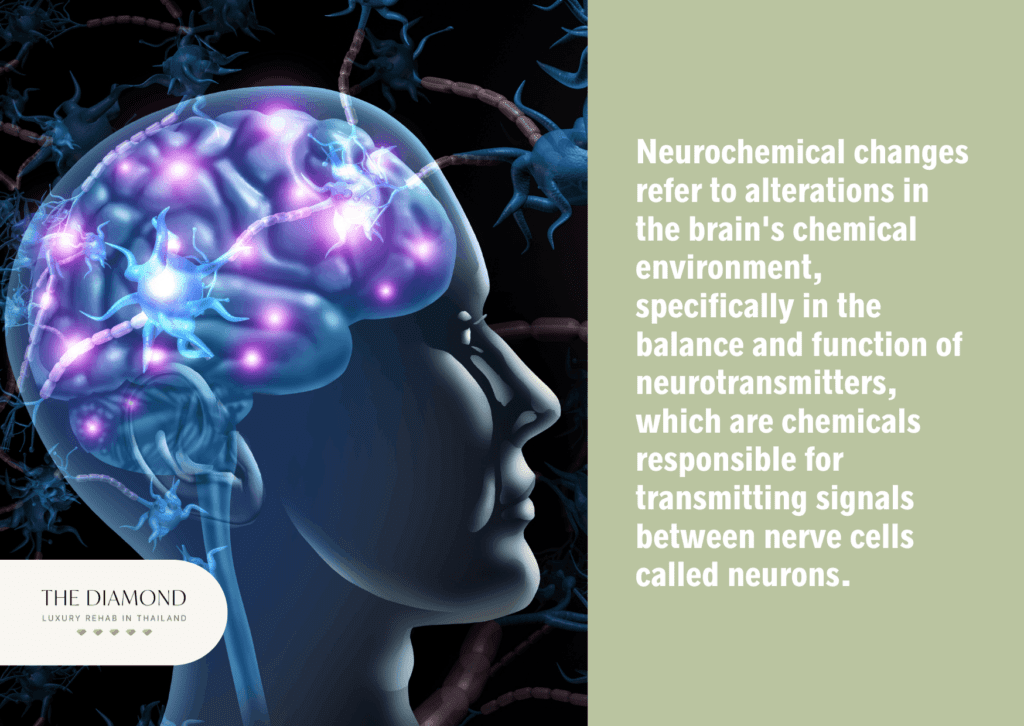
Neurochemical changes refer to alterations in the brain’s chemical environment, specifically in the balance and function of neurotransmitters, which are chemicals responsible for transmitting signals between nerve cells called neurons. These changes influence mood, cognition, behavior, and overall brain function.
Chapter 2 titled “THE NEUROBIOLOGY OF SUBSTANCE USE, MISUSE, AND ADDICTION” in the book Facing Addiction in America: The Surgeon General’s Report on Alcohol, Drugs, and Health published by the U.S. Department of Health and Human Services (HHS), Office of the Surgeon General in 2016 highlights the significant role of neurochemical changes in driving addiction.
Addictive substances affect the brain’s pleasure center, the nucleus accumbens, by releasing dopamine, which makes people feel good and encourages its repeated use. Over time, the brain becomes less sensitive to dopamine, so individuals need more of the substance to feel the same effects, leading to addiction. The article further explains that during withdrawal, stress chemicals like corticotropin-releasing factor (CRF) and dynorphin increase, causing anxiety and discomfort, which pushes people to use the substance again to feel better.
9. Prolonged substance use
Prolonged substance use refers to the continuous or repeated consumption of drugs or alcohol over an extended period. This persistent use often leads to changes in the brain’s chemistry and function, increasing tolerance, and dependence, thus acting as a cause of addiction.
The research article “Pathways to the persistence of drug use despite its adverse consequences” authored by Gavan P. McNally et al. published in the journal Molecular Psychiatry in 2023, emphasizes the critical role of prolonged substance use in the development of addiction. The study explains how repeated exposure to drugs or alcohol-induced neuroadaptations in the brain’s reward system, effectively “hijacking” its natural processes. This creates a dependence on the substance, even after the original reason, like using it to manage psychiatric symptoms, is no longer relevant. These changes in the brain lead to a lasting addiction that continues on its own. The article points out that long-term, high-dose substance use causes serious mental health issues, such as psychotic-like symptoms, showing deep and lasting effects on the brain.
10. Lack of support and access to treatment
Lack of support and access to treatment is a significant cause of addiction. Individuals struggle to find the help they need due to various barriers such as financial limitations, lack of specialized facilities, and geographical challenges.
Lack of support and access to treatment significantly contribute to addiction by leaving individuals without the resources they need to break the cycle of substance use. Without proper treatment, individuals rely on substances to cope with stress, trauma, or mental health issues, causing their addiction to worsen over time. Financial barriers, limited availability of specialized care, and long wait times for services further exacerbate the problem. Social isolation, stigma, and a lack of support from family or community make it even harder for people to seek help or stay in recovery. Without the necessary support, addiction continues, leading to more serious health and social problems.
The study “America’s Mental Health 2018” conducted by Ketchum Analytics and published by the Cohen Veterans Networkand National Council for Behavioral Health on October 10, 2018, identified a significant lack of support for mental health care access in the U.S. Despite 56% of Americans seeking or wanting mental health services, 42% faced high costs and inadequate insurance. Additionally, 38% reported long wait times and had to travel far for treatment.