
Benzo withdrawal: symptoms, timeline, and treatment


Benzo withdrawal is the appearance and development of a cluster of predictable withdrawal symptoms that individuals who are physiologically dependent on benzodiazepines experience when they stop using the drug or reduce their usual dosage significantly. Long-term and heavy use of benzodiazepines is associated with severe withdrawal symptoms. The intensity and duration of benzo withdrawal are determined by current dosage strength, frequency and duration of usage, the elimination half-life of the specific benzo formulation being used, concurrent use of other substances including sedating drugs, and the baseline health of the patient.
The typical symptoms of benzo withdrawal include benzo belly; rebound anxiety; insomnia including a rebounding of the symptom; seizures; high blood pressure; heart palpitations; muscle tension; headaches; tremors, especially in the hands; mania; agitated behavior and irritability; and blurry vision. The symptoms appear at different phases of withdrawal and vary in intensity.
The timeline of benzo withdrawal comprises three phases: early withdrawal, acute withdrawal, and protracted withdrawal. The early withdrawal phase begins just after a person stops using benzo. The acute withdrawal stage lasts from a few days to several months. The protracted withdrawal stage has been known to continue for years and is characterized by waxing and waning of symptoms.
The treatments for benzo withdrawal include slow tapering; benzo substitution; pharmacotherapy using drugs like tricyclic antidepressants, pregabalin, carbamazepine, gabapentin, and flumazenil; psychotherapy, such as cognitive behavioral therapy; mindfulness therapies; meditation; and exercise.
What is benzo withdrawal?
Benzo withdrawal refers to the emergence of a cluster of withdrawal symptoms, some potentially life-threatening, when individuals who are physiologically dependent on benzos (or benzodiazepines) stop taking the drug abruptly, according to a 1994 article by H. Pétursson published in the journal Addiction, titled “The benzodiazepine withdrawal syndrome.” Benzodiazepines are central nervous system depressant drugs that are prescribed to reduce anxiety, manage seizures, and relieve muscle spasms. They also possess sedative and hypnotic qualities, according to an October 2022 release by the United States Drug Enforcement Administration, titled “Benzodiazepines.” These drugs are controlled substances in the U.S. and several other countries because they have high abuse potential. Benzos are habit-forming.
In the entry titled “sedative, hypnotic, or anxiolytic withdrawal” included in the APA Dictionary of Psychology published by the American Psychological Association and last updated on 15 November 2023, it is stated that long-term and heavy use of all formulations of benzodiazepines–as seen in benzo addiction characterized by a dependence on the drug and the resultant compulsive use–carries significant withdrawal risks when an individual stops taking it or significantly decreases their usual dosage. Even prolonged treatment with therapeutic doses of benzodiazepine has the possibility of causing drug withdrawal (Pétursson, 1994). The severity and duration of benzo withdrawal depend on dosage strength, frequency and duration of use, the specific benzo formulation being used, simultaneous use of other substances of abuse, and the underlying physical and mental health of the patient.
When does benzo withdrawal start?

Benzo withdrawal starts within 8-12 hours after a person has stopped taking short-acting drugs like Xanax (alprazolam) and Ativan (lorazepam) and after 1-2 days or even longer after stopping long-acting forms like Klonopin (clonazepam). The onset of withdrawal depends on the specific medicine that was being taken. Short-acting forms of benzodiazepine have a shorter half-life, are absorbed rapidly by the body, and have few or no active metabolites. These are thus cleared from the body sooner than the long-acting forms. This is the reason why benzo withdrawal symptoms appear earlier in the case of short-acting drugs than when the long-acting forms are involved. The half-life of any drug, and consequently, the onset of withdrawal symptoms, are also dependent on the age and liver and kidney functions of the patient.
How long does benzo withdrawal last?
Benzo withdrawal lasts for varied durations–from a few days to several months–depending on the half-life of the specific drug being used. According to the Diagnostic and Statistical Manual of Mental Disorders, 5th edition (DSM-5) released by the American Psychiatric Association, withdrawal symptoms of benzodiazepine formulations whose actions usually last less than 10 hours, such as lorazepam, temazepam, and oxazepam, peak on the second day and improve by the fourth or fifth day. The withdrawal symptoms of longer-acting benzo formulations peak during the second week after cessation and reduce significantly by the third or fourth week. About 15-44% of long-term benzodiazepine users experience protracted moderate to severe withdrawal symptoms for several months, according to a 2012 article by Hood et al., published in the British Journal of Clinical Pharmacology, titled “Benzodiazepine dependence and its treatment with low dose flumazenil.” Protracted withdrawal symptoms typically appear and disappear in waves. However, they rarely last for more than a year.
Can you die from benzo withdrawal?
Yes, you can die from benzo withdrawal if the medication is stopped abruptly and/or the process of withdrawal is not medically supervised and/or managed. According to a release by the Substance Abuse and Mental Health Services Administration (SAMHSA), titled “Detoxification and Substance Abuse Treatment,” a part of the Treatment Improvement Protocol Series and last revised in 2015, seizures and delirium are two serious medical complications arising out of benzo withdrawal. Seizures are known to occur during withdrawal without being preceded by any other sign of withdrawal. Delirium is known to occur, particularly in the elderly, without warning signs like elevated levels of blood pressure, temperature, or pulse. Elderly people withdrawing from benzodiazepine are at an increased risk of falls and myocardial infarctions, which have the likelihood of turning fatal.
Patients with unstable psychiatric or medical comorbidities, concurrent substance abuse or dependence, and a history of seizures are at a greater risk of developing life-threatening withdrawal symptoms, according to a 2015 article by Jonathan Brett and Bridin Murnion published in the journal Australian Prescriber, titled “Management of benzodiazepine misuse and dependence.” Considering that benzo withdrawal is potentially life-threatening, the SAMHSA recommends that withdrawal be medically supervised. All formulations of benzodiazepines, irrespective of the dose and duration of usage, should be tapered instead of quitting abruptly.
What causes benzo withdrawal?
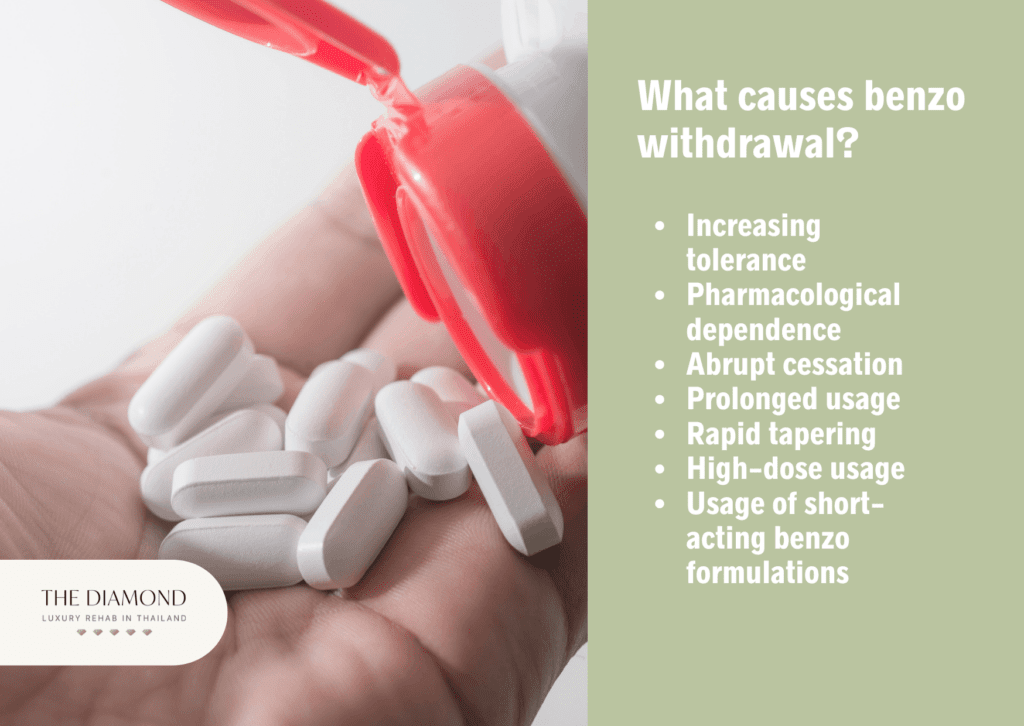
The causes of benzo withdrawal are listed below.
- Increasing tolerance: According to the Diagnostic and Statistical Manual of Mental Disorders, 5th edition (DSM-5) released by the American Psychiatric Association, repeated use of benzodiazepine builds a tolerance to its effects. So, the individual taking the drug needs an increasing amount of it to derive the same degree of effect. Usually, developing tolerance leads to the individual becoming dependent on the substance, which is associated with withdrawal.
- Pharmacological dependence: Pharmacological dependence is the natural and predictable adaptation of the body to the presence of a drug. Charles P. O’brien in a 2005 article titled “Benzodiazepine use, abuse, and dependence” published in The Journal of Clinical Psychiatry states that even therapeutic doses of benzodiazepine cause dependence, and this dependence usually manifests as withdrawal symptoms when the drug is abruptly stopped.
- Abrupt cessation: The human body attempts to maintain homeostasis, a state of balance between the various systems and functions that promotes survival. When an individual abruptly stops taking a drug after prolonged or heavy use, their bodies try to revert to a state of balance by initiating a series of counter-regulatory measures that manifest clinically as withdrawal symptoms. These withdrawal symptoms are the opposite of the effects that were induced by the drug being taken. Quitting benzodiazepine abruptly too, causes withdrawal, according to Charles P. O’brien (2005).
- Prolonged usage: An individual who had been taking benzodiazepine for more than 3-4 weeks has an increased risk of experiencing withdrawal symptoms if the drug is stopped abruptly, according to Jonathan Brett and Bridin Murnion in their 2015 article published in the journal Australian Prescriber, titled “Management of benzodiazepine misuse and dependence.” DSM-5 warns that even when benzo is prescribed for medicinal purposes and is taken at therapeutic doses, prolonged use tends to produce significant levels of tolerance and increases the risk of experiencing adverse withdrawal outcomes.
- Rapid tapering: More rapid tapering is associated with severe acute benzo withdrawal, according to a 2012 article by Hood et al., published in the British Journal of Clinical Pharmacology, titled “Benzodiazepine dependence and its treatment with low dose flumazenil.” Authors Jonathan Brett and Bridin Murnion (2015) mention that the ideal rate of tapering depends on the initial dose, therapy duration, the risk of relapse of the patient, and how the patient responds to tapering.
- High-dose usage: Taking benzodiazepine in high doses is associated with the development of serious withdrawal symptoms like seizures and psychotic episodes, according to a 1994 article by H Pétursson published in the journal Addiction, titled “The benzodiazepine withdrawal syndrome.” According to the DSM-5, doses of 40 mg of diazepam daily are known to cause clinically relevant withdrawal signs while doses of 100 mg of diazepam are associated with severe withdrawal seizures or delirium.
- Usage of short-acting benzo formulations: H Pétursson (1994) notes that short-acting benzodiazepine formulations trigger more severe withdrawal symptoms than longer-acting drugs. Short-acting formulations are cleared by the body quickly, so the withdrawal symptoms appear earlier.
What are the symptoms of benzo withdrawal?
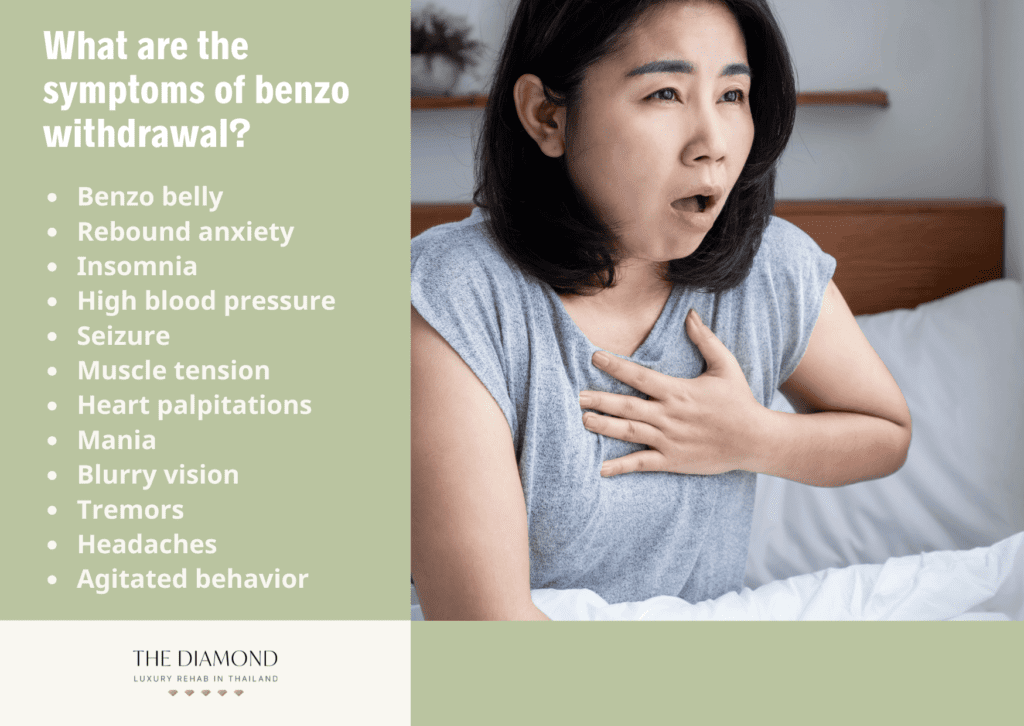
The symptoms of benzo withdrawal are listed below.
- Benzo belly: Benzo belly refers to symptoms like constipation, diarrhea, abdominal pain, and bloating. There is also retention of water that causes the individual to gain weight.
- Rebound anxiety: Rebound symptoms refer to the worsening of symptoms compared to baseline levels when the treating agent is discontinued. Rebound anxiety is common in patients who were taking benzodiazepines for generalized anxiety disorder, according to a 1983 article by Chouinard et al., published in the journal Progress in Neuro-psychopharmacology and Biological Psychiatry, titled “New concepts in benzodiazepine therapy: Rebound anxiety and new indications for the more potent benzodiazepines.”
- Insomnia: Insomnia and sleep disturbance are typical benzo withdrawal symptoms, according to a 1994 article by H Pétursson published in the journal Addiction, titled “The benzodiazepine withdrawal syndrome.” However, rebound insomnia is also possible during benzo withdrawal, especially when short- to intermediate-acting benzodiazepines are involved, according to a 1990 article by Roehrs et al., published in The American Journal of Medicine, titled “Rebound insomnia: its determinants and significance.”
- High blood pressure: High blood pressure is caused by the autonomic hyperactivity associated with benzo withdrawal, according to theDiagnostic and Statistical Manual of Mental Disorders, 5th edition (DSM-5) released by the American Psychiatric Association.
- Seizure: Quitting benzos abruptly after using the drug for 1-6 months increases the risk of life-threatening seizures, according to a 2015 article by Jonathan Brett and Bridin Murnion published in the journal Australian Prescriber, titled “Management of benzodiazepine misuse and dependence.”
- Muscle tension: Central nervous system depressants like benzodiazepines are known to produce anxiety during withdrawal. It is possible that the muscle tension experienced by the patient during withdrawal is a physical symptom of anxiety, according to a release by the Substance Abuse and Mental Health Services Administration (SAMHSA), titled “Detoxification and Substance Abuse Treatment,” a part of the Treatment Improvement Protocol Series and last revised in 2015.
- Heart palpitations: Heart palpitations are characterized by feelings of the heart beating fast, fluttering, or pounding.
- Mania: Abrupt cessation of lorazepam, a short-acting form of benzodiazepine, has been reported to cause manic reactions, according to a 1987 article by Y. D. Lapierre and A. Labelle in The Canadian Journal of Psychiatry, titled “Manic-like reaction induced by lorazepam withdrawal.”
- Blurry vision: Blurry vision typically occurs during the acute phase of benzo withdrawal and lasts anywhere from as little as two weeks to several months.
- Tremors: The tremors are largely observed in the hands and cause significant distress in the patient or impairment of critical areas of functionality (DSM-5).
- Headaches: Chronic use of benzodiazepines alters brain chemistry and functionality. So, the brain is unable to function normally when the drug is withdrawn, resulting in headaches.
- Agitated behavior: DSM-5 lists psychomotor agitation as a symptom of benzo withdrawal. This behavior is characterized by purposeless activities not directed toward any goal.
What are the symptoms of Valium (diazepam) withdrawal?
The symptoms of Valium (diazepam) withdrawal include physiological, neurological, cardiovascular, and psychological effects. The physical symptoms include headaches, lightheadedness, nausea, vomiting, abdominal pain, chills, cramps, and hand tremors. The neurological symptoms include confusion and seizures, the latter being life-threatening in several instances. Cardiovascular symptoms of Valium (diazepam) withdrawal, such as elevated blood pressure and heart rate, are associated with anxiety or the general physiological and psychological stress of the withdrawal process.
Valium (diazepam) withdrawal is known to produce toxic psychosis symptoms, according to a 1982 article by C. S. Mellor and V. K. Jain published in the Canadian Medical Association Journal, titled “Diazepam withdrawal syndrome: its prolonged and changing nature.” These symptoms include suicidal ideations, hallucinations, delusions, paranoia, inability to feel pleasure, and depersonalization. Other Valium withdrawal symptoms include distorted sensory perceptions; disturbing bodily sensations like vibrations, burning, and pins and needles; extreme and painful sensitivity to normal sound levels; and hypersensitivity to stimuli like touch, light, and motion. The presence of Valium addiction, indicating a dependence on the drug, is associated with increased severity of withdrawal symptoms.
What are the symptoms of Xanax (alprazolam) withdrawal?
The symptoms of Xanax (alprazolam) withdrawal are similar to those of other benzodiazepines but are much more severe and complicated, according to a 2018 article by Ait-Daoud et al., published in the Journal of Addiction Medicine, titled “A Review of Alprazolam Use, Misuse, and Withdrawal.” The authors refer to studies where it has been found that patients undergoing alprazolam withdrawal exhibited symptoms that were more severe than the pre-treatment levels. Patients have also developed new somatic symptoms. Generally, acute Xanax withdrawal symptoms include rebound anxiety, panic attacks, insomnia, tremors, muscle spasms, loss of appetite, racing pulse, profuse sweating, cravings, abnormal bodily sensations, and increased sensitivity to light, sound, or touch. Quitting Xanax abruptly is associated with the development of severe and potentially life-threatening symptoms like grand mal seizures, delirium, and suicidal thoughts.
The severity of Xanax (alprazolam) withdrawal symptoms is attributed to the unique properties of this benzodiazepine formulation, which include a short half-life, rapid absorption and elimination from the body, and an overall high potency that produces effects rapidly (Ait-Daoud et al., 2018). These properties are implicated in the high abuse potential of Xanax and increased risks of developing Xanax addiction and dependence.
What are the symptoms of Ativan (lorazepam) withdrawal?
The symptoms of Ativan (lorazepam) withdrawal include headaches, nausea, vomiting, hand tremors, abdominal cramps, sweating, increased heart rate and blood pressure, difficulty concentrating, confusion, anxiety, irritability, panic attacks, mood swings, and cravings. Lorazepam withdrawal is characterized by rebound effects, such as anxiety, insomnia, elevated blood pressure, and increased heart rate. A re-emergence of psychiatric symptoms, such as clinical depression, post-traumatic stress disorder, and obsessive-compulsive disorder, have also been reported during Ativan withdrawal.
Patients taking Ativan in high doses, such as individuals with Ativan addiction who have become dependent on the drug and engage in compulsive use, are at an increased risk of experiencing severe and life-threatening symptoms like delirium, hallucinations, and grand mal seizures during withdrawal. Post-acute withdrawal symptoms associated with discontinuing Ativan (lorazepam) include mood swings, depression, and an overall feeling of malaise that lasts for several months and years.
What are the symptoms of Klonopin (clonazepam) withdrawal?
The symptoms of Klonopin (clonazepam) withdrawal are similar to the ones caused by other benzodiazepines and include headache, abdominal pain, nausea and vomiting, tremors, insomnia, lightheadedness, irregular heart rate, muscle cramps and spasms, and fatigue. The psychological symptoms of Klonopin withdrawal include hallucinations, nightmares, confusion, short-term memory loss, difficulty concentrating, irritability, panic attacks, mood swings, and an inability to feel pleasure and/or be motivated. Suicidal ideations and seizures are some of the more severe and life-threatening symptoms of Klonopin (clonazepam) withdrawal.
Clonazepam is a drug with a long half-life. So, compared to other benzodiazepines, it is less likely to cause rebound anxiety when stopped, according to a StatPearls release by Hajira Basit and Chadi I. Kahwaji, titled “Clonazepam” and last updated on 13 May 2023. Withdrawal symptoms are reported to be severe in patients who were using high doses of the drug over a long period, such as individuals with Klonopin addiction who have become dependent on the drug, according to a medication guide approved by the U.S. Food and Drug Administration titled “KLONOPIN TABLETS® (clonazepam)” that was last revised in October 2017.
What does benzo withdrawal feel like?
Benzo withdrawal feels difficult, uncomfortable, and often, risky. Being dependent on the drug means that the individual experiences withdrawal symptoms when they quit abruptly or reduce their dosage. Individuals tend to feel anxious, irritable, and hypersensitive for several weeks after initiating withdrawal. There are physical symptoms like headaches, hand tremors, and insomnia. The discomfort and/or risks associated with benzo withdrawal depend on the severity and duration of usage and whether a short- or long-acting formulation was used. However, the symptoms are highly variable and differ across patients. Patients experience both rebound effects and withdrawal symptoms. Gradually withdrawing by tapering doses dampens the severity of the symptoms, and these milder symptoms usually appear and disappear in waves, thereby making them bearable.
What is the timeline of benzo withdrawal?
The timeline of benzo withdrawal spans three phases, namely early or immediate withdrawal, acute withdrawal, and protracted withdrawal. The early withdrawal phase begins shortly after a person stops taking benzodiazepine and is characterized by the appearance or worsening of rebound symptoms. Rebound symptoms, such as anxiety and insomnia, are the conditions that necessitate the initiation of benzodiazepine therapy in people who have been prescribed benzodiazepine for therapeutic purposes. The acute withdrawal phase is the peak phase where most of the symptoms of benzo withdrawal appear, and spans from a few days to several months. On average, the acute withdrawal phase lasts for 5-28 days, according to a 2012 article by Hood et al., published in the British Journal of Clinical Pharmacology, titled “Benzodiazepine dependence and its treatment with low dose flumazenil.” The protracted withdrawal phase lasts for more than 12 months and manifests as post-acute withdrawal symptoms like depression, anxiety, mood swings, insomnia, poor concentration, and loss of libido.
What is the timeline of Valium (diazepam) withdrawal?
The timeline of Valium (diazepam) withdrawal generally spans two distinct phases, namely acute withdrawal and general withdrawal. There are also references to a post-acute withdrawal stage that follows the general withdrawal phase. Valium is a longer-acting benzodiazepine. So, the withdrawal symptoms of Valium (diazepam) take longer to appear compared to those of shorter-acting benzo formulations.
The initial symptoms typically appear 24-48 hours after the patient has stopped taking the drug. The acute withdrawal phase begins 1-4 days after the last use of Valium, and the symptoms increase in intensity over the first week and peak during the second week. For the majority of patients, the most severe symptoms subside by the end of the second week. The general withdrawal phase is a longer period that begins after experiencing acute symptoms for 3-4 days and usually lasts 10-14 days.
Diazepam withdrawal period lasts about six weeks, and the symptoms increase and decrease in severity throughout this period, according to a 1982 article by C. S. Mellor and V. K. Jain published in the Canadian Medical Association Journal, titled “Diazepam withdrawal syndrome: its prolonged and changing nature.” The post-acute withdrawal phase of Valium (diazepam) withdrawal lasts from several weeks to years and requires sustained therapy to prevent relapse.
What is the timeline of Xanax (alprazolam) withdrawal?
The timeline of Xanax (alprazolam) withdrawal involves three phases, which are early withdrawal, acute withdrawal, and late withdrawal. The symptoms typically appear within 8-12 hours of last use. The first two days after stopping Xanax represent the early withdrawal phase while the acute withdrawal phase lasts from the third to the fifth or sixth day when symptoms peak. The patient enters the late withdrawal stage about a week after last taking Xanax. There are references to suggest that certain individuals experience post-acute withdrawal symptoms that last for months. However, these symptoms come in waves. The Xanax (alprazolam) withdrawal timeline varies according to individual patient circumstances, which include frequency and duration of dosage, dosage strength, concurrent substance use, and the physical and psychological health of the person undergoing withdrawal. The timeline is also impacted if the patient is going through a medically-recommended tapering schedule.
What is the timeline of Ativan (lorazepam) withdrawal?
The timeline of Ativan (lorazepam) withdrawal spans two phases, which are an acute withdrawal stage and a prolonged withdrawal stage. Ativan has a short elimination half-life, so withdrawal symptoms appear within 24 hours of last using the drug, according to a 1998 article by Busto et al., published in the Journal of Psychiatry & Neuroscience, titled “Safety of ipsapirone treatment compared with lorazepam: discontinuation effects.” Often, acute withdrawal symptoms appear in as little as 8-12 hours and last 1-4 weeks. The symptoms peak within 24 hours of discontinuing Ativan. However, Busto et al., note a difference in peaking times for different symptoms. For instance, fatigue was most intensely felt 24 hours after stopping Ativan while insomnia peaked at 48 hours. The prolonged or protracted withdrawal phase occurs after the acute phase and usually lasts 10-14 days. However, this timeline is extended in the case of individuals who were using Ativan in high doses.
What is the timeline of Klonopin (clonazepam) withdrawal?
The timeline of Klonopin (clonazepam) withdrawal spans three stages, namely early withdrawal, acute withdrawal, and protracted or late withdrawal. Withdrawal symptoms emerge 1-3 days after last using Klonopin and last 2-4 days, which is the early withdrawal phase. The acute withdrawal phase sees symptoms peaking about two weeks after clonazepam cessation and typically lasts from a week to a month. This phase is associated with a majority of withdrawal symptoms. Protracted withdrawal with clonazepam is rare and involves the continuation of the psychological symptoms and the emergence of cravings, especially if the patient has not undergone mental health therapy. Protracted Klonopin (clonazepam) withdrawal symptoms last for months and years and appear and disappear in waves.
What are the treatments for benzo withdrawal?
The treatments for benzo withdrawal are listed below.
- Tapering: The primary method of treating benzo withdrawal is slow tapering, according to a 2018 article by Weinstein et al., published in the journal Medical Clinics of North America, titled “Inpatient Addiction Consult Service: Expertise for Hospitalized Patients with Complex Addiction Problems.” Authors Boris B. Quednow and Marcus Herdener in their 2016 article titled “Neuroscience for Addiction Medicine: From Prevention to Rehabilitation – Methods and Interventions” published in the journal Progress in Brain Research recommend tapering the dosage in steps of about one-eighth to one-tenth of the daily dose every 1-2 weeks for patients on therapeutic doses of benzodiazepine. In the case of benzo abusers who are accustomed to taking the drug in high doses, rapid tapering is recommended, for instance, reducing the dosage by half over six weeks. The pace of tapering should be slowed when a therapeutic dosage range is achieved for these patients. Rapid tapering must be carried out in an inpatient setting under the supervision of specialists to ensure patient safety.
- Switching to long-acting benzodiazepine: According to a 2015 article by Jonathan Brett and Bridin Murnion published in the journal Australian Prescriber, titled “Management of benzodiazepine misuse and dependence,“switching to a long-acting benzodiazepine is an effective withdrawal therapy unless the patient is an elderly person. For instance, short-acting formulations like alprazolam are substituted by those with a longer half-life, such as diazepam. For aged patients, gradual withdrawal of benzodiazepine without substitution has been found to be effective.
- Using pharmacotherapy to manage withdrawal symptoms: Drug strategies have been suggested to manage benzo withdrawal symptoms. For instance, antihistamine hydroxycin has the potential to reduce clinical anxiety and decrease the severity of benzo withdrawal symptoms. Tricyclic antidepressants and the anticonvulsant carbamazepinehave been reported to alleviate benzo withdrawal symptoms, according to Annemarie Heberlein andThomas Hillemacher in the chapter titled “Medications for Sedative Dependence” from the book Interventions for Addiction published in 2013. Gabapentin has been shown to reduce the severity of benzo withdrawal symptoms and decrease the rate of relapse in patients who have successfully withdrawn.
- Administering p sychotherapy: Patients during benzo withdrawal often experience symptoms that resemble physiological and psychiatric problems like insomnia and anxiety, which prompted them to take the drug in the first place. Brett and Murnion (2015) suggest that psychotherapy be used to address these symptoms. Psychotherapy delivered with gradual dose reduction has been shown to be more effective in managing benzo withdrawal than tapering alone. There is moderate evidence that cognitive behavioral therapy is more effective than motivational interviewing in treating benzo withdrawal.
- Practicing alternative therapies: Strategies like meditation, exercise, and mindfulness therapies are helpful in dealing with anxiety, a common symptom of benzo withdrawal.
How long does benzo detox take?
The duration of benzo detox depends on the starting dose and how well the patient tolerates the recommended tapering schedule, according to a 2015 article by Jonathan Brett and Bridin Murnion published in the journal Australian Prescriber, titled “Management of benzodiazepine misuse and dependence.” While there is no standardized detox period, the authors suggest gradual withdrawal over at least 10 weeks to optimize the chances of long-term abstinence. The duration also depends on the risk of relapse of the patient. For instance, patients with a lower risk of relapse, such as those taking a daily dose of 10 mg or less diazepam equivalent at the start of detox, people who have reduced their dose significantly before beginning detox, and those with less severe dependence, are able to taper quickly within a few weeks.
Like any other drug detox, benzo withdrawal should also be carefully monitored. If detoxification is taking place at home, the patient should stay in regular touch with their doctors. Doctors advise detoxification at an inpatient facility if the patient has a history of complicated withdrawal attempts, is suffering from co-morbid psychiatric ailments, and/or is at risk of experiencing seizures. These patients have to go through an extended detoxification period.
How to manage benzo withdrawal symptoms?
Benzo withdrawal symptoms are managed with tapering, benzodiazepine substitution, pharmacotherapy, and psychotherapy, according to a 2015 article by Jonathan Brett and Bridin Murnion published in the journal Australian Prescriber, titled “Management of benzodiazepine misuse and dependence.” Therapies are administered alone or in combination with one or more modalities depending on the particular circumstances of the patient. There is also no strict order for initiating a particular mode of therapy. For instance, patients who are considered to be at low risk of experiencing harm or relapse first go through withdrawal involving tapering of doses. Those who have a higher risk of harm and/or relapse go through stabilization and maintenance therapy where the specific benzo formulation they are dependent on is substituted with one with a longer half-life. These high-risk patients undergo treatment, such as psychotherapy, for their dependence before attempting withdrawal or discontinuing with the aim of achieving abstinence. Pharmacotherapy is often used as an adjunct therapy to manage the uncomfortable symptoms of withdrawal.
What medications help with benzo withdrawal?
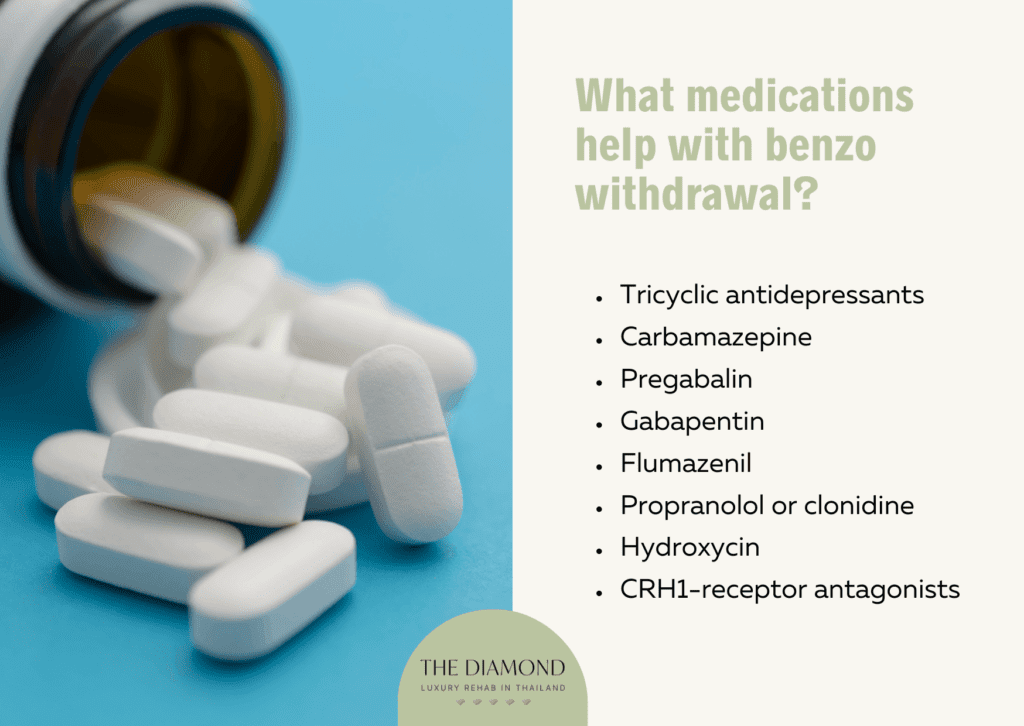
The medications that help with benzo withdrawal are listed below.
- Tricyclic antidepressants: Tricyclic antidepressants have sedative properties, which are believed to reduce the severity of benzo withdrawal symptoms, according to Annemarie Heberlein and Thomas Hillemacher in the chapter titled “Medications for Sedative Dependence” from the book Interventions for Addiction published in 2013.
- Carbamazepine: Carbamazepine, an antiepileptic drug, has shown promise in reducing the severity of withdrawal symptoms, especially in patients receiving daily benzodiazepines in doses of 20mg/day or greater of diazepam and similar formulations, according to a 1991 article by Schweizer et al., published in the journal Archives of General Psychiatry, titled “Carbamazepine treatment in patients discontinuing long-term benzodiazepine therapy. Effects on withdrawal severity and outcome.” Heberlein and Hillemacher (2013) mention that carbamazepine has the potential to decrease relapse rates.
- Pregabalin: According to a 2018 publication by Welsh et al., published in the journal Drug and Alcohol Dependence, titled “Review: Adjunctive pharmacologic approaches for benzodiazepine tapers,” the antiepileptic drug pregabalin has been shown to reduce overall withdrawal symptoms and levels of anxiety in patients undergoing benzo cessation in a community setting. The authors believe that these benefits stemmed from the rapid anxiety-reducing effects of pregabalin. However, they clarify that pregabalin was administered to this sample population without adhering to a standardized tapering regimen.
- Gabapentin: Analysis of medical record data suggests that administering gabapentin as an adjunct to the use of benzodiazepine has the potential to improve the outcomes of benzo withdrawal, such as patients needing smaller doses of benzo during the withdrawal period and achieving successful withdrawal with shorter hospital stays, according to a 2022 article by Leung et al., published in the Journal of Psychiatric Practice, titled “A Retrospective Study of the Adjunctive Use of Gabapentin With Benzodiazepines for the Treatment of Benzodiazepine Withdrawal.” Heberlein and Hillemacher (2013) note that gabapentin has the potential to reduce relapse rates in patients who have withdrawn successfully.
- Flumazenil: Flumazenil is a benzodiazepine antagonist that has been shown to reduce or totally prevent withdrawal symptoms in long-term benzodiazepine users undergoing cessation, according to Welsh et al., in their 2018 publication. The authors mention that patients on flumazenil therapy report fewer cravings and reduced relapse rates for up to 30 days after detoxification.
- Propranolol or clonidine: Low doses of clonidine or propranolol are suggested for managing benzo withdrawal symptoms in patients with severe autonomic symptoms, such as profuse sweating, increased blood pressure or body temperature, or a pulse rate greater than 100 bpm, that the primary therapeutic agent is unable to control, according to a release by the Substance Abuse and Mental Health Services Administration (SAMHSA), titled “Detoxification and Substance Abuse Treatment,” a part of the Treatment Improvement Protocol Series and last revised in 2015.
- Hydroxycin: Hydroxycin is believed to reduce the intensity of benzo withdrawal symptoms. However, Heberlein and Hillemacher (2013) caution that there are studies that have reported contrary findings in this regard.
- CRH1-receptor antagonists: Preclinical studies have shown that CRH1-receptor antagonists like DMP-904 are able to reduce depression and anxiety (Heberlein and Hillemacher, 2013). Drug withdrawal is a physically and psychologically stressful process. It is believed that these agents are also able to prevent the negative consequences of severe stressors.