

Dissociative identity disorder (DID): definition, symptoms, causes, diagnosis, and treatment

Table of content
- What is dissociative identity disorder (DID)?
- What are the symptoms of dissociative identity disorder (DID)?
- What are the causes of dissociative identity disorder?
- What are the effects of dissociative identity disorder on a person’s life?
- What are the risk factors for dissociative identity disorder?
- How is dissociative identity disorder (DID) diagnosed?
- What are the treatments for dissociative identity disorder (DID)?
Dissociative identity disorder (DID) is a complex mental health condition that occurs when a person displays two or more separate identities or personality states, each with unique thought and behavior patterns. These distinct identities frequently develop as a coping strategy for trauma, resulting in memory lapses and a feeling of alienation from oneself.
The symptoms of dissociative identity disorder (DID) include anxiety, delusions, depression, disorientation, drug or alcohol abuse, memory loss, and suicidal thoughts or self-harm.
The causes of dissociative identity disorder are trauma, brain abnormalities, family environment, societal factors, and cultural influences.
The diagnosis of dissociative identity disorder necessitates a thorough history acquired by psychiatric professionals and experienced psychologists. In order to complete diagnostic exams, accurate history taking and long-term longitudinal evaluations are often required.
Treatment options for DID include psychotherapy, cognitive behavioral therapy (CBT), medication, eye movement desensitization and reprocessing (EMDR), hypnotherapy, and trauma-focused CBT.
What is dissociative identity disorder (DID)?
Dissociative identity disorder (DID) is a psychological condition marked by the existence of two or more separate identities or personality states within an individual, each with unique patterns of perception, behavior, and interaction with the environment.
These identities, commonly referred to as “alters,” exhibit considerable diversity in age, gender, preferences, and emotional reactions, occasionally possessing unique memories and skills. The mental illness typically arises as a defense mechanism against severe, repeated trauma often experienced during early childhood, as dissociation helps the person distance themselves from distressing memories and emotions.
DID is a personality disorder that involves recurrent gaps in memory for personal information, daily events, or traumatic events, a phenomenon often referred to as dissociative amnesia. During memory gaps, one identity is often unaware of the actions or experiences of another, leading to confusion or feelings of losing time.
What was dissociative identity disorder previously called?
Dissociative identity disorder (DID) was previously known as multiple personality disorder and, informally, as split personality disorder. Both terms were used to describe the condition before its current classification, which reflects a more nuanced understanding of dissociative processes rather than a literal splitting of the personality.
Multiple personality disorder (MPD) was initially included in the Diagnostic and Statistical Manual of Mental Disorders, Third Edition (DSM-III) in 1980 and subsequently reclassified as Dissociative identity disorder (DID) in later editions of the diagnostic handbook, as noted in a 2021 study by Pietkiewicz et al., titled, “Revisiting False-Positive and Imitated Dissociative Identity Disorder.”
With the DSM-IV’s publication in 1994, multiple personality disorder was renamed dissociative identity disorder. This shift highlighted the dissociation involved and the effect of trauma on identity development, therefore reflecting a changing knowledge of the condition. The modification sought to lower the stigma related with the earlier term and increase diagnostic clarity.
What is dissociation?
Dissociation is defined as a disturbance or discontinuity in the typical subjective integration of several components of psychological functioning, encompassing identity, consciousness, memory, motor control, and perception, as per a 2017 study titled, “Dissociation and Alterations in Brain Function and Structure: Implications for Borderline Personality Disorder” published in Current Psychiatry Reports.
Such a detachment manifests in various ways, including memory gaps, a feeling of being disconnected from oneself or one’s surroundings, and a sense of unreality. While in certain cases, dissociation is a temporary and adaptive response to extreme situations, it becomes problematic when it interferes with daily functioning or leads to the development of a dissociative disorder like dissociative identity disorder (DID).
Dissociation functions as a mechanism for coping with traumatic memories or emotions in such a case, ultimately affecting an individual’s capacity to integrate experiences and sustain a coherent sense of self.
How common is dissociative identity disorder?
Dissociative identity disorder is quite rare, as estimates suggest that approximately 1.5% of the world’s population is diagnosed with the condition, according to a continuing education activity by Paroma Mitra and Ankit Jain last updated in May 2023 from StatPearls.
A paper by Brand et al., published in the July 2016 issue of the Harvard Review of Psychiatry reported that research employing strict protocols, such as sequential clinical admissions and organized clinical interviews, discovered DID in 0.4% — 6.0% of clinical samples.
It is important to note that the illness is often misdiagnosed and requires several evaluations to guarantee a correct diagnosis. Given this, an accurate global population estimate for dissociative identity disorder remains elusive.
What are the symptoms of dissociative identity disorder (DID)?

Symptoms of dissociative identity disorder (DID) encompass a range of experiences where an individual exhibits multiple, separate self-states. The symptoms of dissociative identity disorder (DID) are listed below.
- Anxiety: Anxiety in DID emerges from the internal conflicts and unpredictability of shifting self-states, leading to heightened nervousness or a sense of impending danger. Individuals experience intense worry over lost memories or fear of actions taken by alternate self-states. A 2022 paper by Pan et al., titled, “Anxiety sensitivity predicts depression severity in individuals with dissociative identity disorder” found that individuals with DID, especially those with past experiences of childhood trauma and post-traumatic stress disorder (PTSD), had elevated anxiety sensitivity levels, surpassing the average scores generally observed in individuals with PTSD or depression.
- Delusions: Individuals with DID may experience delusions—strongly held beliefs or perceptions that deviate from reality—due to the blurred boundaries between personality states. A 2020 study from the Journal of Psychiatric Research titled, “Delusional beliefs and their characteristics: A comparative study between dissociative identity disorder and schizophrenia spectrum disorders” revealed that delusions are experienced by an estimated 45% of patients with DID. The most prevalent content is delusions of control, which are the false belief that someone is controlling the person’s thoughts or actions. Such a belief is frequently influenced by another dissociative identity or identities. Additionally, delusions of thought withdrawal/insertion are common, in which the person believes that their thoughts are not their own.
- Depression: Depression in DID manifests through feelings of worthlessness, prolonged sadness, or numbness, often linked to the isolation and instability caused by the disorder. Episodes of depression are likely to worsen following shifts between self-states, especially if certain identities carry painful or traumatic memories. Individuals feel a lack of control over their lives, leading to hopelessness and withdrawal from daily activities.
- Disorientation: Disorientation often results from memory gaps or sudden changes in perception in DID patients, leaving them confused about their location, time, or identity. This symptom disrupts their sense of continuity, as they suddenly find themselves in unfamiliar places without recollection of how they arrived. Disorientation leads to challenges in routine activities because affected people struggle to maintain awareness of their surroundings.
- Drug or alcohol abuse: Substance abuse develops in DID as individuals attempt to cope with internal conflict, emotional pain, or the instability caused by dissociation. Different self-states turn to drugs or alcohol to suppress painful memories or feelings of detachment. The cycle of dissociation and drug abuse often perpetuates itself, worsening both the addiction and symptoms of DID.
- Memory loss: Memory loss is a hallmark symptom in DID, where individuals cannot recall certain events, personal information, or actions performed by different self-states. Such memory gaps disrupt continuity, often leaving individuals unsure of past activities, relationships, or responsibilities. A 2001 paper by Martin J. Dorahy titled, “Dissociative identity disorder and memory dysfunction: the current state of experimental research and its future directions” stated that dissociation affects memory retrieval, leading to fragmented or inaccessible recollections of traumatic experiences. This hampers coherent storytelling and the recall of trauma, frequently impeding therapy and recovery.
- Suicidal thoughts or self-harm: Suicidal thoughts or self-harm behaviors in DID often arise from the intense emotional pain, identity confusion, and isolation associated with the disorder. In certain patients, feelings of despair and frustration over the lack of control lead to engagement in self-injurious behavior as a way of coping. A 2022 article by Nester et al., titled, “The reasons dissociative disorder patients self-injure” revealed that trauma-related cues, stressors, dissociative experiences, emotion dysregulation, psychiatric and physical health symptoms, and ineffective coping attempts are the six primary themes of self-harm reasoning among people with dissociative disorders (DDs). The majority of DD patients (92.31%) had a partial understanding of the causes of their urges to harm themselves, with 60.26% citing “sometimes” and 28.85% citing “almost always.”
What are the causes of dissociative identity disorder?
The causes of dissociative identity disorder are multifaceted and often involve a combination of different factors. The causes of dissociative identity disorder are listed below.
- Trauma: Trauma is known to be the main cause of DID. Patients usually develop DID as a way to cope with the long-term trauma they experienced. In most cases, DID forms in childhood when personal identity is still forming. Children are more capable than adults to step outside of themselves and observe trauma like it’s happening to another person. Children who dissociate to cope or survive traumatic experiences continue using this coping mechanism to react to other stressful situations throughout their lives.
- Brain abnormalities: While the primary cause of dissociative identity disorder is trauma, it’s important to mention patients with the condition tend to have differences in brain structure. Individuals diagnosed with DID exhibit reduced cortical and subcortical volumes in key brain regions, including the amygdala, parietal structures responsible for perception and self-awareness, frontal structures involved in movement execution and fear learning, and hippocampus. There appears to be an association between these neuroanatomical alterations and prevalent symptoms of DID, including host dissociation, neurotic defense mechanisms, and general brain activation/circuitry recruitment, according to a 2020 paper by Blihar et al., published in the European Journal of Trauma & Dissociation.
- Family environment: Dysfunctional family dynamics are a crucial aspect in establishing an environment where trauma, a primary cause of DID, occurs and remains unresolved. Families characterized by denial, boundary violations, and distortions of reality foster an environment conducive to traumatic events, as noted in a review titled, “Revisiting the etiological aspects of dissociative identity disorder: a biopsychosocial perspective” published in the May 2017 issue of Psychology Research and Behavior Management.
- Societal factors: In certain situations, social pressures perpetuate unhealthy family dynamics, such as keeping abuse a secret or putting family honor ahead of the wellbeing of children. Social circumstances in oppressive or conflict-ridden groups additionally play a role in the development of dissociative symptoms as a coping strategy for ongoing cultural or interpersonal conflict, according to a 2017 paper by Şar et al., titled, “Revisiting the etiological aspects of dissociative identity disorder: a biopsychosocial perspective.”
- Cultural influences: In certain cultural contexts, dissociative episodes are accepted or even normalized as reactions to severe environmental or interpersonal stress, as per a 2017 review by Şar et al., titled, “Revisiting the etiological aspects of dissociative identity disorder: a biopsychosocial perspective.” Cultures that perceive varying self-states as adaptive reactions to societal constraints interpret symptoms differently than those that regard them as pathological. The study further indicated that cultural norms influence the types of traumas children encounter, including restrictive or abusive practices linked to tradition, which prompt dissociative coping techniques from an early age.
What are the effects of dissociative identity disorder on a person’s life?
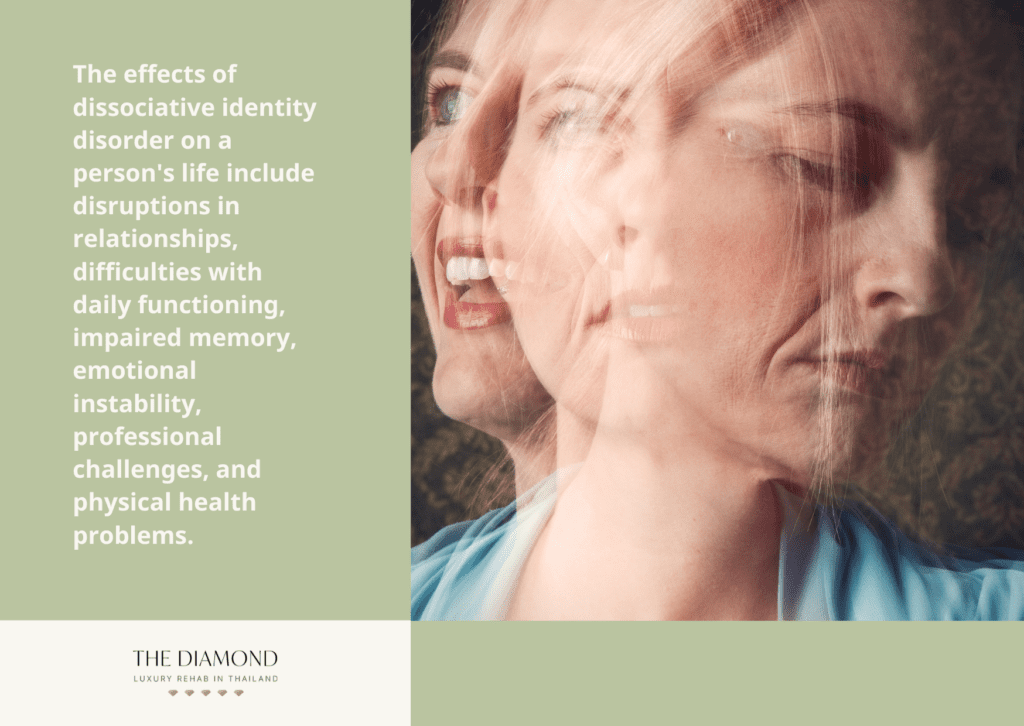
The effects of dissociative identity disorder on a person’s life include disruptions in relationships, difficulties with daily functioning, impaired memory, emotional instability, professional challenges, and physical health problems.
Disruptions in relationships are common as loved ones struggle to understand the unpredictable behavior and identity shifts associated with DID. Trust and communication challenges often arise, especially when self-states express conflicting emotions or opinions.
Difficulties with daily functioning often manifest as confusion and an inability to maintain consistency in activities, routines, or responsibilities. The unpredictable nature of personality states changes complicates even simple tasks, leaving individuals feeling overwhelmed or incapable of following through on commitments.
Impaired memory not just leads to confusion but creates a fragmented sense of self as well, making it difficult to maintain a cohesive life narrative. Emotional instability leads to mood swings and intense feelings, making emotional regulation difficult.
Rapid changes between identities often bring different emotional responses that feel uncontrollable. Professional challenges emerge as individuals with DID find it difficult to keep stable employment or meet work expectations.
Inconsistent performance, memory issues, and struggles with concentration tend to jeopardize job stability. Physical health problems additionally result from the stress and internal conflict associated with the condition, manifesting as headaches, fatigue, or unexplained pain.
What does having DID feel like?
Having DID often feels like living with multiple, distinct versions of oneself, each with its own unique thoughts, memories, and perspectives. People with DID frequently experience memory gaps, leading to confusion and a sense of losing time, as they cannot always recall what they have done or where they have been.
Shifts between identities feel disorienting, as once a different identity takes control, the individual is left feeling detached from their own actions or emotions. Daily life seems unpredictable and chaotic, as the various self-states have unique thoughts, feelings, and preferences, resulting in a struggle to maintain stability and coherence.
People frequently feel alone, misinterpreted, or detached from reality as a result of this fragmentation, which exacerbates emotional instability due to the attempt to make sense of their experiences in a world that seems to be changing all the time.
Do people with dissociative identity disorder see what their other personalities are doing?
No, people with dissociative identity disorder do not always see what their other personalities are doing. The extent of awareness between self-states varies widely among individuals with DID.
Certain individuals have no recollection or awareness of what occurs when another identity takes over, resulting in memory gaps or a sensation of lost time. Others are partially aware, experiencing a sense of being on the periphery, as if watching events unfold from a distance but without control.
In a few cases, certain identities observe or retain knowledge of actions performed by other self-states, while others remain entirely unaware. This inconsistency in awareness and memory contributes to the confusion and distress often experienced by individuals with DID.
How does switching personalities feel in DID?
Switching personalities in DID feels disorienting and overwhelming, often accompanied by a sense of losing control or being displaced. The experience varies for each person, but certain people describe it as suddenly “blacking out” and then finding themselves in a different situation, unable to remember how they got there.
In other instances, the switch tends to feel more like a sudden shift in their thinking, physical sensations, or behavior, as if they’re suddenly pushed back while another personality comes forward to take control. There seems to be a feeling of detachment, like watching oneself from the outside or fading into the background while a different identity comes forward.
What are the risk factors for dissociative identity disorder?
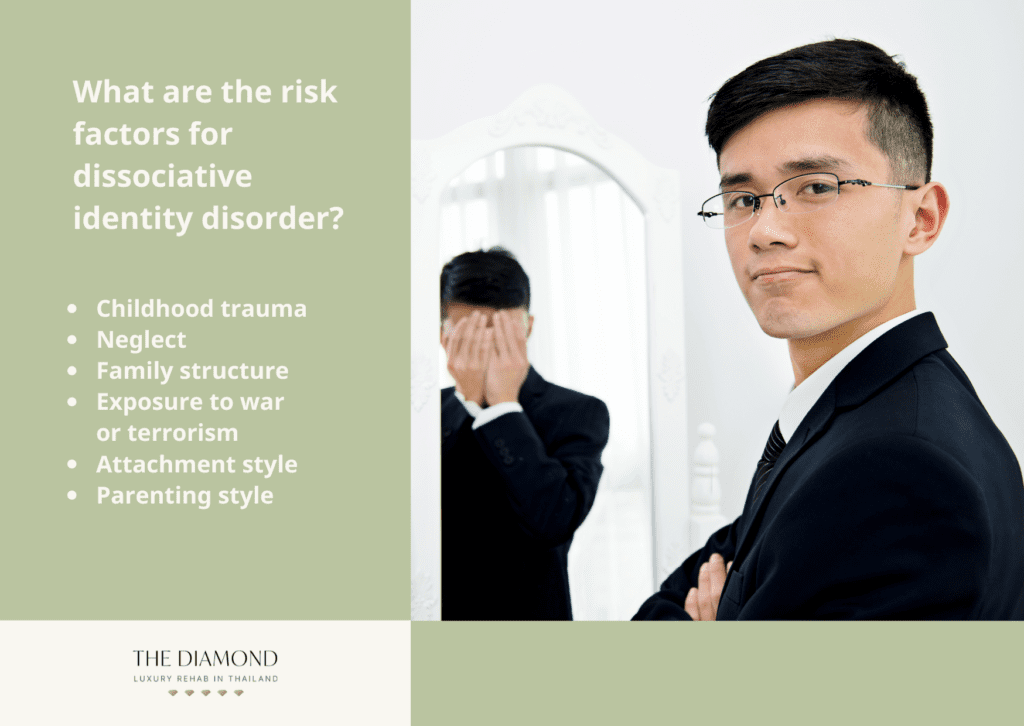
Risk factors for dissociative identity disorder denote elements elevating the probability of developing the condition. The risk factors for dissociative identity disorder are listed below.
- Childhood trauma: Experiencing severe physical, emotional, or sexual abuse during childhood is one of the most significant risk factors for DID. The mind uses dissociation as a defense mechanism to cope with the overwhelming pain and fear, leading to the development of separate identities.
- Neglect: Emotional or physical neglect, where a child’s basic needs for care and emotional support are unmet, contributes to the development of DID. Lack of safety and consistent caregiving lead to the use of dissociation as a way to handle feelings of abandonment or distress. Over time, the absence of nurturing bonds causes fragmentation in the child’s sense of self.
- Family structure: Familial disorder, inconsistency in parenting regarding parental expectations and reinforcement methods, modeling of dissociation, and insufficient emotional support from parents serve as risk factors for the development of dissociation, according to a 2020 study by Moorshid Mon Thayyil and Akanksha Rani titled, “Structural Family Therapy with a Client Diagnosed with Dissociative Disorder.”
- Exposure to war or terrorism: Exposure to war, terrorism, or violent events, leads to severe psychological distress and dissociative symptoms. The unpredictability and life-threatening nature of such experiences overwhelm an individual’s coping mechanisms. Findings of a 2015 study by Özdemir et al., titled, “Assessment of dissociation among combat-exposed soldiers with and without posttraumatic stress disorder” demonstrated that combat-exposed soldiers had higher degrees of dissociation than healthy controls, even in the absence of PTSD. This implies that exposure to combat alone increases symptoms of dissociation.
- Attachment style: An insecure or disorganized attachment style, often developed when a primary caregiver is unreliable or frightening, contributes to DID. A 2008 review by Susan Korol titled, “Familial and Social Support as Protective Factors Against the Development of Dissociative Identity Disorder” explained that compared to children with other attachment styles, children with disorganized attachment styles are more prone to develop DID because they lack a structured method for handling emotional distress. Children who are exposed to carers who are both comforting and frightening are more likely to develop this attachment style, which causes them to become confused and experience internal conflict.
- Parenting style: Authoritarian, unpredictable, or abusive parenting styles heighten the risk of DID by instilling fear and insecurity. A paper titled, “Familial and Social Support as Protective Factors Against the Development of Dissociative Identity Disorder” published in the October 2008 issue of the Journal of Trauma & Dissociation characterized the parenting methods in families of persons with dissociative identity disorder as predominantly authoritarian, inflexible, inconsistent, and domineering. The inconsistency and authoritarian control erode a child’s resilience and foster the use of dissociation as a coping strategy.
How is dissociative identity disorder (DID) diagnosed?
Dissociative identity disorder (DID) is diagnosed through a comprehensive history obtained by psychiatric practitioners and seasoned psychologists, according to a continuing education activity titled, “Dissociative Identity Disorder” by Paroma Mitra and Ankit Jain last updated in May 2023.
The publication further noted that completing diagnostic examinations frequently necessitates precise history-taking and longitudinal assessments conducted over extended periods. History often comes from various sources. Neurological evaluations are frequently necessary to rule out autoimmune encephalitis, typically involving electroencephalograms, lumbar punctures, and neuroimaging.
A minimum of two or more distinct personalities is one of the Diagnostic and Statistical Manual (DSM-5) criteria for DID. The behavior, memory, sense of consciousness, and perception of the external world of each personality are all unique.
Amnesia, distinct lapses in memory, and recollections of daily and traumatic events are all common experiences for individuals with DID. They are not explicitly associated with substance use or cultural norms or practices. It is crucial that these symptoms result in a significant impairment of daily functioning.
Is there a DID test?
No, there is no single DID test used to definitively diagnose the condition. Mental health professionals rely on a comprehensive evaluation that includes clinical interviews, psychological assessments, and a thorough review of the individual’s history.
While there are screening tools, such as the Dissociative Experiences Scale (DES) and the Structured Clinical Interview for DSM Dissociative Disorders (SCID-D), these merely help identify the presence of dissociative symptoms rather than provide a conclusive diagnosis.
These assessments are part of a larger diagnostic process rather than standalone diagnostic tests. Thus, while there are DID-specific assessments, a formal diagnosis requires comprehensive evaluation beyond these tests alone.
What are the treatments for dissociative identity disorder (DID)?
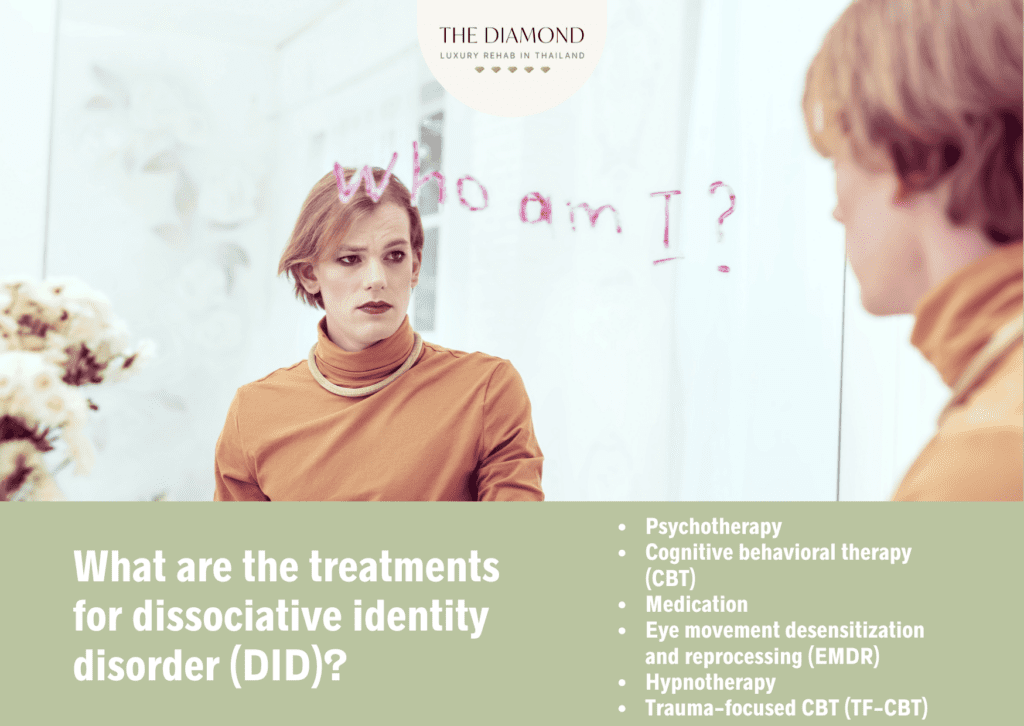
Treatments for dissociative identity disorder (DID) describe therapeutic modalities intended to assist people in integrating and managing their various self-states, lessening dissociative episodes, and enhancing general functioning. The treatments for dissociative identity disorder (DID) are listed below.
- Psychotherapy: The primary treatment for dissociative identity disorder (DID), psychotherapy, helps individuals understand and integrate their different self-states. Therapy promotes communication and cooperation between self-states, helping them work toward a more cohesive sense of identity. Over time, psychotherapy reduces dissociative episodes and enhances emotional stability.
- Cognitive behavioral therapy (CBT): CBT helps individuals with DID recognize and change negative thought patterns and maladaptive behaviors. Dissociative symptoms are effectively addressed by CBT, which focuses on grounding techniques and trigger management. As a result, patients’ psychological health is improved as they’re encouraged to reframe incorrect ideas that have their roots in trauma. In addition to improving day-to-day functioning, CBT offers coping skills for anxiety and stress.
- Medication: While medication does not directly treat DID, it helps manage co-occurring symptoms. Medication makes psychotherapy more effective by providing symptom relief that allows the individual to engage more fully in the therapeutic process. The most often prescribed drugs are those for PTSD (post-traumatic stress disorder) and mood disorders, as per an article titled, “Dissociative Identity Disorder” last updated in May 2023 by StatPearls.
- Eye movement desensitization and reprocessing (EMDR): EMDR provides a treatment pathway for addressing dissociative disorders through its distinctive method of alternate bilateral stimulation (ABS), according to a 2023 paper by Poli et al., titled, “The integrative process promoted by EMDR in dissociative disorders: neurobiological mechanisms, psychometric tools, and intervention efficacy on the psychological impact of the COVID-19 pandemic.” EMDR facilitates the reprocessing of traumatic memories by establishing neurophysiological circumstances akin to early sleep stages, particularly stimulating the parasympathetic system, fostering a sense of tranquility and security.
- Hypnotherapy: Hypnotherapy involves using guided relaxation and focused attention to explore and address dissociative symptoms. Providing insight into the origin of dissociative behavior and facilitating trauma processing, it assists in the establishment of communication among self-states. Through the controlled access to unconscious memories and emotions, hypnotherapy seeks to foster self-awareness and integration. When used in conjunction with psychotherapy, it expedites the healing process and promotes emotional stability.
- Trauma-focused CBT (TF-CBT): TF-CBT, a specialized form of CBT, is employed exclusively for trauma-related symptoms in individuals with DID, targeting maladaptive thought patterns and behaviors stemming from traumatic events, according to an article titled, “Multiple Personality Disorder or Dissociative Identity Disorder: Etiology, Diagnosis, and Management” published in the November 2023 issue of Cureus.
Is dissociative identity disorder difficult to treat?
Yes, dissociative identity disorder is difficult to treat due to its complexity and the deep-rooted trauma often underlying the condition. Treatment typically requires long-term, intensive psychotherapy, as the process of integrating multiple identities and addressing traumatic memories tend to be slow and challenging.
Each personality state has unique needs, memories, and defenses, making therapy intricate and requiring a tailored approach. Additionally, progress is not always linear; individuals experience setbacks or worsening symptoms, especially when trauma memories resurface.
The goal of achieving a stable and cohesive sense of self demands patience, persistence, and the support of a skilled and experienced therapist.