
Alcohol addiction: definition, signs, and treatment

Table of content
- What is alcohol addiction?
- What are the signs of alcohol addiction?
- What are the causes of alcohol addiction?
- What are the stages of alcohol addiction?
- What are the treatment options for alcohol addiction?
- Who are the professionals involved in alcohol addiction treatment?
- Which alcohol addiction treatment method is the best?
- Is alcohol highly addictive?
- Can the body and brain repair themselves from alcohol?
- How many alcoholics exist in the world?
Alcohol addiction, otherwise known as alcoholism or alcohol use disorder, is a chronic relapsing disorder marked by an incapacity to regulate or cut back on alcohol intake despite its detrimental effects.
The signs of alcohol addiction are categorized into mild, moderate and severe signs. The mild signs of alcohol addiction include getting intoxicated frequently and an established pattern of heavy drinking, while moderate signs of alcohol addiction are mood swings and personality changes and drinking a lot more than intended. The severe signs of alcohol addiction include yellow skin due to liver damage and unsuccessful attempts to stop drinking.
The treatment options for alcohol addiction include detoxification, therapy, medications, self-care, support groups and aftercare.
What is alcohol addiction?
Alcohol addiction, clinically termed alcohol use disorder (AUD), encompasses a chronic pattern of alcohol consumption leading to significant distress or impairment. The condition is characterized by compulsive alcohol drinking, an inability to control alcohol consumption, and continued use despite adverse consequences.
Unhealthy alcohol use starts with heavy drinking that gradually develops into a consistent habit, eventually resulting in alcohol dependence and serious health consequences.
Recognized as one of the most widespread addiction types, the disorder tends to worsen progressively, with alcohol dependent individuals facing different levels of disruption in personal, social and professional functioning.
What are the signs of alcohol addiction?
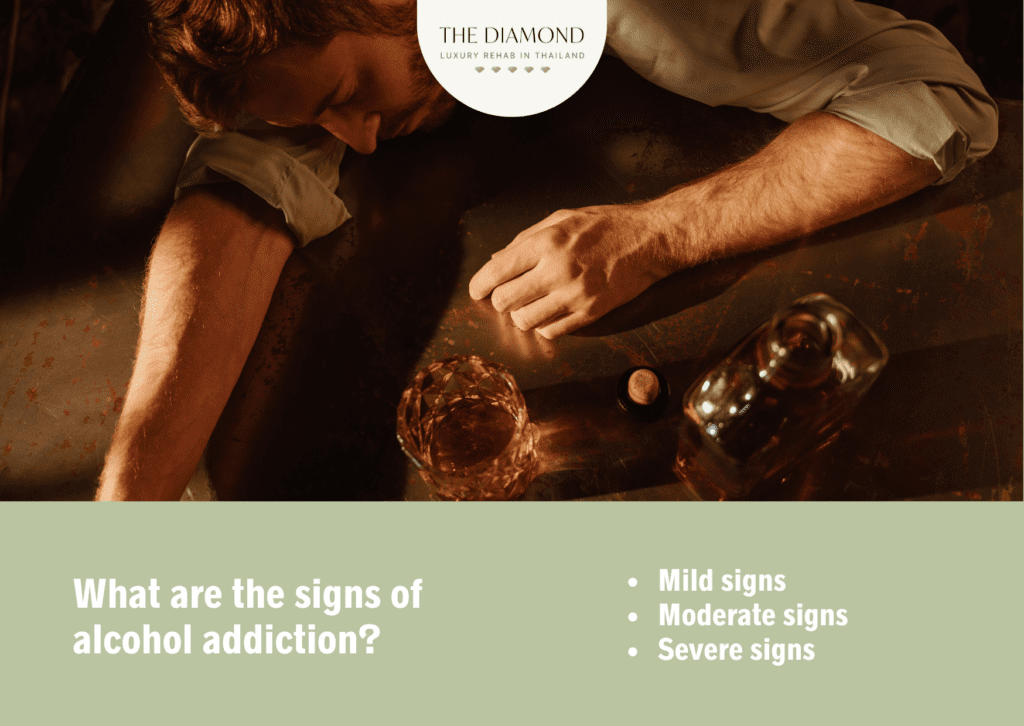
Signs of alcohol addiction refer to observable behaviors, physical symptoms and psychological indicators suggesting an individual is struggling with alcohol use disorder (AUD). The signs of alcohol addiction are listed below.
- Mild signs: getting intoxicated frequently, established pattern of heavy drinking
- Moderate signs: mood swings and personality changes, drinking a lot more than intended
- Severe signs: yellow skin due to liver damage, unsuccessful attempts to stop drinking
1. Mild signs of alcohol addiction
Mild signs of alcohol addiction refer to early or mild indications of a problematic relationship with alcohol. The mild signs of alcohol addiction are listed below.
- Established pattern of heavy drinking
- Getting intoxicated frequently
- Drinking in dangerous situations, e.g., when driving
- Thinking about alcohol more often
- Planning activities around alcohol intake
- Drastic changes in demeanor when drinking, e.g., becoming angry or more violent
2. Moderate signs of alcohol addiction
Moderate signs of alcohol addiction are indications showing a person’s drinking problem is becoming more progressive. The moderate signs of alcohol addiction are listed below.
- Mood swings and personality changes
- Drinking more alcohol than intended
- Refusing to acknowledge the existence of a drinking problem
- Drinking alcohol first thing in the morning
- Experiencing withdrawal symptoms when not drinking alcohol
3. Severe signs of alcohol addiction
Severe signs of alcohol addiction, often observed in certain types of alcoholics, refer to the drastic changes the drinking problem has caused in the affected individual. The most common severe signs of alcohol addiction are listed below.
- Yellow skin and eyes due to liver damage
- Unsuccessful attempts to stop drinking
- Broken capillaries on nose and face
- Significant weight loss due to neglect of healthy eating in favor of alcohol intake
- Dry skin, brittle nails and hair increase the appearance of fine lines and wrinkles due to dehydrating effects of alcohol
- The smell of alcohol in breath even long after drinking
- Poor hygiene
- Poor memory
- Strong cravings for alcohol
- Developing tolerance to alcohol leads to drinking more to feel its effects
What are the causes of alcohol addiction?
Causes of alcohol addiction describe underlying factors contributing to the development of alcohol dependence. The causes of alcohol addiction are listed below.
- Genetic predispositions: Genetic factors play a significant role in alcohol addiction. According to an article titled “Risk Factors: Varied Vulnerability to Alcohol-Related Harm” last revised by the National Institute on Alcohol Abuse and Alcoholism (NIAAA) in May 2025, alcohol use disorder (AUD) frequently appears to run in families. Genes influence vulnerability in different ways—some reduce susceptibility, while others heighten the likelihood of developing alcohol addiction. Among certain Asian populations, a specific genetic variation alters the speed of alcohol metabolism, producing reactions such as facial flushing, nausea, and rapid heartbeat after drinking.
- Environmental influences: Environmental factors, such as exposure to heavy drinking or alcohol availability, significantly impact the development of harmful alcohol use. Growing up in an environment where alcohol misuse is normalized or readily accessible increases the likelihood of problematic drinking behavior. Peer pressure and social norms surrounding alcohol consumption influence individuals’ drinking patterns as well.
- Psychological factors: Persistent psychological strain tends to drive individuals toward alcohol as an emotional escape. In a 2023 study by Liu et al., titled “Correlation analysis of mental health conditions and personality of patients with alcohol addiction,” participants struggling with alcohol addiction and poorer mental health often display elevated levels of psychoticism, reflected through social withdrawal and eccentric behavior, along with heightened neuroticism marked by persistent anxiety and depressive symptoms.
- Social influences: Interactions with peers, colleagues or family members strongly affect drinking patterns and attitudes. Frequent exposure to gatherings where heavy consumption is normal enables acceptance of excessive drinking. Individuals seeking approval or belonging sometimes adopt such habits to fit in, unaware of the gradual shift toward dependency. The social reinforcement of drinking behaviors masks the dangers, making recovery more challenging once addiction takes hold.
What are the stages of alcohol addiction?
Stages of alcohol addiction describe the progressive phases through which drinking behavior develops from casual use to dependence. The stages of alcohol addiction are listed below.
- Pre-alcoholic: The earliest phase of alcohol addiction begins subtly, marked by occasional drinking intended for relaxation or stress relief. Consumption feels controlled and motives appear harmless, yet the person gradually starts relying on alcohol to manage discomfort or tension. Drinking patterns become increasingly routine as tolerance begins to build, requiring larger amounts to achieve the same sense of ease.
- Early stage: During the early stage, drinking becomes more frequent and begins to influence daily habits and decision-making. Individuals start to experience stronger cravings, seeking opportunities to consume alcohol in both social and private settings. Memory lapses or mild hangovers appear, but the behavior is usually rationalized as harmless indulgence. The shift from casual use toward alcohol abuse starts becoming evident as control begins to slip, yet denial remains strong.
- Middle stage: In the middle stage, alcohol holds a central place in daily life, replacing healthier routines and relationships. Physical signs such as shaking hands, sleep disruptions and declining work performance become noticeable to others. Attempts to limit intake frequently fail, reinforcing the growing dependence on alcohol. Among the various phases of alcohol addiction, the middle stage reflects the point where personal stability begins to collapse under the weight of compulsive drinking.
- End stage: The final stage represents complete dependence, where drinking persists despite severe physical, mental and social deterioration. Health issues such as liver disease and cognitive decline emerge with increasing severity. Daily functioning becomes nearly impossible without alcohol. At this point, professional treatment becomes essential to reverse or manage the damage caused by chronic dependence.
What are the treatment options for alcohol addiction?
Treatment options for alcohol addiction refer to the various medical, psychological and behavioral approaches designed to help individuals stop drinking and rebuild stability. The treatment options for alcohol addiction are listed below.
- Detoxification
- Therapy
- Medications
- Self-care
- Support groups
- Aftercare
1. Detoxification
Detoxification serves as the initial step in treatments for alcohol addiction, focusing on clearing alcohol from the body while managing withdrawal safely. Medical supervision during detox ensures stability and reduces the risks linked to abrupt cessation.
The process helps stabilize vital functions as alcohol levels decline, allowing the body to regain balance after extended exposure. Physicians administer medication to ease symptoms such as tremors, nausea and sleep disturbances.
Proper hydration and nutritional support assist recovery, as alcohol misuse frequently depletes essential vitamins and minerals. Continuous monitoring prevents severe complications, including seizures or delirium tremens. Beyond physical cleansing, detox prepares the mind for further therapies by restoring clarity and focus.
2. Therapy
Therapy represents a cornerstone in addressing alcohol addiction, focusing on reshaping destructive behaviors through guided psychological support. It works to uncover the emotional and cognitive roots of dependence while building practical tools for sustained sobriety.
Through therapy, individuals gain insight into the personal challenges driving an alcohol problem, learning to respond to stress or pain in healthier ways. Regular sessions promote emotional regulation, accountability and stronger self-awareness, forming the foundation for lasting behavioral change.
Common types of therapy for alcohol addiction include cognitive behavioral therapy (CBT), motivational enhancement therapy (MET), family therapy and brief interventions. CBT targets harmful thought cycles and impulsive reactions, while MET builds personal drive to commit to recovery.
Family therapy restores trust and balance within households, and brief interventions provide short, focused sessions motivating individuals to reduce drinking and adopt healthier habits.
A 2024 review examining 12 studies titled “Psychosocial treatment options for adolescents and young adults with alcohol use disorder: systematic review and meta-analysis” by Belay et al., found that five reported a significant difference in alcohol use frequency between treatment and control groups after six months. One intervention combined MET and CBT, producing the strongest effect in reducing drinking frequency.
The same study reported combining family therapy with CBT produced modest reductions in alcohol use frequency among adolescents and young adults. Ecologically based family therapy, an approach focused on improving family dynamics and environmental support systems, yielded similarly mild decreases in drinking frequency.
The result aligned with another meta-analysis showing integrated psychosocial approaches produce substantial improvements in alcohol use and consumption patterns. The success of combined interventions likely stems from the complementary impact of each therapeutic component, creating a synergistic outcome.
A 2018 review of 69 randomized controlled trials (RCTs) by Kaner et al., involving 33,642 participants titled “Effectiveness of brief alcohol interventions in primary care populations” found brief interventions lowered alcohol intake by an average of 20 grams per week after 12 months compared to minimal or no intervention.
Binge-drinking frequency dropped by 0.08 episodes per week, drinking days declined by 0.13 per week, and the proportion of heavy and binge drinkers fell by 9% and 7%, respectively.
3. Medications
Medications are provided to treat alcohol use disorder as a part of a complete treatment plan to assist people in controlling withdrawal symptoms, preventing relapse and reducing or quitting drinking. The medications used for alcohol addiction are listed below.
- Benzodiazepines: Benzodiazepines (BZDs) serve as the primary medication for managing alcohol withdrawal, helping stabilize brain activity disrupted by chronic drinking. BZDs ease agitation, tremors and anxiety, lowering the risk of severe complications such as seizures or delirium. Physicians typically administer BZDs in controlled doses to prevent sedation or dependency. Careful medical supervision ensures safe withdrawal while maintaining physical stability throughout detoxification.
- Anticonvulsants: Anticonvulsants stabilize electrical activity in the brain disrupted through heavy drinking and withdrawal. These medicines lessen the chance of seizures, tremors and intense restlessness once alcohol use stops. Certain formulations adjust neurotransmitter function, helping the body regain internal balance.
- Antipsychotics: Antipsychotics assist individuals experiencing confusion, agitation or hallucinations during detoxification. The drugs quiet mental disturbances and restore composure when thinking becomes disorganized. Specialists prescribe antipsychotics carefully to prevent excessive sedation or unwanted neurological effects. When used properly, the medications contribute to greater mental steadiness during treatment.
- Barbiturates: Barbiturates act as strong sedatives calming hyperactive brain responses in difficult withdrawal cases. Physicians employ the drugs when common remedies fail to produce relief from severe anxiety or tension. Due to potency, each dose demands careful regulation within a clinical environment. Proper administration provides relief while avoiding excessive suppression of vital functions.
- Naltrexone: Naltrexone is one of the three medications—along with acamprosate and disulfiram—licensed by the United States Food and Drug Administration (FDA) for the treatment of alcohol use disorder and opioid dependency. The drug interferes with the brain’s reward circuits responsible for reinforcing alcohol consumption. Naltrexone’s blocking effect dulls the pleasurable sensations usually linked to drinking, reducing desire for further use. The medication supports abstinence without inducing drowsiness or confusion. Consistent use strengthens motivation to maintain sobriety through positive reinforcement of restraint.
- Acamprosate: Acamprosate rebalances disrupted chemical activity in the nervous system following long exposure to alcohol. Through normalizing brain communication, the treatment promotes emotional steadiness. According to a 2022 article by Barbara J. Mason titled “Looking Back, Looking Forward: Current Medications and Innovative Potential Medications to Treat Alcohol Use Disorder,” another factor behind acamprosate’s effectiveness lies in the drug’s ability to stabilize sleep disrupted through alcohol use, a common issue triggering relapse during early abstinence.
- Disulfiram: Disulfiram serves as a secondary therapy for alcohol dependence, while acamprosate and naltrexone remain the preferred first-line medications for patients receiving proper therapeutic care, according to a continuing education activity titled “Disulfiram” by Stokes et al., last updated in September 2024. When administered under supervision, disulfiram provides a safe and effective option for alcohol dependent individuals motivated to maintain abstinence both short-term and long-term.
4. Self-care
Self-care involves personal practices and lifestyle choices supporting recovery from alcohol addiction, complementing medical and therapeutic interventions. The method empowers individuals to manage physical, mental and emotional health while reinforcing sobriety.
Engaging in regular exercise strengthens the body and improves mood, helping offset stress potentially triggering drinking urges. Balanced nutrition restores nutrients depleted through prolonged alcohol use, supporting overall health and resilience.
Adequate sleep promotes mental clarity and reduces irritability, a factor often contributing to relapse risk. Mindfulness techniques, such as meditation or deep breathing, assist in managing cravings and enhancing emotional regulation.
Developing hobbies or meaningful routines provides distraction from alcohol-related thoughts and creates a sense of purpose in an individual. Self-care routines encourage consistent self-monitoring, helping identify early warning signs of relapse.
5. Support groups
Support groups serve as organized meetings bringing together people striving to overcome alcohol dependence. The sessions offer a safe setting promoting openness, shared learning and steady encouragement throughout recovery.
Usually centered around a particular issue or problem (like alcoholism), support groups seek to foster a nonjudgmental and encouraging atmosphere where people with alcoholism relate to others with similar difficulties.
Examples of support groups for alcohol addiction include Alcoholics Anonymous (AA), SMART Recovery and Women for Sobriety (WFS).
Participation in support groups reduces feelings of isolation by connecting individuals with peers facing similar challenges. Members exchange practical strategies for managing cravings and handling cravings in everyday situations.
Listening to success stories reinforces hope and demonstrates long-term recovery is achievable. Whether attending in-person or online meetings, individuals benefit greatly from the sense of connection and community a self-help group offers.
6. Aftercare
Aftercare refers to ongoing support and planning following formal treatment for alcohol dependence. The program focuses on sustaining sobriety through consistent guidance, relapse prevention and continued accountability.
Ongoing follow-up after treatment helps individuals maintain progress through peer meetings or scheduled check-ins. Structured routines reduce exposure to relapse triggers and reinforce healthy coping habits. Continued counseling promotes personal insight and emotional stability, vital for long-term recovery.
Support from mentors or peers provides motivation during difficult moments and helps rebuild confidence. Lifestyle guidance encourages activities supporting wellness, such as exercise or balanced nutrition. Participation in aftercare nurtures consistency and helps individuals stay committed to sober living, lowering the chance of returning to alcohol use.
Who are the professionals involved in alcohol addiction treatment?
Professionals involved in alcohol addiction treatment involve a multidisciplinary group of healthcare professionals committed to assisting individuals recovering from alcoholism. The professionals involved in alcohol addiction treatment are listed below.
- Psychologist: A psychologist focuses on understanding the mental and behavioral factors sustaining alcohol dependence. Through therapy, individuals explore thought patterns and triggers influencing drinking habits. Cognitive and behavioral methods guide healthier coping responses to stress or craving. Regular sessions encourage personal insight and build motivation for continued abstinence.
- Psychiatrist: A psychiatrist addresses both the psychological and neurological dimensions of alcohol dependence. The specialist identifies coexisting mental disorders influencing drinking behavior and prescribes medication when necessary to stabilize mood and reduce cravings. Regular evaluations ensure the chosen treatment remains effective and well-balanced. With ongoing psychiatric care, patients receive tailored treatment aligning medical precision with emotional recovery.
- Physician: A physician focuses on restoring the body’s stability after prolonged alcohol use. Comprehensive check-ups reveal the extent of internal damage and guide decisions regarding detox or medication. Physicians monitor progress through laboratory testing and prescribe medications supporting recovery. Medical oversight enables the patient’s body to regain strength while treatment continues under controlled care.
- Alcohol counselor: An alcohol counselor offers direct support through sessions addressing personal struggles linked with drinking. Practical discussions guide individuals through triggers, relationships and relapse-prevention strategies. Counselors employ motivational interviewing to inspire self-awareness and accountability. Through consistent dialogue, patients gain practical direction for rebuilding daily life free from alcohol dependence.
- Social worker: A social worker collaborates with healthcare professionals to connect individuals to essential resources, including rehabilitation programs, community services and housing support. Their involvement bridges the gap between clinical treatment and social reintegration. Advocacy plays a major part in restoring social and economic stability. With social workers’ help, individuals rebuild lives anchored in purpose and renewed self-sufficiency.
Which alcohol addiction treatment method is the best?
A combination of treatments tailored to individual needs stands as the most effective approach for alcohol addiction, since no single method works universally for everyone. Evidence indicates behavioral therapies, such as CBT and MET, produce consistent improvements in abstinence rates and coping ability.
Pharmacological options like naltrexone and acamprosate support such therapies by reducing cravings and stabilizing brain chemistry. Medical supervision ensures safety during detoxification, particularly for individuals with severe withdrawal symptoms.
Support groups complement professional care by fostering accountability and shared motivation. Aftercare programs reduce relapse risk through continued guidance and skill reinforcement. Lifestyle adjustments, including proper nutrition and self-care routines, contribute to sustained recovery. Comprehensive approaches addressing both physical and psychological health tend to outperform single-focus interventions.
What should you know when choosing a treatment method?
Things to know when choosing a treatment method refer to the key considerations individuals should evaluate before selecting an approach for alcohol addiction recovery. The things you should know when choosing a treatment method are listed below.
- Assess the severity of your alcohol dependence: Understanding the intensity of alcohol dependence helps determine which treatment methods are going to be most effective. Individuals with more severe dependence usually require medically supervised detox and structured rehabilitation programs, while milder cases benefit from outpatient therapy or brief interventions. Accurately assessing severity ensures resources and interventions match the complexity of the condition, improving the likelihood of successful recovery.
- Look for evidence-based practices: Look for alcohol treatment methods supported by scientific evidence and research. Select initiatives or programs with a track record of successfully assisting people in kicking alcohol addiction.
- Know the potential benefits and risks: Awareness of the advantages and limitations of each treatment guides informed decision-making. Medications reduce cravings but carry side effects, while certain therapies improve coping skills yet demand high engagement. Understanding such trade-offs ensures selection aligns with health priorities and personal circumstances.
- Determine personal readiness and motivation: A person’s willingness to engage actively in recovery shapes the success of any chosen treatment. Commitment to follow through with therapy, attend support sessions and adopt lifestyle changes greatly enhances outcomes. Recognizing personal motivation allows healthcare professionals to select strategies resonating with the individual.
- Choose the appropriate type of intervention: Different interventions vary in structure, duration and intensity, impacting each method’s suitability for particular individuals. Certain programs offer short-term counselling, while others require immersive residential stays with comprehensive therapies. Matching the intervention’s intensity to a person’s needs helps prevent under- or over-challenging the recovery process.
- Check program accessibility: Access to treatment facilities and professional support affects the feasibility of completing a recovery plan. Geographic location, program schedules and financial considerations determine whether an individual is going to be able to participate consistently. Securing access prevents interruptions undermining progress and maintains continuity of care.
- Consider the influence of support systems: The presence of supportive family, friends or peer groups significantly affects recovery outcomes. Treatments incorporating community involvement or social support enhance accountability. Considering the influence of social networks allows selection of methods within a positive environment.
- Inquire about how the program handles relapse: Ask about the program’s relapse prevention tactics, coping mechanisms for handling triggers and support services offered in the event of relapse. Understanding these details helps anticipate challenges and ensures continuous guidance during setbacks. Confirming available resources allows individuals to make educated choices and gain confidence in sustaining recovery.
What is the cost of alcohol addiction treatment?
The cost of alcohol addiction treatment ranges from $932 for stepped care in primary settings to $2,702–$2,853 for detoxification services, based on findings from a 2023 systematic review by Fardone et al., called “Economic benefits of substance use disorder treatment: A systematic literature review of economic evaluation studies from 2003 to 2021,” with all figures adjusted to 2021 USD.
Treatment prices for alcohol misuse are influenced by various aspects, such as the nature of the program (inpatient or outpatient), location, duration of treatment and the range of services and amenities provided.
1. Inpatient treatment cost for alcohol addiction
Inpatient treatment for alcohol addiction provides a structured, residential setting where individuals receive intensive medical and psychological care under continuous supervision.
The approach isolates patients from daily stressors, ensuring complete focus on recovery within a supportive environment. An inpatient rehabilitation program typically includes detoxification, therapy sessions, medication management and relapse prevention planning, all within a single facility. Such programs incorporate group counselling and recreational activities to build healthier coping habits.
The 2023 National Academies Press (US) report on aviation industry substance use disorder (SUD) programs called “Substance Misuse Programs in Commercial Aviation: Safety First” estimated residential treatment costs at an average of $42,500 total, with daily rates between $600 and $900. The figures reflect allowable rates under program guidelines and vary depending on insurance coverage.
In general, programs within standard clinics or facilities tend to be more affordable but still provide essential medical support. Price variation additionally depends on the center’s amenities, location, length of stay or whether medication-assisted treatments and aftercare planning are included.
2. Outpatient treatment cost for alcohol addiction
Outpatient treatment for alcohol addiction offers structured therapy and medical care without requiring patients to live in a facility. The approach allows individuals to maintain work, family or school responsibilities while receiving consistent professional support.
An outpatient program involves counselling sessions, group therapy, medication management and scheduled check-ins with healthcare providers. Such programs require regular attendance, ensuring accountability and continued progress.
According to the 2023 National Academies Press (US) report “Substance Misuse Programs in Commercial Aviation: Safety First,” partial hospital outpatient programs, which provide more intensive care, reported daily rates of $450–$650, while intensive outpatient programs (IOP) averaged $250–$350 per day. Insurance typically covers part of the expense, with total costs varying by session frequency, such as three to five days weekly for four to twelve weeks.
Facilities offering specialized therapies or medication-assisted treatments typically charge higher fees. Location, therapist qualifications and frequency of visits influence pricing as well. Community clinics and government-supported programs generally provide more affordable options.
How to measure the success of alcohol addiction treatment?
To measure the success of alcohol addiction treatment, progress is assessed through both behavioral changes and personal well-being. A clear indicator includes a consistent reduction or complete abstinence from alcohol consumption, reflecting improved self-control.
Another measure is the ability to manage stress or challenges without relying on substances, showing the development of healthier coping mechanisms. Emotional steadiness becomes more evident as mood swings lessen and a sense of self-worth strengthens.
Another important marker involves the person’s ability to care for mental well-being through therapy participation or personal mindfulness routines. Enhanced physical wellness, such as better sleep, appetite and energy, further reflects progress. Various individuals describe feeling grounded and capable of facing challenges without relapse.
What to do if your husband has alcohol use disorder?
If your husband has alcohol use disorder, approach the situation with empathy and clear boundaries. Begin by learning about the condition to better understand its physical and psychological roots.
Encourage open yet calm conversations, choosing moments when he is sober and more receptive to discussion. Avoid arguments or blame, as confrontation heightens defensiveness and is likely to push him further away.
Suggest professional help such as counselling, detoxification or rehabilitation programs tailored to his needs. As a spouse, maintain emotional balance by joining support groups or family therapy to gain perspective and guidance.
Establish firm yet compassionate limits to protect your own well-being while remaining supportive. Observe any warning signs of worsening withdrawal or physical decline and contact a healthcare provider if needed. Most importantly, celebrate each sign of progress, reinforcing hope and showing recovery remains achievable with consistent effort and proper care.
What to do if your child has alcohol addiction?
If your child has alcohol addiction, focus first on creating a safe environment at home that limits access to alcohol. Observe patterns of alcoholic behavior abuse and keep detailed notes on any incidents of drinking to share with healthcare professionals.
Having open discussions about consequences and health impacts help your child see the reality of alcoholism without feeling attacked. Encourage involvement in school or community programs offering mentorship or sober activities to replace risky routines.
Connect with specialists experienced in adolescent substance use for assessment and guidance on treatment options. Collaborate with other family members to maintain consistent rules and expectations.
Monitor physical and emotional changes, and seek immediate medical help if signs of withdrawal or dangerous behavior appear. Celebrate achievements like attending sessions or resisting urges, no matter how small, to build confidence and reinforce positive habits. Use ongoing education about alcohol abuse to keep your child informed and engaged in their own recovery.
How to convince a person they need professional help for alcohol addiction?
To convince a person they need professional help for alcohol addiction, begin by identifying specific situations where alcohol use has caused harm or disruption. Point out the direct consequences of drinking on responsibilities, health or relationships, using clear examples to illustrate the pattern.
Invite your friend or loved one to reflect on these impacts, allowing them to consider the need for support without pressure. Suggest scheduling a consultation with a qualified professional and offer to assist with making an appointment.
Protect your own well-being during the process, ensuring boundaries are clear and respected. Communicate feelings in a factual, calm manner, using statements beginning with “I” to describe the effects on yourself or others.
Anticipate potential resistance and address concerns about treatment with practical information, clarifying what to expect during therapy or medical evaluation. Maintain steady communication with the person by checking in on their willingness to seek help and offering assistance as needed.
What are the future improvements for alcoholism treatment?

Future improvements for alcoholism treatment refer to the constant improvement and creation of strategies to address alcohol addiction more effectively. The future improvements for alcoholism treatment are listed below.
- Gabapentin: Gabapentin, primarily used to treat nerve pain and seizures, shows promise as a future adjunct in alcoholism treatment. A 2020 paper by Anton et al., called “Efficacy of Gabapentin for the Treatment of Alcohol Use Disorder in Patients With Alcohol Withdrawal Symptoms: A Randomized Clinical Trial” concluded gabapentin supports abstinence and lessens heavy drinking among AUD patients with a history of withdrawal symptoms. The effectiveness, measured by the number of patients needed to treat for one to benefit (NNT), is similar to or better than that of naltrexone, another established treatment for AUD, as observed in prior research.
- Anti-smoking drugs: Certain medications originally developed for smoking cessation, such as varenicline, are under investigation for potential use in lowering alcohol intake. Such drugs act on brain reward pathways, possibly weakening the reinforcing impact of alcohol. Through targeting shared neurological mechanisms between nicotine and alcohol dependence, anti-smoking drugs help prevent relapse in individuals with co-occurring substance use patterns.
- Anti-epileptic medication: Anti-epileptic medications, traditionally prescribed for seizure disorders, are being examined for the ability to stabilize neural activity during alcohol withdrawal. Certain compounds reduce hyperexcitability in the brain, decreasing the risk of withdrawal seizures and agitation. Anti-epileptic drugs indirectly curb alcohol cravings by modulating neurotransmitter systems linked to reward and reinforcement.
Can you assess alcohol addiction yourself?
No, you cannot assess alcohol addiction yourself with full accuracy. An alcoholism self-assessment is likely to offer an initial sense of drinking habits and potential warning signs, but it cannot replace a full evaluation from a healthcare professional.
Self-assessments typically depend on personal perception and tend to downplay the seriousness of drinking behavior or miss underlying psychological and physical health concerns. Medical experts use structured diagnostic tools and clinical interviews to identify the presence and severity of alcohol dependence accurately.
Professional evaluation helps detect co-occurring conditions influencing treatment planning as well. Attempting to rely solely on self-assessment risks delaying necessary medical care. Clinical guidance provides tailored recommendations based on comprehensive analysis instead of subjective judgment.
Is alcohol highly addictive?
Yes, alcohol is highly addictive, particularly for individuals with genetic vulnerability and young adults within the age range of 18 to late 20s, according to a publication titled “Risk Factors: Varied Vulnerability to Alcohol-Related Harm” last revised by the National Institute on Alcohol Abuse and Alcoholism in May 2025.
Roughly 50–60% of AUD risk stems from genetics, influencing stress response, alcohol metabolism, and physical tolerance. The ages of 18 to the late 20s mark a stage of continued brain maturation and identity formation, when major life transitions such as entering university heighten drinking risks while providing key points for early prevention.
Alcohol exerts a powerful effect on the brain through dopamine surges strengthening the urge for repeated drinking. Continued use disrupts normal reward pathways, leaving pleasure harder to achieve in the absence of alcohol.
The neurological shift encourages compulsive drinking patterns dominating thought and behavior. Continued exposure leads to alcohol blunting responsiveness to ordinary emotional and physical cues, reducing interest in previously fulfilling activities.
How addictive is alcohol in comparison to other drugs?
Alcohol is ranked as fifth among twenty substances assessed for dependence potential in a 2007 study titled “Development of a rational scale to assess the harm of drugs of potential misuse” by Nutt et al., following heroin, cocaine, tobacco and barbiturates. Despite being legal and widely accessible, alcohol holds a stronger addictive capacity than substances such as cannabis, amphetamine and ecstasy.
Among the most widely used substances, smoked tobacco ranks as the most habit-forming, followed closely by heroin and alcohol, the paper added. The findings further questioned the validity of current drug classification systems by showing how the level of harm caused by various legal substances, especially alcohol, is similarly high when compared to several illegal drugs.
Alcohol is particularly notable due to the prominent position of the substance in terms of societal and health-related detriments, such as persistent physical damage, strong propensity for addiction, aggressive behavior, car accidents and economic burdens.
Can the body and brain repair themselves from alcohol?

Yes, the body and brain can repair themselves from alcohol, although the process demands sustained abstinence and proper care. Recovery begins once drinking stops, allowing the brain to stabilize chemical activity disrupted during prolonged use.
Gradual improvements in brain function occur as neurotransmitter systems regain balance and neural connections strengthen. Certain cognitive abilities, such as memory and attention, tend to improve with consistent sobriety and adequate nutrition.
Alcohol-related brain damage is potentially reversible , particularly when long-term sobriety is maintained. In a 2023 article by Martelli et al., titled “Caudate gray matter volumes and risk of relapse in Type A alcohol-dependent patients: A 7-year MRI follow-up study,” participants who remained sober for more than two years showed measurable brain restoration. Frontal regions responsible for decision-making and self-control displayed significant recovery during prolonged abstinence.
Similarly, organ damage caused by alcohol exposure, including liver impairment, demonstrates strong potential for healing because of the organ’s regenerative capacity, as noted in a 2021 study by Thomes et al., titled “Natural Recovery by the Liver and Other Organs after Chronic Alcohol Use.”
The paper further stated each organ heals from alcohol exposure at a different pace, with the liver recovering within weeks or months, the gastrointestinal system stabilizing within weeks for barrier repair but requiring longer for microbiota restoration, the pancreas and heart improving over several months and bones needing years to rebuild.
Sustained abstinence stops additional harm and allows regeneration, though the degree of recovery varies according to the level of damage.
How many alcoholics exist in the world?
In 2019, global data revealed around 400 million individuals, or roughly 7% of adults aged 15 and above all over the world, experienced alcohol use disorders. Among them, 209 million met the criteria for alcohol dependence, according to a 2024 publication from the World Health Organization (WHO) titled “Alcohol.”
Among 145 reporting nations, 54% had national standards for specialized treatment services, while 46% had laws safeguarding treatment confidentiality. Access to screening, early intervention, and medications for alcohol-related disorders remained scarce across most regions. The share of affected individuals receiving professional care ranged from below 1% to a maximum of 14% in reporting nations.
Another 2024 publication from the World Health Organization, “Global status report on alcohol and health and treatment of substance use disorders,” revealed how the past 12-month prevalence of alcohol use disorders differed across WHO regions, reaching 10.7% in Europe and 10.2% in the Americas, while the Eastern Mediterranean Region reported the lowest rate at 0.5%. Alcohol dependence during the same period followed a similar pattern, with 5.8% in Europe, 5.3% in the Americas, and just 0.3% in the Eastern Mediterranean.